Introduction
Car jack service encompasses the inspection, maintenance, repair, and calibration of hydraulic and mechanical lifting devices used in automotive applications. These devices, crucial for vehicle maintenance and repair, are subject to stringent safety requirements and performance demands. The industry chain positions car jack service as a critical support function for automotive repair shops, dealerships, emergency roadside assistance providers, and fleet maintenance operations. Core performance characteristics include lifting capacity, lifting range, stability under load, and operational reliability. Failure in these areas can lead to vehicle damage, personal injury, or even fatalities, making rigorous service practices paramount. Modern car jack systems incorporate diverse technologies, from simple screw mechanisms to sophisticated hydraulic systems with safety valves and quick-release mechanisms, necessitating specialized knowledge and tooling for effective servicing.
Material Science & Manufacturing
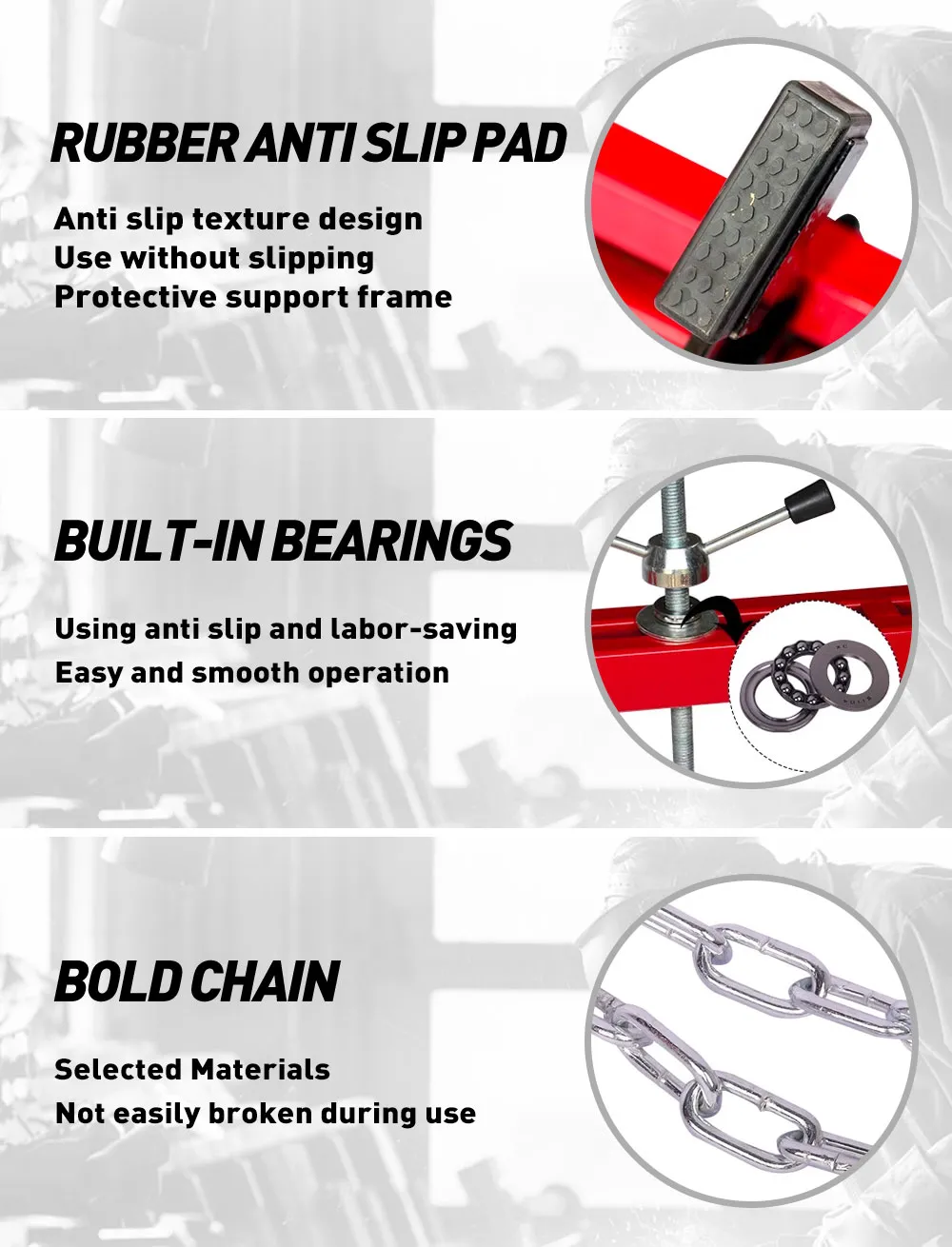
Car jacks utilize a range of materials dictated by the stresses and operational environment. Hydraulic jacks predominantly employ high-strength steel alloys (typically AISI 1045 or equivalent) for the cylinder body, piston, and pump components. These alloys are selected for their yield strength, tensile strength, and resistance to fatigue. Seals are commonly manufactured from nitrile butadiene rubber (NBR) or hydrogenated nitrile butadiene rubber (HNBR) due to their compatibility with hydraulic fluids and resistance to abrasion. Mechanical jacks rely heavily on carbon steel for the lifting screw, base, and frame, often undergoing surface treatments like zinc plating or powder coating to enhance corrosion resistance. The manufacturing processes vary significantly. Hydraulic cylinders involve precision honing and machining to ensure a tight seal between the piston and cylinder wall. Welding processes, such as Gas Metal Arc Welding (GMAW) and Submerged Arc Welding (SAW), are critical for assembling the structural components. Quality control at this stage focuses on weld integrity (radiographic inspection) and dimensional accuracy. Mechanical jacks primarily rely on cold forming and machining of steel components, with thread rolling being a crucial step in screw manufacturing. Parameter control during thread rolling is vital to achieve the correct thread profile and prevent stress concentrations. Material hardness testing (Rockwell or Vickers) is a standard quality control measure throughout the manufacturing process.
Performance & Engineering
The performance of a car jack is governed by principles of statics and hydraulics. Lifting capacity is determined by the cylinder bore area and the maximum allowable hydraulic pressure in hydraulic jacks. In mechanical jacks, it’s defined by the mechanical advantage of the screw thread and the applied force. Stability under load is crucial; engineering analysis must account for the center of gravity of the lifted vehicle, the footprint of the jack's base, and potential side loads. Finite Element Analysis (FEA) is frequently used to simulate stress distribution under various loading conditions and optimize the jack’s structural design. Environmental resistance is a key consideration. Exposure to moisture, road salts, and temperature fluctuations can accelerate corrosion and degrade seals. Hydraulic fluids must possess adequate viscosity and thermal stability to maintain performance across a wide temperature range. Compliance requirements vary by region but typically include adherence to safety standards like ASME B30.1 (Slings, Alloys Chains, Synthetic Slings, and Attachments) and EN 1494. Functional implementation involves rigorous testing of lifting speed, load holding capability, and release mechanisms. Safety features such as overload protection valves and quick-release mechanisms are evaluated to ensure reliable operation. Force analysis during jack operation reveals potential stress concentrations at weld joints and thread roots, dictating the need for robust design and regular inspection.
Technical Specifications
| Lifting Capacity (tons) | Minimum Lifting Height (mm) | Maximum Lifting Height (mm) | Hydraulic Fluid Type |
|---|---|---|---|
| 2 | 75 | 380 | ISO VG 32 Hydraulic Oil |
| 3 | 85 | 465 | ISO VG 46 Hydraulic Oil |
| 5 | 90 | 530 | ISO VG 46 Synthetic Hydraulic Oil |
| 10 | 110 | 680 | ISO VG 68 Hydraulic Oil |
| 20 | 130 | 850 | ISO VG 68 Synthetic Hydraulic Oil |
| 50 | 150 | 1100 | ISO VG 100 Hydraulic Oil |
Failure Mode & Maintenance
Common failure modes in car jacks include hydraulic leaks (resulting from seal degradation or cylinder damage), mechanical failure of the lifting screw (due to fatigue cracking or thread stripping), structural failure of the base or frame (caused by corrosion or overload), and malfunctioning safety valves. Fatigue cracking is prevalent in mechanical jacks subjected to repeated loading cycles, particularly at stress concentration points. Delamination can occur in powder-coated surfaces due to inadequate surface preparation or coating defects. Hydraulic fluid degradation (oxidation and contamination) leads to reduced efficiency and accelerated wear of internal components. Regular maintenance is critical. This includes visual inspection for leaks, cracks, and corrosion; lubrication of moving parts; checking and topping up hydraulic fluid levels; and testing the operation of safety valves. For hydraulic jacks, periodic fluid flushing and seal replacement are recommended. Mechanical jacks require regular greasing of the screw threads and inspection for thread damage. Calibration checks should be performed annually to verify lifting height and capacity accuracy. In the event of a structural failure, the entire jack must be replaced. Preventive maintenance schedules, documented in a service log, are essential for ensuring long-term reliability and safety.
Industry FAQ
Q: What is the typical service life of a hydraulic car jack under professional use?
A: Under consistent professional use (e.g., daily operation in a repair shop), a well-maintained hydraulic car jack typically has a service life of 5-7 years. This is heavily dependent on the quality of the initial components, the frequency of use, the operating environment, and the adherence to a regular maintenance schedule. Seal replacement is usually required every 2-3 years, and fluid changes should be performed annually.
Q: How do I identify if a hydraulic jack's seals are failing?
A: Common indicators of failing hydraulic jack seals include a noticeable decrease in lifting speed, inability to maintain a load at a constant height (slow creep), visible hydraulic fluid leaks around the cylinder or piston, and a spongy or inconsistent feel to the jack handle. A drop in hydraulic pressure during testing is also a telltale sign.
Q: What are the implications of using an incorrect type of hydraulic fluid?
A: Using an incorrect hydraulic fluid can have serious consequences. Incorrect viscosity can reduce lifting efficiency and increase wear. Fluids incompatible with the seal materials can cause swelling, degradation, and leakage. Using a fluid with poor thermal stability can lead to performance degradation at high temperatures. Always adhere to the manufacturer's recommended fluid specification.
Q: What safety precautions should be observed during car jack maintenance?
A: Always disconnect the air supply or power source before performing any maintenance. Support the vehicle with jack stands before working underneath it – never rely solely on the jack. Wear appropriate personal protective equipment (PPE), including safety glasses and gloves. Dispose of used hydraulic fluid responsibly, following local environmental regulations. Ensure the work area is well-ventilated.
Q: How often should a mechanical car jack's lifting screw be inspected for damage?
A: The lifting screw of a mechanical car jack should be inspected for damage (thread stripping, cracking, or deformation) at least every six months, or more frequently under heavy use. Pay particular attention to the areas near the nut and the points of highest stress. Early detection of thread damage is crucial to prevent catastrophic failure.
Conclusion
Car jack service is a multifaceted discipline demanding a thorough understanding of material science, hydraulic/mechanical principles, and safety regulations. Maintaining the integrity of these devices is paramount for ensuring the safety of automotive technicians and the prevention of vehicle damage. Regular inspection, proactive maintenance, and adherence to industry best practices are essential for maximizing the service life and reliability of car jacks.
Future advancements in car jack technology are likely to focus on incorporating intelligent monitoring systems, predictive maintenance algorithms, and lighter-weight materials. Developing standardized diagnostic procedures and remote monitoring capabilities will further enhance service efficiency and safety. Continual professional development for technicians and a commitment to rigorous quality control throughout the manufacturing process will remain critical for upholding the highest standards of car jack service.
