Introduction
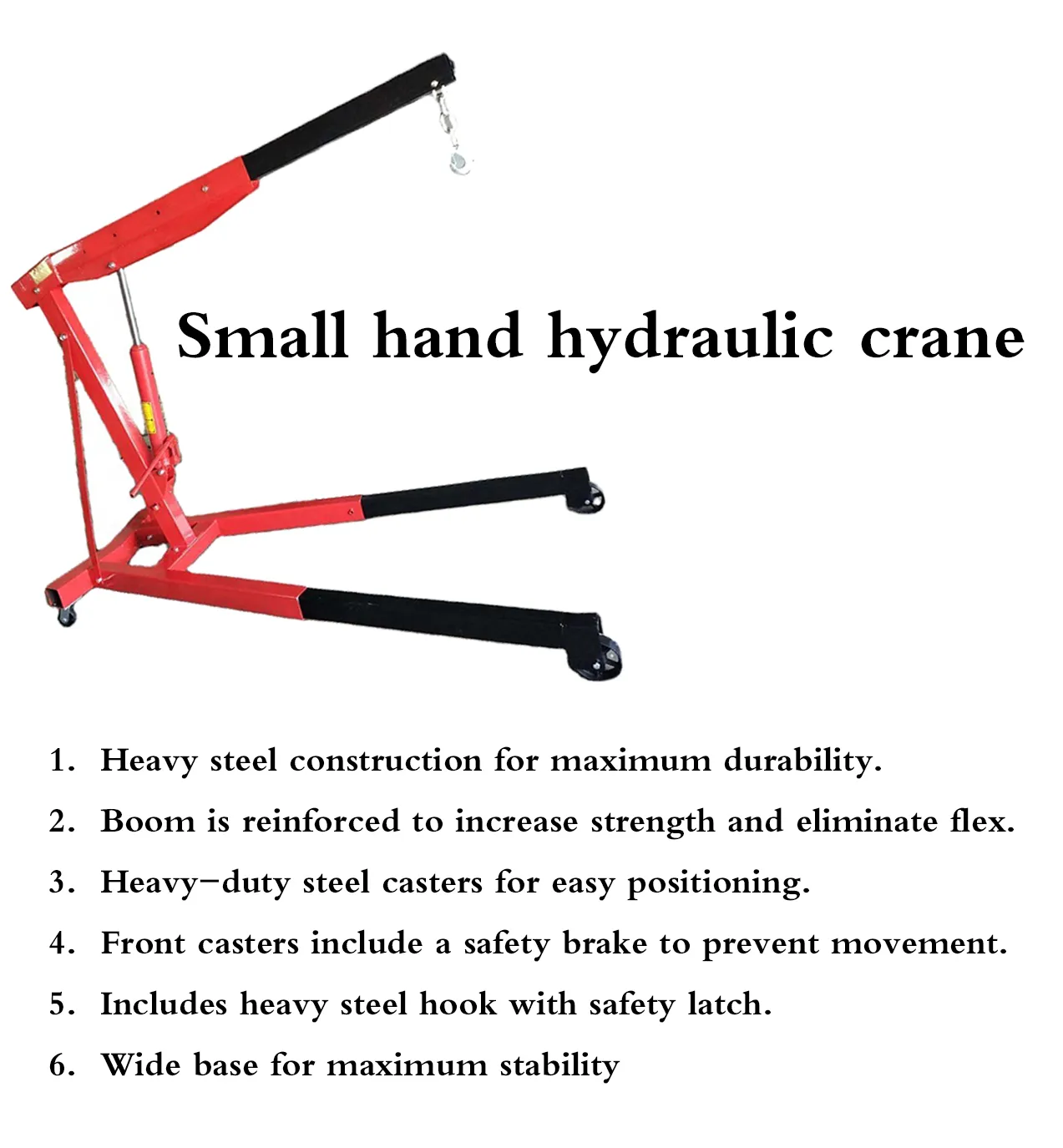
The 1 ton foldable engine hoist represents a critical piece of lifting equipment within the automotive repair, heavy equipment maintenance, and industrial manufacturing sectors. This device, typically categorized as a bridge crane or chain hoist system, facilitates the safe and efficient removal and installation of heavy components, primarily internal combustion engines, transmissions, and related machinery. Its foldable design addresses the limitations of fixed overhead crane systems by offering portability and space-saving storage. The core performance characteristics of these hoists are defined by their lifting capacity (1 ton / 2000 lbs), reach (horizontal extension), lifting height (vertical extension), and the safety features incorporated into their construction. A key pain point in the industry is the need for robust, reliable lifting solutions that don’t require permanent infrastructure alterations, and the foldable hoist directly addresses this need, providing a flexible solution for workshops with limited space or varying operational requirements.
Material Science & Manufacturing
The construction of a 1 ton foldable engine hoist typically involves a combination of high-strength steel alloys, primarily carbon steel (ASTM A572 Grade 50) for the main structural components such as the A-frame, boom arm, and base. The chain itself is commonly manufactured from Grade 80 alloy steel (EN 818-7), known for its high tensile strength and resistance to wear. Manufacturing processes include:
- Steel Fabrication: Laser cutting and CNC machining are employed to create precise component shapes from steel plate. Welding, predominantly shielded metal arc welding (SMAW) or gas metal arc welding (GMAW), joins these components. Critical weld joints undergo non-destructive testing (NDT), such as ultrasonic testing (UT) and magnetic particle inspection (MPI), to ensure structural integrity.
- Chain Manufacturing: The Grade 80 alloy steel undergoes a process of cold forging, heat treatment, and shot peening to enhance its strength, hardness, and fatigue resistance. Accurate chain pitch and link dimensions are crucial for smooth operation and load distribution.
- Hydraulic System (if applicable): Some models incorporate a hydraulic system for controlled lowering. This system utilizes hydraulic cylinders manufactured from high-strength alloy steel, sealed with nitrile rubber O-rings and seals compatible with hydraulic fluid (typically ISO VG 32 or VG 46).
- Powder Coating: A durable powder coating is applied to all steel components to provide corrosion resistance and enhance the aesthetic appearance. Surface preparation involves sandblasting to ensure proper adhesion.
- Assembly & Testing: Final assembly involves meticulous fitting of all components, followed by load testing to verify the hoist's capacity and safety features. Load testing protocols typically exceed 125% of the rated capacity.
Chemical compatibility is a key consideration. Exposure to corrosive environments (saltwater, acidic fumes) necessitates the use of protective coatings and regular maintenance. The steel’s carbon content influences its weldability and susceptibility to corrosion; higher carbon content increases strength but reduces weldability and increases corrosion risk.
Performance & Engineering
The performance of a 1 ton foldable engine hoist is governed by several key engineering principles. Force Analysis focuses on ensuring that all structural components can withstand the applied loads, including static weight, dynamic forces during lifting and lowering, and potential shock loads. The boom arm's design must account for bending moments and shear stresses. Finite Element Analysis (FEA) is frequently employed during the design phase to optimize structural integrity and minimize weight.
Environmental Resistance is crucial. The hoist must operate reliably across a wide temperature range (-20°C to +60°C). Exposure to humidity and rain requires corrosion protection. The hydraulic system (if present) must maintain consistent performance in varying temperatures. Compliance Requirements vary by region. In the US, OSHA regulations (29 CFR 1910.179) govern the safe operation of hoists and cranes. European standards (EN 13155 and EN 1495) specify design, testing, and safety requirements. Load testing is critical for verifying compliance.
Functional Implementation involves precise control of lifting and lowering speeds. Chain hoists typically utilize a manual ratchet system, while hydraulic hoists employ a controlled hydraulic cylinder. The foldable mechanism must provide a stable and secure configuration in both folded and extended positions. Locking pins and safety latches are essential to prevent accidental collapse.
Technical Specifications
| Parameter | Specification | Unit | Testing Standard |
|---|---|---|---|
| Rated Capacity | 1000 | lbs / 453.6 kg | ASTM E415 |
| Maximum Lifting Height | 78.7 | inches / 2000 mm | EN 13155 |
| Boom Arm Length (Extended) | 6.23 | ft / 1900 mm | In-house Testing |
| Folded Dimensions (LxWxH) | 47.2 x 23.6 x 78.7 | inches / 1200 x 600 x 2000 mm | EN 1495 |
| Chain Material | Grade 80 Alloy Steel | - | EN 818-7 |
| Frame Material | Carbon Steel (A572 Grade 50) | - | ASTM A572 |
Failure Mode & Maintenance
Common failure modes for a 1 ton foldable engine hoist include: Fatigue Cracking in the boom arm or A-frame, particularly at weld joints, due to repeated stress cycles. Chain Wear & Elongation reduces the chain's effective strength and can lead to slippage. Hydraulic System Failure (if applicable) can result from seal degradation, fluid leaks, or pump failure. Corrosion, particularly in humid or saltwater environments, weakens steel components. Component Deformation of the folding mechanism due to overloading or impact.
Failure Analysis should begin with a visual inspection for cracks, deformation, and corrosion. Non-destructive testing (NDT) methods like dye penetrant inspection can detect surface cracks. Chain wear can be assessed by measuring chain stretch. Hydraulic system failures require pressure testing and leak detection.
Maintenance Solutions include: Regular lubrication of all moving parts (chain, pivot points, hydraulic cylinders). Periodic inspection of weld joints for cracks. Chain replacement when wear exceeds acceptable limits (typically 3% elongation). Hydraulic fluid replacement and seal maintenance according to manufacturer’s recommendations. Protective coating repair to prevent corrosion. Strict adherence to the rated capacity and proper lifting techniques. Annual load testing to verify the hoist's performance. Thorough cleaning after use, especially in harsh environments.
Industry FAQ
Q: What is the recommended inspection frequency for a 1 ton foldable engine hoist used in a commercial automotive repair shop?
A: The recommended inspection frequency is at least every 6 months, and prior to each use. Inspections should include visual checks for cracks, deformation, corrosion, and proper operation of the folding mechanism and chain hoist. A qualified person should conduct a comprehensive annual inspection, including load testing and NDT.
Q: What are the safety implications of exceeding the rated capacity of the hoist?
A: Exceeding the rated capacity drastically increases the risk of structural failure, potentially leading to dropped loads, serious injury, or even fatalities. The hoist is designed with a specific safety factor; exceeding the capacity negates this safety margin. Components can be overstressed, leading to immediate failure or accelerated fatigue cracking.
Q: Can the hoist be used outdoors, and if so, what precautions should be taken?
A: The hoist can be used outdoors, but with significant precautions. It must be protected from rain and direct sunlight. Corrosion protection measures, such as applying a protective coating and regular cleaning, are essential. Avoid operating the hoist in windy conditions, as this can create unstable loads. Ensure the ground is level and stable.
Q: What type of chain lubricant is recommended, and how often should it be applied?
A: A high-quality chain lubricant specifically designed for lifting chains is recommended. Penetrating oil-based lubricants are effective. Application frequency depends on usage, but generally, lubricating the chain after every 20-30 lifting cycles, or at least monthly, is advisable. Avoid using abrasive lubricants or solvents.
Q: What are the key differences between a manual chain hoist and a hydraulic engine hoist, and which is more suitable for a small automotive workshop?
A: A manual chain hoist relies on manual pulling of the chain to lift and lower loads, offering simplicity and lower cost. A hydraulic hoist utilizes a hydraulic cylinder for controlled lifting and lowering, providing smoother operation and requiring less physical effort. For a small workshop, a manual chain hoist is often more practical due to its lower price point and minimal maintenance requirements. However, a hydraulic hoist is preferable when frequent lifting and precise load control are needed.
Conclusion
The 1 ton foldable engine hoist provides a versatile and cost-effective solution for lifting heavy components in various industrial settings. Its foldable design enhances portability and space-saving storage, addressing a key pain point for workshops with limited infrastructure. Understanding the material science behind its construction, adhering to strict manufacturing processes, and implementing a robust maintenance program are critical for ensuring its long-term reliability and safety.
The selection of the appropriate hoist, coupled with proper training for operators and adherence to relevant safety standards (OSHA, EN, etc.), is paramount. Continuous monitoring of the hoist's condition and prompt attention to any signs of wear or damage are essential for preventing catastrophic failures and maintaining a safe working environment. Future advancements in hoist technology may focus on incorporating smart sensors for real-time load monitoring and predictive maintenance.
