Introduction
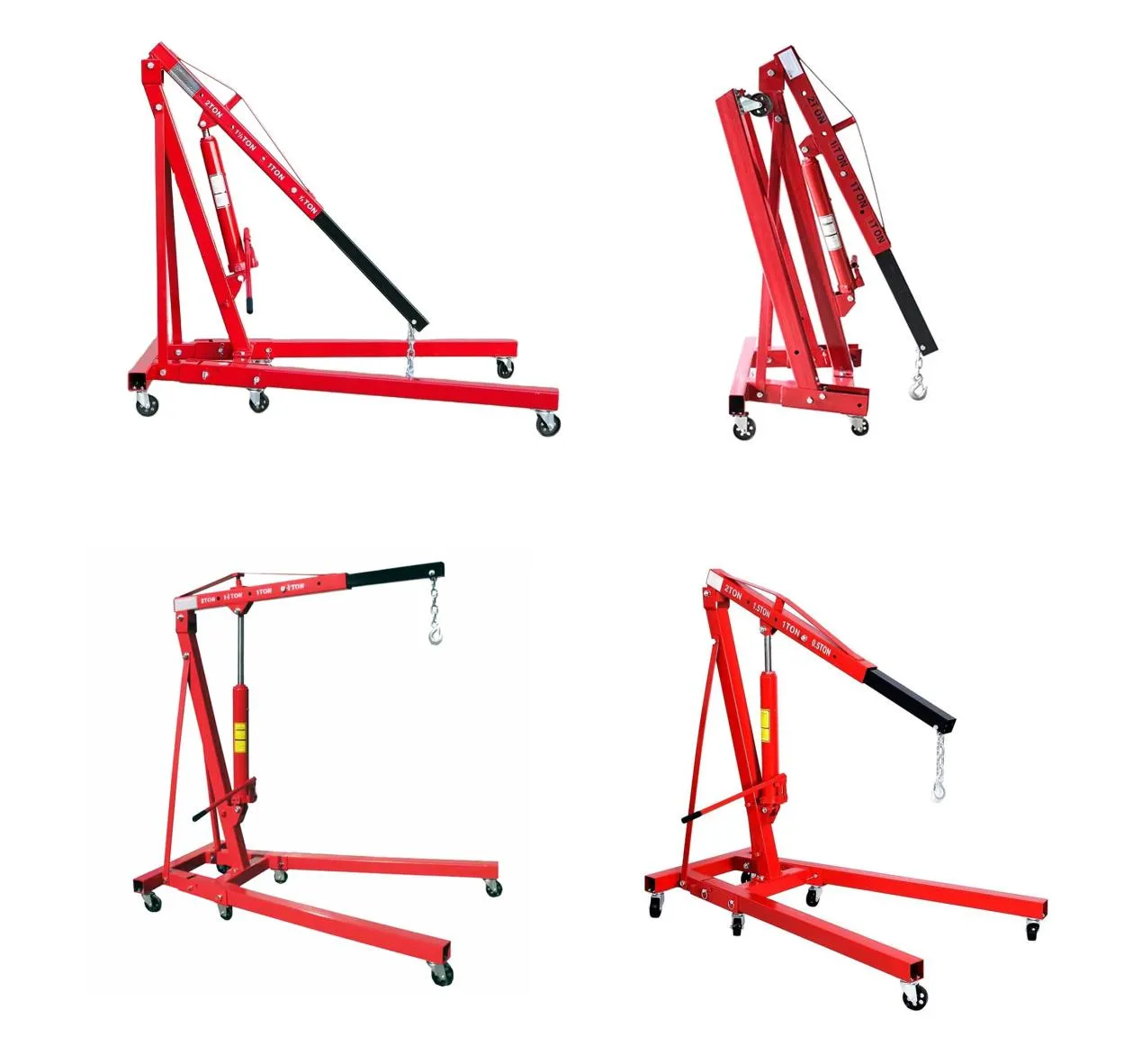
The 1-ton foldable shop crane represents a crucial material handling solution within the industrial and automotive sectors. Positioned as a cost-effective alternative to permanent overhead crane systems, these cranes facilitate the safe and efficient lifting and movement of heavy components, engines, and machinery. They bridge the gap between manual lifting and large-scale, fixed infrastructure. Core performance characteristics revolve around its load capacity (1 ton / 2000 lbs), reach, lift height, and importantly, its portability and ease of deployment. The increasing demand for flexible manufacturing processes and lean production methodologies drives the adoption of foldable shop cranes, as they minimize downtime associated with installation and relocation. A key pain point in the industry is the need for adaptable lifting solutions that don't require substantial capital investment or facility modifications. Foldable shop cranes address this by offering a readily available and mobile lifting asset.
Material Science & Manufacturing
The construction of a 1-ton foldable shop crane typically involves high-strength steel alloys for the primary structural components – the boom, base, and supporting legs. Specifically, ASTM A572 Grade 50 steel is frequently used, offering a yield strength of 50,000 psi, providing necessary tensile and yield strength for load-bearing elements. The hydraulic system utilizes steel cylinders honed and polished to reduce friction and ensure smooth operation. Hydraulic fluid, typically a mineral oil-based ISO VG 46 grade, is critical; its viscosity impacts performance across varying temperatures. The wheels are often manufactured from cast iron or polyurethane, selected for their load capacity and wear resistance. Manufacturing processes include robotic welding for consistent and high-strength joints, CNC machining for precise component fabrication, and powder coating for corrosion protection. Critical parameter control during welding includes maintaining appropriate heat input to prevent metallurgical changes in the steel, ensuring complete fusion, and minimizing distortion. Hydraulic cylinder manufacturing demands tight tolerances in bore and piston diameters to maintain efficient fluid sealing. Boom sections are usually formed through cold-rolled steel sections and reinforced with gussets to maximize bending resistance. A critical manufacturing aspect is non-destructive testing (NDT), such as ultrasonic testing, to identify internal flaws in welded joints.
Performance & Engineering
Performance analysis of a 1-ton foldable shop crane centers on its stability and structural integrity under load. Force analysis involves calculating bending moments in the boom, shear forces in the legs, and compressive loads on the base. The critical load path extends from the hook, through the hoist chain, boom, and down to the base. Stability is paramount; the crane's base must be sufficiently wide and weighted to prevent tipping. Finite Element Analysis (FEA) is routinely used during the design phase to simulate stress distribution and identify potential weak points. Environmental resistance is crucial. The crane must operate reliably in ambient temperatures ranging from -20°C to 50°C without significant performance degradation. Corrosion protection, achieved through powder coating and the use of corrosion-inhibitive hydraulic fluids, is essential in preventing premature failure. Compliance requirements include adherence to ASME B30.31 standards for mobile and portable cranes, which govern design, inspection, and operational safety. The lifting mechanism itself often utilizes a geared hoist with a mechanical advantage, minimizing the operator's required pulling force. Lift height is determined by the boom’s length and the hoist’s chain length, with safety factors incorporated to prevent over-extension and potential instability.
Technical Specifications
| Parameter | Specification | Testing Standard | Tolerance |
|---|---|---|---|
| Load Capacity | 1 ton (2000 lbs) | ASTM E4 | ±5% |
| Minimum Lifting Height | 1.8m (6 ft) | In-house Calibration | ±0.02m |
| Maximum Lifting Height | 2.7m (9 ft) | In-house Calibration | ±0.02m |
| Boom Length | 1.5m (5 ft) | Dimensional Inspection | ±0.01m |
| Base Width (Open) | 1.2m (4 ft) | Dimensional Inspection | ±0.01m |
| Base Width (Folded) | 0.6m (2 ft) | Dimensional Inspection | ±0.01m |
Failure Mode & Maintenance
Common failure modes in 1-ton foldable shop cranes include hydraulic system leaks, boom bending or buckling, wheel bearing failure, and hoist chain wear. Hydraulic leaks often originate from seals degrading over time due to fluid contamination or thermal cycling. Boom bending/buckling results from exceeding the load capacity or applying loads off-center, leading to material fatigue. Wheel bearing failure manifests as excessive play and noise, stemming from insufficient lubrication or overloading. Hoist chain wear is a gradual process caused by friction and corrosion. Failure analysis identifies root causes using techniques like fractography (examining fracture surfaces) and oil analysis (detecting contaminants). Preventative maintenance is crucial. This includes regular hydraulic fluid checks and replacement (typically every 6-12 months), lubrication of wheel bearings and pivot points, inspection of the hoist chain for wear and corrosion, and visual inspection of the boom and base for cracks or deformation. NDT methods, such as magnetic particle inspection, can detect surface cracks before they propagate. Periodic load testing, performed by certified personnel, validates the crane’s lifting capacity. Proper storage is also vital; cranes should be stored indoors or covered to protect against weather exposure and corrosion.
Industry FAQ
Q: What is the impact of exceeding the load capacity on the crane's lifespan?
A: Exceeding the load capacity introduces stresses significantly beyond the crane’s design limits. This accelerates fatigue cracking in the boom and legs, potentially leading to catastrophic failure. Even short-term overloading reduces the crane's lifespan considerably, requiring more frequent inspections and potentially necessitating component replacement.
Q: What type of hydraulic fluid is recommended and what are the consequences of using the wrong type?
A: ISO VG 46 mineral oil-based hydraulic fluid is generally recommended. Using an incorrect viscosity fluid can lead to reduced efficiency, increased wear, and potential damage to hydraulic components. Fluids with incompatible additives can cause corrosion or seal degradation.
Q: How often should the hoist chain be inspected and what are the key signs of wear?
A: The hoist chain should be inspected monthly for wear, corrosion, and damage. Key signs of wear include elongation, pitting, cracks, and distortion of the links. Any damaged links must be replaced immediately. Regular inspection is critical for safety.
Q: What safety precautions should be taken during operation, beyond adhering to the load capacity?
A: Ensure the crane is positioned on a level and stable surface. Avoid side loading and ensure the load is properly secured. Operators should wear appropriate personal protective equipment (PPE), including safety glasses and gloves. Maintain a clear area around the crane during operation.
Q: What is the expected lifespan of a properly maintained 1-ton foldable shop crane?
A: With diligent maintenance and adherence to operating guidelines, a 1-ton foldable shop crane can have a lifespan of 5-10 years or more. Consistent preventative maintenance and prompt repair of any issues are key to maximizing its longevity.
Conclusion
The 1-ton foldable shop crane provides a valuable, adaptable lifting solution for a broad spectrum of industrial applications. Its success hinges on robust material selection, precise manufacturing processes, and adherence to stringent engineering principles. Understanding the potential failure modes and implementing a comprehensive preventative maintenance program is crucial for ensuring operational safety and maximizing the crane’s service life.
The future of foldable shop crane technology will likely focus on incorporating smart features such as load monitoring systems, remote diagnostics, and automated safety controls. These advancements will enhance operational efficiency, reduce the risk of accidents, and provide valuable data for predictive maintenance, further solidifying the crane’s position as a critical asset in modern manufacturing environments.
