Introduction
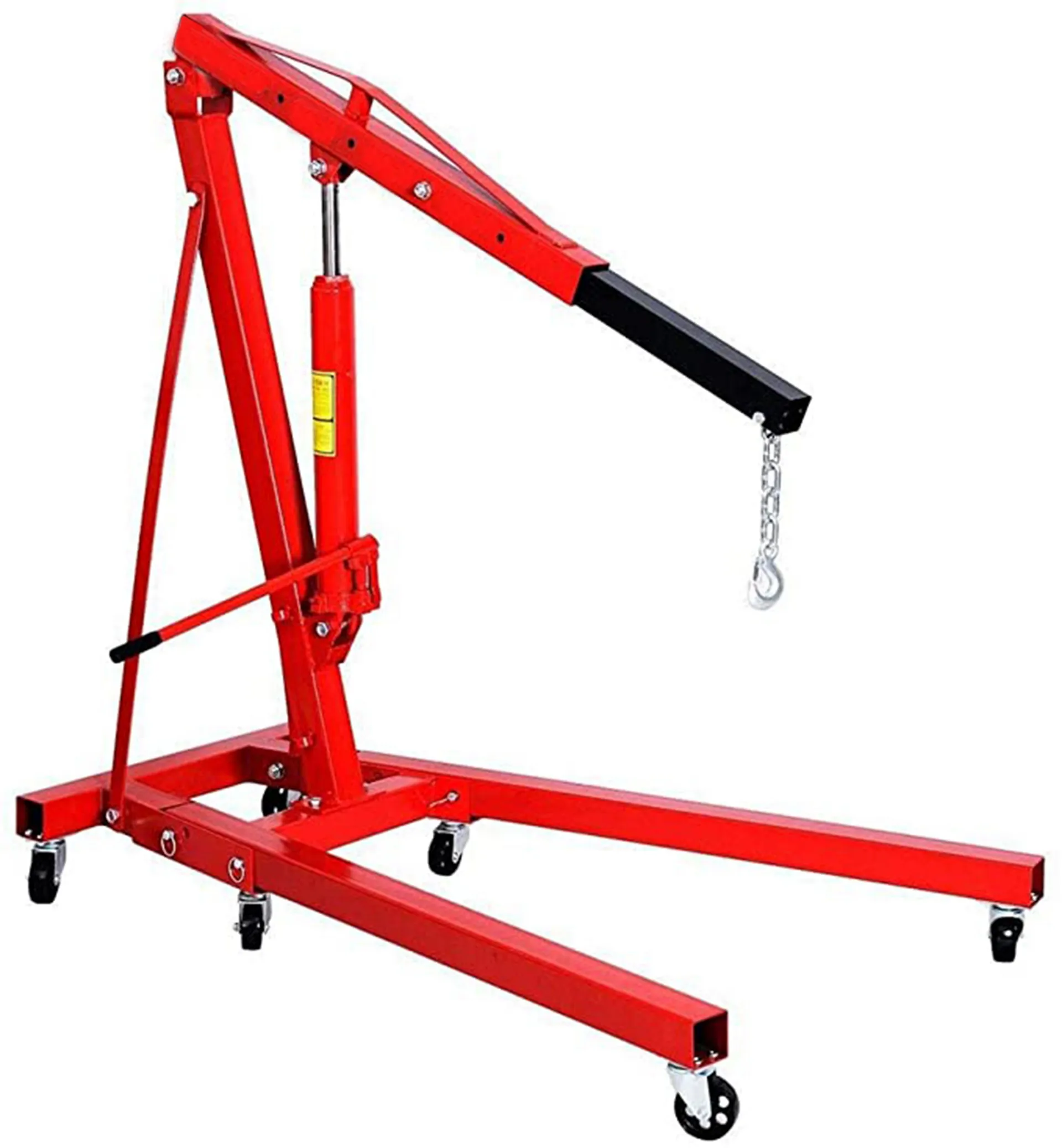
The 2-ton foldable shop crane represents a critical lifting solution in maintenance, repair, and operations (MRO) environments, particularly within automotive, manufacturing, and warehousing sectors. Positioned within the broader family of mobile gantry cranes, it distinguishes itself through its compact storage footprint achieved via a foldable boom and frame. Its core performance characteristics center around its lifting capacity, reach, and portability. A primary industry pain point this crane addresses is the limited overhead space common in many workshops, where traditional overhead cranes are impractical. Furthermore, the intermittent need for heavy lifting necessitates a solution more adaptable and cost-effective than permanent crane installations. This crane offers a balance between lifting capacity and maneuverability, allowing operators to safely and efficiently move loads where fixed cranes cannot.
Material Science & Manufacturing
The construction of a 2-ton foldable shop crane relies on a carefully selected combination of materials to achieve structural integrity, durability, and manageable weight. The boom, typically a multi-segmented structure, is primarily constructed from high-strength carbon steel, specifically ASTM A572 Grade 50, chosen for its yield strength (minimum 50 ksi) and weldability. Critical weld points undergo radiographic and ultrasonic inspection to ensure the absence of internal flaws. The frame and base utilize similarly graded steel, often incorporating rectangular hollow sections for optimized bending resistance. The hydraulic cylinder responsible for lifting is constructed from a honed cylinder tube made of AISI 1045 steel, offering good wear resistance, and a hardened chrome-plated piston rod to prevent corrosion. The hydraulic fluid itself is typically a mineral-based ISO VG 46 oil, selected for its viscosity index and thermal stability. Manufacturing processes involve precision cutting and forming of steel components via CNC laser cutting and hydraulic press braking. Welding is performed using the Gas Metal Arc Welding (GMAW) process, adhering to AWS D1.1 structural welding code. Critical parameters monitored during manufacturing include weld penetration, heat input, and dimensional accuracy. Chain hoists, used in conjunction with the hydraulic system, employ alloy steel chains (typically Grade 80 or higher) subjected to rigorous tensile testing and proof load verification according to EN 818-7 standards. Folding mechanisms utilize hardened steel pins and bushings, ensuring smooth operation and minimal wear.
Performance & Engineering
The performance of a 2-ton foldable shop crane is dictated by several key engineering considerations. Static load analysis, employing Finite Element Analysis (FEA) software, is crucial to validating the structural integrity of the boom and frame under maximum load conditions. Buckling analysis is specifically performed on the boom segments to ensure stability. Dynamic load considerations, including shock loading during lifting and lowering, are accounted for with appropriate safety factors. The hydraulic system is designed to deliver a smooth and controlled lifting motion. The hydraulic pump's flow rate directly impacts lifting speed, while the pressure relief valve prevents overloading. Stability is a paramount concern; the base footprint must be sufficient to counteract overturning moments generated by off-center loads. The crane’s stability is often evaluated using a tipping load test, determining the load at which the crane begins to tip. Environmental resistance is addressed through corrosion-resistant coatings (e.g., powder coating) and the selection of materials suitable for the operating temperature range. Compliance with ASME B30.31 standards for mobile gantry cranes is essential, encompassing requirements for load testing, inspection, and operator training. The folding mechanism’s geometry must be carefully designed to ensure smooth operation and prevent binding, using kinematic analysis to optimize linkage angles and minimize stress concentrations. Furthermore, the locking mechanisms securing the crane in the open and closed positions must reliably prevent unintended movement.
Technical Specifications
| Parameter | Specification | Testing Standard | Tolerance |
|---|---|---|---|
| Lifting Capacity | 2000 kg (4409 lbs) | ISO 6095 | ±5% |
| Maximum Lifting Height | 2.7 m (8.9 ft) | Manufacturer Specification | ±2% |
| Boom Length (Extended) | 1.5 m (4.9 ft) | Manufacturer Specification | ±1% |
| Folded Dimensions (L x W x H) | 1.8 m x 0.7 m x 1.9 m | Manufacturer Specification | ±3% |
| Base Width | 1.3 m (4.3 ft) | Manufacturer Specification | ±2% |
| Hydraulic System Pressure | 25 MPa (3625 psi) | ISO 6022 | ±5% |
Failure Mode & Maintenance
Failure modes in 2-ton foldable shop cranes can be categorized into mechanical, hydraulic, and structural failures. Mechanical failures include chain hoist component wear (e.g., chain links, sprockets) leading to reduced lifting capacity or chain breakage. Fatigue cracking can occur in the boom segments around weld points, especially under cyclical loading, initiating from stress concentrations. Hydraulic system failures encompass pump wear, valve malfunctions causing erratic lifting speeds, and cylinder seal leaks resulting in pressure loss. Structural failures involve bending or buckling of the boom under excessive load or corrosion weakening the frame. Oxidation of steel components, particularly in humid environments, can lead to material degradation and reduced load-bearing capacity. Maintenance procedures should include regular visual inspection for cracks, corrosion, and damaged components. Hydraulic fluid levels must be checked and maintained, with fluid changes performed according to manufacturer recommendations (typically every 6-12 months). Chain hoists require periodic lubrication and inspection for wear. Welded joints should be inspected using non-destructive testing (NDT) methods (e.g., dye penetrant testing) at specified intervals. Proper storage practices, protecting the crane from environmental exposure, are crucial to preventing corrosion. Overloading the crane significantly accelerates wear and increases the risk of catastrophic failure. Regular load testing, performed by qualified personnel, verifies the crane’s continued lifting capacity. Any component exhibiting signs of wear or damage should be promptly replaced.
Industry FAQ
Q: What is the recommended load testing frequency for this crane?
A: The recommended load testing frequency is dictated by ASME B30.31 standards, typically requiring a proof load test (125% of rated capacity) annually, or after any major repair or modification. A periodic inspection should be performed more frequently – at least every 6 months – to identify potential issues before they escalate.
Q: What type of hydraulic fluid is compatible with the crane's system?
A: The crane is designed to operate with ISO VG 46 mineral-based hydraulic oil. Using fluids with different viscosities or compositions can damage the pump and seals, voiding the warranty. Ensure the fluid meets the manufacturer’s specifications for demulsibility and anti-wear properties.
Q: What are the implications of exceeding the crane's rated lifting capacity?
A: Exceeding the rated lifting capacity significantly increases the risk of structural failure, potentially leading to catastrophic collapse and severe injury. It also accelerates wear on all components, shortening the crane’s lifespan and increasing maintenance costs. Operating beyond the rated capacity voids the manufacturer's warranty.
Q: How should the crane be stored to prevent corrosion?
A: The crane should be stored indoors in a dry, well-ventilated area. If outdoor storage is unavoidable, it must be covered with a waterproof tarp and elevated off the ground to prevent direct contact with moisture. Regular application of a corrosion inhibitor is also recommended.
Q: What training is required for operators of this crane?
A: Operators must receive comprehensive training on crane operation, load rigging, safety procedures, and inspection protocols, in accordance with OSHA 29 CFR 1926.602 and ASME B30 standards. Certification of competence is highly recommended. Training should cover hazard identification, proper lifting techniques, and emergency procedures.
Conclusion
The 2-ton foldable shop crane offers a versatile and practical solution for intermittent heavy lifting tasks in environments where space is constrained. Its robust construction, utilizing high-strength steels and reliable hydraulic systems, ensures safe and efficient operation when properly maintained and operated within its specified parameters. Understanding the material science, manufacturing processes, and potential failure modes is critical for maximizing the crane’s lifespan and minimizing downtime.
Looking forward, advancements in material technology, such as the implementation of higher-strength, lighter-weight alloys, could further enhance the crane's lifting capacity and portability. Integration of smart sensor technology for real-time load monitoring and predictive maintenance could also improve safety and reduce operational costs. Continued adherence to industry standards and best practices remains paramount for ensuring the long-term reliability and safety of these essential lifting tools.
