Introduction
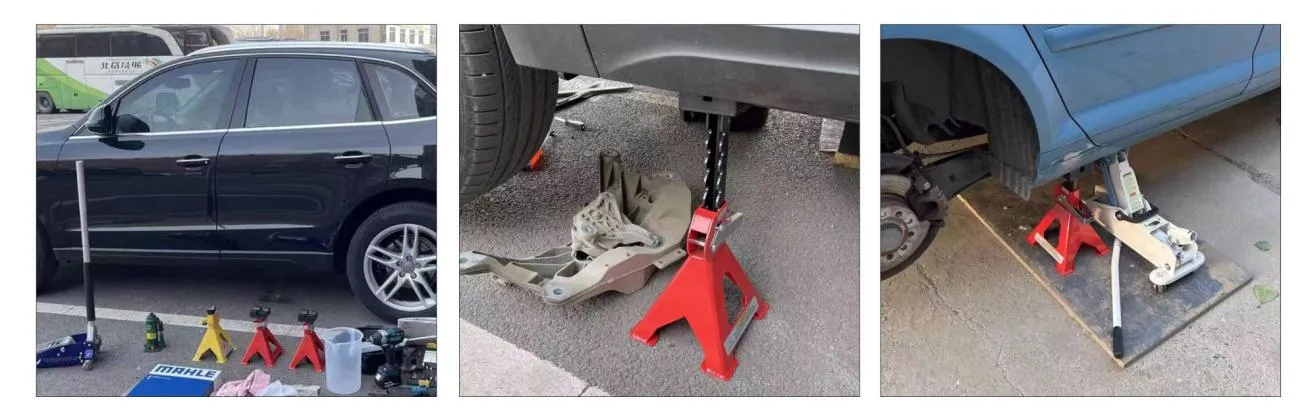
Four jack stands are critical lifting and support equipment utilized extensively in automotive repair, construction, maintenance, and various industrial applications. Positioned within the vehicle service and heavy equipment maintenance supply chain, they function as static load-bearing devices following the dynamic lift provided by a jack. Their core performance characteristics revolve around maintaining a stable and secure elevated platform for personnel to safely work beneath heavy loads. Unlike hydraulic jacks which provide lift but limited stability for extended periods, jack stands offer unwavering support. A key pain point in the industry is ensuring adequate load capacity combined with a stable footprint, minimizing the risk of collapse and subsequent injury or equipment damage. Understanding their material composition, manufacturing processes, and load-bearing capabilities is paramount to safe and effective utilization.
Material Science & Manufacturing
The primary material in most four jack stand constructions is steel, specifically carbon steel, chosen for its high yield strength and relatively low cost. Higher-end models may utilize alloy steels (e.g., 4140 chromium-molybdenum alloy) for increased tensile strength and resistance to deformation under sustained loads. The steel is typically manufactured via a hot-rolling process, producing structural shapes like rectangular tubing or I-beams for the stand’s upright supports and base. The pawl mechanism, responsible for the ratcheting height adjustment, is typically constructed from hardened tool steel (e.g., AISI 1045) to withstand repeated stress and prevent wear. Manufacturing processes include welding (typically shielded metal arc welding or gas metal arc welding) to assemble the structural components. Critical parameter control during welding focuses on achieving full penetration welds, minimizing porosity, and ensuring proper heat treatment to prevent weld metal cracking. Surface treatment invariably involves powder coating or painting, providing corrosion resistance. The saddle, or load contact point, is often constructed of reinforced polymers (e.g., polypropylene) or cast iron with a textured surface to enhance grip and reduce slippage. Quality control focuses on dimensional accuracy, weld integrity (using non-destructive testing methods like ultrasonic or radiographic inspection), and verification of the pawl mechanism’s locking functionality.
Performance & Engineering
Performance of a four jack stand is fundamentally dictated by its load capacity, stability, and height adjustment range. Load capacity is determined by the yield strength of the steel used and the geometry of the stand's structural members, calculated using principles of structural mechanics (bending moments, shear forces, and buckling analysis). Stability is achieved through a wide base design, minimizing the center of gravity and preventing tipping. Finite Element Analysis (FEA) is routinely employed in the design phase to simulate stress distribution under various load conditions and identify potential weak points. The pawl mechanism is engineered to provide positive locking at discrete height intervals, preventing unintended descent. Safety factors, typically in the range of 3:1 to 5:1, are applied to the calculated load capacity to account for dynamic loading, material variability, and unforeseen stresses. Compliance requirements often include adherence to ASME B30.23 standards (Safety Standard for Hydraulic and Pneumatic Hoists) although jack stands are not directly covered, the principles of safe lifting and load support are applicable. Environmental resistance is also crucial; prolonged exposure to moisture and corrosive substances can compromise the steel’s integrity. The design must consider protection against corrosion and potential degradation of polymeric components.
Technical Specifications
| Load Capacity (per stand) | Minimum Height | Maximum Height | Base Width |
|---|---|---|---|
| 3 Ton (6,600 lbs / 3,000 kg) | 11 inches (279 mm) | 16.5 inches (419 mm) | 8 inches (203 mm) |
| 6 Ton (13,200 lbs / 6,000 kg) | 14 inches (356 mm) | 24 inches (610 mm) | 10 inches (254 mm) |
| 10 Ton (22,000 lbs / 10,000 kg) | 16 inches (406 mm) | 30 inches (762 mm) | 12 inches (305 mm) |
| 3 Ton (6,600 lbs / 3,000 kg) - Heavy Duty | 10 inches (254 mm) | 18 inches (457 mm) | 9 inches (229 mm) |
| 6 Ton (13,200 lbs / 6,000 kg) - Low Profile | 3.5 inches (89 mm) | 12 inches (305 mm) | 7 inches (178 mm) |
| 3 Ton (6,600 lbs / 3,000 kg) - Steel Saddle | 12 inches (305 mm) | 17 inches (432 mm) | 8 inches (203 mm) |
Failure Mode & Maintenance
Common failure modes in four jack stands include: Yielding/Buckling: Occurs when the load exceeds the stand's capacity, causing permanent deformation or catastrophic collapse. This is particularly prevalent in stands with thin-walled structural members. Pawl Mechanism Failure: Wear or damage to the pawl or its mating ratchet teeth can prevent proper locking, leading to a sudden drop in height. Weld Failure: Poorly executed welds are susceptible to cracking under cyclic loading or impact. Corrosion: Rust weakens the steel structure, reducing its load-bearing capacity. Saddle Degradation: Polymer saddles can crack or wear over time, reducing grip and potentially allowing the load to slip. Maintenance should include regular visual inspection for signs of corrosion, weld cracks, or damage to the pawl mechanism. Lubrication of the pawl mechanism with a light oil prevents sticking and ensures smooth operation. Stands should be cleaned regularly to remove dirt, grease, and corrosive substances. Periodic load testing (using a calibrated load cell) is recommended to verify continued compliance with the rated capacity. Damaged or corroded stands should be removed from service immediately.
Industry FAQ
Q: What is the difference between dynamic and static load capacity?
A: Static load capacity refers to the maximum weight a jack stand can safely support when the load is applied gradually and remains constant. Dynamic load capacity considers the impact forces and vibrations encountered during lifting and lowering operations. Jack stands are typically rated for static load only; dynamic loading significantly reduces the safe working load.
Q: How often should jack stands be inspected?
A: Jack stands should be inspected before each use and at least annually as part of a comprehensive safety program. Inspections should focus on structural integrity, weld quality, pawl mechanism functionality, and corrosion.
Q: What steel grade is commonly used for jack stand construction?
A: Carbon steel (typically A36) is the most common material. Higher-capacity stands often employ alloy steels like 4140 for increased strength. The specific grade should be clearly marked on the stand.
Q: Is it safe to exceed the rated load capacity of a jack stand, even slightly?
A: Absolutely not. Exceeding the rated load capacity compromises the structural integrity of the stand and dramatically increases the risk of failure, potentially leading to serious injury or equipment damage.
Q: What is the purpose of the safety pin on the jack stand?
A: The safety pin provides an additional layer of security by physically preventing the pawl mechanism from retracting in the event of a malfunction. It’s crucial to ensure the safety pin is always properly installed before use.
Conclusion
Four jack stands are indispensable components of any safe lifting and support system. Their reliable performance is predicated on careful material selection, robust manufacturing processes, and adherence to established engineering principles. Understanding the potential failure modes and implementing a diligent maintenance program are critical for maximizing safety and longevity.
Moving forward, advancements in jack stand design will likely focus on incorporating lightweight materials (e.g., high-strength aluminum alloys) to reduce operator fatigue, integrating smart sensors to monitor load distribution and stability, and enhancing corrosion protection through advanced surface treatments. Continued adherence to relevant safety standards and best practices will remain paramount.
