Introduction
6-ton floor jack stands are critical lifting and support equipment utilized extensively in automotive repair, heavy machinery maintenance, construction, and industrial settings. Positioned downstream from steel manufacturing and hydraulic component production, these stands represent a vital safety component. Their primary function is to securely elevate and hold a load after lifting via a floor jack, allowing technicians to perform work beneath the elevated object. Core performance characteristics center around static load capacity, stability under load, adjustable height range, and adherence to stringent safety standards. A key pain point for industry users revolves around ensuring consistent weld quality, material traceability for critical components, and preventing premature failure due to overload or corrosion. The market demands robust stands capable of withstanding repeated use in demanding environments, offering a reliable and stable platform for worker safety and efficient operations.
Material Science & Manufacturing
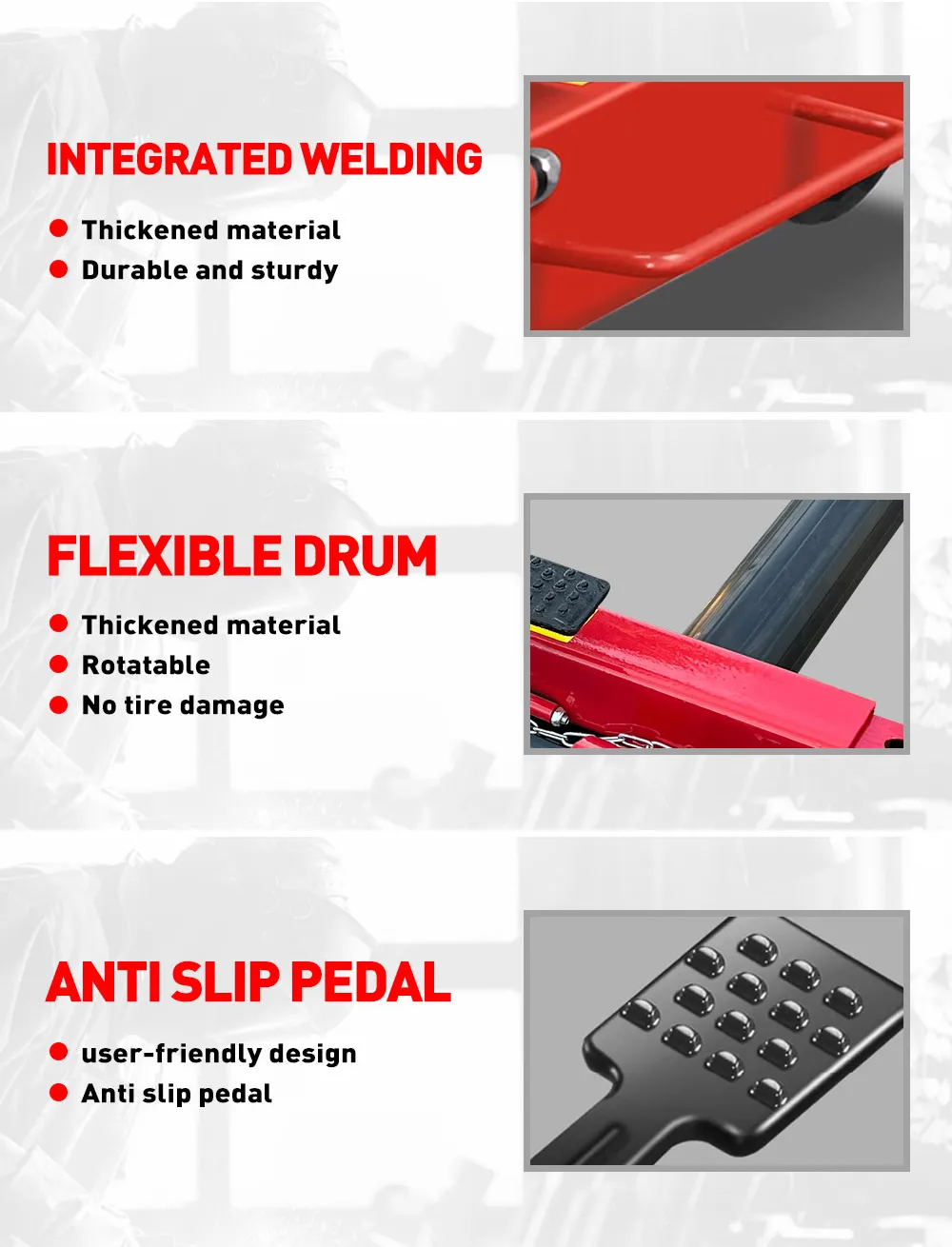
The majority of 6-ton floor jack stands utilize structural grade steel, typically ASTM A36 or equivalent, for the main support columns and base. The steel's yield strength (typically around 36,000 psi) and tensile strength are critical for withstanding the applied load. Lower-grade steels are sometimes employed in non-critical components, but must still meet minimum thickness specifications. Welding is a crucial manufacturing process, primarily employing Shielded Metal Arc Welding (SMAW) or Gas Metal Arc Welding (GMAW) processes. Proper weld penetration, absence of porosity, and consistent weld bead geometry are paramount for structural integrity. Welding parameters, including amperage, voltage, and travel speed, are rigorously controlled and subject to Non-Destructive Testing (NDT) such as visual inspection, magnetic particle inspection (MPI), and ultrasonic testing (UT) to detect defects. The saddle (contact point with the vehicle/load) often incorporates a high-density polyethylene (HDPE) or polyurethane pad to prevent damage to the load surface and enhance grip. The adjustment mechanism typically involves a telescoping design with a locking pin manufactured from alloy steel, hardened and tempered for high shear strength. The manufacturing process involves cutting, forming, welding, machining, and surface treatment (typically powder coating or painting) to enhance corrosion resistance.
Performance & Engineering
The performance of 6-ton floor jack stands is governed by principles of statics and material science. Force analysis dictates that the load is distributed across the four contact points of the base, creating compressive stress within the steel columns. The buckling resistance of the columns is a critical design parameter, influenced by the column length, cross-sectional area, and material properties. Finite Element Analysis (FEA) is commonly employed during the design phase to simulate stress distribution under various load conditions and identify potential failure points. Stability is also influenced by the base geometry; a wider base provides increased resistance to tipping. The locking mechanism must provide sufficient friction or positive engagement to prevent unintentional collapse under load. Environmental resistance considerations include corrosion protection, particularly in environments exposed to moisture, salt, or chemicals. Compliance requirements, as dictated by organizations like ANSI/ASME (American National Standards Institute/American Society of Mechanical Engineers), mandate minimum load testing, stability testing, and material certification. The stands must maintain their load-bearing capacity even after repeated cycles of loading and unloading.
Technical Specifications
| Capacity (tons) | Minimum Height (in) | Maximum Height (in) | Base Width (in) |
|---|---|---|---|
| 6 | 13.75 | 27.5 | 30 |
| 6 | 11.8 | 23.6 | 27 |
| 6 | 15 | 29 | 32 |
| 6 | 12 | 24 | 28 |
| 6 | 14 | 28 | 31 |
| 6 | 10 | 22 | 25 |
Failure Mode & Maintenance
Common failure modes in 6-ton floor jack stands include: 1) Weld failure: Cracking or rupture of welds due to fatigue, stress concentration, or improper welding technique. 2) Material yielding/fracture: Permanent deformation or fracture of the steel columns due to overloading or material defects. 3) Locking mechanism failure: Failure of the locking pin or ratchet mechanism to secure the stand at the desired height, leading to collapse. 4) Corrosion: Rusting and degradation of the steel structure, reducing its load-bearing capacity. 5) Column buckling: Instability and collapse of the support column under compressive load, particularly if the stand is used on an uneven surface. Maintenance involves regular inspection for weld cracks, corrosion, and damage to the locking mechanism. Lubrication of the telescoping mechanism and locking pin is essential for smooth operation. Avoid exceeding the rated capacity, and always use the stands on a level and stable surface. If corrosion is present, remove it with a wire brush and apply a rust preventative coating. Damaged stands should be removed from service immediately and either repaired by a qualified welder or replaced.
Industry FAQ
Q: What is the significance of the ANSI/ASME PASE 2019 standard for floor jack stands?
A: The ANSI/ASME PASE 2019 standard establishes minimum safety requirements for lifting devices, including floor jack stands. Compliance demonstrates that the stand has undergone rigorous testing for load capacity, stability, and durability, providing assurance to users that the product meets industry-accepted safety criteria. Non-compliance can lead to safety hazards and potential legal liabilities.
Q: How does the steel grade affect the lifespan of a floor jack stand?
A: Higher-grade steels with greater yield strength and tensile strength generally result in a longer lifespan, as they are more resistant to deformation and fracture. ASTM A36 is common, but higher alloy steels provide increased durability, particularly in corrosive environments. The quality of the steel also impacts weldability and fatigue resistance.
Q: What are the critical considerations when selecting a floor jack stand for a specific application?
A: The primary consideration is the weight of the object to be supported; the stand's capacity must exceed the load. Height range is also important to ensure sufficient clearance for the work being performed. The base width influences stability, and the type of saddle material should be chosen based on the load surface to prevent damage. Operating environment (indoor/outdoor, exposure to chemicals) also dictates material selection and corrosion protection requirements.
Q: What preventative measures can be taken to minimize the risk of a floor jack stand collapsing?
A: Always use stands in pairs, ensuring they are properly positioned and locked at the same height. Never work under a load supported only by a floor jack; the jack is for lifting, not sustained support. Use the stands on a level and stable surface. Regularly inspect the stands for damage, corrosion, and proper locking mechanism function. Do not exceed the rated capacity.
Q: What is the best method for detecting fatigue cracking in a floor jack stand?
A: Visual inspection is the first line of defense, looking for cracks around welds, stress concentration points, and areas exposed to high loads. However, Non-Destructive Testing (NDT) methods such as Magnetic Particle Inspection (MPI) and Ultrasonic Testing (UT) are far more effective at detecting subsurface cracks that are not visible to the naked eye. Dye penetrant inspection can also reveal surface cracks.
Conclusion
6-ton floor jack stands are indispensable tools in numerous industries, demanding a robust combination of material science, precise manufacturing, and adherence to stringent safety standards. The selection process should prioritize capacity, stability, and compatibility with the application environment. Understanding potential failure modes – primarily weld failure, material yielding, and locking mechanism malfunctions – is critical for preventative maintenance and ensuring long-term operational safety. Regular inspection, proper usage, and adherence to industry regulations like ANSI/ASME PASE 2019 are paramount for minimizing risk and maximizing the service life of these essential lifting support devices.
Future trends in floor jack stand design may focus on the incorporation of smart features such as integrated load sensors, wireless communication for remote monitoring, and the use of advanced materials to reduce weight while maintaining structural integrity. Furthermore, increased emphasis on ergonomic design and user-friendly locking mechanisms will contribute to improved workplace safety and efficiency. Ongoing research into non-destructive testing methods will enable more reliable and accurate detection of potential failures, ultimately enhancing the overall reliability and safety of these critical support components.
