Introduction
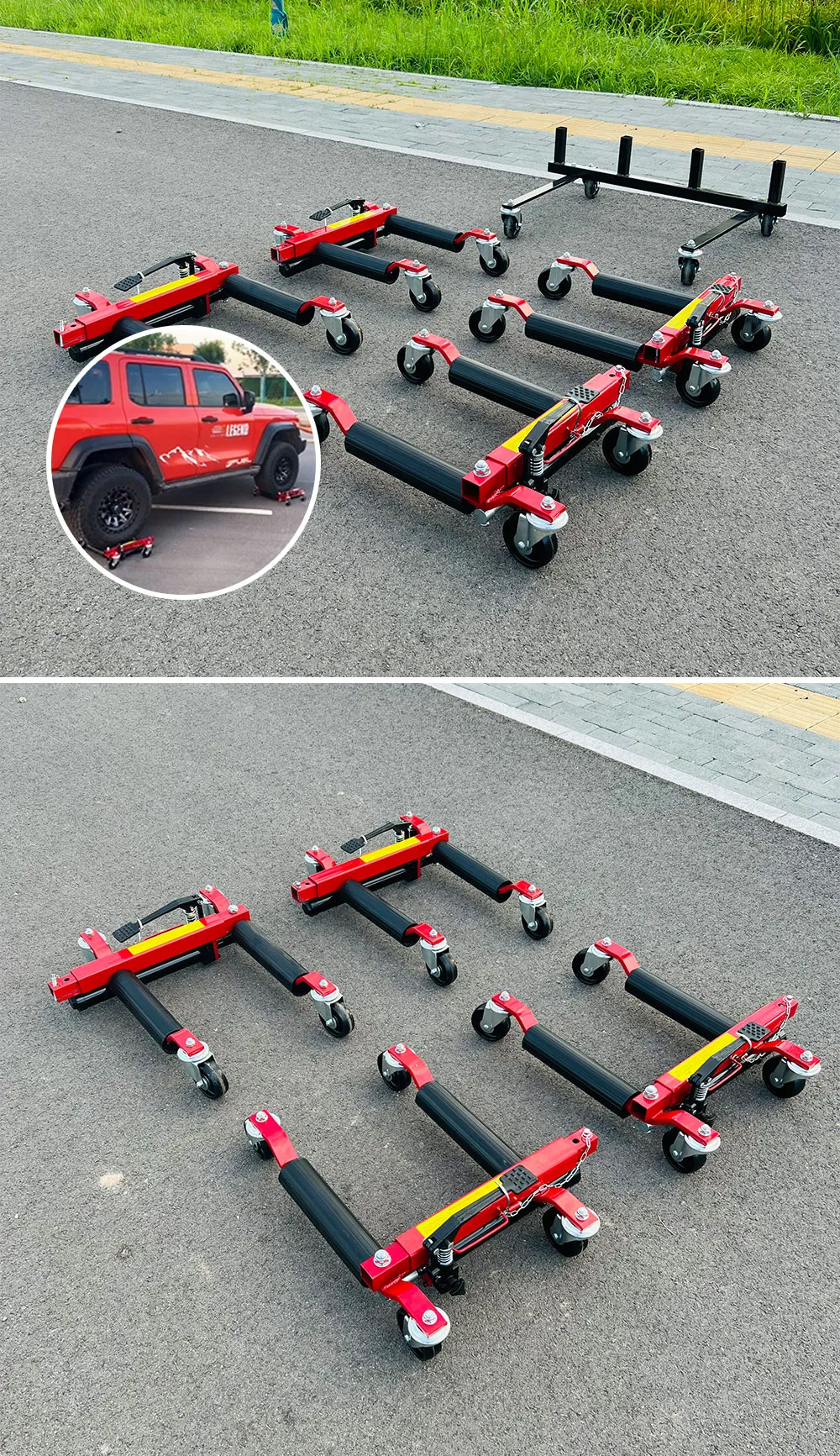
Auto lift jack stands are critical safety components utilized in automotive repair and maintenance, providing stable support for vehicles elevated off the ground. Positioned within the automotive aftermarket, they represent a fundamental element of workshop equipment, integral to procedures ranging from oil changes to comprehensive chassis repairs. Their technical position necessitates high static and dynamic load capacities, combined with robust locking mechanisms to prevent accidental collapse. Core performance characteristics include rated capacity, minimum and maximum height adjustment range, base stability, and the reliability of the locking pawl mechanism. A key industry challenge revolves around ensuring consistent manufacturing quality and adherence to stringent safety standards, particularly given the potential for catastrophic consequences resulting from product failure. This guide provides an in-depth technical overview of auto lift jack stands, covering material science, manufacturing processes, performance engineering, potential failure modes, and relevant industry standards.
Material Science & Manufacturing
The predominant material utilized in auto lift jack stand construction is steel, specifically carbon steel grades such as AISI 1018 or equivalent. These materials are chosen for their high yield strength, tensile strength, and weldability. The steel is often subjected to heat treatment processes like quenching and tempering to enhance hardness and toughness. Manufacturing typically involves several key processes: stamping or forging for creating the base and upright support structures; roll forming or extrusion for the telescoping sections; and welding to assemble the various components. Precise parameter control is essential during welding, with shielding gas composition (typically Argon/CO2 mixtures) and weld current meticulously regulated to prevent porosity and ensure adequate penetration. The locking pawl mechanism relies on high-strength spring steel (e.g., AISI 5160) for its elastic properties and fatigue resistance. Surface treatments like phosphate coating or powder coating are applied to provide corrosion resistance. The quality of the steel is confirmed via chemical composition analysis (ASTM E3) and mechanical property testing (ASTM E8, ASTM E23). Base materials often utilize thicker gauge steel for improved stability and to resist deformation under load. Telescoping sections require tight dimensional tolerances to ensure smooth operation and prevent binding. The manufacturing process also requires stringent quality control checks at each stage, including dimensional inspections, weld quality assessments (visual and non-destructive testing like dye penetrant inspection), and load testing of finished units.
Performance & Engineering
The performance of auto lift jack stands is fundamentally governed by principles of statics and materials science. Force analysis focuses on the load distribution through the stand’s structure, considering both compressive forces on the upright and shear forces on the locking mechanism. Finite Element Analysis (FEA) is commonly employed during the design phase to optimize geometry and minimize stress concentrations. Stability is paramount; the base must provide sufficient footprint to prevent tipping, especially when supporting off-center loads. Environmental resistance is also crucial, necessitating corrosion protection against exposure to moisture, road salts, and automotive fluids. Compliance requirements are dictated by safety standards (detailed in the conclusion) which mandate minimum load capacities, stability criteria, and locking mechanism performance. The locking pawl mechanism's engineering is critical. It must reliably engage and disengage, resisting accidental release under dynamic loads and vibrations. This involves careful selection of spring force, pawl geometry, and friction materials. The angle of the pawl, the depth of engagement, and the surface finish all contribute to the system’s overall reliability. The stand’s height adjustment mechanism must allow for secure locking at various positions, preventing slippage during use. The design also considers buckling prevention in the telescoping sections, ensuring they maintain structural integrity under compressive loads.
Technical Specifications
| Capacity (tons) | Minimum Height (in) | Maximum Height (in) | Base Width (in) |
|---|---|---|---|
| 3 | 11 | 17.5 | 9 |
| 6 | 14 | 24 | 12 |
| 10 | 16 | 30 | 14 |
| 15 | 18 | 36 | 16 |
| 20 | 20 | 42 | 18 |
| 30 | 22 | 48 | 20 |
Failure Mode & Maintenance
Auto lift jack stands are susceptible to several failure modes. Fatigue cracking, particularly around weld points and the locking pawl interface, is a common concern, exacerbated by repeated loading and unloading cycles. Base deformation or buckling can occur if the stand is overloaded or used on uneven surfaces. The locking pawl mechanism can fail due to wear, corrosion, or spring fatigue, leading to accidental collapse. Delamination of any protective coatings (phosphate or powder coat) can lead to corrosion of the underlying steel, reducing its structural integrity. Oxidation, especially in humid environments, can degrade the steel, weakening the stand over time. Proper maintenance is crucial for preventing these failures. Regular inspection should include visual checks for cracks, corrosion, and deformation. The locking pawl mechanism should be tested to ensure smooth operation and secure engagement. Lubrication of telescoping sections and the pawl mechanism with a suitable penetrating oil can prevent binding and corrosion. If cracks are detected, the stand should be immediately removed from service. Avoid exceeding the rated capacity. Ensure the stands are placed on a level, hard surface. Periodic re-coating may be necessary to maintain corrosion protection, especially in harsh environments. Load testing (while not typically performed by end-users) is essential during manufacturing to verify structural integrity and adherence to safety standards.
Industry FAQ
Q: What is the primary cause of jack stand collapse in a professional shop environment?
A: The primary cause is typically operator error, specifically exceeding the rated capacity of the stand or using the stand on an uneven or unstable surface. However, metallurgical failures stemming from fatigue cracking in the pawl mechanism or around weld points are also significant contributors, particularly in stands that haven't undergone rigorous quality control or are subjected to consistent overloading.
Q: How do different steel alloys affect the lifespan and load capacity of a jack stand?
A: Higher-grade steel alloys like AISI 1045 offer superior yield strength and tensile strength compared to AISI 1018, allowing for higher load capacities and improved resistance to deformation. The use of alloy steels also enhances fatigue resistance, prolonging the lifespan of the stand under repeated loading. Spring steel (AISI 5160) is critical for the pawl mechanism, providing the necessary elasticity and fatigue resistance.
Q: What are the critical parameters to consider when evaluating the stability of a jack stand?
A: Base width is a primary factor; a wider base provides greater stability. The height-to-base ratio is also critical – a lower center of gravity (achieved with a lower overall height and wider base) increases stability. The surface on which the stand is placed is crucial; it must be level and hard. Finally, the distribution of the load – avoiding off-center loading – significantly affects stability.
Q: What types of non-destructive testing (NDT) are commonly employed during jack stand manufacturing?
A: Dye penetrant inspection (DPI) is widely used to detect surface cracks in welds and the base material. Ultrasonic testing (UT) can detect internal flaws. Magnetic particle inspection (MPI) is also employed to identify surface and near-surface defects. Visual inspection is the most common and initial stage of quality control, assessing weld quality and overall appearance.
Q: How does powder coating contribute to the long-term performance and safety of a jack stand?
A: Powder coating provides a durable, corrosion-resistant barrier that protects the steel from environmental factors like moisture, road salts, and automotive fluids. This prevents oxidation and degradation of the steel, maintaining its structural integrity and extending the lifespan of the stand. A high-quality powder coating also enhances the stand's appearance and provides a slightly textured surface for improved grip.
Conclusion
Auto lift jack stands are essential safety devices demanding careful material selection, precise manufacturing processes, and rigorous quality control. The core performance relies on a complex interplay of mechanical engineering principles, material properties, and adherence to stringent safety standards. Failure analysis highlights the critical importance of preventing fatigue cracking, corrosion, and overloading. Selecting stands with appropriate capacity, maintaining them diligently, and adhering to safe operating procedures are paramount to prevent catastrophic incidents.
Future advancements may involve the integration of smart sensors to monitor load levels and provide real-time alerts in case of overload. Further research into advanced materials and coatings could enhance corrosion resistance and reduce weight. Continuous refinement of locking mechanism designs will remain a crucial area of development to improve reliability and prevent accidental collapse. The ongoing emphasis on safety regulations and industry standards will continue to drive innovation and improve the overall performance and safety of auto lift jack stands.
