Introduction
Automatic scissor jacks represent a significant advancement in vehicle lifting technology, offering a powered alternative to traditional manual jacks. Positioned within the automotive aftermarket and emergency roadside assistance equipment supply chain, these devices utilize an electromechanical system to raise and lower a vehicle. Core performance characteristics are defined by lifting capacity (typically ranging from 1.5 to 3 tons), lifting speed, and operational voltage (commonly 12V DC sourced from the vehicle’s electrical system). A primary industry pain point lies in ensuring robust design to withstand repetitive stress and environmental factors while maintaining operational safety and reliability. The inherent complexity of integrating electronic controls with mechanical lifting systems necessitates rigorous testing and adherence to stringent safety standards. Furthermore, consistent performance across varying temperatures and vehicle weights is a crucial performance metric.
Material Science & Manufacturing
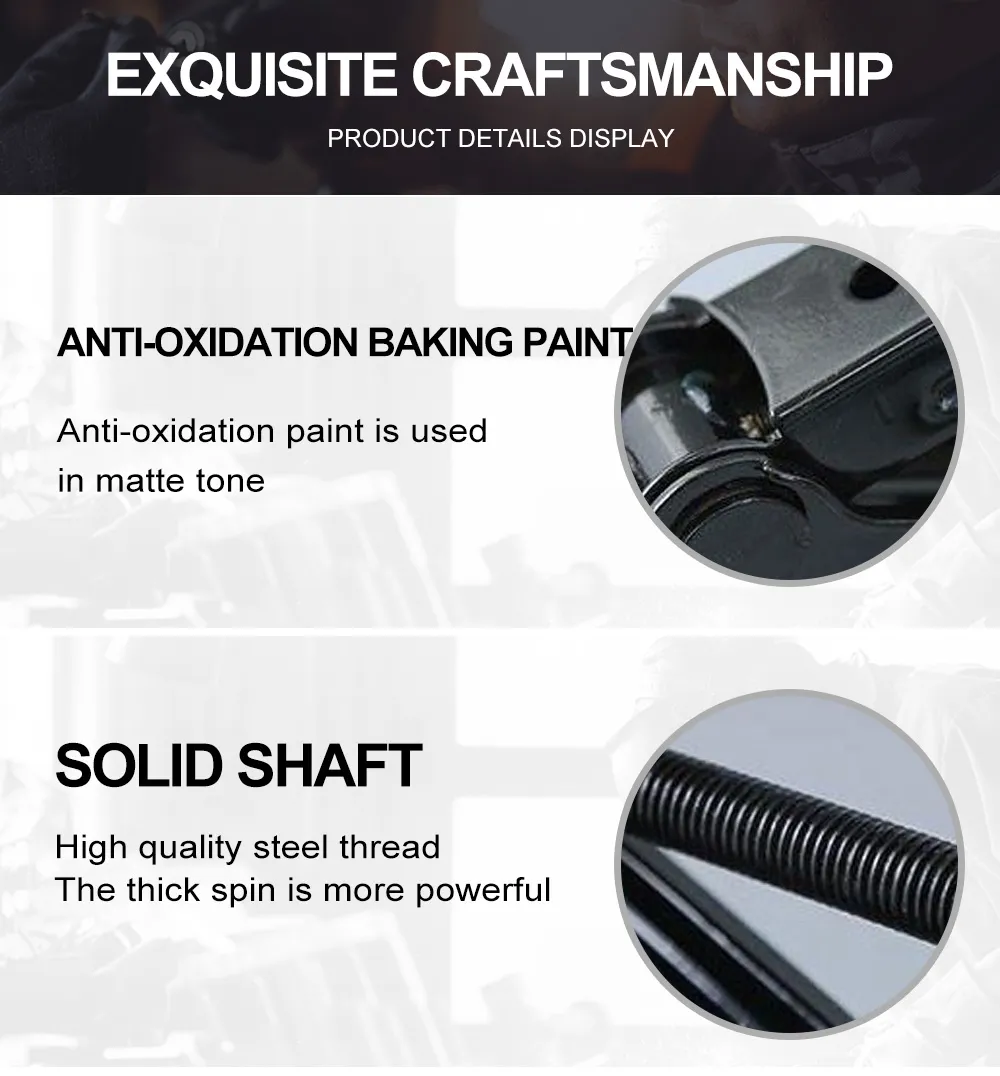
The construction of automatic scissor jacks relies on a combination of materials selected for their strength, durability, and weight characteristics. The primary structural components – the scissor mechanism itself – are typically manufactured from medium carbon steel (e.g., AISI 1045) due to its high yield strength and weldability. This steel undergoes heat treatment processes, such as quenching and tempering, to enhance its hardness and resistance to fatigue. The screw spindle, responsible for driving the scissor mechanism, is frequently crafted from alloy steel (e.g., 4140) for superior tensile strength and resistance to shear stress. Gearboxes, integral to power transmission, employ hardened steel gears, often case-hardened to increase surface hardness while maintaining core ductility. The housing is commonly constructed from polypropylene or ABS plastic, offering impact resistance and corrosion protection. Manufacturing processes involve precision machining of steel components, robotic welding for structural integrity, and injection molding for plastic parts. Key parameter control during manufacturing focuses on weld quality (ensuring complete fusion and minimal porosity), gear backlash (minimizing power loss and noise), and dimensional accuracy of the scissor linkage to prevent binding and ensure smooth operation. Electromotor selection centers on DC motors with sufficient torque output and thermal stability under continuous load. Lubrication with high-performance grease (lithium complex based) is critical to reduce friction and wear in all moving parts.
Performance & Engineering
Performance analysis of automatic scissor jacks necessitates a detailed understanding of force distribution and structural mechanics. The lifting force is generated by the electric motor driving the screw spindle, which translates rotary motion into linear displacement of the scissor arms. Force analysis considers the vehicle's weight, the geometry of the scissor linkage, and the mechanical advantage of the screw thread. Environmental resistance is a critical engineering consideration. Components must withstand exposure to road salt, moisture, and temperature extremes (-20°C to 60°C). Corrosion protection is achieved through surface treatments such as galvanizing or powder coating on steel parts and the use of UV-stabilized polymers for plastic components. Compliance requirements dictate adherence to safety standards such as CE marking (European Union) and SAE J676 (Society of Automotive Engineers). Functional implementation requires integration of safety features, including overload protection (to prevent damage to the motor and jack), anti-rollback mechanisms (to prevent accidental lowering during operation), and emergency stop functionality. Thermal management is also crucial; continuous operation can lead to motor overheating, requiring heat sinks or forced-air cooling. The stability of the jack during lifting is paramount, necessitating a robust base and careful consideration of the vehicle’s contact points.
Technical Specifications
| Lifting Capacity (tons) | Lifting Height (mm) | Operating Voltage (V DC) | Current Draw (Amps) |
|---|---|---|---|
| 1.5 | 330 | 12 | 15 |
| 2.0 | 380 | 12 | 20 |
| 2.5 | 420 | 12 | 25 |
| 3.0 | 450 | 12 | 30 |
| 1.5 | 300 | 24 | 10 |
| 2.0 | 350 | 24 | 12 |
Failure Mode & Maintenance
Automatic scissor jacks are susceptible to several failure modes. Fatigue cracking in the scissor linkage is a common issue, stemming from repetitive stress during lifting and lowering. This is exacerbated by overloading or improper use. Delamination can occur in the plastic housing due to UV degradation or impact damage. Gearbox failure, manifested as excessive noise or inability to lift, results from wear and tear on the gears or lubrication failure. Motor burnout is frequently caused by overheating due to prolonged operation or inadequate ventilation. Electrical failures can arise from corroded connectors, damaged wiring, or a faulty control module. Oxidation of steel components, particularly in corrosive environments, can lead to reduced strength and functionality. Preventive maintenance includes regular inspection for cracks, corrosion, and wear. Lubrication of moving parts with appropriate grease is essential. Electrical connections should be checked for corrosion and tightened as needed. The jack should be stored in a dry, clean environment to prevent corrosion. Avoid exceeding the specified lifting capacity, and ensure the jack is placed on a level, stable surface before operation. If unusual noises or erratic behavior are observed, the jack should be immediately removed from service for inspection and repair. Replacement of worn or damaged components should be performed by qualified personnel using OEM-approved parts.
Industry FAQ
Q: What is the impact of temperature on the jack's lifting capacity?
A: Extreme temperatures can affect the viscosity of the lubricating grease and the performance of the electric motor. Lower temperatures can increase grease viscosity, potentially reducing lifting speed and increasing current draw. Higher temperatures can lead to motor overheating and reduced efficiency. Specifications typically define an operating temperature range; operation outside this range may compromise lifting capacity and safety.
Q: How does the design mitigate the risk of rollback during operation?
A: Most automatic scissor jacks incorporate a self-locking mechanism within the gearbox. This mechanism prevents the screw spindle from rotating backwards under load, effectively preventing rollback. Additionally, some models feature an electronic brake system that locks the motor shaft in place when power is removed.
Q: What materials are used to prevent corrosion, and what is their lifespan?
A: Steel components are typically protected by galvanizing or powder coating, offering a lifespan of 5-10 years under normal operating conditions. Plastic housings utilize UV-stabilized polypropylene or ABS. While plastic is inherently corrosion-resistant, UV degradation can occur over time (typically 3-5 years), potentially leading to cracking or discoloration.
Q: What are the key differences between 12V and 24V models, and which is preferred for heavy-duty applications?
A: 24V models generally offer higher torque output and improved efficiency compared to 12V models, making them more suitable for heavy-duty applications. They also tend to draw less current for the same lifting capacity, reducing the load on the vehicle's electrical system. However, 24V systems require a more complex power supply or a vehicle equipped with a 24V electrical system.
Q: What safety certifications are typically required for automatic scissor jacks sold in the US and Europe?
A: In the US, compliance with SAE J676 is a common requirement. In Europe, CE marking is mandatory, demonstrating adherence to relevant European safety directives, including those related to electrical safety and mechanical safety. Independent testing and certification by organizations like TÜV Rheinland or UL can further enhance product credibility.
Conclusion
Automatic scissor jacks represent a sophisticated evolution in vehicle lifting technology, offering convenience and efficiency over traditional manual methods. The performance and longevity of these devices are intrinsically linked to careful material selection, precision manufacturing, and robust design that addresses potential failure modes. Understanding the interplay between mechanical forces, electrical controls, and environmental factors is crucial for ensuring safe and reliable operation.
Future developments in this area will likely focus on incorporating smart features such as remote control operation via mobile apps, integrated diagnostic systems for predictive maintenance, and the use of lightweight materials (e.g., aluminum alloys) to further reduce weight and improve portability. Continued refinement of safety mechanisms and adherence to evolving industry standards will remain paramount.
