Introduction
Car lift jack stands are critical safety components used in automotive repair and maintenance. They provide stable support for vehicles elevated by a lift or jack, enabling technicians to perform work underneath. Unlike hydraulic jacks which are intended for lifting only, jack stands are designed for sustained load-bearing, preventing accidental lowering in the event of hydraulic failure or component malfunction. Their position in the automotive service industry chain is foundational – any professional or serious DIY automotive work requiring under-vehicle access relies on their dependable performance. Core performance metrics center around load capacity, stability under load, and adherence to rigorous safety standards. A key pain point in the industry is ensuring adequate capacity for modern, heavier vehicles, especially trucks and SUVs, coupled with robust locking mechanisms to prevent collapse. Concerns also extend to material fatigue over time and the potential for corrosion, impacting long-term reliability.
Material Science & Manufacturing
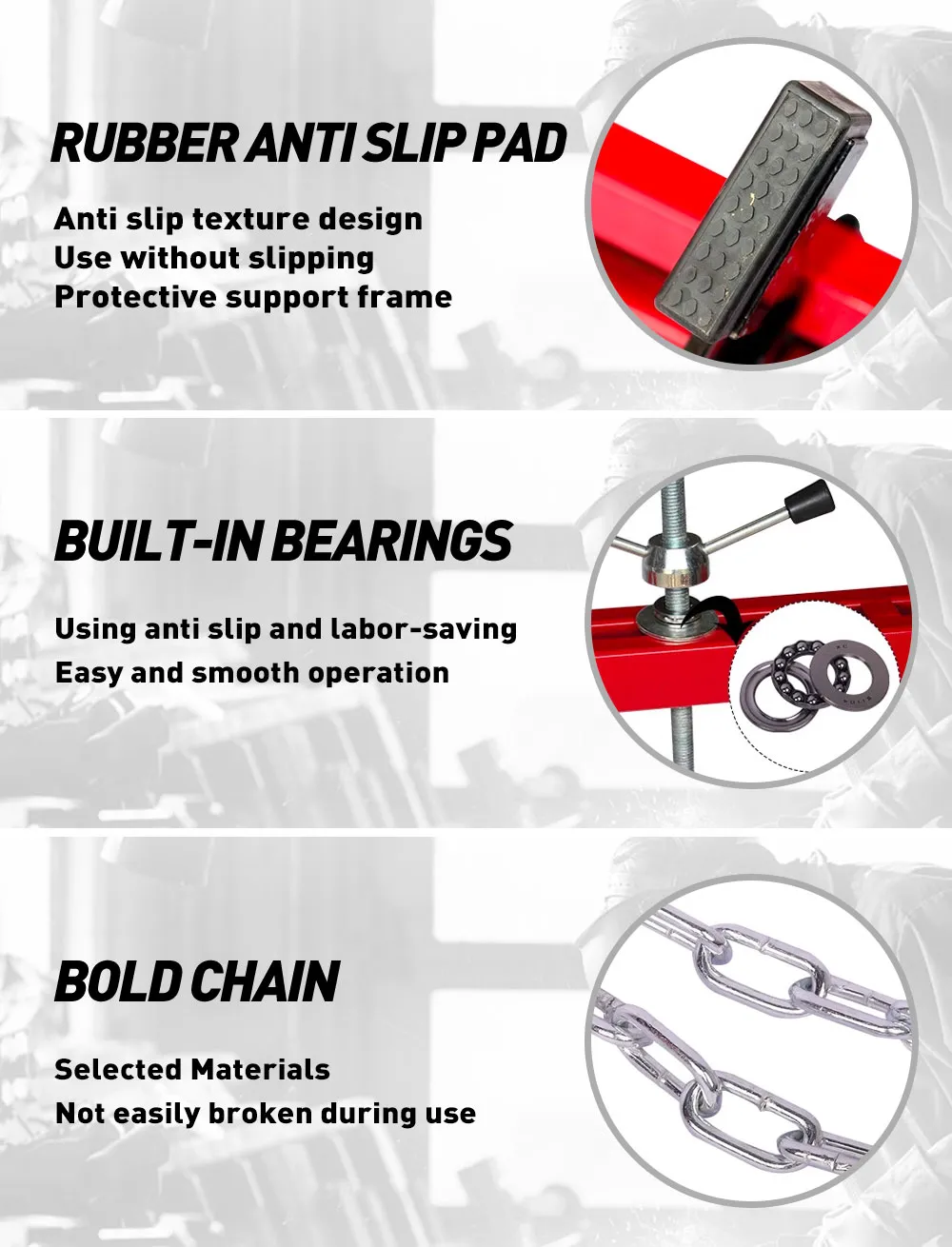
The predominant material in car lift jack stand construction is steel, specifically carbon steel alloys such as ASTM A572 Grade 50 or equivalent. This choice is driven by the high tensile strength and yield strength required to withstand substantial loads without permanent deformation. Manufacturing processes typically involve steel plate cutting (using CNC plasma or laser cutting), bending, and welding. Welding is a critical process; Shielded Metal Arc Welding (SMAW) or Gas Metal Arc Welding (GMAW) are commonly employed, requiring certified welders and adherence to AWS D1.1 structural welding code. Parameter control during welding is paramount: heat input, weld metal composition, and shielding gas purity directly impact weld integrity and prevent hydrogen embrittlement. Locking mechanisms utilize spring steel (SAE 675 or equivalent) for pawl components due to its high elasticity and fatigue resistance. Surface treatment typically includes powder coating or painting, providing corrosion resistance. The chemical composition of the coating is selected for compatibility with automotive fluids (oils, brake cleaner, etc.). Quality control involves non-destructive testing (NDT) methods like visual inspection, magnetic particle inspection (MPI) to detect surface cracks, and ultrasonic testing (UT) for internal flaw detection. The selection of appropriate fasteners (grade 8 bolts, lock washers) and their torque specifications are also vital for structural integrity.
Performance & Engineering
The primary engineering consideration for jack stands is force analysis under load. Each stand must be capable of supporting at least 100% of the vehicle’s weight, with a significant safety factor (typically 1.5 to 2.0). This necessitates detailed finite element analysis (FEA) to identify stress concentration points and optimize structural design. Stability is paramount, influenced by the base footprint and the height-to-width ratio. A wider base enhances stability but may reduce maneuverability. The locking mechanism is a crucial engineering element. It must reliably engage and disengage, resisting accidental release under dynamic loads. This involves analyzing the shear forces acting on the pawl and ratchet teeth, ensuring sufficient contact area and material strength. Environmental resistance is another key factor. Jack stands are frequently exposed to moisture, road salt, and automotive fluids, potentially leading to corrosion. Materials selection and protective coatings are therefore vital. Compliance requirements are defined by standards such as ASME B30.23 (Safety Standard for Hydraulic and Pneumatic Hoists and Jacking Systems), which dictates minimum load capacities, testing procedures, and marking requirements. Fatigue life is a critical performance parameter. Repeated loading and unloading cycles can induce fatigue cracking, particularly around welded joints and stress concentration areas. Therefore, rigorous fatigue testing is essential to validate the product’s durability.
Technical Specifications
| Load Capacity (per stand) | Minimum Height | Maximum Height | Base Width |
|---|---|---|---|
| 3 Ton (6,600 lbs / 3,000 kg) | 11 inches (279 mm) | 16 inches (406 mm) | 24 inches (610 mm) |
| 6 Ton (13,200 lbs / 6,000 kg) | 15 inches (381 mm) | 22 inches (559 mm) | 30 inches (762 mm) |
| 10 Ton (22,000 lbs / 10,000 kg) | 18 inches (457 mm) | 28 inches (711 mm) | 36 inches (914 mm) |
| Material (Frame) | Material (Pawl) | Welding Standard | Coating Type |
| Carbon Steel (ASTM A572 Grade 50) | Spring Steel (SAE 675) | AWS D1.1 | Powder Coat |
| Locking Positions | Safety Factor | Certification | Weight (3 Ton Pair) |
| Typically 5-8 | 1.5 - 2.0 | ASME B30.23 | 33 lbs (15 kg) |
Failure Mode & Maintenance
Common failure modes in car lift jack stands include: 1) Yielding/Fracture: Exceeding the load capacity can cause permanent deformation or catastrophic failure of the steel frame, particularly at welded joints. 2) Fatigue Cracking: Repeated loading and unloading can initiate cracks, especially in high-stress areas like the pawl engagement points and weld toes. 3) Corrosion: Exposure to moisture and salt accelerates corrosion, weakening the steel structure. 4) Locking Mechanism Failure: Damage to the pawl or ratchet teeth prevents proper engagement, leading to unintended lowering. 5) Base Instability: Uneven surfaces or insufficient base width can cause tipping. Preventive maintenance is crucial. Regular inspection should include: visual checks for cracks, corrosion, and damage to the locking mechanism; verifying the functionality of the pawl and ratchet; and ensuring all fasteners are properly torqued. Lubrication of moving parts (pawl pivot point) prevents sticking and ensures smooth operation. If corrosion is present, remove it mechanically and reapply protective coating. Damaged or worn components should be replaced immediately. Never exceed the rated load capacity and always use jack stands on a level, hard surface. Regularly calibrate the load capacity verification using a certified load cell.
Industry FAQ
Q: What is the difference between a jack and a jack stand, and why are both necessary?
A: A jack (hydraulic or mechanical) is designed for lifting a vehicle. It's not intended to support the weight for extended periods. A jack stand, conversely, is specifically engineered for sustained load-bearing. It locks into place and provides stable support after the vehicle has been lifted by the jack. Using only a jack is extremely dangerous, as hydraulic jacks can slowly leak down, and mechanical jacks can slip, leading to a vehicle collapse. Both are essential for safe under-vehicle work.
Q: How do I determine the correct load capacity of jack stands for my vehicle?
A: Consult your vehicle's owner's manual for the Gross Vehicle Weight (GVW). Select jack stands with a combined load capacity that exceeds the GVW. For example, if your vehicle weighs 4,000 lbs, you should use at least two jack stands, each with a capacity of 2,000 lbs or higher. It's prudent to err on the side of caution and choose stands with a higher capacity for added safety.
Q: What safety precautions should I take when using jack stands?
A: Always use jack stands in pairs on a level, hard surface. Never work under a vehicle supported only by a jack. Ensure the locking mechanism is fully engaged and securely locked before placing any weight on the stands. Avoid exceeding the rated load capacity. Chock the wheels that remain on the ground to prevent rolling. Perform a "wiggle test" – gently rock the vehicle to verify stability before commencing work.
Q: What is the typical lifespan of a car lift jack stand, and how can I extend it?
A: The lifespan depends on usage frequency and maintenance. Properly maintained, high-quality jack stands can last for many years (10+ years of regular use). To extend lifespan, avoid overloading, regularly inspect for damage/corrosion, lubricate moving parts, and store them in a dry environment. Replace stands if any structural damage or locking mechanism issues are detected.
Q: What materials are commonly used in jack stand construction, and what are their advantages and disadvantages?
A: Carbon steel is the most common material due to its strength and cost-effectiveness. However, it's susceptible to corrosion. Some high-end jack stands utilize alloy steels for increased strength and resistance to fatigue. Aluminum jack stands are lighter but typically have lower load capacities and are more expensive. The choice depends on the intended application and budget.
Conclusion
Car lift jack stands represent a foundational element of automotive safety and maintenance. Their reliable performance hinges on meticulous material selection, robust manufacturing processes, and adherence to stringent engineering standards. Understanding the principles of force analysis, failure modes, and preventative maintenance is paramount for ensuring operator safety and maximizing the longevity of these critical components.
The continued evolution of jack stand technology will likely focus on increasing load capacities for heavier vehicles, incorporating advanced locking mechanisms for enhanced security, and utilizing corrosion-resistant materials and coatings to extend service life. Regular inspection and adherence to safety protocols remain the most crucial aspects of responsible jack stand utilization within the automotive service industry.
