
Introduction
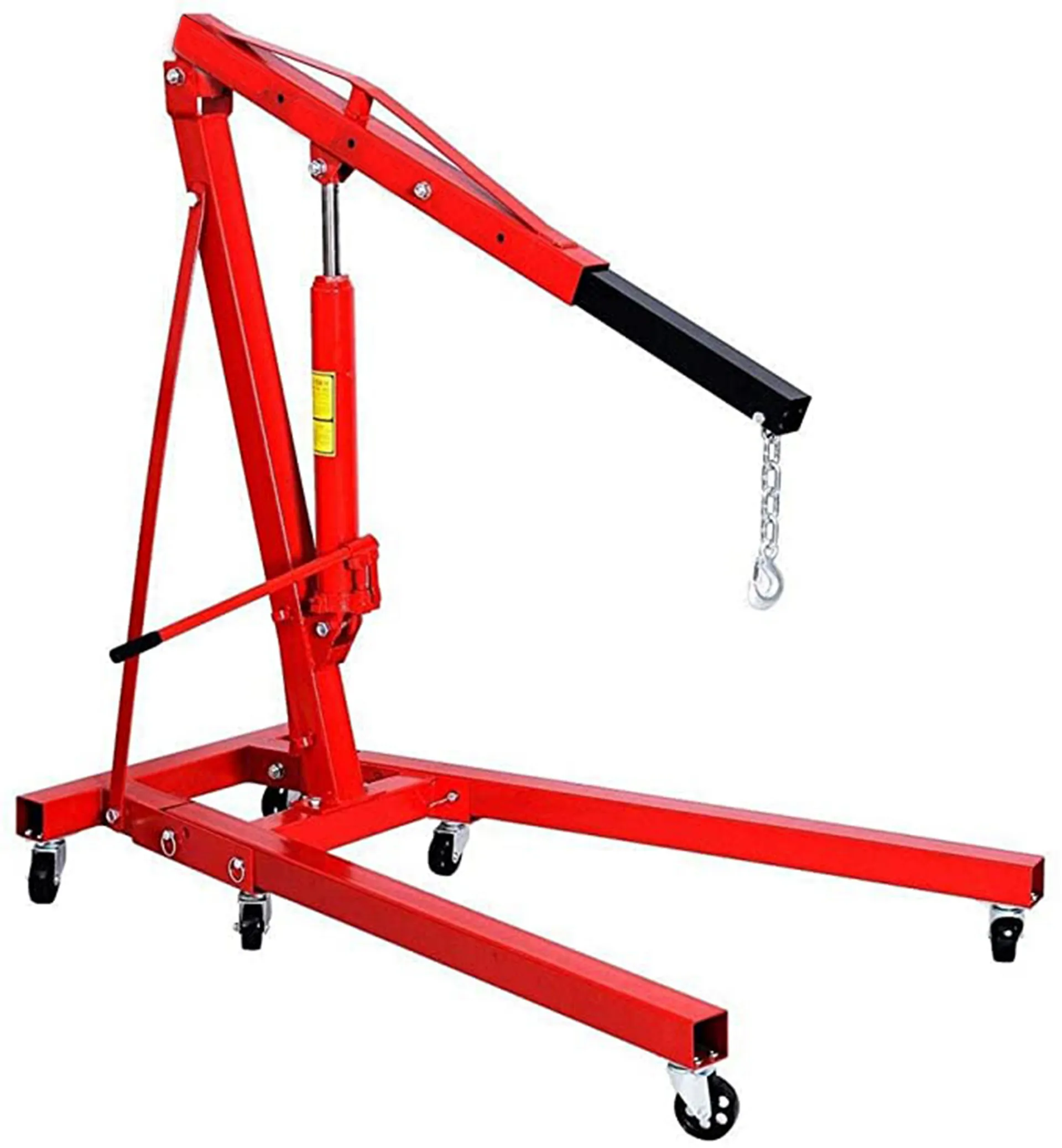
Engine crane folding 1000kg units represent a critical component in modern industrial maintenance and repair operations. These devices, positioned within the lifting and material handling equipment sector, are primarily employed for the controlled lifting, positioning, and lowering of heavy components – most commonly internal combustion engines, transmissions, and large machinery parts. Unlike fixed-boom cranes, the folding design allows for greater portability and storage efficiency, a key advantage in workshops with limited space. Core performance characteristics center around load capacity (1000kg, or approximately 2200 lbs), reach, lift height, and folding mechanism reliability. A crucial pain point in the industry is ensuring structural integrity under cyclical loading, coupled with minimizing the risk of uncontrolled descent during operation. This guide provides an in-depth technical examination of these cranes, covering material science, manufacturing processes, performance engineering, failure modes, and relevant industry standards.
Material Science & Manufacturing
The primary structural components of a 1000kg folding engine crane are typically constructed from high-strength carbon steel, specifically ASTM A36 or equivalent, chosen for its balance of tensile strength, weldability, and cost-effectiveness. The boom sections often utilize hollow structural sections (HSS) – rectangular or circular tubing – to maximize strength-to-weight ratio and minimize deflection under load. Critical load-bearing joints are frequently reinforced with gusset plates fabricated from the same steel grade. The folding mechanism itself employs precision-machined steel pins and bushings, often case-hardened for increased wear resistance (SAE 8620 is a common choice). Hydraulic cylinders, responsible for lifting actuation, utilize high-strength alloy steel cylinders with internal chrome plating to resist corrosion and wear. Manufacturing processes include robotic welding (SMAW, GMAW, or FCAW depending on the specific joint requirements) adhering to AWS D1.1 standards, CNC machining of critical components, and shot peening to induce compressive residual stresses in high-stress areas, enhancing fatigue life. Parameter control during welding is paramount; precise heat input and cooling rates are vital to prevent distortion and maintain metallurgical integrity. Surface treatments, such as powder coating, are applied to protect against corrosion and improve aesthetics. The hydraulic fluid used is typically a mineral oil-based hydraulic fluid formulated for optimal viscosity and performance across a range of temperatures. Compatibility with seal materials (NBR or Viton) is critical to prevent leaks and maintain system pressure.
Performance & Engineering
Performance analysis of a 1000kg folding engine crane focuses on several key engineering principles. Force analysis must account for static and dynamic loads, including the weight of the lifted object, the boom angle, and the acceleration/deceleration forces during lifting and lowering. The boom's structural stability is critically dependent on its moment of inertia and section modulus. Finite Element Analysis (FEA) is routinely employed to identify stress concentration points and optimize boom geometry. Environmental resistance is a major consideration. Corrosion protection, achieved through surface treatments, is vital to prevent degradation in humid or corrosive environments. The hydraulic system must be designed to provide smooth, controlled lifting and lowering, with safety features such as overload protection valves and emergency descent mechanisms. Compliance requirements, dictated by standards like ASME B30.9 (Slings, Alloys Chains, and Synthetic Slings) and relevant regional safety regulations, mandate regular inspection and maintenance procedures. The folding mechanism's geometry and locking mechanisms are engineered to ensure secure and reliable operation, preventing accidental unfolding during lifting. The stability of the entire crane assembly is also critical; the base must be sufficiently wide and weighted to prevent tipping, particularly when lifting at extended reach.
Technical Specifications
| Parameter | Specification | Testing Standard | Tolerance |
|---|---|---|---|
| Load Capacity | 1000 kg (2200 lbs) | ISO 6887-1 | ±5% |
| Maximum Lift Height | 2.5 m (8.2 ft) | EN 13155 | ±0.05 m |
| Boom Reach (Extended) | 1.6 m (5.2 ft) | ASME B30.9 | ±0.03 m |
| Folding Length (Compact) | 1.3 m (4.3 ft) | Internal Standard | ±0.02 m |
| Hydraulic System Pressure | 25 MPa (3625 psi) | DIN 24310 | ±1 MPa |
| Steel Grade (Boom) | ASTM A36 | ASTM A36 | Compliant |
Failure Mode & Maintenance
Common failure modes in 1000kg folding engine cranes include fatigue cracking at high-stress points in the boom, particularly around welded joints. This is often exacerbated by cyclical loading and inadequate weld quality. Hydraulic cylinder seal failure is another frequent issue, leading to loss of lifting capacity and potential uncontrolled descent. Corrosion, particularly in coastal or industrial environments, can weaken the steel structure and compromise its integrity. Wear and tear on the folding mechanism’s pins and bushings can cause looseness and instability. Delamination of the powder coat finish can accelerate corrosion. Preventive maintenance is crucial. Regular inspection of welds for cracks is essential, utilizing non-destructive testing methods like visual inspection, dye penetrant testing (ASTM E165), or ultrasonic testing (ASTM E797). Hydraulic fluid levels should be checked regularly, and fluid should be replaced according to the manufacturer’s recommendations (typically annually). Pins and bushings should be lubricated regularly with a suitable grease. The folding mechanism should be inspected for smooth operation and any signs of wear. Damaged or corroded components should be replaced immediately. Load testing should be conducted periodically (e.g., annually) to verify the crane’s lifting capacity and structural integrity. Documentation of all maintenance activities is essential for tracking performance and identifying potential issues.
Industry FAQ
Q: What is the primary cause of boom deflection under load, and how is it mitigated?
A: The primary cause of boom deflection is the bending moment induced by the weight of the lifted object and its distance from the crane’s pivot point. This is mitigated through robust boom construction using high-strength steel with a large moment of inertia, optimized boom geometry, and limiting the load beyond the crane’s rated capacity. FEA analysis is used to refine the design and minimize deflection.
Q: How does temperature affect the performance of the hydraulic system?
A: Temperature significantly impacts hydraulic fluid viscosity. Low temperatures increase viscosity, leading to slower operation and increased pressure drop. High temperatures decrease viscosity, potentially reducing lubrication and causing seal leakage. Hydraulic fluids are formulated to maintain acceptable viscosity within a specific temperature range, and regular fluid analysis is recommended.
Q: What are the critical considerations when selecting hydraulic fluid?
A: Key considerations include viscosity, anti-wear properties, oxidation stability, corrosion inhibition, and compatibility with the seal materials used in the hydraulic system (NBR, Viton, etc.). The fluid must also have a high flash point and low pour point for safe and reliable operation.
Q: What is the importance of regular weld inspection, and what methods are typically employed?
A: Regular weld inspection is vital to detect fatigue cracks and prevent catastrophic failure. Common methods include visual inspection (ASTM E1417), dye penetrant testing (ASTM E165) to identify surface cracks, magnetic particle testing (ASTM E703) for near-surface flaws, and ultrasonic testing (ASTM E797) for subsurface defects.
Q: What are the implications of exceeding the crane's rated load capacity?
A: Exceeding the rated load capacity introduces stresses beyond the crane’s design limits, significantly increasing the risk of structural failure, including boom buckling, weld fracture, or hydraulic system failure. This can lead to uncontrolled descent of the load, posing a serious safety hazard. Overload protection devices should be functional and regularly tested.
Conclusion
The 1000kg folding engine crane represents a versatile and essential tool for modern industrial applications. Its effectiveness and longevity are inextricably linked to diligent material selection, precise manufacturing processes, and a thorough understanding of the underlying engineering principles governing its performance. Maintaining structural integrity through regular inspection and adherence to established maintenance protocols are paramount to preventing catastrophic failure and ensuring operator safety.
Future development trends in this sector are likely to focus on incorporating smart technologies such as load monitoring systems with real-time feedback, remote diagnostics, and automated safety features. Further advancements in materials science, such as the adoption of high-strength, lightweight alloys, could lead to increased lifting capacity and improved portability, solidifying the role of the folding engine crane as a cornerstone of efficient and safe industrial operations.
