Introduction
Fold away bumper cranes, also known as bumper cranes or portable gantry cranes, are specialized lifting devices designed for temporary or semi-permanent installation, primarily in environments where a fixed overhead crane is impractical or cost-prohibitive. Positioned within the materials handling industry, they bridge the gap between manual lifting and large-scale, permanently installed crane systems. These cranes typically feature a collapsible or foldable boom and supporting structure, enabling ease of transport and setup. Core performance characteristics revolve around safe load handling, structural stability under load, and efficient deployment. Their applications span various sectors, including construction, shipbuilding, automotive assembly, warehousing, and event staging. A key pain point addressed by these cranes is the need for flexible lifting solutions in areas with limited headroom or restricted access, often circumventing the significant civil engineering costs associated with fixed crane foundations. They often incorporate features like adjustable height, mobility via casters or wheels, and remote control operation for increased safety and maneuverability.
Material Science & Manufacturing
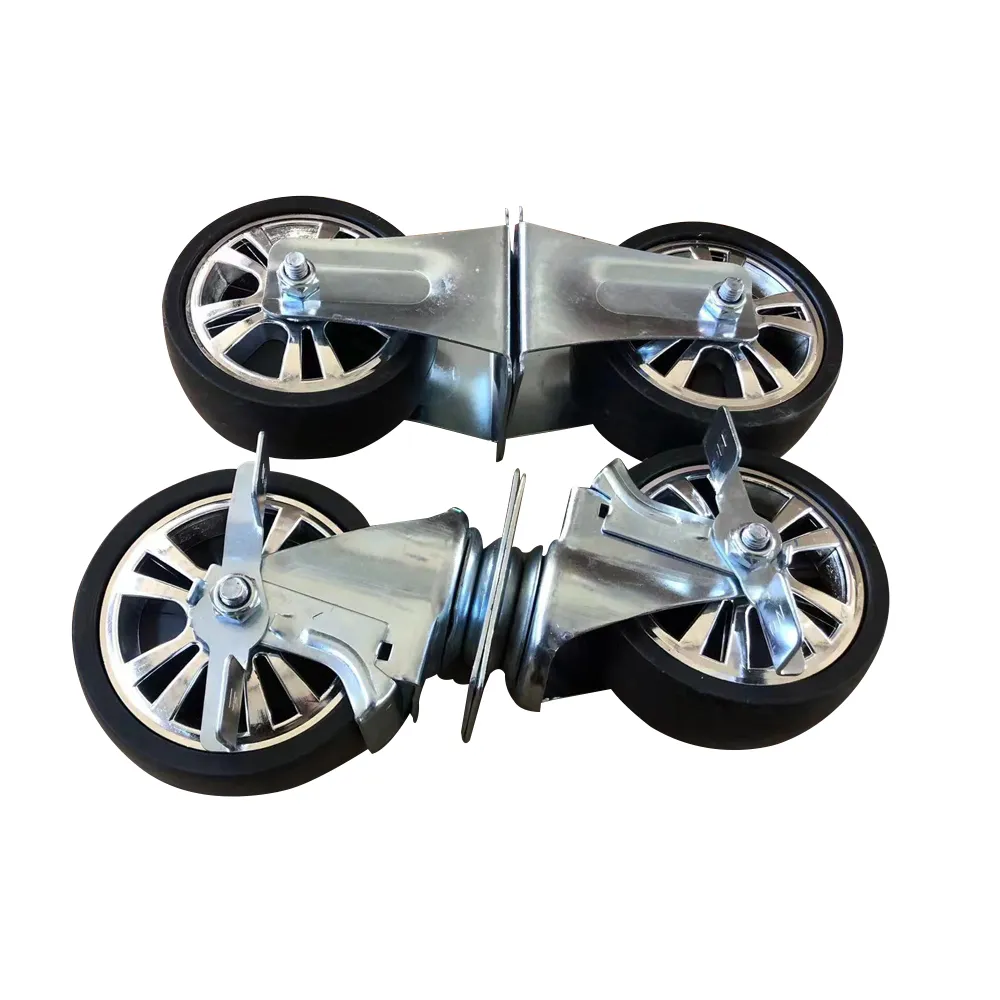
The primary materials utilized in fold away bumper crane construction are high-strength steel alloys – typically ASTM A572 Grade 50 for the structural members (legs, boom sections, base plates) – offering a balance of tensile strength, yield strength, and weldability. The boom itself often incorporates closed-section profiles (rectangular or circular hollow sections) to maximize bending resistance and torsional rigidity. Caster wheels and supporting hardware are frequently manufactured from forged steel or high-grade cast iron, chosen for their durability and load-bearing capacity. Pins and connecting components utilize alloy steel, heat-treated for increased hardness and resistance to shear forces. Manufacturing processes begin with steel cutting and forming, employing CNC laser cutting or plasma cutting for precision. Structural welding is crucial, adhering to AWS D1.1 standards for structural steel welding. Welding parameter control – including amperage, voltage, and travel speed – is critical to ensuring weld integrity and preventing defects like porosity or incomplete fusion. The boom sections are assembled via bolted connections, utilizing high-strength bolts meeting ASTM A325 specifications. Surface treatments, such as powder coating or galvanizing, are applied to protect against corrosion. The lifting mechanism typically incorporates wire rope (meeting ISO 2409 standards) wound around a winch drum, driven by an electric motor with a gear reducer. Regular non-destructive testing (NDT), including magnetic particle inspection (MPI) and ultrasonic testing (UT), is employed to verify weld quality and identify potential flaws. The rubber tires for casters are made of high-resistance polyurethane to ensure load capacity and durability.
Performance & Engineering
The performance of a fold away bumper crane is fundamentally governed by principles of structural mechanics and load distribution. Force analysis, conducted via Finite Element Analysis (FEA), is essential to determine stress concentrations and ensure the crane can withstand anticipated loads with an appropriate safety factor (typically 3:1 or higher). The base of the crane must distribute the load effectively to prevent tipping or ground failure. This is achieved through a wide base plate design and, in some cases, the use of outriggers to increase stability. Environmental resistance is a critical consideration. Corrosion protection (through galvanizing or powder coating) is vital, particularly in marine or corrosive industrial environments. Wind loading is a significant factor, and the crane must be designed to withstand specified wind speeds according to local building codes. Compliance requirements vary by region, but commonly include adherence to ASME B30.11 (for rated capacity and safety standards) and OSHA regulations. Functional implementation involves careful selection of the lifting mechanism (chain hoist, wire rope winch), ensuring it has sufficient capacity and lifting speed for the intended application. The braking system must be reliable and capable of holding the load securely, even in the event of power failure. Properly engineered counterbalance systems are essential to prevent instability during lifting and lowering operations. The range of motion and the adjustability of the boom are engineered to address site-specific requirements. Consideration is given to accessibility for maintenance and inspection.
Technical Specifications
| Capacity (tons) | Maximum Lifting Height (meters) | Boom Length (meters) | Base Width (meters) |
|---|---|---|---|
| 1 | 2.5 | 3 | 1.5 |
| 2 | 3.5 | 4 | 2 |
| 3 | 4.5 | 5 | 2.5 |
| 5 | 6 | 6 | 3 |
| 10 | 8 | 8 | 3.5 |
| 20 | 10 | 10 | 4 |
Failure Mode & Maintenance
Common failure modes in fold away bumper cranes include fatigue cracking at welded joints (particularly in high-stress areas like the boom hinges and base connections), bending or buckling of boom sections under excessive load, caster wheel failure due to overloading or uneven terrain, winch system malfunction (wire rope breakage, gear wear, brake failure), and corrosion-induced degradation of structural components. Fatigue cracking is often initiated by stress concentrations at weld toes and can propagate over time, leading to catastrophic failure. Buckling occurs when compressive stresses exceed the material's critical buckling load. Caster wheel failure can result in instability and loss of control. Winch system failures are typically caused by insufficient lubrication, wear of moving parts, or overloading. Maintenance solutions include regular visual inspections for cracks, corrosion, and wear; lubrication of all moving parts (winch, caster bearings, boom hinges); periodic NDT (MPI, UT) of welded joints; wire rope inspection and replacement according to manufacturer’s recommendations (based on wear and damage); and periodic load testing to verify the crane's capacity. Preventive maintenance schedules should be implemented based on usage frequency and environmental conditions. Proper storage (protected from the elements) is crucial to minimize corrosion. Detailed maintenance records should be maintained to track inspection results and repairs. Replacement of worn parts should always use OEM-approved components or equivalent. Training for operators and maintenance personnel is vital to ensure safe and effective operation and maintenance practices. Addressing minor issues proactively can prevent escalation to major failures.
Industry FAQ
Q: What is the impact of dynamic loading (sudden load application) on the lifespan of the crane?
A: Dynamic loading significantly reduces the fatigue life of the crane's structural components. Every time a load is suddenly applied or removed, it creates impact forces that generate higher stresses than those calculated for static loading. Repeated dynamic loading accelerates fatigue crack initiation and propagation, leading to premature failure. Therefore, it's crucial to operate the crane smoothly and avoid sudden jerks or impacts. Load charts should be strictly adhered to, and operators should be trained to minimize dynamic effects.
Q: How does the ambient temperature affect the crane's performance and material properties?
A: Extreme temperatures can affect the ductility and strength of the steel used in the crane’s construction. Low temperatures can increase the risk of brittle fracture, while high temperatures can reduce the steel's yield strength. Additionally, temperature fluctuations can cause thermal expansion and contraction, potentially stressing bolted connections and welded joints. Operating manuals should specify the acceptable temperature range for the crane, and precautions should be taken to avoid operation outside of these limits. Lubricants may also require modification based on ambient temperature.
Q: What are the key considerations when selecting a caster wheel for a specific application?
A: Key considerations include load capacity, floor surface type, rolling resistance, and environmental conditions. The caster wheel must have a sufficient load capacity to support the crane and its maximum load. The wheel material (e.g., polyurethane, nylon) should be compatible with the floor surface to provide adequate traction and prevent damage. Lower rolling resistance improves maneuverability. Environmental factors (e.g., exposure to chemicals, abrasive materials) must be considered to select a wheel material that is resistant to degradation.
Q: What is the recommended inspection frequency for wire rope used in the lifting mechanism?
A: Wire rope inspection frequency depends on the severity of service. For normal service, a visual inspection should be conducted at least monthly, looking for signs of wear, kinking, corrosion, and broken wires. A more detailed inspection, including magnetic particle inspection, should be performed annually or after any significant overload event. Wire rope should be replaced immediately if any of the following conditions are observed: broken wires (more than 5% on any one rope diameter), severe corrosion, kinking, or reduction in diameter below the manufacturer's specifications.
Q: How can the stability of the crane be improved on uneven terrain?
A: Stability on uneven terrain can be improved by using outriggers to widen the crane's base, ensuring the ground surface is firm and level, and reducing the load lifted. Outriggers distribute the load over a larger area, reducing the ground pressure and minimizing the risk of tipping. If outriggers are not available, use shims or leveling plates under the caster wheels to create a more level base. Avoid lifting loads on slopes or uneven surfaces whenever possible. Implement a strict leveling procedure prior to each lift.
Conclusion
Fold away bumper cranes represent a versatile and cost-effective solution for temporary and semi-permanent lifting applications. Their design prioritizes portability, ease of setup, and adaptability to challenging environments. Understanding the underlying principles of material science, structural engineering, and load handling is paramount to ensuring safe and reliable operation. Proper selection of materials, adherence to rigorous manufacturing standards (welding, NDT), and diligent maintenance practices are essential for maximizing the crane’s lifespan and minimizing the risk of failure.
Looking ahead, advancements in materials (e.g., high-strength lightweight alloys) and control systems (e.g., advanced load monitoring and anti-tipping technology) will further enhance the performance and safety of these cranes. The integration of sensor technology for predictive maintenance – monitoring stress levels, wear patterns, and corrosion rates – will enable proactive interventions and reduce downtime. Continued development and refinement of industry standards will also play a critical role in promoting best practices and ensuring the long-term reliability of fold away bumper cranes.
