Introduction
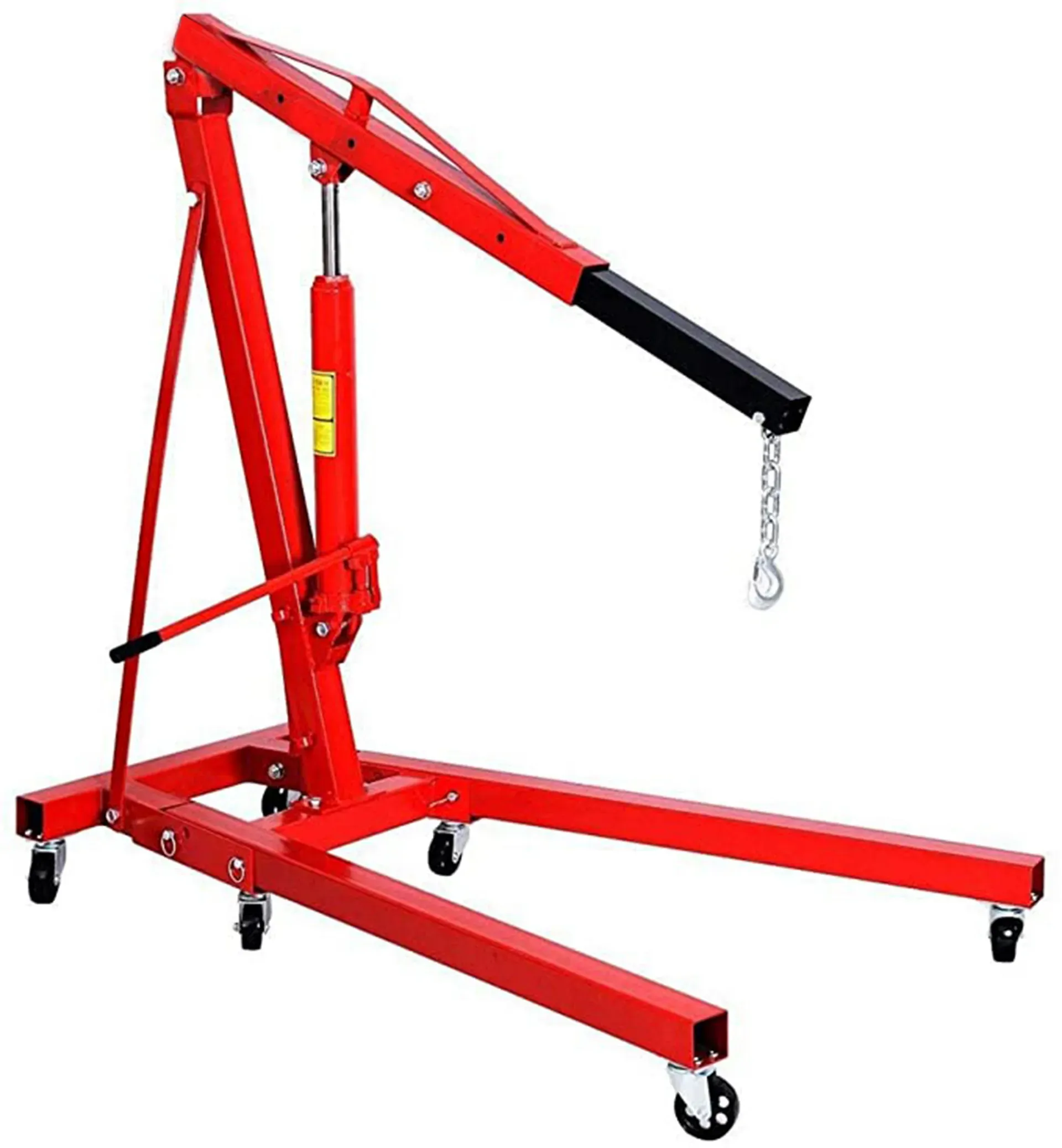
The fold up engine hoist is a mechanical lifting device utilized primarily in automotive repair and heavy equipment maintenance for the removal and installation of engines, transmissions, and other substantial components. Positioned within the industrial chain as a crucial element of workshop equipment, its function bridges the gap between manual handling limitations and the precise, controlled movement required for modern engine work. Core performance metrics center around lifting capacity, reach (horizontal and vertical), stability under load, and the ease of folding and storage. Unlike traditional engine hoists which require dedicated floor space, the fold-up design addresses a significant pain point in increasingly congested workshop environments. Proper selection and implementation of a fold up engine hoist directly impacts workshop efficiency, technician safety, and ultimately, repair turnaround time. The device’s ability to minimize strain and reduce the risk of damage during engine handling makes it a standard fixture in professional automotive service facilities.
Material Science & Manufacturing
Fold up engine hoists typically employ a combination of high-strength carbon steel (SAE 1020 or equivalent) for the structural components like the mast, boom, and base. This steel provides a robust balance of tensile strength and weldability, critical for enduring substantial loads. The hydraulic system, essential for lifting, utilizes steel cylinders and pistons, often coated with a chromium plating to resist corrosion and wear. The folding mechanisms rely on pivot points fabricated from similarly robust steel alloys. Critical to the manufacturing process is the welding procedure. Shielded Metal Arc Welding (SMAW) and Gas Metal Arc Welding (GMAW) are common, requiring strict adherence to AWS D1.1 structural welding code to ensure weld integrity and prevent fatigue cracking. Heat treatment post-welding is crucial to relieve residual stresses. The hydraulic fluid employed is typically a mineral oil-based hydraulic fluid with a viscosity index (VI) rating suitable for the operating temperature range, ensuring consistent performance. Chain and sling mechanisms used for load engagement utilize alloy steel chains (Grade 80 or higher) due to their superior strength and abrasion resistance. Parameter control during manufacturing includes precise angle measurements for the folding mechanism, dimensional accuracy of the mast and boom components, and meticulous inspection of weld quality via non-destructive testing methods like ultrasonic testing (UT) and magnetic particle inspection (MPI).
Performance & Engineering
The performance of a fold up engine hoist is fundamentally governed by principles of statics and mechanics. Force analysis during lifting involves calculating the bending moment on the mast and boom, considering the weight of the engine, the distance from the pivot point, and the angle of elevation. Stability is paramount; the base must provide sufficient footprint and weight to prevent tipping under maximum load. Finite Element Analysis (FEA) is commonly employed during the design phase to optimize the structural integrity and identify potential stress concentration points. Environmental resistance is a key consideration. The steel components are typically coated with a powder coat finish to protect against corrosion from moisture, oil, and other workshop contaminants. Hydraulic systems require careful engineering to manage fluid pressure and prevent leaks. Compliance requirements vary by region. In North America, OSHA standards dictate load capacity labeling and safe operating procedures. European standards (EN) focus on machine safety and risk assessment. Functional implementation necessitates a robust hydraulic pump capable of delivering consistent pressure and flow rate. Load testing is a vital step, verifying the hoist’s ability to safely lift and hold its rated capacity. Furthermore, the folding mechanism must operate smoothly and securely, preventing accidental deployment or collapse during transport or storage.
Technical Specifications
| Capacity (tons) | Maximum Lift Height (inches) | Boom Length (inches) | Folded Dimensions (inches L x W x H) |
|---|---|---|---|
| 2 | 78 | 48 | 50 x 20 x 70 |
| 3 | 90 | 60 | 60 x 24 x 75 |
| 4 | 102 | 72 | 70 x 28 x 80 |
| 5 | 114 | 84 | 80 x 32 x 85 |
| 6 | 126 | 96 | 90 x 36 x 90 |
| 7.5 | 138 | 108 | 100 x 40 x 95 |
Failure Mode & Maintenance
Common failure modes in fold up engine hoists include hydraulic system leaks, typically originating from worn seals or damaged hoses. Fatigue cracking can occur at weld joints, particularly in high-stress areas like the boom and mast pivot points. Chain and sling failure can result from overloading or corrosion. The folding mechanism may experience binding or misalignment due to accumulated debris or lack of lubrication. Oxidation and corrosion of steel components are accelerated in humid environments. Failure analysis involves a thorough inspection of the affected component, looking for signs of fatigue, wear, or corrosion. Non-destructive testing (NDT) methods like dye penetrant inspection can reveal surface cracks. Preventive maintenance is crucial. This includes regular inspection of hydraulic hoses and fittings, lubrication of pivot points and moving parts, checking chain and sling integrity, and ensuring proper storage in a dry environment. Hydraulic fluid should be replaced annually, and seals should be inspected and replaced as needed. Welds should be visually inspected for cracks, and any suspect areas should be subjected to NDT. Proper load distribution and adherence to the hoist’s rated capacity are essential to prevent overloading and premature failure. A detailed maintenance log should be maintained to track all inspections and repairs.
Industry FAQ
Q: What is the proper procedure for inspecting the hydraulic system for leaks?
A: Begin by visually inspecting all hydraulic hoses, fittings, and the pump for any signs of fluid seepage. Pay close attention to connections and areas subject to abrasion. Run the hoist through its full range of motion, observing for leaks under load. A hydraulic pressure test can be conducted to identify internal leaks within the pump or cylinder. Replace any damaged hoses or fittings immediately and address any internal leaks by consulting a qualified hydraulic repair technician.
Q: How often should the lifting chains and slings be inspected, and what criteria should be used?
A: Chains and slings should be inspected before each use. Look for signs of wear, damage, distortion, or corrosion. Check for stretched or damaged links, cracked or frayed sling webbing, and ensure that the load hooks are properly secured. Any chain or sling exhibiting these defects should be immediately removed from service. Maintain a documented inspection log, detailing the date, inspector, and condition of each chain and sling.
Q: What are the key safety precautions to observe when using a fold up engine hoist?
A: Always ensure the hoist is placed on a level and stable surface. Never exceed the rated load capacity. Use appropriate lifting attachments and ensure the load is properly balanced before lifting. Keep personnel clear of the lift zone. Never work under a suspended load. Inspect the hoist before each use for any defects. Follow all manufacturer's recommendations and relevant safety regulations.
Q: What type of hydraulic fluid is recommended for optimal performance and longevity of the hoist?
A: A high-quality mineral oil-based hydraulic fluid with a viscosity index (VI) between 40-60 is generally recommended. Consult the hoist's owner's manual for specific fluid requirements. Ensure the fluid is clean and free of contaminants. Regular fluid changes are essential to maintain optimal performance and prevent corrosion within the hydraulic system.
Q: What are the long-term storage recommendations to prevent corrosion and maintain functionality?
A: When storing the hoist for extended periods, clean all surfaces thoroughly and apply a corrosion inhibitor. Store the hoist in a dry, indoor environment. Protect hydraulic components from moisture by applying a rust preventative. Periodically cycle the hoist through its range of motion to lubricate internal components. Cover the hoist with a protective tarp to prevent dust accumulation.
Conclusion
The fold up engine hoist represents a significant advancement in workshop equipment design, directly addressing the limitations of traditional hoists through its space-saving functionality. Its performance is dictated by sound engineering principles relating to force analysis, material science, and hydraulic systems, with safety and compliance serving as paramount considerations. Proper maintenance, including regular inspections and timely replacement of worn components, is crucial for ensuring long-term reliability and preventing catastrophic failure.
Future developments in fold up engine hoist technology are likely to focus on increasing lifting capacity while minimizing overall weight, incorporating smart features such as load sensors and remote controls, and enhancing the durability of hydraulic components through advanced materials and coatings. The integration of predictive maintenance capabilities, leveraging sensor data and machine learning algorithms, could further optimize operational efficiency and reduce downtime, solidifying the fold up engine hoist as an indispensable asset in modern automotive and heavy equipment repair facilities.
