Introduction
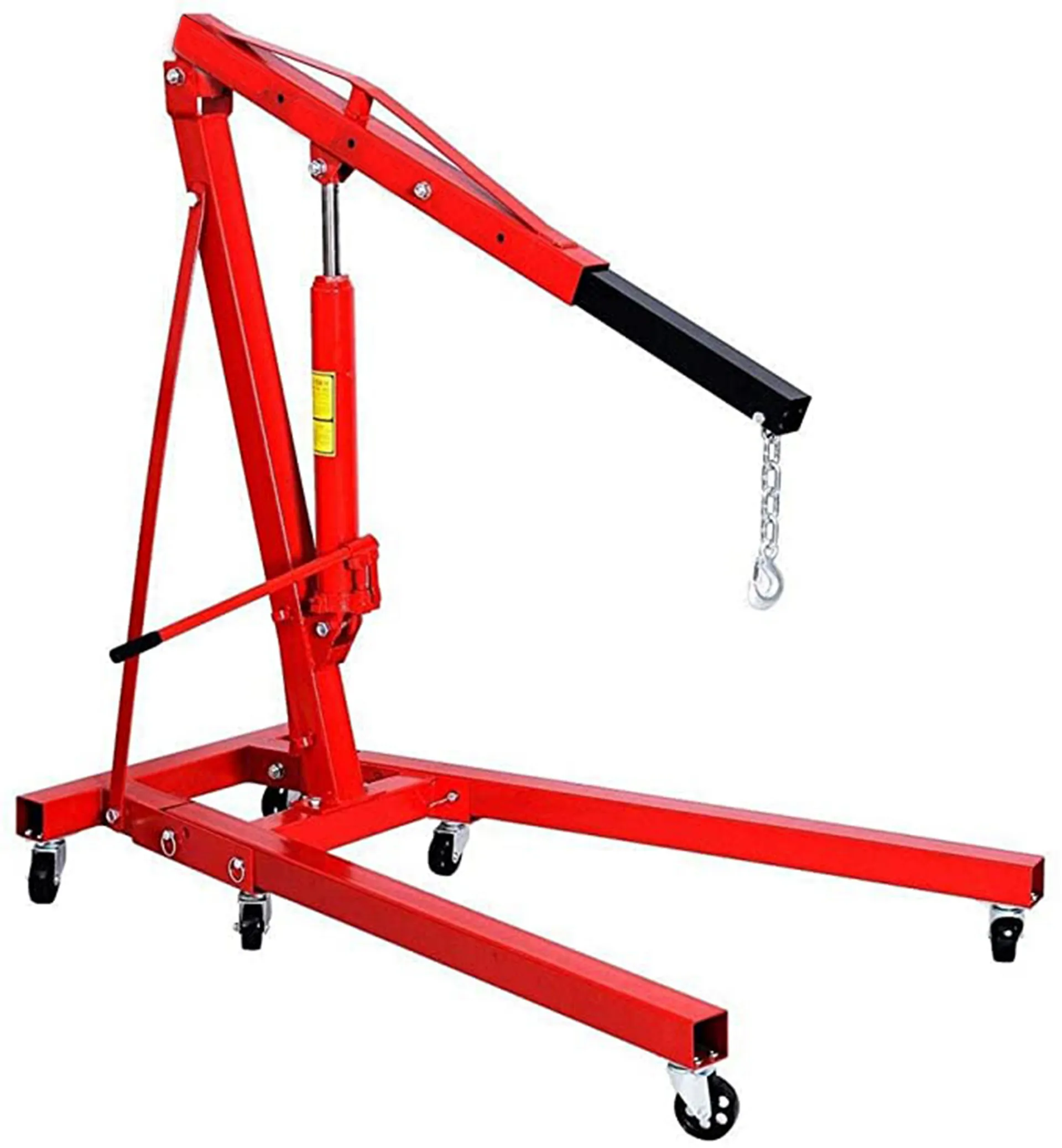
Folding engine hoists represent a critical piece of equipment within the automotive repair, heavy machinery maintenance, and industrial sectors. Unlike traditional engine hoists, the folding design prioritizes portability and storage efficiency without substantial compromise to lifting capacity. These hoists typically consist of a hydraulic lifting mechanism, a foldable boom arm constructed from high-strength steel, and various sling or adapter configurations for secure engine handling. Their technical position lies between fixed-location overhead cranes and simpler, non-folding engine lifters. Core performance characteristics include rated lifting capacity, maximum boom extension length, minimum boom height, and the degree of boom folding for compact storage. The increasing demand for mobile maintenance services and limited shop floor space drives adoption, making robust design and reliable performance paramount concerns for both manufacturers and end-users. Addressing key industry pain points like maneuverability in confined spaces, ease of transport, and long-term durability is central to the evolution of folding engine hoist technology.
Material Science & Manufacturing
The fabrication of a folding engine hoist relies on a combination of materials chosen for their strength, weldability, and resistance to deformation under load. High-strength low-alloy steels (HSLA), such as ASTM A572 Grade 50, are commonly used for the boom arm segments and structural components. These steels offer an optimal balance between yield strength (typically 50 ksi) and ductility. The hydraulic cylinder housing is often constructed from ductile cast iron (ASTM A48 Class 30) due to its excellent damping properties and resistance to pressure. Piston rods utilize medium carbon steel (AISI 1045) hardened and tempered to achieve high tensile strength and wear resistance. Manufacturing processes are multi-stage. The boom arm segments are formed via cold-rolled steel sections or hot-rolled plates that are subsequently formed and welded. Welding is critical and typically employs shielded metal arc welding (SMAW) or gas metal arc welding (GMAW) processes, adhering to AWS D1.1 structural welding code. Precise control of welding parameters (current, voltage, travel speed, shielding gas composition) is essential to prevent defects like porosity, incomplete fusion, and lamellar tearing. Folding mechanisms utilize precision machining of hinge points and hardened steel pins to ensure smooth operation and resistance to wear. Hydraulic components are manufactured using deep drawing and machining processes. Quality control incorporates non-destructive testing (NDT) methods, including ultrasonic testing (UT) and magnetic particle inspection (MPI), to verify weld integrity and identify material flaws. Surface treatments such as powder coating (meeting ASTM D3359) provide corrosion protection.
Performance & Engineering
The performance of a folding engine hoist is dictated by several key engineering considerations. Force analysis centers on the stresses induced within the boom arm during lifting. Finite Element Analysis (FEA) is frequently employed to model load distribution and identify potential weak points in the design. Buckling analysis is critical, particularly for extended boom configurations, to ensure structural stability. The hydraulic system must be designed to provide sufficient lifting force while maintaining precise control. Flow rate, pressure rating, and cylinder bore size are key parameters. Environmental resistance is a significant factor. Hoists operating outdoors are susceptible to corrosion, particularly in marine or industrial environments. Coatings and material selection must mitigate these risks. Compliance requirements include adherence to ASME B30.9 standards for slings and ASME HST-1 for hydraulic lifting devices. These standards specify minimum design factors, inspection intervals, and safety procedures. Functional implementation involves careful consideration of the lifting hook design, ensuring secure attachment to engine lifting points. The folding mechanism must lock securely in both the extended and folded positions. Stability is a paramount concern; the base frame must provide a sufficient footprint to prevent tipping during lifting and maneuvering. Calculating the center of gravity of the hoist and the lifted engine is essential for safe operation.
Technical Specifications
| Lifting Capacity (tons) | Maximum Boom Extension (meters) | Minimum Boom Height (meters) | Folded Height (meters) |
|---|---|---|---|
| 2 | 2.5 | 1.8 | 0.6 |
| 3 | 3.0 | 2.2 | 0.8 |
| 5 | 3.5 | 2.8 | 1.0 |
| 7.5 | 4.0 | 3.2 | 1.2 |
| 10 | 4.5 | 3.6 | 1.4 |
| 15 | 5.0 | 4.0 | 1.6 |
Failure Mode & Maintenance
Folding engine hoists, while robust, are susceptible to several failure modes. Fatigue cracking is a common issue in the boom arm, particularly around weld joints and hinge points, due to repeated stress cycles. Corrosion, especially in humid or saline environments, can weaken structural components. Hydraulic system failures include seal degradation, cylinder leakage, and pump malfunction. Delamination of powder coating can accelerate corrosion. Operational issues include binding of the folding mechanism due to lubrication failure or debris accumulation. Failure analysis often reveals root causes such as exceeding the rated lifting capacity, improper operation, or inadequate maintenance. Preventive maintenance is crucial. Regular inspection of weld joints for cracks is essential, utilizing visual inspection and potentially dye penetrant testing (ASTM E165). Lubrication of hinge points and moving parts with appropriate greases (NLGI Grade 2 lithium-based grease) prevents binding and wear. Hydraulic fluid levels should be checked and maintained according to manufacturer specifications. Seals should be inspected and replaced as needed. Corrosion protection involves regular cleaning and reapplication of protective coatings. Periodic load testing (following ASME B30.9 guidelines) verifies the structural integrity of the hoist. A documented maintenance schedule and operator training are vital to ensuring long-term reliability and safety.
Industry FAQ
Q: What is the impact of exceeding the rated lifting capacity on the hoist’s structural integrity?
A: Exceeding the rated lifting capacity introduces stresses significantly beyond the design limits of the boom arm and hydraulic system. This can lead to immediate structural failure, such as buckling or fracture, or accelerated fatigue damage, reducing the hoist’s lifespan and increasing the risk of catastrophic failure during subsequent operations. It invalidates any warranty and creates a significant safety hazard.
Q: How often should the hydraulic fluid be replaced, and what type of fluid is recommended?
A: Hydraulic fluid should be replaced every 12-24 months, or more frequently in harsh operating environments. The recommended fluid type is typically a high-viscosity hydraulic oil (ISO VG 46 or VG 68) formulated for industrial applications, possessing anti-wear properties and corrosion inhibitors. Consult the manufacturer’s specifications for the precise recommended fluid.
Q: What are the critical inspection points for identifying potential corrosion issues?
A: Critical inspection points include weld joints, hinge points, the base frame, and any areas where the powder coating is damaged or chipped. Look for signs of rust, pitting, or blistering paint. Pay close attention to areas exposed to moisture or corrosive chemicals.
Q: What is the recommended procedure for lubricating the folding mechanism?
A: The folding mechanism should be lubricated with NLGI Grade 2 lithium-based grease every 6 months, or more frequently in dusty or harsh environments. Apply grease to all hinge points, pivot pins, and sliding surfaces. Ensure the grease is evenly distributed and that any excess is wiped away to prevent debris accumulation.
Q: Does the boom arm’s material composition impact its performance in extreme temperatures?
A: Yes, the steel alloy used in the boom arm’s construction can be affected by extreme temperatures. Very low temperatures can reduce the steel’s ductility and increase the risk of brittle fracture, while high temperatures can reduce its yield strength. Hoists designed for extreme temperature environments may utilize specialized steel alloys with enhanced temperature resistance.
Conclusion
Folding engine hoists represent a significant advancement in lifting technology, offering a compelling blend of portability, storage efficiency, and lifting capacity. Their design and manufacturing are predicated on meticulous material selection, rigorous welding processes, and adherence to stringent industry standards (ASME, AWS). Understanding the core engineering principles – force analysis, hydraulic system design, and stability considerations – is crucial for ensuring safe and reliable operation.
Ongoing maintenance, including regular inspection, lubrication, and hydraulic fluid management, is paramount to mitigating failure modes such as fatigue cracking, corrosion, and hydraulic system malfunctions. As demand for mobile maintenance solutions continues to grow, innovations in materials, folding mechanisms, and safety features will further enhance the performance and longevity of these essential pieces of industrial equipment.
