Introduction
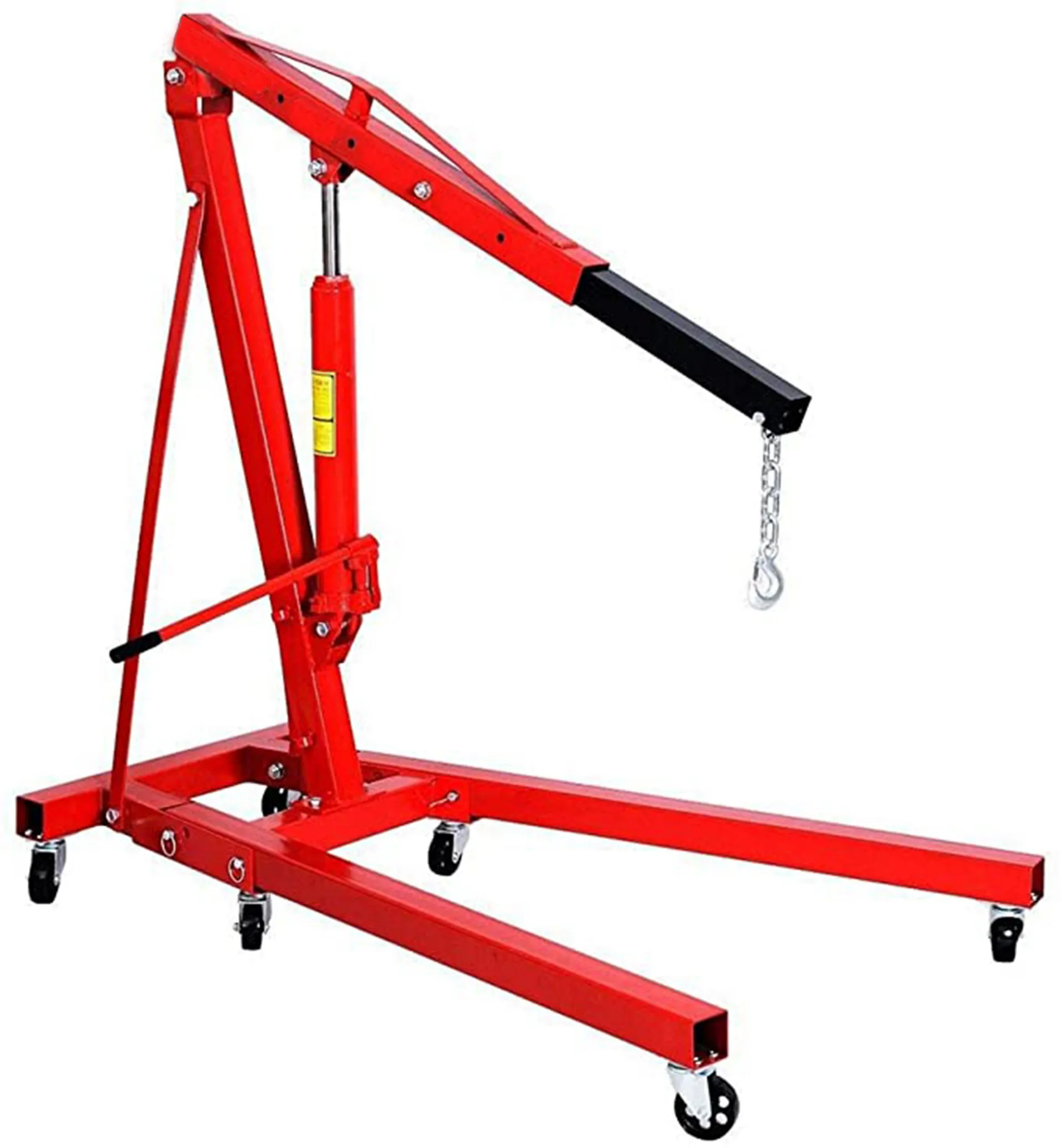
Hydraulic engine shop cranes are critical lifting devices employed in automotive repair facilities, machine shops, and industrial maintenance environments. These cranes utilize a hydraulic system to provide controlled lifting and maneuvering of heavy components, primarily internal combustion engines, transmissions, and other large machinery parts. Their technical position within the industrial chain lies as a crucial element in facilitating maintenance, repair, and overhaul (MRO) operations. Core performance characteristics revolve around lifting capacity, reach, stability, and operational safety. Unlike overhead cranes or forklifts, shop cranes provide maneuverability within a confined workspace, allowing access to engines within vehicle bays or around stationary equipment. The inherent advantages in precise control and minimal space requirements make them indispensable for engine removal, component installation, and general heavy lifting tasks. Understanding the nuances of hydraulic systems, structural mechanics, and safety protocols is paramount for effective implementation and maintenance.
Material Science & Manufacturing
The fabrication of hydraulic engine shop cranes involves a combination of high-strength steel alloys, hydraulic components, and precision machining. The primary structural components – the boom, mast, and base – are typically constructed from ASTM A572 Grade 50 steel, selected for its high yield strength (345 MPa) and weldability. Steel selection considers factors such as tensile strength, impact toughness (particularly at low temperatures), and resistance to fatigue. The hydraulic cylinders utilize honed cylinder tubes, often made from 4140 alloy steel, offering exceptional wear resistance. Piston rods are frequently composed of induction-hardened chrome-plated steel (SAE 1045) to minimize corrosion and friction. Manufacturing processes include robotic welding to ensure consistent weld quality and penetration, adhering to AWS D1.1 standards. Critical welds undergo non-destructive testing (NDT), including ultrasonic testing (UT) and magnetic particle inspection (MPI) to detect subsurface flaws. Hydraulic hoses are constructed from multi-layered synthetic rubber reinforced with high-tensile steel wire braid, meeting or exceeding SAE J517 specifications. Pump components typically utilize cast iron for housings and hardened steel for internal gears, requiring precise machining and balancing to minimize noise and vibration. Final assembly involves rigorous quality control checks, including hydrostatic testing of the hydraulic system to verify leak-free operation and structural load testing to confirm compliance with rated capacity.
Performance & Engineering
The performance of a hydraulic engine shop crane is directly linked to its structural integrity, hydraulic efficiency, and stability under load. Force analysis is critical; the crane’s lifting capacity is determined by the tensile strength of the steel components and the hydraulic pressure generated by the pump. The boom’s design employs principles of bending moment and shear stress calculation to ensure it can withstand the maximum rated load without deformation or failure. Stability is achieved through a wide base, low center of gravity, and careful distribution of weight. Finite element analysis (FEA) is used during the design phase to simulate stress concentrations and optimize structural geometry. Environmental resistance is a key consideration; the crane must operate reliably in typical shop environments which may include exposure to oils, solvents, and temperature fluctuations. Hydraulic fluid selection – typically a mineral oil-based hydraulic fluid meeting ISO VG 32 or VG 46 standards – is crucial for maintaining viscosity and lubricity across a wide temperature range. Compliance requirements include adherence to ASME B30.2 standards for slings, hoists, and lifting devices. The hydraulic system incorporates safety features such as overload protection valves, which prevent lifting beyond the rated capacity, and slow-lowering valves, which control the descent rate in case of hydraulic failure. Proper load balancing and controlled movement are essential to prevent dynamic loading and potential instability.
Technical Specifications
| Lifting Capacity (tons) | Maximum Lifting Height (m) | Boom Length (m) | Base Width (m) |
|---|---|---|---|
| 2 | 2.5 | 1.9 | 1.5 |
| 4 | 3.2 | 2.5 | 2.0 |
| 6 | 3.8 | 3.0 | 2.5 |
| 8 | 4.5 | 3.6 | 2.8 |
| 10 | 5.0 | 4.2 | 3.0 |
| 15 | 5.5 | 4.8 | 3.5 |
Failure Mode & Maintenance
Hydraulic engine shop cranes are susceptible to several failure modes. Fatigue cracking can occur in the boom or mast due to repeated loading cycles, particularly if the crane is consistently operated at or near its maximum capacity. Delamination of welds is another potential failure point, often caused by inadequate welding procedures or material defects. Hydraulic system failures, including pump cavitation (due to insufficient fluid or air ingress), seal degradation (leading to fluid leaks), and cylinder drift (due to internal wear), are common. Oxidation of the hydraulic fluid can lead to sludge formation and reduced lubricating properties. Corrosion, especially in marine or corrosive environments, can weaken structural components. Maintenance procedures should include regular visual inspections for cracks, deformation, and leaks. Hydraulic fluid should be checked and replaced according to manufacturer’s recommendations (typically every 6-12 months). Lubrication of moving parts, such as pivot points and cylinder rods, is essential. Welds should be periodically inspected using NDT methods. Overload protection valves should be tested regularly to ensure proper function. Proper storage and protection from the elements are crucial to prevent corrosion. A preventative maintenance schedule, aligned with ASME B30.2, should be implemented and strictly followed. Records of maintenance and inspections should be maintained for traceability and compliance.
Industry FAQ
Q: What are the key considerations when selecting a shop crane for an automotive repair facility?
A: The primary considerations are lifting capacity, reach, and available workspace. Select a crane with a lifting capacity that exceeds the heaviest engine or component you anticipate handling. Evaluate the required lifting height to ensure adequate clearance for engine removal and installation. Consider the base width and maneuverability to ensure the crane can operate effectively within the confines of the repair bay. Also, prioritize cranes with robust safety features, such as overload protection and slow-lowering valves.
Q: How frequently should the hydraulic fluid be replaced in a shop crane?
A: Hydraulic fluid should typically be replaced every 6 to 12 months, depending on usage and operating conditions. Contamination from dust, debris, and moisture can degrade the fluid’s performance and lead to component wear. Regular fluid analysis can help determine the optimal replacement interval.
Q: What are the potential consequences of operating a shop crane beyond its rated capacity?
A: Operating a crane beyond its rated capacity significantly increases the risk of structural failure, potentially leading to catastrophic collapse and severe injury. Overloading can cause permanent deformation of the boom, mast, or base, rendering the crane unusable. It also compromises the integrity of the hydraulic system.
Q: What type of inspection should be performed before each use of the shop crane?
A: Before each use, a thorough visual inspection should be conducted, checking for any signs of damage, such as cracks, deformation, or leaks. The hydraulic system should be inspected for fluid levels and proper operation. The lifting mechanism should be tested with a small load to verify smooth and controlled movement. All safety devices, including overload protection and slow-lowering valves, should be tested to ensure functionality.
Q: What are the key requirements for proper crane operator training?
A: Operator training should cover topics such as crane operation principles, load handling techniques, safety procedures, hazard recognition, and emergency procedures. Operators should be familiar with the crane’s specifications, limitations, and maintenance requirements. Certification programs, aligned with ASME B30 standards, are highly recommended.
Conclusion
Hydraulic engine shop cranes represent a vital component of modern maintenance and repair operations. Their performance relies heavily on a complex interplay of material science, robust manufacturing processes, and precise engineering design. Adhering to industry standards, such as ASME B30.2, and implementing a rigorous preventative maintenance program are critical for ensuring operational safety, maximizing service life, and minimizing the risk of costly failures. The selection of appropriate materials, meticulous weld quality control, and proper hydraulic fluid management all contribute to a reliable and efficient lifting solution.
Moving forward, advancements in sensor technology and predictive maintenance analytics will likely play a more significant role in optimizing crane performance and identifying potential issues before they escalate. The integration of digital load monitoring systems and remote diagnostics could further enhance safety and efficiency. Continued adherence to evolving industry regulations and best practices will remain paramount for the safe and effective utilization of hydraulic engine shop cranes in demanding industrial environments.
