Introduction
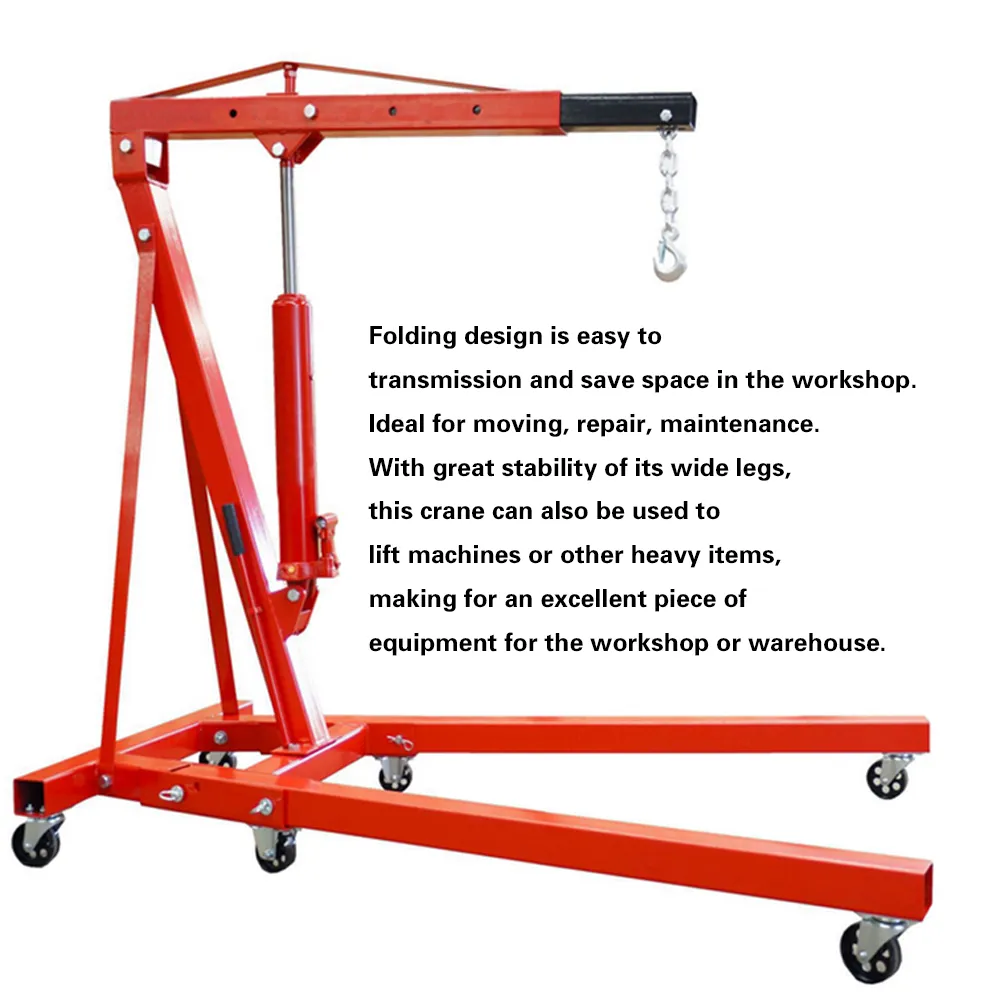
Hydraulic folding engine cranes represent a critical material handling solution across diverse industries, including automotive repair, construction, and manufacturing. These cranes leverage hydraulic principles to provide significant lifting capacity in a compact and maneuverable form factor. Positioned within the industrial lifting equipment chain, they bridge the gap between smaller manual hoists and larger, fixed-position overhead cranes. Core performance characteristics revolve around lifting capacity, boom reach, lifting speed, and overall stability under load. A key industry pain point centers on ensuring consistent lifting force across varying boom angles, minimizing hydraulic fluid leakage, and maximizing operational lifespan in demanding environments. The folding design minimizes storage space requirements, a significant benefit in congested work areas. Selection criteria prioritize safety, durability, and adherence to stringent regulatory standards governing lifting operations.
Material Science & Manufacturing
The core components of a hydraulic folding engine crane demand precise material selection and manufacturing processes. The boom arm is typically constructed from high-strength, low-alloy steel (HSLA) such as ASTM A572 Grade 50, chosen for its high yield strength and weldability. This steel undergoes a controlled cooling process after welding to minimize residual stresses and prevent cracking. The hydraulic cylinder bodies are generally manufactured from seamless steel tubing, conforming to ASTM A519, providing a robust and leak-proof enclosure for the high-pressure hydraulic fluid. Piston rods utilize medium carbon steel (e.g., AISI 1045) that is hardened and chromed to resist corrosion and wear. Hydraulic hoses are constructed from reinforced synthetic rubber compounds, often incorporating multiple layers of textile braiding for pressure resistance and flexibility, meeting standards like SAE J517.
Manufacturing involves several key processes. Boom fabrication utilizes robotic welding techniques, ensuring consistent weld quality and penetration. Hydraulic cylinders undergo precision honing to achieve a smooth internal surface finish, minimizing friction and maximizing sealing efficiency. The folding mechanism relies on precise machining of hinge points and locking mechanisms, utilizing CNC milling and turning centers to achieve tight tolerances. Critical parameters monitored during manufacturing include weld bead geometry, cylinder bore diameter, surface roughness, and hinge pin interference fit. Hydraulic fluid selection is also crucial, with ISO VG 46 or VG 68 mineral-based oils commonly employed, selected for their viscosity, lubricity, and resistance to thermal breakdown. Post-manufacturing, non-destructive testing (NDT) methods like magnetic particle inspection (MPI) and ultrasonic testing (UT) are employed to detect any internal flaws or surface cracks.
Performance & Engineering
The performance of a hydraulic folding engine crane is fundamentally governed by principles of statics and hydraulics. Force analysis dictates that the lifting capacity is directly proportional to the hydraulic pressure and the effective area of the piston within the cylinder. The boom’s geometry and the position of the load relative to the pivot point significantly influence the applied moment and the required lifting force. Stability is paramount; the crane's base must provide sufficient resistance to overturning moments, which are calculated based on the load weight, boom angle, and crane’s center of gravity. Environmental resistance is addressed through corrosion protection, utilizing powder coating or galvanizing to prevent rust and degradation in outdoor conditions. Compliance requirements are dictated by standards such as ASME B30.9 for slings and ASME B30.2 for cranes, ensuring safe lifting practices.
Engineering design considerations include fatigue life assessment of the boom arm and critical weld joints. Finite Element Analysis (FEA) is routinely employed to simulate stress distribution under various loading scenarios, identifying potential areas of failure. Hydraulic system design focuses on minimizing pressure drops and optimizing flow rates to achieve smooth and efficient lifting operations. The control system incorporates safety features such as overload protection, emergency stop mechanisms, and limit switches to prevent exceeding the crane’s rated capacity. A critical design parameter is the hydraulic system's response time, ensuring precise and controlled lifting and lowering movements. Furthermore, the design must account for dynamic loads and shock loading experienced during operation, such as sudden stops or uneven load distribution.
Technical Specifications
| Parameter | Unit | Value (Typical) | Testing Standard |
|---|---|---|---|
| Lifting Capacity | ton | 2-20 | ASME B30.9 |
| Maximum Lifting Height | m | 1.8-4.5 | Manufacturer Specification |
| Boom Reach | m | 0.9-2.5 | Manufacturer Specification |
| Hydraulic System Pressure | MPa | 20-35 | ISO 6020 |
| Hydraulic Fluid Type | - | ISO VG 46 Mineral Oil | ISO 3448 |
| Rotation Angle | degrees | 360 | Manufacturer Specification |
Failure Mode & Maintenance
Hydraulic folding engine cranes are susceptible to several failure modes. Fatigue cracking can occur at weld joints in the boom arm due to cyclical loading, particularly if welding defects are present. Hydraulic fluid leaks are common, originating from worn seals, damaged hoses, or loose fittings. Cylinder drift, where the load slowly descends despite the control valve being closed, indicates internal seal failure or valve leakage. Delamination of the hydraulic hoses can lead to catastrophic fluid loss and loss of lifting capability. Oxidation of the hydraulic fluid degrades its lubricating properties, leading to increased wear and component failure. Corrosion of metallic components, particularly in harsh environments, weakens structural integrity.
Preventive maintenance is critical. Regular inspection of hydraulic hoses for cracks, abrasions, and leaks is essential. Hydraulic fluid should be sampled and analyzed periodically for contamination and viscosity changes, with fluid changes performed according to the manufacturer’s recommendations (typically every 1-2 years). Lubrication of hinge pins and moving parts minimizes friction and wear. Weld joints should be visually inspected for cracks or signs of fatigue. Cylinder seals should be replaced proactively based on operational hours or evidence of leakage. A thorough functional test, including a load test, should be conducted annually to verify the crane’s lifting capacity and safety features. Proper storage when not in use, protected from the elements, extends the crane’s lifespan. Adherence to manufacturer’s maintenance schedules and the use of genuine replacement parts are crucial for optimal performance and reliability.
Industry FAQ
Q: What is the primary cause of hydraulic hose failure in these cranes?
A: The primary cause is often a combination of factors: exceeding the hose’s pressure rating, internal abrasion from contaminated hydraulic fluid, and external damage from rubbing against other components. Regular inspection for cuts, bulges, and abrasion is crucial. Selecting hoses rated for the specific application and using appropriate hose guards can mitigate these failures.
Q: How does temperature affect the performance of the hydraulic fluid?
A: Extreme temperatures significantly impact hydraulic fluid viscosity. High temperatures reduce viscosity, leading to internal leakage and reduced lifting efficiency. Low temperatures increase viscosity, making the fluid sluggish and potentially causing cavitation. Selecting a fluid with a suitable viscosity index (VI) and maintaining it within the recommended operating temperature range is essential.
Q: What are the key safety considerations when operating a folding engine crane?
A: Maintaining a stable work surface, ensuring the load is balanced and within the crane’s capacity, and avoiding side loading are paramount. Personnel should be properly trained in safe lifting practices and wear appropriate personal protective equipment (PPE). Regular inspection of all crane components before each use is also essential.
Q: What is the typical lifespan of a hydraulic cylinder in a folding engine crane?
A: With proper maintenance, a hydraulic cylinder can last for 5-10 years, or approximately 5,000-10,000 operational hours. However, this lifespan is highly dependent on operating conditions, load frequency, and maintenance practices. Signs of impending failure include cylinder drift, external leakage, and piston rod corrosion.
Q: How important is the correct boom angle for safe lifting?
A: Boom angle is critically important. Operating at excessively steep angles reduces lifting capacity and increases the risk of tipping. Operating at extremely shallow angles extends the boom reach but also increases instability. Always refer to the crane’s load chart to determine the safe lifting capacity for a given boom angle and load radius.
Conclusion
Hydraulic folding engine cranes are integral components in a multitude of industrial applications, providing a versatile and efficient lifting solution. Their performance and longevity are directly linked to meticulous material selection, precise manufacturing processes, and rigorous adherence to industry standards. Understanding the underlying hydraulic principles, potential failure modes, and preventative maintenance procedures is paramount for ensuring safe and reliable operation.
Future advancements will likely focus on incorporating smart sensors for real-time load monitoring and predictive maintenance, as well as utilizing lighter-weight materials without compromising structural integrity. Continued refinement of hydraulic system efficiency and the integration of advanced control systems will further enhance the performance and safety of these vital pieces of industrial equipment. Prioritizing operator training and adherence to established safety protocols remains crucial for maximizing the benefits of this technology.
