Introduction
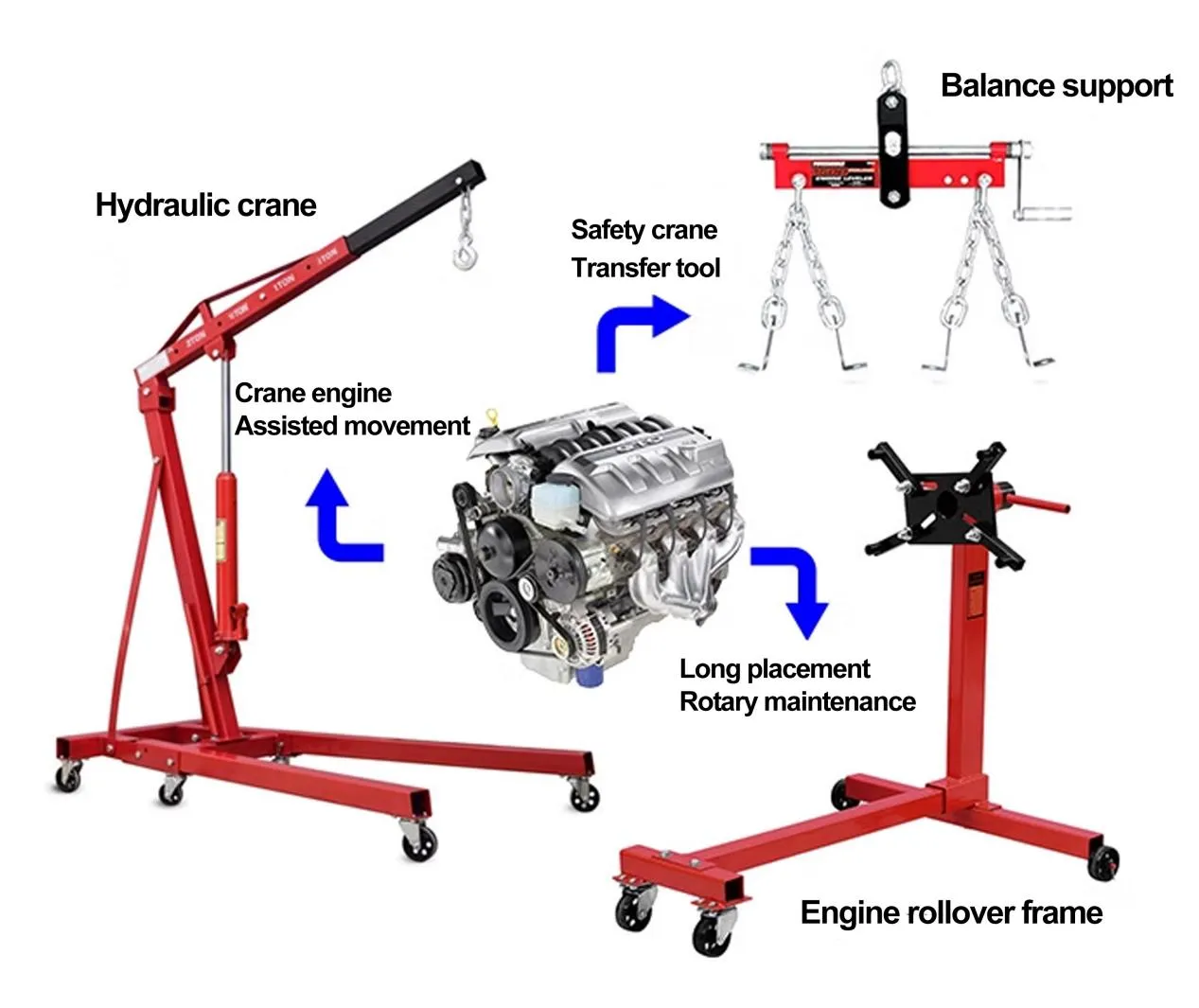
Power lift hydraulic engine hoists are critical material handling equipment utilized extensively in automotive manufacturing, heavy equipment repair, and industrial maintenance. These hoists employ hydraulic principles to lift and position internal combustion engines and other heavy components, reducing manual labor and minimizing the risk of worker injury. Positioned within the broader category of lifting devices, they serve a specialized function distinct from general-purpose cranes or chain hoists, focusing on the precise and controlled movement of large, often sensitive, machinery. Core performance characteristics include lifting capacity (typically ranging from 2 tons to 10 tons), maximum lift height, and operational safety features such as overload protection and controlled lowering speeds. The increasing demands for efficiency and ergonomic safety within industrial settings drive continuous development in this technology, focusing on improvements in hydraulic system reliability, control precision, and integrated safety mechanisms.
Material Science & Manufacturing
The construction of a power lift hydraulic engine hoist relies on a combination of high-strength steel alloys, hydraulic fluids, and specialized seals. The primary structural components – the frame, lifting arms, and support columns – are typically manufactured from carbon steel (e.g., ASTM A36) or alloy steels (e.g., 4140) chosen for their high yield strength and tensile strength. These materials undergo processes like forging, rolling, and welding. Welding, specifically shielded metal arc welding (SMAW) or gas metal arc welding (GMAW), is crucial and requires strict adherence to AWS D1.1 standards for structural welding code to ensure joint integrity and prevent failure under load. The hydraulic cylinder is commonly constructed from honed hydraulic cylinder tubing (e.g., ASTM A519) and employs hardened and tempered steel for the piston rod to resist corrosion and wear. Seals are often composed of nitrile butadiene rubber (NBR) or fluorocarbon elastomers (FKM) due to their compatibility with hydraulic fluids and their ability to maintain sealing performance across a broad temperature range. Hydraulic fluid formulations generally consist of mineral oil-based fluids with anti-wear additives, corrosion inhibitors, and viscosity index improvers. Manufacturing tolerances are tightly controlled, particularly in the cylinder bore and piston diameter, to minimize leakage and ensure efficient hydraulic power transmission. Heat treatment processes, such as quenching and tempering, are vital for achieving desired mechanical properties in critical components.
Performance & Engineering
The performance of a power lift hydraulic engine hoist is governed by fundamental principles of fluid mechanics and structural engineering. The lifting capacity is directly related to the hydraulic pressure generated by the pump, the effective area of the cylinder, and the mechanical advantage of the lifting arm configuration. Force analysis must account for the weight of the engine, the hoist’s own weight, and dynamic loads induced during lifting and maneuvering. Environmental resistance is a critical engineering consideration. Exposure to corrosive environments (e.g., automotive repair shops) necessitates the use of protective coatings such as epoxy or polyurethane on steel components to prevent corrosion. Hydraulic fluids are susceptible to degradation due to moisture and contamination; therefore, regular fluid analysis and filtration are essential. Compliance requirements, such as those stipulated by ASME B30.30 for hydraulic jacks and lifts, dictate safety features like overload protection, safety latches, and pressure relief valves. The design incorporates a robust locking mechanism to prevent unintentional lowering of the load. Finite element analysis (FEA) is commonly employed during the design phase to optimize structural components and validate their ability to withstand anticipated stresses. Operational stability is achieved through a low center of gravity and a wide base, minimizing the risk of tipping. Controlled lowering speeds are managed via a precisely calibrated flow control valve within the hydraulic system.
Technical Specifications
| Lifting Capacity (tons) | Maximum Lift Height (mm) | Minimum Lift Height (mm) | Hydraulic Pump Type |
|---|---|---|---|
| 2 | 1800 | 150 | Manual |
| 4 | 2000 | 200 | Electric/Manual |
| 6 | 2200 | 250 | Electric |
| 8 | 2500 | 300 | Electric |
| 10 | 2800 | 350 | Electric |
| 20 | 3000 | 400 | Pneumatic/Electric |
Failure Mode & Maintenance
Power lift hydraulic engine hoists are susceptible to several failure modes. Fatigue cracking can occur in the lifting arms and frame due to repeated stress cycles, particularly if the hoist is consistently overloaded. Hydraulic cylinder failure often manifests as leakage due to seal degradation or cylinder wall scoring caused by contamination. Delamination of the hydraulic fluid can occur due to water ingress, reducing its lubricating properties and accelerating corrosion. Oxidation of the hydraulic fluid leads to viscosity changes and sludge formation, impeding system performance. Component wear, particularly in the pump and valve assemblies, is a common cause of reduced lifting capacity and slower operating speeds. Maintenance procedures should include regular inspection of structural components for cracks and deformation. Hydraulic fluid should be analyzed periodically for contamination, viscosity, and water content, and replaced as needed. Seals should be inspected and replaced preventatively. Lubrication of pivot points and moving parts is essential to minimize wear. Overload protection mechanisms should be tested regularly to ensure proper functionality. Adherence to the manufacturer’s recommended maintenance schedule is crucial for maximizing hoist lifespan and ensuring operational safety. Proper storage in a clean, dry environment will mitigate corrosion and environmental degradation.
Industry FAQ
Q: What is the typical safety factor incorporated into the design of these hoists?
A: A typical safety factor for power lift hydraulic engine hoists is 2:1 or higher, meaning the hoist is designed to withstand at least twice the rated lifting capacity without failure. This factor accounts for dynamic loads, impact forces, and potential material imperfections. Specific safety factor requirements are often dictated by applicable industry standards (e.g., ASME B30.30).
Q: How does temperature affect the performance of the hydraulic fluid?
A: Temperature significantly impacts hydraulic fluid viscosity. High temperatures reduce viscosity, potentially leading to increased internal leakage and reduced lifting efficiency. Low temperatures increase viscosity, making the fluid more difficult to pump and potentially causing sluggish operation. Proper fluid selection and temperature control are critical for optimal performance.
Q: What type of hydraulic fluid is recommended for cold weather operation?
A: For cold weather operation, a hydraulic fluid with a low pour point and a high viscosity index is recommended. Synthetic hydraulic fluids often exhibit superior low-temperature performance compared to mineral oil-based fluids. Ensure the fluid is compatible with the seal materials used in the hoist.
Q: What is the significance of the relief valve setting?
A: The relief valve setting is a critical safety feature. It is set to a pressure slightly above the maximum operating pressure of the hoist. If the pressure exceeds this setting, the relief valve opens, diverting fluid back to the reservoir and preventing overpressure, which could lead to catastrophic failure.
Q: How frequently should the hydraulic fluid be tested for contamination?
A: Hydraulic fluid should be tested for contamination at least annually, or more frequently if the hoist is used in a particularly dirty or harsh environment. Regular fluid analysis can identify the presence of water, particulate matter, and chemical breakdown products, allowing for timely fluid replacement and preventing system damage.
Conclusion
Power lift hydraulic engine hoists represent a sophisticated application of hydraulic principles and materials science, offering a safe and efficient solution for lifting and positioning heavy components. Understanding the interplay between material properties, manufacturing processes, and performance engineering is paramount for ensuring reliable operation and maximizing lifespan. The selection of appropriate materials, adherence to stringent welding standards, and rigorous quality control throughout the manufacturing process are crucial factors influencing the overall robustness and safety of these hoists.
Continued advancements in hydraulic system technology, coupled with the integration of smart sensors and predictive maintenance capabilities, are poised to further enhance the performance and reliability of power lift hydraulic engine hoists. Future designs will likely focus on reducing environmental impact through the use of biodegradable hydraulic fluids and energy-efficient pump systems. Moreover, the implementation of remote monitoring and diagnostics will enable proactive maintenance, minimizing downtime and optimizing operational efficiency.
