Introduction
Rally car jack stands are specialized lifting and support devices engineered to safely elevate and secure vehicles – specifically those modified for rally racing – during maintenance, repair, or inspection. Unlike standard automotive jack stands, rally versions address the unique demands of vehicles with increased ride height, modified suspension systems, and often, reinforced chassis. Their technical position within the automotive aftermarket is critical for ensuring technician safety and the integrity of complex repairs. Core performance characteristics are defined by load capacity, stability under dynamic loads (simulating uneven terrain), and adaptability to various vehicle underbody configurations. The primary pain point in the industry lies in balancing cost-effectiveness with the demanding safety requirements of professional rally teams and high-performance vehicle enthusiasts. Compromises in material selection or manufacturing processes can lead to catastrophic failure, resulting in vehicle damage, personal injury, and significant liability concerns.
Material Science & Manufacturing
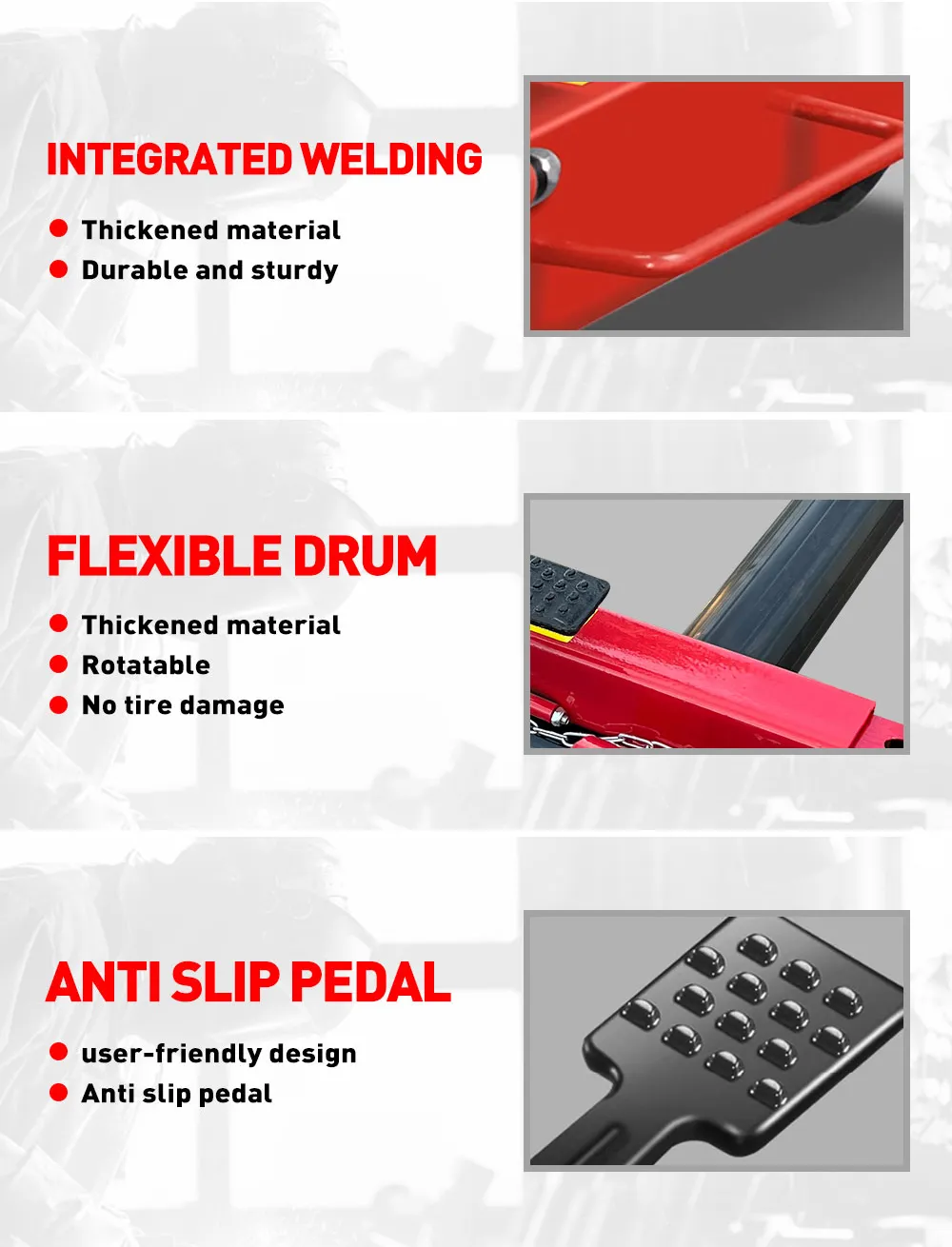
The predominant material for rally car jack stands is high-strength steel, typically AISI 1045 or equivalent carbon steel alloys. This selection is driven by a favorable strength-to-weight ratio, excellent weldability, and relatively low cost. The steel undergoes a heat treatment process – often quenching and tempering – to enhance its yield strength and impact toughness. Critical load-bearing components, such as the vertical support posts and saddle contact points, frequently utilize thicker steel gauges to distribute forces effectively. Manufacturing primarily involves several stages: steel plate cutting (using CNC laser or plasma cutters), forming (hydraulic pressing or bending), welding (SMAW, GMAW, or SAW processes are common), and surface finishing (powder coating or painting for corrosion resistance). Parameter control during welding is paramount, requiring stringent adherence to welding procedures specifications (WPS) to ensure full penetration welds and minimize defects like porosity or cracking. The saddle, which contacts the vehicle chassis, is often lined with high-density polyethylene (HDPE) or a similar polymer to prevent damage to the vehicle’s paint or underbody coating. The pin locking mechanisms, crucial for height adjustment, are frequently constructed from alloy steel (e.g., 4140) and hardened to resist shear forces and wear. Finite Element Analysis (FEA) is increasingly used during the design phase to optimize material distribution and predict stress concentrations under various load conditions.
Performance & Engineering
Performance of rally car jack stands is dictated by their ability to withstand static and dynamic loads without deformation or failure. Force analysis considers several factors: the vehicle's weight, the center of gravity, and potential impact loads during vehicle movement or accidental contact. A typical rally car jack stand is designed with a minimum load capacity significantly exceeding the vehicle’s weight – often 2.5 to 3 times the maximum axle load. Stability is a critical concern, particularly on uneven surfaces common in rally environments. Base dimensions and geometry are engineered to maximize the stand’s footprint and prevent tipping. The pin locking mechanism’s shear strength is a key engineering parameter, calculated based on the anticipated forces and a substantial safety factor. Environmental resistance is also important; jack stands are often exposed to moisture, dirt, and corrosive substances. Powder coating provides a protective barrier against corrosion. Compliance requirements include adherence to relevant safety standards (see section 7). Functional implementation involves careful consideration of the vehicle's jacking points. Rally cars often have reinforced jacking points designed to withstand the concentrated loads imposed by jack stands. Proper engagement with these points is essential to prevent damage to the vehicle’s chassis.
Technical Specifications
| Parameter | Unit | Typical Value (Single Stand) | Testing Standard |
|---|---|---|---|
| Load Capacity | tons | 3-5 | ASME B30.23 |
| Minimum Height | inches | 14 | In-house testing |
| Maximum Height | inches | 24 | In-house testing |
| Base Width | inches | 20-24 | Stability Analysis (FEA) |
| Base Depth | inches | 16-20 | Stability Analysis (FEA) |
| Steel Grade (Post) | - | AISI 1045 | Material Certification |
| Steel Grade (Base) | - | AISI 1045 | Material Certification |
Failure Mode & Maintenance
Rally car jack stands are susceptible to several failure modes. Fatigue cracking, particularly around weld points and pin locking mechanisms, is a common concern, resulting from repeated loading and unloading cycles. Delamination of the saddle’s protective polymer coating can occur due to abrasion or exposure to harsh chemicals, potentially leading to direct contact between the steel stand and the vehicle chassis. Corrosion, especially in humid environments, can weaken the steel structure and compromise its load-bearing capacity. Oxidation of the pin locking mechanism can impede its function and increase the risk of accidental slippage. Buckling of the vertical support post can occur if the load exceeds the stand's rated capacity or if the stand is subjected to off-center loads. Maintenance involves regular inspection for signs of cracking, corrosion, or deformation. Lubrication of the pin locking mechanism with a corrosion-inhibiting lubricant is essential for smooth operation. Periodic cleaning of the stand to remove dirt and debris prevents corrosion and ensures accurate operation. If cracks are detected, the stand should be immediately removed from service and either repaired by a qualified welder or replaced. A yearly load test – applying a load equal to or exceeding the rated capacity – can help identify potential weaknesses before they lead to catastrophic failure.
Industry FAQ
Q: What is the primary difference between a standard automotive jack stand and one designed for rally applications?
A: Rally car jack stands are engineered with significantly higher load capacities and enhanced stability to accommodate the increased weight, ride height, and dynamic loads associated with modified rally vehicles. They often feature wider bases and more robust construction compared to standard jack stands.
Q: How important is the material certification for the steel used in these jack stands?
A: Material certification is critical. It verifies that the steel meets the specified mechanical properties (yield strength, tensile strength, impact toughness) and chemical composition, ensuring the stand can safely withstand the intended loads.
Q: What is the role of Finite Element Analysis (FEA) in the design process?
A: FEA is used to simulate stress distribution under various load conditions, allowing engineers to optimize the stand’s geometry and material distribution to minimize stress concentrations and maximize its structural integrity. It helps predict potential failure points before physical prototyping.
Q: What preventative measures can be taken to mitigate corrosion?
A: Powder coating is the primary corrosion prevention method. Regular cleaning to remove dirt and debris, coupled with the application of a corrosion-inhibiting lubricant to the pin locking mechanism, further enhances corrosion resistance.
Q: What constitutes a 'safe' safety factor when determining the load capacity of a rally jack stand?
A: A safety factor of at least 2.5 is generally considered industry best practice for rally car jack stands, meaning the stand's ultimate load capacity should be at least 2.5 times the maximum anticipated vehicle weight. Higher safety factors may be employed for particularly demanding applications.
Conclusion
Rally car jack stands represent a critical safety component in the automotive aftermarket, demanding a rigorous approach to material selection, manufacturing, and quality control. The ability to reliably support substantial loads under dynamic conditions is paramount, necessitating robust designs validated through comprehensive testing and analysis. The industry faces ongoing challenges in balancing cost-effectiveness with stringent safety requirements.
Future developments are likely to focus on lightweight materials (such as high-strength aluminum alloys), advanced welding techniques, and the integration of smart sensor technology to monitor load distribution and detect potential failures proactively. Adherence to established safety standards and a commitment to continuous improvement are essential for ensuring the long-term reliability and safety of these vital components.
