Introduction
The scissor jack 30 is a mechanical lifting device commonly employed in automotive, construction, and industrial maintenance applications. Operating on a linked parallelogram mechanism, it translates rotational force – typically applied via a screw drive – into vertical linear motion. Its position within the industry chain is as a foundational component in vehicle repair, equipment installation, and general lifting tasks where portability and moderate lifting capacity are required. Core performance characteristics are defined by its rated lifting capacity (typically ranging from 2 to 30 tons for industrial models), lifting height, and operational speed. A critical pain point in the scissor jack market is balancing cost-effectiveness with durability and safety, particularly concerning materials selection and fatigue resistance. Ensuring stability under load and preventing unintended lowering are paramount concerns for manufacturers and end-users alike. The jack 30 aims to address these challenges through optimized design and robust material specification.
Material Science & Manufacturing
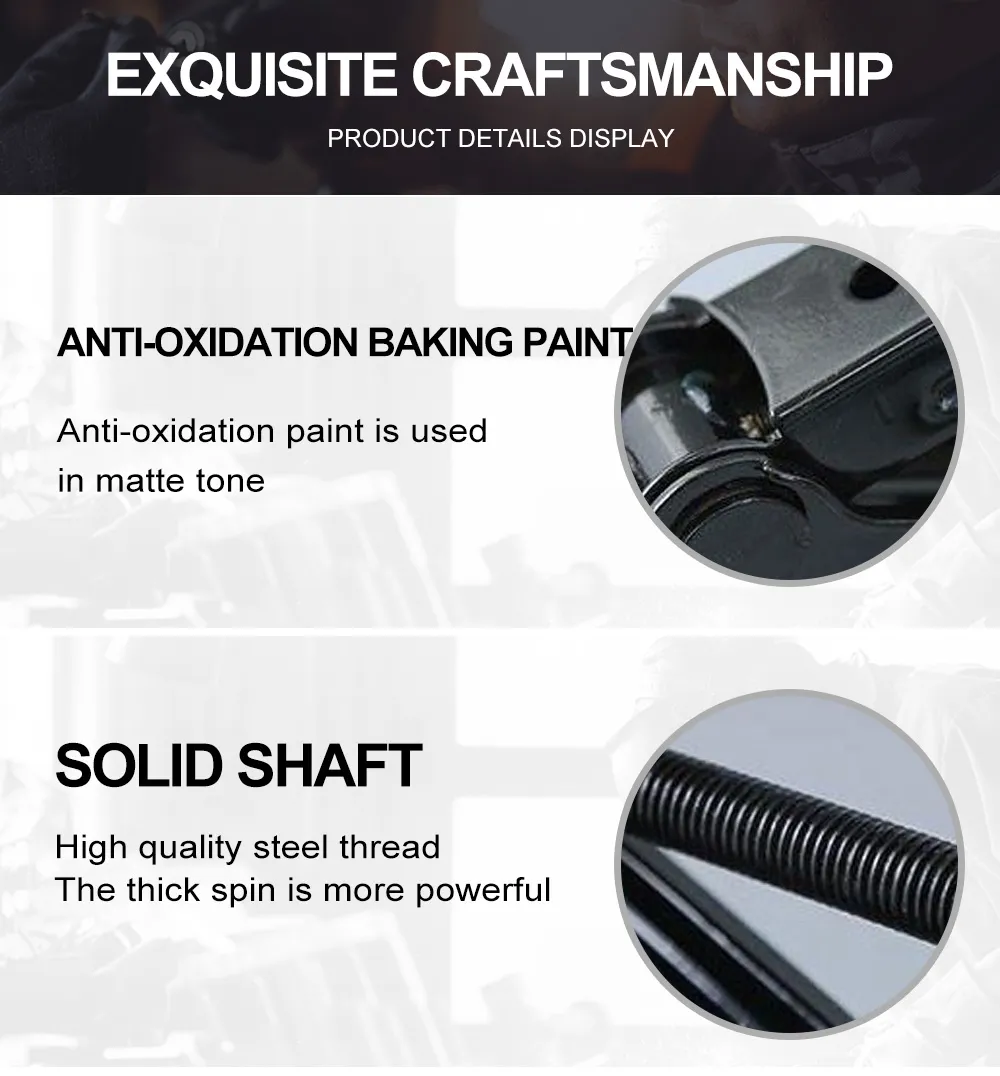
The primary materials utilized in scissor jack 30 construction are high-strength steel alloys – specifically AISI 1045 or equivalent carbon steel – for the scissor arms and base. These alloys are chosen for their high yield strength, tensile strength, and weldability. The screw drive is typically manufactured from alloy steel (e.g., 4140) due to the high shear stresses experienced during operation. Manufacturing begins with steel plate cutting, followed by forming operations such as bending and pressing to create the scissor arm profiles. Critical dimensions are maintained using CNC machining. Welding, typically using shielded metal arc welding (SMAW) or gas metal arc welding (GMAW), joins the individual components. Parameter control during welding is crucial: Preheat temperatures must be carefully monitored to prevent hydrogen embrittlement. Post-weld heat treatment (PWHT), such as normalizing, is implemented to relieve residual stresses and improve ductility. The screw drive is manufactured via cold forging or machining, followed by thread rolling. Surface treatments, including phosphate coating or black oxide coating, are applied to both the scissor arms and screw to enhance corrosion resistance. Proper lubrication with a high-load grease is also vital. Chemical compatibility between the grease and the steel alloys must be verified to prevent corrosion or degradation of the lubricant.
Performance & Engineering
Performance of the scissor jack 30 is fundamentally governed by principles of force analysis. The applied force at the screw drive is amplified through the mechanical advantage of the scissor linkage. The theoretical mechanical advantage (TMA) is determined by the geometry of the linkage – specifically, the ratio of the distance from the fulcrum to the applied force to the distance from the fulcrum to the load. In practice, the actual mechanical advantage (AMA) is reduced due to friction in the joints and screw drive. Environmental resistance is a critical consideration. The jack 30 is susceptible to corrosion in humid environments or when exposed to road salts. Design features, such as protective coatings and sealed bearings, mitigate this risk. Stability under load is ensured by a wide base and a low center of gravity. Finite Element Analysis (FEA) is utilized during the design phase to optimize the geometry of the scissor arms and base for maximum load-bearing capacity and minimal stress concentration. Compliance requirements are dictated by regional safety standards (see section 7). Functional implementation necessitates precise alignment of the jack with the lifting point to avoid uneven loading and potential damage to the lifted object.
Technical Specifications
| Parameter | Value (Typical) | Unit | Testing Standard |
|---|---|---|---|
| Lifting Capacity | 30 | tons | ASME B30.1 |
| Minimum Lifting Height | 150 | mm | Internal Specification |
| Maximum Lifting Height | 450 | mm | Internal Specification |
| Screw Drive Pitch | 6 | mm | ISO 683-1 |
| Material (Scissor Arms) | AISI 1045 | - | ASTM A36 |
| Material (Screw Drive) | 4140 Alloy Steel | - | ASTM A29 |
Failure Mode & Maintenance
Common failure modes for scissor jack 30 include fatigue cracking at the weld points of the scissor arms, particularly under cyclic loading. This is exacerbated by stress concentrations introduced during welding. Another frequent failure is thread stripping on the screw drive due to overloading or improper lubrication. Corrosion, especially in the screw threads, can also lead to seizure and functional failure. Delamination of the protective coatings (phosphate or oxide) reduces corrosion resistance. Buckling of the scissor arms can occur if the load exceeds the design capacity. Failure analysis typically involves visual inspection for cracks and corrosion, followed by non-destructive testing (NDT) such as ultrasonic testing (UT) or dye penetrant inspection (DPI) to detect subsurface flaws. Preventive maintenance includes regular lubrication of the screw drive and joints with a high-load grease. Periodic inspection for signs of corrosion or fatigue cracking is crucial. Worn or damaged components should be replaced immediately. Proper storage in a dry environment helps to prevent corrosion. Avoid exceeding the rated lifting capacity and ensure the jack is placed on a stable, level surface before operation. If fatigue cracking is detected, the entire jack should be decommissioned and replaced.
Industry FAQ
Q: What is the expected service life of the scissor jack 30 under typical automotive maintenance usage?
A: Under typical usage – approximately 2-3 lifts per week – and with proper maintenance (regular lubrication and inspection), the expected service life is 5-7 years. This is dependent on operating conditions and the extent to which the jack is exposed to corrosive environments. Frequent overloading will significantly reduce service life.
Q: What are the key differences between a manual and a pneumatic scissor jack, and which is more suitable for heavy-duty applications?
A: Manual scissor jacks, like the 30, rely on human-powered rotational force. Pneumatic scissor jacks utilize compressed air. For heavy-duty applications, pneumatic jacks generally offer faster lifting speeds and require less physical exertion. However, they require access to a compressed air source. Manual jacks are more portable and independent of external utilities.
Q: How does the material selection impact the jack’s performance in extremely cold temperatures?
A: At low temperatures, steel alloys can become brittle, increasing the risk of fracture. AISI 1045, while robust, exhibits a ductile-to-brittle transition temperature. Selection of a steel alloy with a lower transition temperature – or the addition of impact modifiers – can improve performance in cold climates. Proper lubrication also becomes more critical, as grease viscosity increases at lower temperatures.
Q: What safety mechanisms are incorporated into the design to prevent accidental lowering of the load?
A: The scissor jack 30 incorporates a self-locking screw drive mechanism that prevents the jack from lowering under load when the handle is not actively engaged. The ratchet mechanism also provides positive locking. However, it's crucial to never work under a load supported solely by a scissor jack without utilizing additional safety supports, such as jack stands.
Q: What is the recommended inspection frequency for a scissor jack used in a commercial vehicle repair shop?
A: For commercial use, a monthly inspection is recommended. This should include a visual inspection for cracks, corrosion, and damage to the screw threads. The lubrication should be checked and replenished as needed. A more thorough inspection, including NDT methods, should be performed annually or after any incident involving suspected overload or misuse.
Conclusion
The scissor jack 30 represents a cost-effective and versatile lifting solution for a broad range of applications. Its performance relies heavily on material selection, manufacturing precision, and proper maintenance. Understanding the principles of force analysis, potential failure modes, and relevant safety standards is crucial for ensuring reliable and safe operation. Addressing the industry pain points of durability and safety through rigorous quality control and adherence to industry best practices is paramount.
Future development may focus on incorporating lighter-weight materials, such as aluminum alloys, to reduce overall weight without compromising strength. Integration of sensors to monitor load and stability could enhance safety and provide real-time feedback to the operator. Continued refinement of welding techniques and surface treatments will further improve fatigue resistance and corrosion protection, extending the service life of the scissor jack 30.
