Introduction
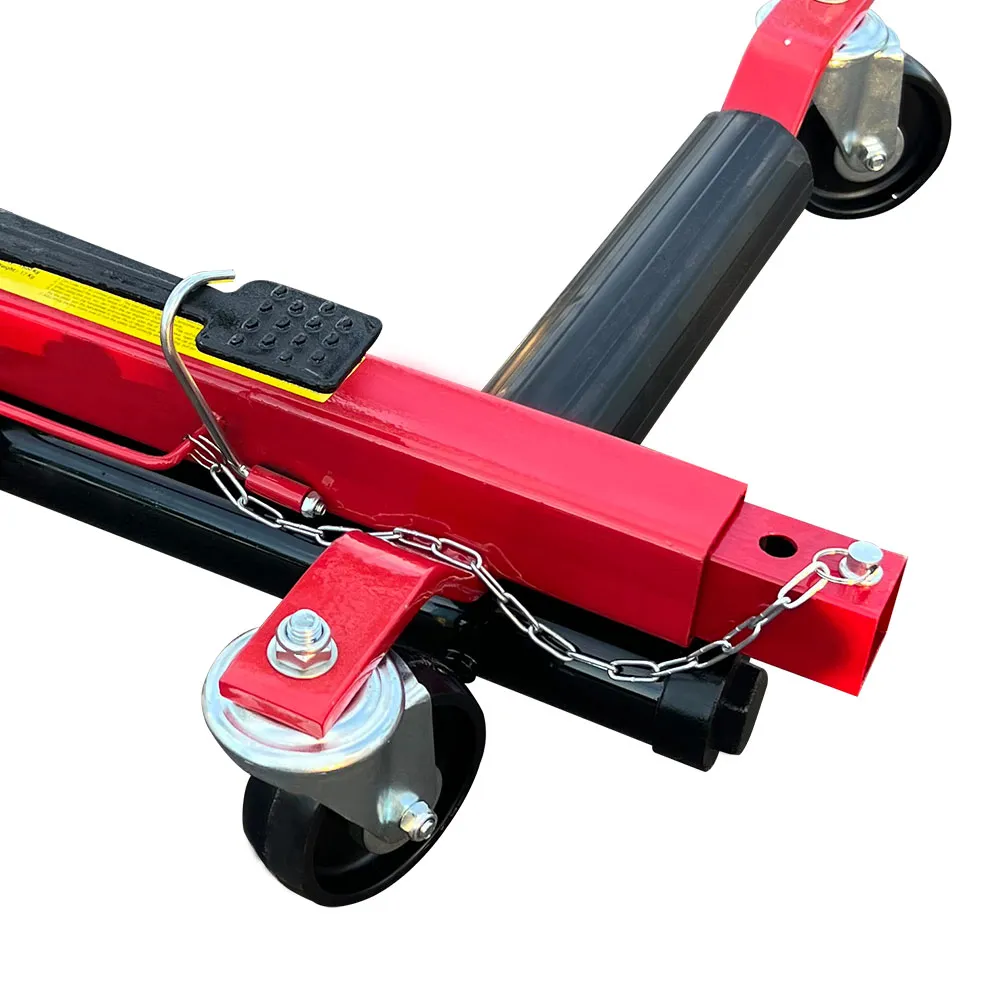
The scissor jack for pickup trucks is a mechanical lifting device employed to raise vehicles for tire changes, maintenance, and emergency repairs. Positioned within the automotive aftermarket and essential to vehicle service, its operation relies on a linked parallelogram structure that expands vertically when force is applied. Unlike hydraulic jacks, scissor jacks typically operate mechanically, using a screw mechanism to drive the expansion. Core performance characteristics center around lifting capacity, stability under load, and operational ease. A critical pain point within the industry revolves around ensuring consistent manufacturing quality to prevent catastrophic failure during use, particularly given the substantial weight of pickup trucks. Furthermore, corrosion resistance is paramount, as these jacks are frequently exposed to harsh environmental conditions and road salts. The trend in modern scissor jack design focuses on increased safety features like locking mechanisms and improved structural integrity to minimize operational risk.
Material Science & Manufacturing
Scissor jacks predominantly utilize medium carbon steel (typically AISI 1045 or equivalent) for the primary structural components – the scissor arms and base plate. This steel is chosen for its balance of tensile strength, yield strength, and weldability. The screw thread, which drives the lifting mechanism, is often made of alloy steel (AISI 4140) for enhanced wear resistance. The saddle, the component contacting the vehicle chassis, frequently employs ductile iron due to its compressive strength and ability to conform to irregular surfaces. Manufacturing begins with steel plate cutting using CNC laser or plasma cutting for precision. The scissor arms are then formed through bending operations. Welding, utilizing shielded metal arc welding (SMAW) or gas metal arc welding (GMAW), joins the individual components. Critical parameters during welding include maintaining appropriate heat input to prevent material distortion and ensuring complete fusion to avoid stress concentration points. The screw thread is formed via cold rolling or machining. Surface treatment includes phosphate coating for corrosion prevention, followed by a final coating of enamel or powder coating for aesthetic appeal and added protection. Heat treatment, specifically quenching and tempering, is crucial for achieving the desired mechanical properties of the steel components. Quality control involves non-destructive testing (NDT), such as ultrasonic testing, to detect internal flaws in welds and material discontinuities. Chemical compatibility analysis ensures the saddle material won't induce galvanic corrosion on the vehicle chassis.
Performance & Engineering
The performance of a scissor jack is fundamentally governed by force analysis. The lifting capacity, typically ranging from 2 to 3 tons for pickup trucks, is dictated by the geometry of the scissor mechanism and the material strength of the components. The force applied to the screw thread is translated into a vertical lifting force, amplified by the mechanical advantage of the linkage. Stability is a critical engineering consideration. The base of the jack must provide sufficient support to prevent tipping under load. Finite Element Analysis (FEA) is commonly used to optimize the structural design and identify potential stress concentration areas. Environmental resistance is addressed through material selection and coatings. Exposure to moisture, salt, and temperature fluctuations can lead to corrosion, which weakens the jack’s structure. Compliance requirements, such as those stipulated by DOT (Department of Transportation) and vehicle manufacturer specifications, dictate minimum lifting capacity, stability criteria, and quality standards. The saddle design must conform to vehicle chassis contours to ensure secure contact and prevent slippage. Locking mechanisms, such as ratchet and pawl systems, are integrated to prevent uncontrolled descent when the screw thread is not actively engaged. Fatigue analysis is performed to predict the jack’s lifespan under repeated loading cycles, considering factors like stress amplitude and material fatigue strength.
Technical Specifications
| Lifting Capacity (Tons) | Minimum Lifting Height (mm) | Maximum Lifting Height (mm) | Screw Thread Pitch (mm) |
|---|---|---|---|
| 2.0 | 80 | 380 | 4.0 |
| 2.5 | 90 | 420 | 5.0 |
| 3.0 | 100 | 460 | 6.0 |
| 2.0 (Heavy Duty) | 120 | 450 | 4.0 |
| 2.5 (Heavy Duty) | 130 | 500 | 5.0 |
| Material (Scissor Arms) | Material (Screw) | Coating | Weight (kg) |
Failure Mode & Maintenance
Common failure modes in scissor jacks include fatigue cracking at weld joints, particularly under high stress concentration areas. Corrosion, resulting from exposure to the environment, can weaken the steel structure, accelerating crack propagation. Screw thread stripping is another frequent failure, caused by excessive loading or improper use. Delamination of the saddle material can occur due to repeated impact loading or material defects. Oxidation of the screw thread, especially in humid environments, can increase friction and impede operation. Maintenance involves regular inspection for signs of corrosion, cracks, or damage. Lubricating the screw thread with a suitable grease prevents friction and ensures smooth operation. Periodic tightening of all bolts and fasteners is crucial to maintain structural integrity. If corrosion is detected, the affected areas should be cleaned, treated with a rust converter, and repainted. Replacement of worn or damaged components, such as the screw thread or saddle, is necessary to prevent catastrophic failure. Avoid exceeding the specified lifting capacity, as this can induce excessive stress and lead to premature failure. Proper storage in a dry environment minimizes corrosion risks. A visual inspection of weld points before each use can identify potential crack initiation sites.
Industry FAQ
Q: What is the primary cause of scissor jack failure in heavy-duty pickup truck applications?
A: The primary cause is typically fatigue cracking at weld points on the scissor arms, exacerbated by exceeding the jack’s rated lifting capacity or encountering uneven loading. Corrosion also plays a significant role, weakening the steel structure over time.
Q: How does the material selection influence the jack’s lifespan?
A: Using higher-strength steel alloys for the scissor arms and employing a hardened alloy steel for the screw thread significantly increases the jack’s resistance to fatigue and wear, extending its lifespan. The quality of the steel and its heat treatment are also crucial.
Q: What type of corrosion protection is most effective for scissor jacks used in coastal environments?
A: A multi-layered coating system is recommended, including a phosphate undercoat for corrosion inhibition, followed by an epoxy primer and a polyurethane topcoat for UV and salt spray resistance. Regular application of a corrosion inhibitor is also advisable.
Q: What is the importance of the locking mechanism in a scissor jack?
A: The locking mechanism (ratchet and pawl system) is critical for safety. It prevents the jack from unintentionally lowering under load, which could result in vehicle damage or personal injury. Regular inspection and maintenance of the locking mechanism are vital.
Q: What are the key considerations when specifying a scissor jack for a new pickup truck model?
A: Key considerations include the truck’s gross vehicle weight rating (GVWR), the required lifting capacity, the operating environment, and compliance with relevant safety standards. Thorough testing and validation are essential to ensure the jack meets performance and reliability requirements.
Conclusion
The scissor jack for pickup trucks, while a seemingly simple device, embodies a complex interplay of material science, mechanical engineering, and manufacturing precision. Its reliable operation is paramount for vehicle maintenance and emergency situations, making consistent quality control and adherence to industry standards essential. The selection of appropriate materials, meticulous welding processes, and robust corrosion protection are critical for ensuring durability and preventing premature failure.
Future developments in scissor jack technology may focus on incorporating lighter-weight materials, such as high-strength aluminum alloys, and integrating advanced safety features like electronic overload protection. Optimizing the geometry of the scissor mechanism through advanced FEA modeling can further enhance lifting capacity and stability. Ongoing research into corrosion-resistant coatings will continue to improve the longevity and reliability of these essential automotive tools.
