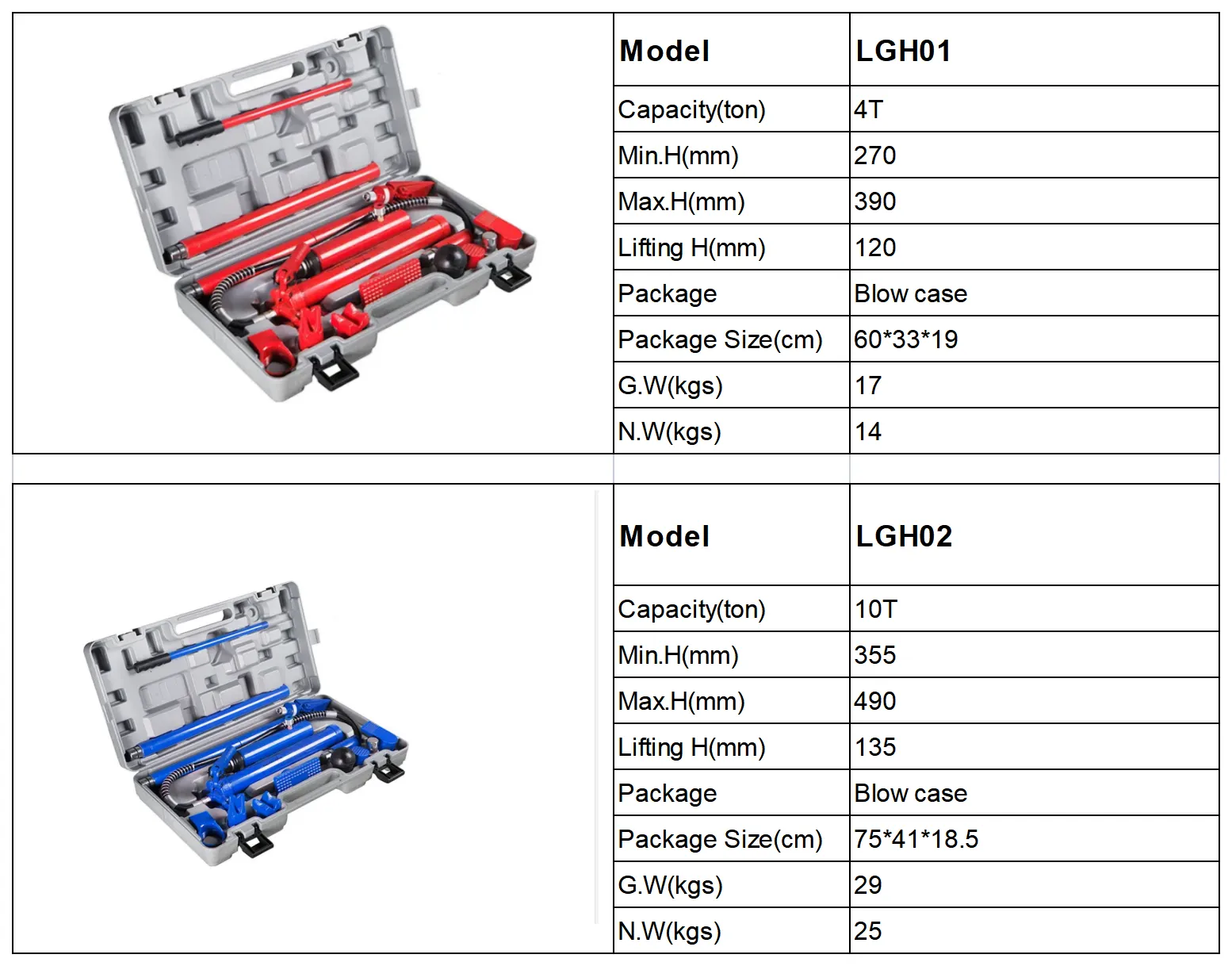
Introduction
The scissor jack tool is a mechanical lifting device utilizing a linked series of supports that expand and contract in a crisscross pattern, akin to the opening and closing of a pair of scissors. Predominantly employed in automotive maintenance and light industrial applications, it provides a stable, albeit limited-stroke, lifting capability. Its positioning within the automotive aftermarket and emergency roadside assistance industries is crucial, serving as a standardized component for vehicle tire changes and minor chassis access. Core performance characteristics center around lifting capacity, stability under load, and operational safety. The simplicity of design, coupled with relatively low manufacturing costs, dictates its widespread adoption. However, limitations in lifting height and inherent stability concerns when operating on uneven terrain require careful consideration and adherence to specified operating procedures.
Material Science & Manufacturing
Scissor jacks are typically constructed from medium carbon steel (SAE 1045 or equivalent) for the primary structural components – the scissor linkages and base plate. This material is chosen for its balance of tensile strength, yield strength, and weldability. The screw mechanism, responsible for translating rotational force into linear displacement, often utilizes alloy steel (e.g., 4140) for enhanced durability and resistance to shear stress. The saddle, which contacts the vehicle chassis, is frequently constructed from high-density polyethylene (HDPE) or similar polymer to prevent damage to the vehicle’s paintwork and provide a non-slip surface. Manufacturing processes involve several critical stages. Steel components are typically formed via cold forging or hot rolling, followed by machining to precise dimensions. Welding (typically MIG or spot welding) joins the linkages, demanding stringent quality control to ensure weld integrity and prevent stress concentration points. The screw is manufactured through a cold-forming process and subsequently thread-rolled. Surface treatment, including phosphating and powder coating, provides corrosion resistance. Critical parameters during manufacturing include material composition verification (spectroscopic analysis), weld penetration depth inspection (ultrasonic testing or radiographic inspection), and dimensional accuracy verification (coordinate measuring machines). Material hardness testing (Rockwell or Vickers) ensures the steel components meet specified strength requirements. Improper heat treatment during steel processing can lead to brittle fracture; thus, meticulous temperature control is paramount.

Performance & Engineering
The performance of a scissor jack is fundamentally governed by the principles of mechanical advantage and stress distribution. The lifting capacity is determined by the applied force on the screw handle and the mechanical advantage of the screw thread. Force analysis reveals that the linkages experience both tensile and compressive stresses during operation, with maximum stress concentration occurring at the pivot points. Stability is a significant concern; the jack’s base must provide sufficient resistance to overturning moments generated by the lifted load. This is exacerbated on uneven surfaces. Engineering considerations include the selection of appropriate bearing surfaces at the pivot points to minimize friction and wear. The screw thread profile (typically ACME or square thread) influences efficiency and load-carrying capacity. Compliance requirements, such as those stipulated by ANSI/ASME B30.1, mandate minimum safety factors and load testing procedures. Furthermore, the jack must be capable of withstanding static and dynamic loads without experiencing permanent deformation or failure. Finite element analysis (FEA) is often employed to optimize the geometry of the linkages and identify potential stress concentration zones. Corrosion resistance is also a crucial performance characteristic, especially in environments exposed to road salt and moisture. Fatigue life is critical; repeated use can induce fatigue cracking at the weld points and pivot connections.
Technical Specifications
| Lifting Capacity (tons) | Minimum Lifting Height (mm) | Maximum Lifting Height (mm) | Base Width (mm) |
|---|---|---|---|
| 1 | 80 | 320 | 150 |
| 2 | 90 | 380 | 180 |
| 3 | 100 | 450 | 200 |
| 1.5 | 70 | 350 | 165 |
| 2.5 | 95 | 400 | 210 |
| 0.5 | 60 | 280 | 130 |
Failure Mode & Maintenance
Common failure modes in scissor jacks include screw thread stripping, linkage bending or fracture, weld failure, saddle deformation, and corrosion. Screw thread stripping typically occurs due to excessive force applied to the handle or improper lubrication. Linkage bending or fracture results from exceeding the jack’s lifting capacity or subjecting it to side loads. Weld failures initiate from stress concentration points and propagate through fatigue cracking. Saddle deformation arises from localized stress concentration when supporting irregularly shaped vehicle components. Corrosion, particularly in steel components, weakens the structure and increases the risk of fracture. Regular maintenance is critical to prevent these failures. This includes periodic lubrication of the screw thread and pivot points with a lithium-based grease. Visual inspection for cracks, bends, or corrosion is essential. Avoid exceeding the rated lifting capacity. Ensure the jack is placed on a level, stable surface before operation. Properly secure the saddle to the vehicle's designated jacking points. If a weld is suspected to be compromised, the jack should be immediately removed from service and sent for professional repair. Replacement of worn or damaged components, such as the saddle or linkages, should be performed by a qualified technician. Rust prevention treatments can extend the service life of the jack, particularly in harsh environments.
Industry FAQ
Q: What is the typical safety factor incorporated into the design of a scissor jack?
A: A typical safety factor for a scissor jack is between 3:1 and 4:1, meaning the jack is designed to withstand a load three to four times its rated lifting capacity before structural failure. This factor accounts for dynamic loads, material variations, and potential misuse.
Q: What materials are best suited for the saddle to prevent damage to vehicle undercarriage?
A: High-density polyethylene (HDPE) or similar polymers with a durometer hardness between 60-70 Shore A are ideal materials for the saddle. These materials provide a non-slip surface and sufficient cushioning to prevent damage to the vehicle’s paintwork and delicate undercarriage components.
Q: How does temperature affect the performance of a scissor jack?
A: Extreme temperatures can affect the viscosity of the lubricant used in the screw mechanism, potentially increasing friction and reducing efficiency. Low temperatures can also increase the brittleness of the steel components, making them more susceptible to fracture. High temperatures may reduce the yield strength of the steel.
Q: What is the recommended torque specification for tightening the screw handle after lifting a vehicle?
A: There isn't a specific torque specification for tightening the screw handle. The objective is to ensure the load is adequately supported and the jack is stable. The handle should be rotated until it is snug and resists further rotation under load, but not excessively tightened, as this can damage the screw thread.
Q: What are the limitations of using a scissor jack on uneven ground?
A: Using a scissor jack on uneven ground significantly increases the risk of instability and potential jack failure. The uneven surface creates an unbalanced load distribution, increasing the overturning moment and potentially causing the jack to slip or collapse. A solid, level surface is always required.
Conclusion
The scissor jack tool remains a prevalent lifting solution due to its simplicity, affordability, and portability. However, its limitations in lifting height, stability concerns, and susceptibility to failure modes stemming from material fatigue and improper usage necessitate stringent adherence to operating procedures and regular maintenance protocols. Understanding the underlying principles of force analysis, material science, and manufacturing processes is critical for ensuring safe and reliable operation.
Future advancements may focus on incorporating improved materials – such as higher-strength alloys or composite materials – to enhance lifting capacity and reduce weight. Implementing integrated stability control mechanisms, such as wider baseplates or locking mechanisms, could mitigate the risk of overturning. Ultimately, a comprehensive understanding of the jack’s technical capabilities and limitations is paramount for professionals in the automotive and light industrial sectors.
