
Introduction
Shop crane jacks, commonly referred to as floor jacks, are hydraulic tools used for lifting heavy loads a short distance, primarily within automotive repair facilities, manufacturing plants, and construction sites. Their technical position in the materials handling chain lies between manual lifting solutions (like pry bars) and larger-scale overhead crane systems. These devices leverage Pascal's principle to amplify force, enabling the lifting of substantial weights with manageable effort. Core performance characteristics center around lift capacity, minimum lift height, maximum lift height, and operational safety features. Unlike larger cranes designed for precise positioning, shop crane jacks prioritize robustness and ease of use for localized lifting operations. This guide provides an in-depth technical analysis of shop crane jacks, covering materials, manufacturing, performance parameters, potential failure modes, and relevant industry standards.
Material Science & Manufacturing
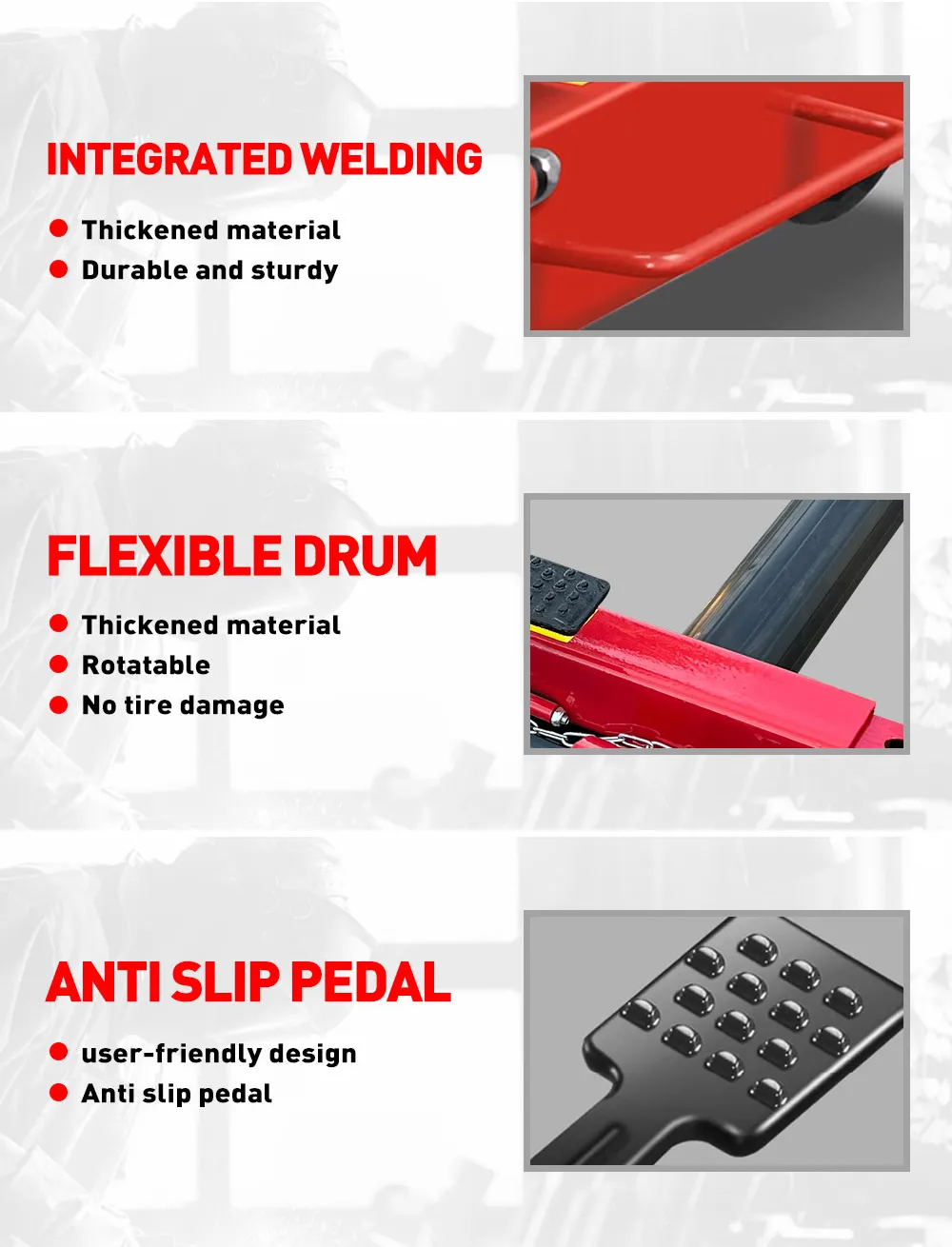
The primary materials used in shop crane jack construction are high-strength steel alloys (AISI 1045, 4140), hydraulic fluid (typically mineral oil-based hydraulic fluid with corrosion inhibitors), and seal materials (nitrile rubber – Buna-N, Viton). The jack's frame and lifting arm are typically constructed from forged or rolled steel, heat-treated to achieve high yield strength and tensile strength, critical for resisting bending and torsional stresses. The hydraulic cylinder is fabricated from honed steel tubing, ensuring a smooth internal surface to minimize friction and prevent seal damage. Piston rods are often chrome-plated to resist corrosion and wear. Manufacturing processes involve several key steps: steel forging/rolling, machining (for precise component dimensions), welding (to assemble the frame), heat treatment (to enhance material properties), hydraulic cylinder assembly (including piston seal installation and fluid filling), and final surface treatment (painting or powder coating for corrosion protection). Critical parameter control focuses on weld integrity (ensuring complete fusion and minimal porosity), hydraulic fluid cleanliness (to prevent valve blockages and pump wear), and seal dimensional accuracy (to maintain a leak-proof hydraulic system). The quality of the steel’s metallurgical structure directly impacts fatigue life and resistance to crack propagation under cyclical loading. Seal material selection is crucial, considering compatibility with the hydraulic fluid and operating temperature range.
Performance & Engineering
Performance of a shop crane jack is fundamentally governed by Pascal’s Law: pressure applied to a confined fluid is transmitted equally in all directions. The mechanical advantage is derived from the difference in piston areas – a small piston (operated by the handle) applies pressure to a larger piston (lifting the load). Force analysis involves calculating the maximum lifting force based on the hydraulic pressure and piston area. The jack’s stability is paramount and is determined by its base width and the height of the lifting point. A wider base and lower lifting height increase stability, reducing the risk of tipping. Environmental resistance is a significant concern. Exposure to corrosive environments (e.g., salt spray, acidic fumes) can lead to rust and degradation of steel components. Hydraulic fluid must maintain its viscosity and lubricity across a wide temperature range. Compliance requirements necessitate adherence to safety standards (discussed in the footer). Engineering considerations also include the design of safety valves (pressure relief valves) to prevent overloading and the implementation of a slow-release valve for controlled lowering. The design of the handle linkage impacts operator effort and lifting speed. Finite element analysis (FEA) is often employed during the design phase to optimize frame geometry and minimize stress concentrations.
Technical Specifications
| Capacity (tons) | Minimum Lift Height (in) | Maximum Lift Height (in) | Pump Handle Strokes/Full Lift |
|---|---|---|---|
| 2 | 3.7 | 18.1 | 13 |
| 3 | 3.5 | 23.6 | 15 |
| 5 | 3.9 | 27.2 | 17 |
| 10 | 4.3 | 36.2 | 21 |
| 20 | 5.1 | 48.8 | 25 |
| 30 | 6.3 | 57.1 | 29 |
Failure Mode & Maintenance
Common failure modes in shop crane jacks include hydraulic leaks (due to seal degradation or corrosion), cylinder damage (caused by overloading or improper use), frame cracking (resulting from fatigue or exceeding the load capacity), and handle/linkage failure (due to wear or material defects). Failure analysis often reveals that hydraulic leaks originate from deteriorated O-rings or seals, exacerbated by the use of incompatible hydraulic fluids. Cylinder damage can manifest as scoring of the piston or bending of the cylinder wall, frequently linked to off-center loading. Frame cracking typically initiates at stress concentration points, such as weld joints or areas around mounting holes. Preventative maintenance is crucial. This includes regular inspection of hydraulic fluid levels and condition, lubrication of moving parts, checking for leaks, and inspecting the frame for cracks or signs of distortion. Hydraulic fluid should be replaced periodically (typically every 1-2 years) to maintain its lubricating properties and prevent corrosion. Seals should be replaced at the first sign of leakage. Avoid exceeding the rated load capacity and always use the jack on a level, stable surface. Proper storage in a dry environment can minimize corrosion. A consistent preventative maintenance schedule drastically improves service life and operational safety.
Industry FAQ
Q: What is the impact of hydraulic fluid viscosity on jack performance?
A: Hydraulic fluid viscosity directly affects the jack’s lifting speed and efficiency. Higher viscosity fluids provide better lubrication but increase resistance to flow, slowing down lifting and lowering operations. Lower viscosity fluids lift faster but offer less protection against wear. The recommended viscosity range is typically specified by the manufacturer and depends on the operating temperature. Using an incorrect viscosity can lead to pump cavitation, seal damage, and reduced lifting capacity.
Q: How does temperature affect the operation of a shop crane jack?
A: Extreme temperatures can significantly impact performance. Cold temperatures increase fluid viscosity, slowing down operation and potentially causing sluggishness. Hot temperatures decrease viscosity, reducing lubrication and increasing the risk of leaks. Hydraulic fluid expands and contracts with temperature changes, potentially affecting pressure readings. Seals also exhibit temperature-dependent behavior, with reduced elasticity at low temperatures and increased susceptibility to degradation at high temperatures.
Q: What are the common causes of cylinder drift in a shop crane jack?
A: Cylinder drift, where the jack slowly lowers under load, is typically caused by internal leakage within the hydraulic cylinder. This can be due to worn piston seals, scored cylinder walls, or damage to the piston itself. Contamination in the hydraulic fluid can also contribute to seal damage. In some cases, the pressure relief valve may be malfunctioning, allowing fluid to bypass the lifting chamber.
Q: What safety precautions should be taken when using a shop crane jack?
A: Always use the jack on a level, hard surface. Never work under a load supported only by the jack; always use jack stands. Ensure the load is properly centered on the jack saddle. Do not exceed the jack’s rated load capacity. Inspect the jack for damage before each use. Slowly and carefully lower the load after completing the work.
Q: What is the role of the pressure relief valve?
A: The pressure relief valve is a critical safety component. It’s designed to automatically release hydraulic pressure if the jack is overloaded, preventing damage to the cylinder, pump, and frame. It also prevents over-pressurization of the system, which could lead to catastrophic failure. Regular inspection and testing of the pressure relief valve are essential for ensuring its proper function.
Conclusion
Shop crane jacks represent a fundamental piece of equipment in many industrial settings, providing a robust and relatively inexpensive method for localized heavy lifting. Understanding the underlying principles of hydraulics, material science, and engineering mechanics is crucial for both effective operation and preventative maintenance. The longevity and safe operation of these devices hinge on the quality of materials used in their construction, the precision of manufacturing processes, and adherence to recommended maintenance procedures.
Future advancements in shop crane jack technology may focus on incorporating smart features such as integrated load sensors, wireless monitoring capabilities, and improved safety mechanisms. Furthermore, research into alternative hydraulic fluids with enhanced environmental performance and wider operating temperature ranges could contribute to increased sustainability and reliability. Consistent adherence to relevant industry standards and best practices remains paramount to ensuring the continued safe and efficient use of shop crane jacks.
