Embossing Machine technology continues to play a pivotal role in automotive parts production, enabling precise surface texturing that enhances grip, reduces noise, and improves aesthetic consistency across interior and exterior components. As vehicle manufacturers push for higher quality benchmarks, the machines and processes behind every part face increasing scrutiny.
The automotive components sector has experienced a fundamental shift over the past decade, driven by stricter emissions regulations, electrification trends, and rising consumer expectations for durability and refinement. These forces compel parts manufacturers to adopt more sophisticated production methods and material handling capabilities than ever before.
Precision Requirements in Modern Component Manufacturing
Today's automotive parts demand dimensional tolerances measured in microns, especially for safety-critical systems such as braking, steering, and suspension assemblies. Achieving these tolerances consistently across high-volume production runs requires stable, well-maintained forming and finishing equipment. The choice of underlying machinery directly influences the repeatability and quality of every component leaving the production line.
Surface finish quality has also become a differentiating factor in the automotive supply chain. Components that exhibit consistent texture, uniform appearance, and defect-free surfaces contribute to overall vehicle perception and customer satisfaction. This is where specialized material processing equipment demonstrates its value in the manufacturing ecosystem.
Material Science Driving Equipment Evolution
Advanced high-strength steels, aluminum alloys, and increasingly polymer composites are reshaping the material landscape in automotive parts production. Each material family presents unique forming characteristics, springback behaviors, and surface treatment requirements. Manufacturers must match their production equipment to the specific material properties they work with to maintain efficiency and quality.
The ability to process diverse materials on a single production platform has become a competitive advantage. Flexible tooling systems, adjustable forming parameters, and quick-change capabilities allow manufacturers to respond to shifting customer demands without major capital expenditure. This adaptability is especially valuable in the current automotive landscape, where model variants and material specifications change frequently.
Tubular Components in Automotive Structures
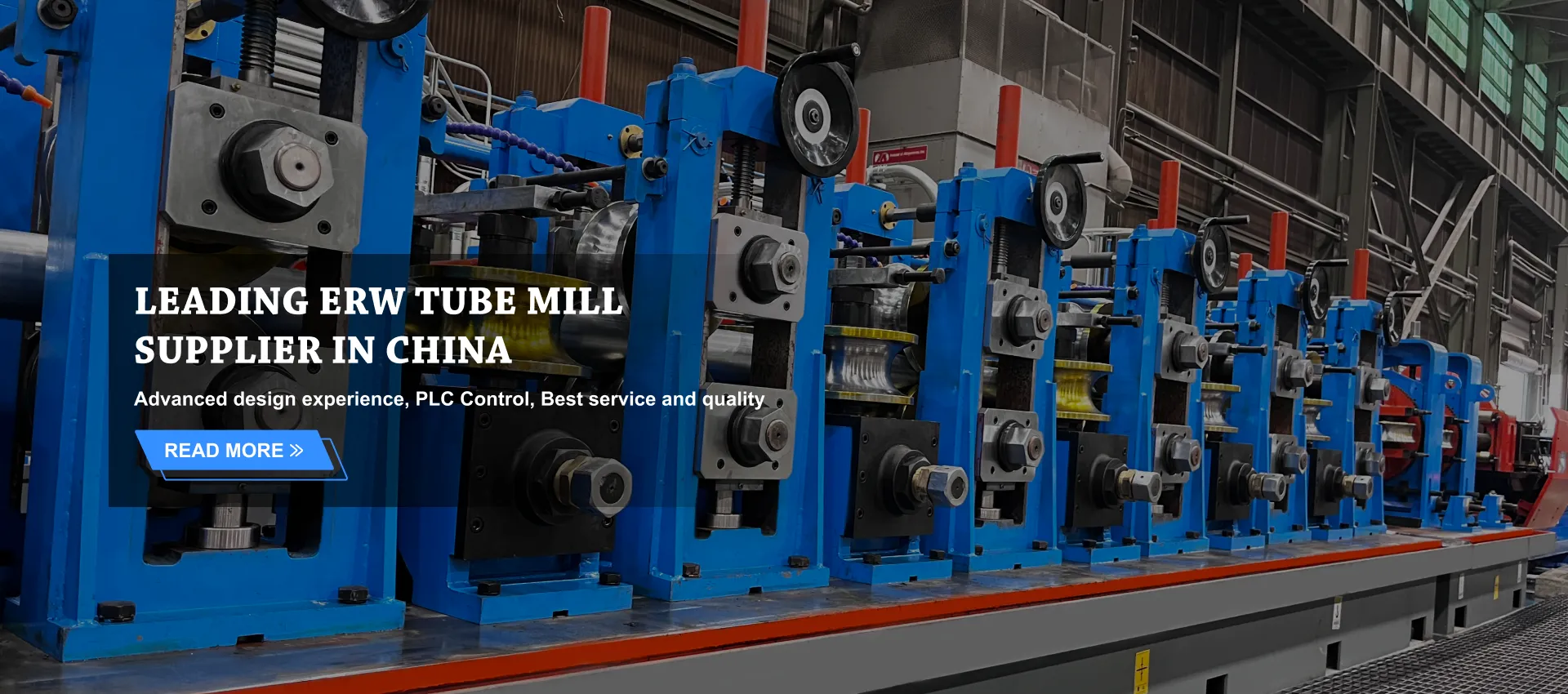
Tubular parts are ubiquitous in modern vehicles, appearing in exhaust systems, chassis frames, roll cages, driveshafts, and structural reinforcements. The production of these components requires precise forming and welding to ensure mechanical integrity and consistent wall thickness. The ERW tube mill machine serves as a critical piece of infrastructure in the supply chain, converting steel coils into welded tubes with the dimensional accuracy and weld quality that automotive applications demand.
Welded tube quality directly impacts downstream forming operations and final part performance. Inconsistent weld seams, ovality variations, or surface defects in the tube stock can lead to rejection rates in subsequent bending, hydroforming, or assembly processes. Automotive parts suppliers therefore place a premium on upstream tube quality, making the selection of reliable tube mill equipment a foundational decision.
Quality Assurance Protocols Across the Supply Chain
Quality control in automotive parts manufacturing has evolved into a multi-layered discipline. Inline inspection systems, statistical process control, and traceability requirements are now standard practice across Tier 1 and Tier 2 suppliers. The integration of non-destructive testing methods such as eddy current inspection, ultrasonic testing, and dimensional scanning helps identify anomalies before they propagate through the production chain.
Many automotive OEMs now require their suppliers to maintain IATF 16949 certification, which mandates rigorous process control and continuous improvement frameworks. Compliance with these standards often necessitates investment in production equipment that can deliver consistent output under varying operating conditions. Equipment reliability, maintenance accessibility, and technical support from the machinery provider become factors that influence overall supply chain stability.
Surface Treatment and Finishing Capabilities
Beyond dimensional accuracy, automotive parts must meet exacting standards for surface appearance, corrosion resistance, and wear characteristics. Finishing operations such as embossing, polishing, coating, and heat treatment add functional and aesthetic value to components. The ability to apply consistent surface textures across large production runs supports brand identity and quality perception.
Surface treatment equipment must be integrated seamlessly into the production flow to avoid bottlenecks. Automated handling, process parameter monitoring, and rapid changeover between different surface patterns or finishes enable manufacturers to serve multiple customers with varying specifications from a single production line.
Supply Chain Resilience and Equipment Strategy
Recent disruptions in global supply chains have highlighted the importance of equipment reliability and technical support availability. Automotive parts manufacturers increasingly evaluate machinery suppliers not only on initial equipment cost but on total cost of ownership, spare parts availability, and engineering support responsiveness. Turnkey project capabilities, where a single supplier coordinates equipment design, installation, and commissioning, have gained traction as a way to reduce project risk and accelerate time to production.
The relationship between equipment manufacturers and parts producers has become more collaborative. Suppliers that offer customized solutions, process optimization assistance, and after-sales technical support help their customers maintain production continuity and adapt to changing market requirements. This partnership approach is increasingly valued in the automotive supply chain, where downtime carries significant financial consequences.
Outlook for the Automotive Parts Sector
The automotive parts industry faces a period of rapid transformation as vehicle architectures evolve toward electrification, lightweight construction, and increased digital integration. Manufacturers that invest in versatile, precision-focused production equipment today will be better positioned to capture opportunities in emerging segments such as battery enclosures, electric drive components, and thermal management systems.
Material innovation continues to open new possibilities for weight reduction, performance improvement, and cost optimization. The equipment that processes these materials must evolve in parallel, offering the precision, flexibility, and reliability that modern automotive production demands. For parts manufacturers navigating this changing landscape, strategic equipment selection remains one of the most consequential decisions affecting long-term competitiveness.
