Introduction
Tire jack stands are critical safety devices employed in automotive maintenance and repair. Functioning as secondary support mechanisms, they maintain vehicle elevation after lifting with a jack, preventing collapse during work. Positioned within the automotive aftermarket, these stands are indispensable for both professional mechanics and DIY enthusiasts. Core performance characteristics revolve around load capacity, stability, and durability. The selection criteria heavily depend on the weight of the vehicle being supported, with stands categorized by capacity (typically in tons or pounds). A substandard jack stand represents a significant safety hazard, making adherence to engineering standards and material selection paramount. This guide provides a comprehensive technical overview of tire jack stands, encompassing material science, manufacturing processes, performance considerations, failure modes, and relevant industry standards.
Material Science & Manufacturing
The vast majority of tire jack stands are constructed from steel, specifically carbon steel, due to its cost-effectiveness and high strength-to-weight ratio. Lower-cost stands may utilize thinner gauge steel or lower-grade alloys. Higher-end stands, particularly those designed for heavier vehicles, often incorporate high-strength low alloy (HSLA) steels or even alloy steels like 4140, offering increased tensile strength and yield strength. The manufacturing process typically involves steel tube forming, welding, and surface treatment. Steel tubing is cut to length and formed into the desired shape, including the base, upright supports, and saddle. Gas Metal Arc Welding (GMAW), also known as MIG welding, is commonly used to join these components. Weld quality is critical; improper welding can introduce stress concentrations and points of failure. Parameter control during welding—including voltage, amperage, and shielding gas composition—is crucial to ensure adequate penetration and avoid porosity. Following welding, stands undergo surface treatment, commonly powder coating, to provide corrosion resistance and enhance durability. The powder coating process involves applying an electrostatic charge to the powder, followed by curing in an oven. Pinholes or uneven coating thickness can compromise corrosion protection. The saddle, the part that contacts the vehicle, often features a textured surface or rubber pad to increase friction and prevent slippage. The rubber pads typically consist of a synthetic rubber compound designed for resistance to oils, solvents, and deformation under load.
Performance & Engineering
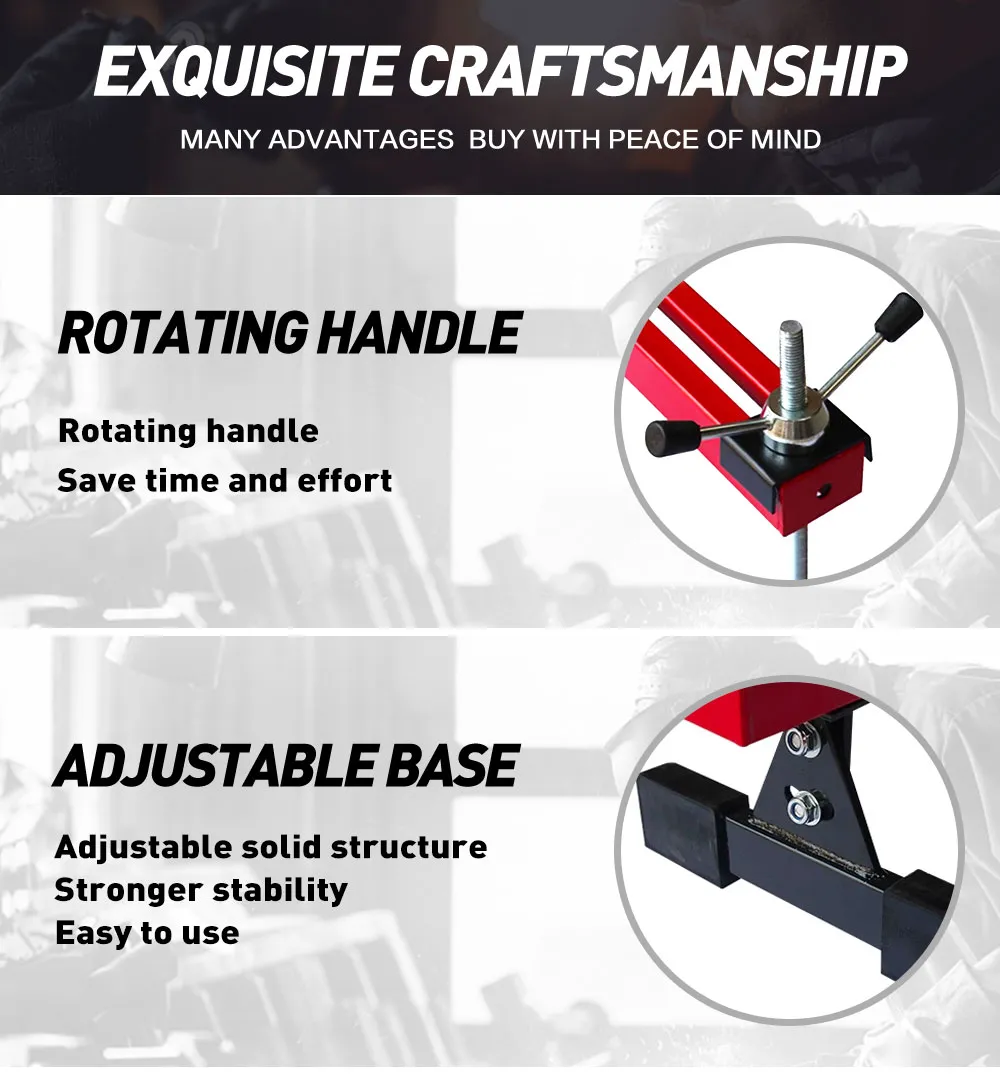
The primary engineering consideration for tire jack stands is structural stability under load. Finite Element Analysis (FEA) is frequently employed during the design phase to simulate stress distribution and identify potential weak points. Key performance parameters include buckling resistance, yield strength, and fatigue life. Buckling is a critical failure mode, particularly in the upright supports. The design must incorporate sufficient cross-sectional area and bracing to prevent buckling under the maximum rated load. Yield strength defines the point at which the material undergoes permanent deformation. Jack stands must remain elastic – returning to their original shape – within their rated capacity. Fatigue life is particularly important for stands used frequently. Repeated loading and unloading can lead to micro-cracking and eventual failure. The saddle design impacts the effective load distribution. A wider saddle distributes the load over a larger area of the vehicle’s chassis, reducing stress concentrations. Stability is also affected by the base design. Wider bases provide greater resistance to tipping. The locking mechanism, which adjusts the stand’s height, is another critical performance element. It must securely lock in place, preventing accidental collapse. Locking mechanisms typically rely on a pin-and-hole system or a ratchet mechanism. Regular inspection of the locking mechanism is essential to ensure its functionality. Environmental resistance also plays a role. Exposure to moisture and road salts can accelerate corrosion, reducing the stand's load capacity and structural integrity.
Technical Specifications
| Parameter | Typical Value (2-Ton Stand) | Typical Value (3-Ton Stand) | Testing Standard |
|---|---|---|---|
| Load Capacity | 4,000 lbs (1814 kg) | 6,000 lbs (2722 kg) | ASME B30.28 |
| Minimum Height | 15 inches (381 mm) | 16 inches (406 mm) | Manufacturer Specification |
| Maximum Height | 23 inches (584 mm) | 27 inches (686 mm) | Manufacturer Specification |
| Base Width | 8 inches (203 mm) | 9 inches (229 mm) | Manufacturer Specification |
| Base Depth | 6 inches (152 mm) | 7 inches (178 mm) | Manufacturer Specification |
| Steel Grade (Upright) | Carbon Steel (e.g., 1018) | HSLA Steel (e.g., 5000) | Material Certificate |
Failure Mode & Maintenance
Common failure modes in tire jack stands include buckling of the upright supports, yielding of the steel, fracture at weld points, and failure of the locking mechanism. Buckling typically occurs when the stand is overloaded or if the upright is damaged. Yielding is often a gradual process, manifesting as a permanent deformation. Weld fractures are frequently caused by fatigue cracking initiated by stress concentrations or poor weld quality. Locking mechanism failure can result from wear and tear, corrosion, or improper operation. Corrosion is a significant contributor to many failure modes, weakening the steel and reducing its load-bearing capacity. Preventive maintenance is crucial to ensure safe operation. Regular inspection should include a visual check for signs of damage, such as dents, cracks, or corrosion. The locking mechanism should be tested to ensure it engages and disengages smoothly and securely. Lubrication of moving parts, such as the locking pin, can prevent corrosion and ensure proper function. Avoid exceeding the rated load capacity of the stand. Always use jack stands on a level, hard surface. Never work under a vehicle supported only by a jack; always use jack stands as secondary support. If a stand shows any signs of damage, it should be removed from service and replaced. Periodically, stands should be cleaned to remove dirt, grime, and corrosive substances.
Industry FAQ
Q: What is the difference between dynamic and static load capacity?
A: Static load capacity refers to the maximum weight a jack stand can support when applied gradually and consistently. Dynamic load capacity accounts for shock loads and impacts, which can significantly increase stress on the stand. Jack stand ratings typically refer to static load capacity, so it's crucial to avoid dropping a vehicle onto the stands or subjecting them to sudden impacts.
Q: How important is the base width of a jack stand?
A: Base width directly affects stability. A wider base provides a larger footprint and greater resistance to tipping, particularly on uneven surfaces. Stands with narrow bases are more prone to instability and should only be used on perfectly level ground.
Q: What steel grade is best for a heavy-duty jack stand?
A: For heavy-duty applications, HSLA (High-Strength Low Alloy) steels are preferred. Grades like 5000 or 7000 offer significantly higher yield strength and tensile strength compared to standard carbon steels, improving both load capacity and durability.
Q: What should I look for when inspecting a jack stand’s locking mechanism?
A: Inspect the locking pin for wear, damage, or corrosion. Ensure the pin engages fully and securely in each locking position. The release mechanism should also operate smoothly. Any difficulty in engaging or disengaging the lock indicates a potential problem that requires immediate attention.
Q: Can I use jack stands that have been powder coated to repair vehicles in wet or humid environments?
A: While powder coating provides corrosion resistance, it’s not a foolproof barrier. Prolonged exposure to moisture and road salts can eventually compromise the coating. Regular cleaning and drying of the stands are essential in wet or humid environments. Consider using stands with additional corrosion protection, such as galvanized steel, for frequent outdoor use.
Conclusion
Tire jack stands, while seemingly simple devices, are engineered components critical for automotive safety. Their performance relies heavily on material selection, precise manufacturing processes, and adherence to established engineering principles. Understanding the failure modes associated with these stands—including buckling, yielding, and weld fracture—is paramount for preventing accidents. Proper maintenance, encompassing regular inspection and adherence to load limits, extends the lifespan and ensures the continued safe operation of jack stands.
The continued evolution of jack stand design is driven by the need for increased safety, durability, and ease of use. Future advancements may include the integration of sensors to monitor load distribution and alert users to potential overloads. Materials research focused on developing corrosion-resistant alloys will also play a crucial role in enhancing the longevity of these essential automotive tools. Ultimately, the responsible use and diligent maintenance of tire jack stands remain the most effective strategies for ensuring a safe working environment.
