Introduction
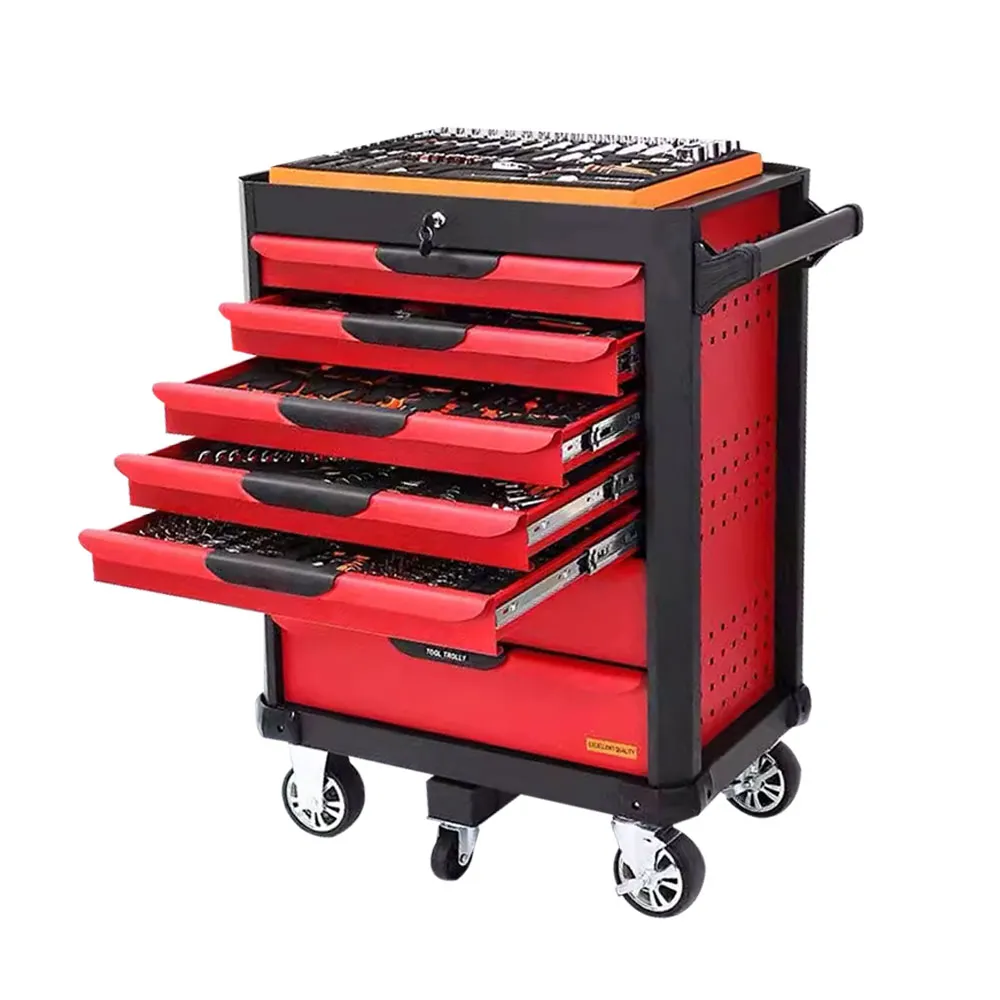
The tools trolley, a mobile workstation designed for the organization and transport of tools and equipment, is a ubiquitous feature in manufacturing, maintenance, repair, and operations (MRO) environments. Positioned within the broader material handling equipment industry, its core function is to enhance efficiency and accessibility, reducing downtime and improving workflow. Modern tools trolleys are evolving beyond simple wheeled carts, incorporating features such as lockable drawers, adjustable shelving, integrated power supplies, and specialized tool holding mechanisms. Performance is characterized by load capacity, maneuverability, durability, and the ability to securely contain a diverse range of tools. A key pain point in the industry is balancing robust construction with ergonomic considerations – ensuring the trolley can withstand heavy use while remaining easily maneuverable by operators. Furthermore, maintaining tool organization and preventing damage during transport are critical concerns driving ongoing design improvements.
Material Science & Manufacturing
The construction of a tools trolley typically involves a combination of materials selected for strength, durability, and cost-effectiveness. Mild steel (ASTM A36) is commonly used for the frame and structural components, offering a good strength-to-weight ratio and weldability. Sheet steel (typically 16-18 gauge) is employed for drawer and panel construction. Drawer slides and handles often utilize zinc-plated steel (ASTM B633) to provide corrosion resistance. Polypropylene (PP) or high-density polyethylene (HDPE) are frequently used for drawer liners and impact-resistant corner protectors due to their chemical resistance and low cost. Wheels are typically manufactured from polyurethane (PU) on a steel or aluminum core, balancing load capacity, abrasion resistance, and rolling smoothness. The manufacturing process generally involves several key steps: steel cutting and forming (using techniques such as laser cutting or stamping), welding (SMAW or MIG/MAG welding for frame assembly, adhering to AWS D1.1 standards), surface finishing (powder coating for corrosion protection and aesthetic appeal, complying with ASTM D3359), and assembly. Parameter control is critical throughout the process, particularly weld penetration, coating thickness, and dimensional accuracy of components. Quality control often utilizes non-destructive testing (NDT) methods such as visual inspection, magnetic particle inspection (MPI – ASTM E703), and ultrasonic testing (UT – ASTM E797) to identify defects in welded joints.
Performance & Engineering
Performance evaluation of a tools trolley centers on its structural integrity, load-bearing capacity, and maneuverability. Force analysis is crucial in determining the maximum load each drawer and the overall trolley can safely support. Finite Element Analysis (FEA) is often employed to simulate stress distribution under various loading conditions, ensuring compliance with relevant safety standards. The stability of the trolley, particularly when fully loaded, is paramount. The center of gravity (CG) must be carefully considered during design to prevent tipping. Wheel selection is critical for smooth operation and reduced operator fatigue. Wheel diameter, material hardness (Shore durometer), and bearing type significantly influence rolling resistance and load capacity. Environmental resistance is also a key consideration. Trolleys used in harsh environments (e.g., automotive repair shops, construction sites) require robust corrosion protection (e.g., epoxy powder coating with a minimum thickness of 80 microns). Compliance requirements vary depending on the intended application and geographic location. In Europe, the CE marking (EN 349) indicates compliance with essential health and safety requirements. ANSI/SGA standards govern the design and testing of industrial mobile equipment in the United States. Ergonomic considerations are increasingly important, with designs focusing on adjustable handle heights and optimal drawer placement to minimize strain on operators.
Technical Specifications
| Parameter | Standard Duty Trolley | Heavy Duty Trolley | Stainless Steel Trolley | Mobile Workstation Trolley |
|---|---|---|---|---|
| Maximum Load Capacity (kg) | 150 | 300 | 200 | 250 |
| Number of Drawers | 3 | 5 | 4 | 6 |
| Drawer Load Capacity (kg/drawer) | 25 | 40 | 30 | 35 |
| Frame Material | Mild Steel | Mild Steel (Thicker Gauge) | 304 Stainless Steel | Mild Steel |
| Wheel Diameter (mm) | 100 | 125 | 100 | 150 |
| Overall Dimensions (L x W x H) (mm) | 750 x 450 x 900 | 900 x 500 x 1000 | 800 x 400 x 950 | 1000 x 550 x 1100 |
Failure Mode & Maintenance
Tools trolleys are susceptible to several failure modes. Fatigue cracking is a common issue in welded frame components, particularly under cyclical loading. This can be mitigated through proper weld design, stress relief treatments, and regular visual inspection. Drawer slide failure can occur due to excessive load, corrosion, or lack of lubrication. Delamination of the powder coating is a typical aesthetic and protective failure, often caused by inadequate surface preparation or poor coating application. Wheel failure can manifest as bearing wear, tread separation, or wheel cracking, leading to reduced maneuverability and potential safety hazards. Corrosion is a significant concern, especially in environments with high humidity or exposure to corrosive substances. Preventative maintenance is crucial for extending the service life of a tools trolley. Regular lubrication of drawer slides and wheel bearings is essential. Periodic inspection of welds and fasteners should be conducted to identify potential cracks or loosening. Damaged or corroded components should be replaced promptly. The powder coating should be inspected for chips or scratches, and touch-up repairs should be performed as needed. Wheel alignment should be checked periodically to ensure smooth rolling. A documented maintenance schedule, including inspection checklists and repair procedures, is recommended to ensure consistent and effective maintenance.
Industry FAQ
Q: What steel grade is most appropriate for a tools trolley operating in a high-humidity environment?
A: For high-humidity environments, 304 stainless steel is the preferred choice due to its excellent corrosion resistance. While mild steel with a robust coating can provide some protection, stainless steel offers superior long-term durability and eliminates the risk of rust formation. Consider also the use of stainless steel hardware (bolts, nuts, screws) to prevent galvanic corrosion.
Q: What is the significance of the Shore durometer rating for trolley wheels?
A: The Shore durometer rating indicates the hardness of the polyurethane wheel material. A lower durometer (e.g., 70A) provides better grip and shock absorption, suitable for uneven surfaces. A higher durometer (e.g., 95A) offers increased abrasion resistance and load capacity, ideal for smooth, hard floors. The optimal durometer depends on the typical operating environment and load requirements.
Q: How does FEA contribute to the design process of a tools trolley?
A: Finite Element Analysis (FEA) allows engineers to simulate the stresses and strains experienced by the trolley under various loading conditions. This helps optimize the design, identify potential weak points, and ensure structural integrity before physical prototyping. FEA minimizes the risk of failure and reduces material waste by ensuring efficient use of resources.
Q: What powder coating process offers the best corrosion protection?
A: Epoxy-polyester hybrid powder coating generally provides the best balance of corrosion protection, durability, and cost-effectiveness. However, for extremely corrosive environments, a zinc-rich epoxy primer followed by a polyester topcoat offers superior performance. Proper surface preparation (e.g., sandblasting) is crucial for ensuring good adhesion of the coating.
Q: What are the key considerations when selecting drawer slides?
A: Key considerations include load capacity, extension length (full extension, 3/4 extension, etc.), slide type (ball bearing, roller bearing), and material (steel, stainless steel). Ball bearing slides offer smoother operation and higher load capacity, while roller bearing slides are more cost-effective. Stainless steel slides are essential for corrosive environments.
Conclusion
The tools trolley, while seemingly a simple piece of equipment, represents a complex intersection of material science, manufacturing processes, and engineering principles. Its effectiveness is directly tied to the careful selection of materials, precise manufacturing control, and adherence to relevant industry standards. Understanding the potential failure modes and implementing a robust preventative maintenance program are essential for maximizing the service life and ensuring the safe and reliable operation of the trolley.
Looking forward, advancements in materials technology – such as the increased use of lightweight, high-strength alloys and composite materials – will likely lead to the development of even more durable and ergonomic tools trolleys. Integration with smart technology, such as RFID tracking and digital inventory management systems, will further enhance efficiency and optimize workflow in industrial settings. The ongoing focus on sustainable manufacturing practices will also drive the adoption of eco-friendly materials and manufacturing processes.
