Introduction
Vehicle jack stands are critical safety components used in automotive repair and maintenance. Positioned as a secondary support system, they prevent a vehicle from collapsing when raised off the ground using a jack. Unlike hydraulic jacks which are designed for lifting, jack stands are engineered for sustained load-bearing. Their technical position within the automotive service chain is paramount, directly impacting technician safety and the integrity of repair procedures. Core performance characteristics center around static load capacity, stability under dynamic loading, and resistance to deformation. A robust jack stand minimizes the risk of vehicle descent, safeguarding personnel and preventing damage to the vehicle itself. Selection must be based on the vehicle's weight, anticipated work conditions, and adherence to relevant safety standards. Their construction, commonly utilizing steel, is geared towards maximizing strength-to-weight ratio and providing a secure platform for automotive work.
Material Science & Manufacturing
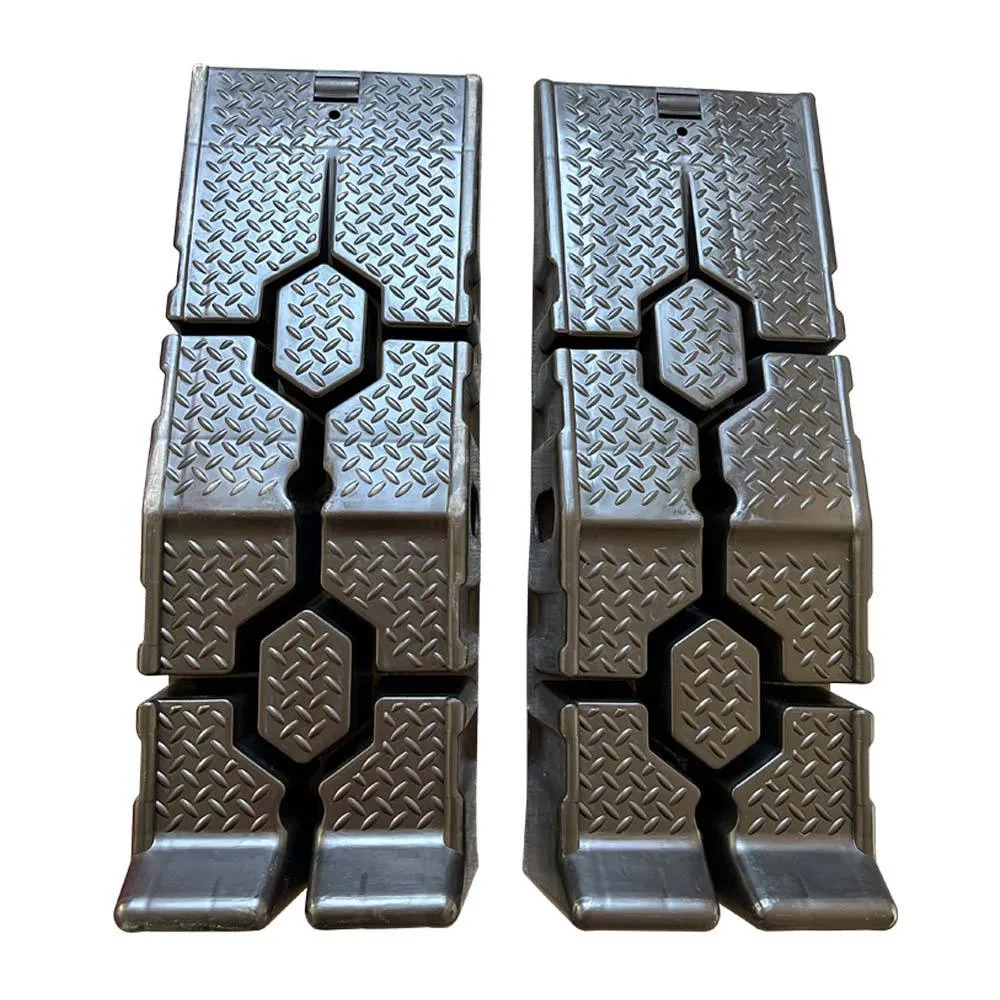
The predominant material for vehicle jack stand construction is carbon steel, specifically AISI 1045 or similar medium carbon steels, due to their balance of strength, weldability, and cost-effectiveness. Raw material properties include a yield strength typically exceeding 350 MPa and a tensile strength of 550-700 MPa. Manufacturing processes commonly involve steel plate cutting, stamping, and robotic welding. Critical parameters in welding include maintaining appropriate heat input to prevent material property degradation in the heat-affected zone (HAZ) and ensuring complete penetration for weld integrity. Powder coating or painting provides corrosion resistance, typically employing epoxy or polyurethane-based systems. The pawl mechanism, responsible for securing the stand at various heights, often uses case-hardened steel (e.g., 8620) for increased wear resistance. Manufacturing tolerances are tightly controlled; dimensional accuracy within +/- 0.5mm is common, particularly for critical features like the pawl engagement points. Quality control includes non-destructive testing (NDT) methods like ultrasonic testing to identify internal flaws in welds and material defects. Plastic components, such as base pads, are generally made from polypropylene or polyethylene for impact resistance and to prevent damage to the vehicle's undercarriage. The manufacturing process also considers the grain structure of the steel, aiming for optimal directional strength to resist bending and shear forces.
Performance & Engineering
Jack stand performance is fundamentally governed by structural mechanics principles. Force analysis considers static loading (the vehicle’s weight) and dynamic loading (movement or impacts during work). Buckling is a primary failure mode, particularly for stands with high aspect ratios. Engineers employ finite element analysis (FEA) to optimize the stand’s geometry and minimize stress concentrations. Stability is enhanced through a wide base and low center of gravity. The pawl locking mechanism is critically analyzed for shear strength and fatigue resistance. Environmental resistance is crucial; exposure to moisture, road salts, and automotive fluids necessitates corrosion protection. Compliance requirements, such as those outlined by ASME B30.23, dictate minimum load capacity and stability criteria. The height adjustment mechanism must reliably lock into position, preventing slippage under load. The saddle, which contacts the vehicle, is often coated with a non-slip material to enhance grip and prevent movement. Material selection focuses on optimizing the yield strength and Young's modulus of the steel to maximize load-bearing capability while minimizing weight. Furthermore, consideration is given to the torsional rigidity of the stand to resist twisting forces.
Technical Specifications
| Capacity (tons) | Minimum Height (in) | Maximum Height (in) | Base Diameter (in) |
|---|---|---|---|
| 3 | 11 | 17.5 | 7 |
| 6 | 14 | 24 | 8.5 |
| 10 | 16 | 28 | 9.5 |
| 15 | 18 | 36 | 11 |
| 20 | 21 | 42 | 12 |
| 30 | 24 | 52 | 14 |
Failure Mode & Maintenance
Common failure modes for vehicle jack stands include: 1) Yielding: Exceeding the rated load capacity causes permanent deformation of critical structural components. 2) Buckling: Slender columns within the stand can buckle under compressive load, particularly if subjected to lateral forces. 3) Pawl Mechanism Failure: Wear or damage to the pawl and its engagement teeth prevents secure locking at the desired height, leading to stand collapse. 4) Weld Failure: Cracks initiated at weld points, often due to fatigue or inadequate weld quality, can propagate under stress. 5) Corrosion: Rust weakens the steel structure, reducing load-bearing capacity. 6) Base Deformation: Impacts or uneven loading can deform the base, compromising stability. Maintenance involves regular inspection for signs of corrosion, weld cracks, and pawl wear. Lubrication of the pawl mechanism with a light oil prevents sticking and ensures smooth operation. If corrosion is present, remove it with a wire brush and re-apply protective coating. Damaged or worn pawls should be replaced immediately. Stands should be stored in a dry environment to minimize corrosion. Routine load testing (with a known weight) can help identify hidden structural weaknesses. Regular visual inspection for any bending or deformation is also crucial. Avoid using jack stands on uneven or unstable surfaces.
Industry FAQ
Q: What is the difference between a jack and a jack stand, and why is using both crucial?
A: A jack is designed for lifting a vehicle, while a jack stand is designed for supporting it. Jacks, especially hydraulic jacks, can slowly lower under load or experience mechanical failure. Jack stands provide a stable, secure, and independent support system, preventing the vehicle from collapsing if the jack fails or is accidentally bumped. Using both is paramount for safety; never work under a vehicle supported only by a jack.
Q: How do I determine the correct load capacity of jack stands for my vehicle?
A: Consult your vehicle’s owner’s manual for the gross vehicle weight (GVWR). Select jack stands with a combined load capacity that exceeds the GVWR. It’s always best to overestimate rather than underestimate. Consider the weight distribution of the vehicle when positioning the stands; you'll need multiple stands to support the entire weight safely.
Q: What is the impact of using jack stands on uneven surfaces?
A: Using jack stands on uneven surfaces significantly reduces stability and increases the risk of slippage or collapse. Always use jack stands on a level, solid surface. If the surface is slightly uneven, use shims or wooden blocks to create a stable base for the stands. Never use makeshift supports like bricks or concrete blocks.
Q: What are the common causes of pawl mechanism failure, and how can it be prevented?
A: Pawl mechanism failure is often caused by wear, corrosion, or debris buildup. Regular lubrication with a light oil prevents sticking and reduces wear. Inspect the pawl teeth for damage and replace the pawl if any wear or damage is observed. Avoid overloading the stands, as this puts excessive stress on the pawl mechanism.
Q: How important is the material certification for jack stands used in a commercial automotive shop?
A: Material certification is critically important in a commercial setting. It provides documented proof that the steel used in the jack stands meets the specified mechanical properties (yield strength, tensile strength, etc.). This verification is crucial for ensuring compliance with safety regulations and mitigating liability in the event of an accident. Look for stands with traceable material certifications and quality control records.
Conclusion
Vehicle jack stands represent a fundamental safety component within the automotive maintenance ecosystem. Their effectiveness relies on a complex interplay of material science, precise manufacturing processes, and sound engineering principles. Proper selection, based on vehicle weight and application, coupled with diligent maintenance, is vital to mitigating the risk of catastrophic failure. Understanding the potential failure modes – from yielding and buckling to pawl mechanism issues and corrosion – is paramount for ensuring a safe working environment.
The future of jack stand design will likely focus on incorporating advanced materials, such as high-strength low-alloy (HSLA) steels and composite materials, to further optimize strength-to-weight ratios and corrosion resistance. Integration of smart sensors could provide real-time load monitoring and alerts, enhancing safety and providing valuable data for predictive maintenance. Continued adherence to and refinement of industry standards, such as ASME B30.23, will remain critical for ensuring the reliability and safety of these essential tools.
