Introduction
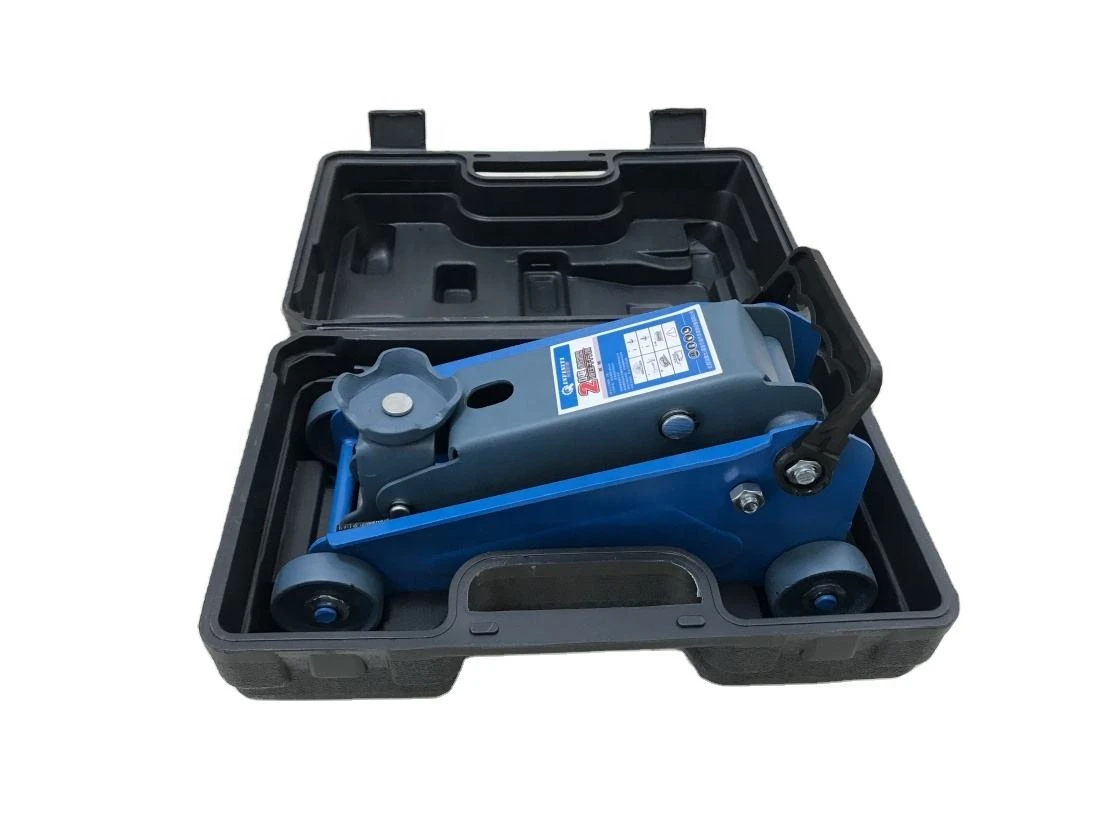
The 1 ½ ton (approximately 1360 kg) aluminum floor jack represents a significant advancement in lifting equipment designed for automotive, light industrial, and professional repair applications. Positioned within the hydraulic lifting tool chain, it provides a portable and efficient means of raising vehicles and other heavy objects for maintenance and repair. Unlike traditional steel jacks, the utilization of aluminum alloy construction offers a substantial weight reduction without compromising structural integrity, addressing a critical pain point for technicians requiring frequent jack maneuvering. Core performance characteristics center around lifting capacity, minimum lifting height, maximum lifting height, and pump stroke count, all of which impact workflow efficiency and operational safety. This guide provides an in-depth technical analysis of the material science, manufacturing processes, performance parameters, potential failure modes, and relevant industry standards governing these floor jacks.
Material Science & Manufacturing
The primary material in a 1 ½ ton aluminum floor jack is typically 6061-T6 aluminum alloy for the jack’s body and lifting arm. 6061-T6 offers a high strength-to-weight ratio, excellent corrosion resistance, and good weldability. Key physical properties include a tensile strength of approximately 310 MPa, yield strength of 276 MPa, and a density of 2.7 g/cm³. The hydraulic cylinder and piston are constructed from high-carbon steel (typically 4140 alloy steel), heat-treated for increased hardness and wear resistance. Seals are manufactured from nitrile butadiene rubber (NBR) or hydrogenated nitrile butadiene rubber (HNBR) for compatibility with hydraulic fluid and resistance to temperature variations. Manufacturing commences with aluminum billet extrusion to form the jack body and arm, followed by precision machining for critical dimensions and surface finish. Welding processes, primarily Gas Metal Arc Welding (GMAW) or Gas Tungsten Arc Welding (GTAW), are employed to join aluminum components. Parameter control during welding is critical to avoid porosity and maintain structural integrity; argon shielding gas is standard. The hydraulic cylinder undergoes honing to achieve a smooth internal surface for optimal seal performance. Quality control measures include non-destructive testing (NDT) like dye penetrant inspection to identify surface cracks and ultrasonic testing to assess weld integrity. The hydraulic fluid, typically a mineral oil-based hydraulic fluid with anti-wear additives, is carefully filtered during filling to prevent contamination and ensure smooth operation.
Performance & Engineering
The performance of a 1 ½ ton aluminum floor jack is governed by Pascal’s Law, dictating the force amplification achieved through the hydraulic system. The force required to lift a given weight is calculated based on the jack’s mechanical advantage, defined by the ratio of the piston area to the pump handle area. Engineering considerations include stress analysis of the lifting arm under load, employing Finite Element Analysis (FEA) to identify potential stress concentrations and optimize the arm’s geometry. Environmental resistance is a critical factor; the aluminum alloy requires surface treatments like anodizing to enhance corrosion protection against exposure to road salts and moisture. Stability is achieved through a wide base and a low center of gravity. The jack must meet compliance requirements outlined by ASME B30.1 (Safety Standard for Cableways, Cranes, Derricks, Hoists, Elevators, and Excavators) and equivalent international standards. Specific parameters like lifting height, pump stroke, and descent control are engineered to optimize operator ergonomics and safety. Failure Mode and Effects Analysis (FMEA) is conducted during the design phase to proactively identify potential failure modes and implement preventative measures. The hydraulic system design focuses on minimizing fluid leakage and maintaining consistent lifting speed under varying loads. Furthermore, the swivel casters are engineered to withstand repeated rolling motion and provide directional stability during positioning.
Technical Specifications
| Parameter | Specification | Testing Method | Tolerance |
|---|---|---|---|
| Lifting Capacity | 1500 kg (1.5 tons) | Static Load Test – ASTM E4 | ±5% |
| Minimum Lifting Height | 75 mm | Dimensional Measurement – ISO 3601-1 | ±2 mm |
| Maximum Lifting Height | 500 mm | Dimensional Measurement – ISO 3601-1 | ±5 mm |
| Pump Stroke | 40 mm | Dimensional Measurement | ±1 mm |
| Hydraulic Fluid Type | ISO VG 32 Mineral Oil | Viscosity Measurement – ASTM D2270 | As per ISO VG 32 standards |
| Aluminum Alloy | 6061-T6 | Chemical Composition Analysis – ASTM E415 | As per 6061-T6 standard |
Failure Mode & Maintenance
Common failure modes in 1 ½ ton aluminum floor jacks include hydraulic seal failure leading to fluid leakage and reduced lifting capacity. This can be attributed to wear, contamination, or exceeding the maximum pressure rating. Fatigue cracking in the lifting arm, particularly around weld joints, can occur due to repeated stress cycles and improper welding techniques. Corrosion of aluminum components, especially in coastal environments, can lead to structural weakening. Valve blockages within the hydraulic system can hinder smooth operation and potentially cause the jack to fail to hold a load. Shear failure of the release valve is also possible, preventing controlled descent. Maintenance procedures include regular inspection for leaks, checking hydraulic fluid levels and condition (replacing every 12-18 months), lubricating moving parts, and inspecting welds for cracks. Proper storage in a clean, dry environment is crucial to prevent corrosion. Any signs of structural damage warrant immediate removal from service. Preventative maintenance should include periodic pressure testing to identify potential hydraulic system weaknesses. Seal replacement should be performed by qualified technicians using manufacturer-approved parts. Careful adherence to the load capacity limits is paramount to prevent premature failure.
Industry FAQ
Q: What is the significance of the aluminum alloy grade (6061-T6) in relation to steel floor jacks?
A: 6061-T6 aluminum offers a substantially lower weight compared to steel while maintaining adequate strength for lifting applications. This reduces operator fatigue and improves maneuverability, crucial for technicians working in confined spaces or performing frequent lifts. While steel typically has higher ultimate tensile strength, the strength-to-weight ratio of 6061-T6 aluminum provides a practical balance for floor jack construction.
Q: How does hydraulic fluid contamination affect jack performance, and what filtration measures are recommended?
A: Contamination by dirt, metal particles, or moisture can significantly reduce hydraulic efficiency, causing slower lifting speeds, reduced capacity, and premature seal failure. A minimum of 10-micron filtration is recommended during fluid filling and regular maintenance. Utilizing a dedicated hydraulic fluid reservoir with a breather cap prevents moisture ingress and minimizes contamination from airborne particles.
Q: What are the critical parameters to consider when assessing the welding quality of the aluminum jack body?
A: Critical parameters include weld penetration, porosity, and the heat-affected zone. Dye penetrant inspection is essential for detecting surface cracks. Radiographic testing or ultrasonic testing provides more comprehensive assessment of internal weld integrity. Proper argon shielding during welding is crucial to prevent oxidation and ensure a strong, corrosion-resistant weld.
Q: What safety features are essential for a 1 ½ ton aluminum floor jack to meet industry standards?
A: Essential safety features include a stable base, a controlled descent valve to prevent rapid lowering, overload protection (pressure relief valve), and clear labeling of load capacity and operating instructions. Compliance with ASME B30.1 or equivalent standards is non-negotiable, demonstrating adherence to accepted safety protocols.
Q: How does the anodizing process contribute to the longevity of the aluminum jack body?
A: Anodizing creates a protective oxide layer on the aluminum surface, significantly enhancing corrosion resistance. This layer prevents the formation of rust and protects against degradation from exposure to road salts, chemicals, and atmospheric moisture, extending the service life of the jack, especially in harsh operating environments.
Conclusion
The 1 ½ ton aluminum floor jack represents a sophisticated application of material science and hydraulic engineering, providing a lightweight yet robust lifting solution for a wide range of automotive and industrial applications. Its design prioritizes weight reduction, operational efficiency, and safety, addressing critical pain points within the maintenance and repair sectors. Understanding the underlying principles of aluminum alloy selection, manufacturing processes, and potential failure modes is crucial for informed procurement and long-term operational reliability.
Future advancements may focus on integrating smart technologies, such as pressure sensors and wireless communication, to enhance safety monitoring and preventative maintenance capabilities. Further research into advanced sealing materials and corrosion-resistant coatings will contribute to increased durability and extended service life. Continued adherence to evolving industry standards and best practices will remain paramount in ensuring the safe and effective operation of these essential lifting tools.
