Introduction
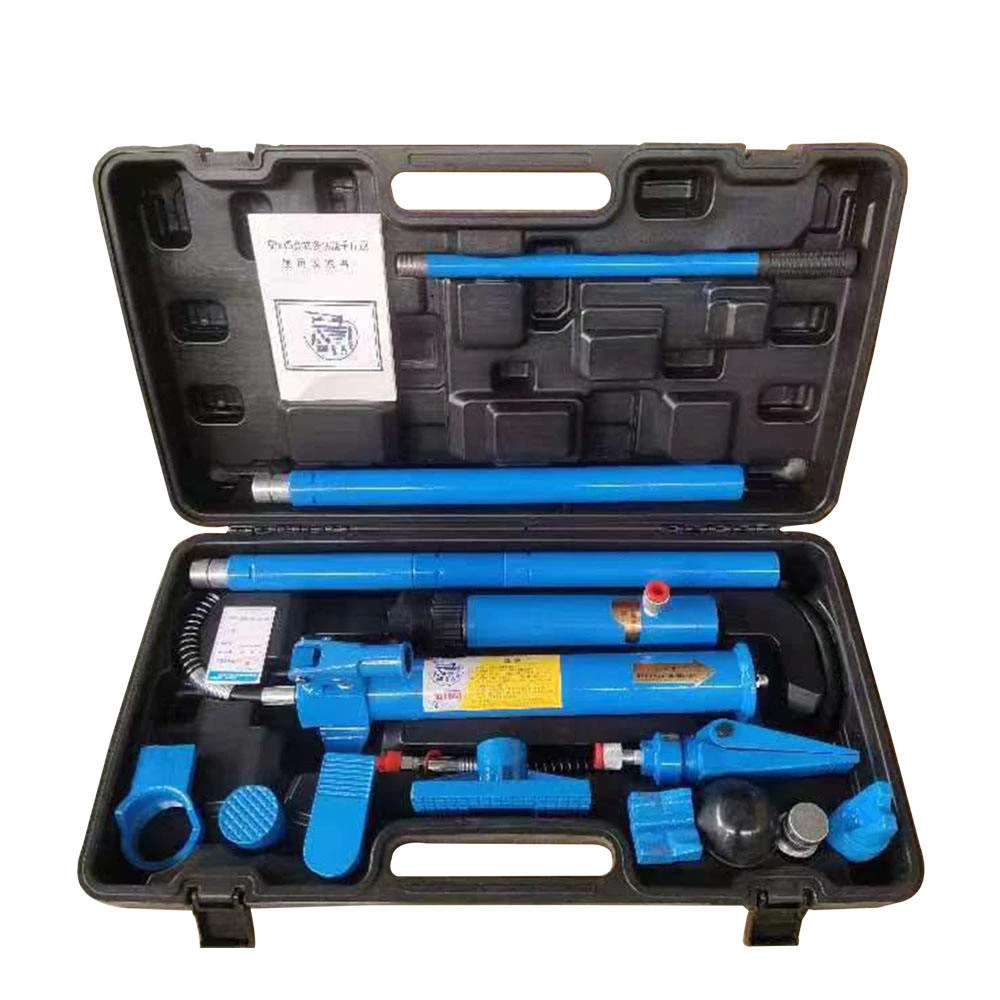
The 10-ton porta power hydraulic jack is a self-contained hydraulic lifting device commonly employed in industrial maintenance, construction, and automotive repair. Positioned within the lifting and positioning equipment sector, its core function is to provide controlled force for lifting, bending, pressing, and spreading applications. Unlike larger, stationary hydraulic presses, its portability offers significant advantages in field service and emergency response situations. The jack operates on Pascal's principle, utilizing a hydraulic fluid to transmit force from a pump to a cylinder, generating substantial lifting capacity in a compact form factor. Key performance characteristics include its maximum lifting tonnage, stroke length, and operational pressure, all of which directly impact its applicability across diverse workloads. A critical pain point within the industry is ensuring consistent performance under varying environmental conditions and maintaining long-term reliability while minimizing potential fluid leakage and component wear.
Material Science & Manufacturing
The construction of a 10-ton porta power hydraulic jack involves several key materials. The hydraulic cylinder is typically manufactured from high-strength steel, such as AISI 1045, chosen for its high yield strength and good machinability. This steel undergoes a heat treatment process (quenching and tempering) to enhance its hardness and resistance to deformation under load. The hydraulic fluid commonly used is a mineral oil-based fluid with corrosion inhibitors and viscosity modifiers, adhering to standards like ISO VG 32 or VG 46. The pump housing and other structural components are often made of cast iron (ASTM A48) or ductile iron (ASTM A536) for strength and vibration damping. Seals are commonly made from nitrile rubber (NBR) or Viton (FKM) depending on the operating temperature and fluid compatibility requirements. Manufacturing processes include precision machining of the cylinder bore and piston, welding of structural components (using shielded metal arc welding – SMAW or gas metal arc welding – GMAW), and assembly under controlled conditions to ensure proper alignment and sealing. Critical parameter control involves maintaining tight tolerances on cylinder dimensions to minimize leakage, ensuring proper heat treatment of steel components to achieve desired hardness, and rigorous testing of the assembled jack under pressure to verify its lifting capacity and structural integrity. The quality of the welding process is paramount to prevent cracking under stress and ensure long-term durability.
Performance & Engineering
The performance of a 10-ton porta power hydraulic jack is fundamentally governed by force analysis based on Pascal's Law (P = F/A, where P is pressure, F is force, and A is area). The engineering design focuses on maximizing the force output while minimizing the size and weight of the jack. The cylinder's bore diameter and the hydraulic pump's pressure rating are critical parameters in achieving the 10-ton lifting capacity. Environmental resistance is addressed through the selection of corrosion-resistant materials and the application of protective coatings. The jack must operate reliably in temperatures ranging from -20°C to 80°C without significant performance degradation. Compliance requirements often include adherence to ASME B30.1 standards for slings, hoists, and related equipment, ensuring safe operation and preventing catastrophic failures. Functional implementation relies on a robust hydraulic circuit featuring a relief valve to prevent over-pressurization and a control valve to regulate the lifting and lowering speed. Finite Element Analysis (FEA) is used during the design phase to optimize the structural integrity of the cylinder and pump housing, identifying potential stress concentrations and ensuring adequate safety factors. The stability of the jack under load is also a key engineering consideration, requiring a wide base and a low center of gravity.
Technical Specifications
| Parameter | Specification | Testing Standard | Typical Application |
|---|---|---|---|
| Lifting Capacity | 10 tons (9072 kg) | ISO 604 | Heavy equipment repair, structural lifting |
| Stroke Length | 150 mm (5.9 inches) | ASTM E83 | Applications requiring moderate vertical movement |
| Operating Pressure | 700 bar (10,150 psi) | ISO 7500-1 | Ensuring sufficient force for rated capacity |
| Hydraulic Fluid | ISO VG 32 Mineral Oil | ISO 3448 | Providing lubrication and power transmission |
| Cylinder Material | AISI 1045 Steel, Heat Treated | ASTM A519 | High strength and wear resistance |
| Seal Material | Nitrile Rubber (NBR) | ASTM D2000 | Preventing fluid leakage |
Failure Mode & Maintenance
Common failure modes for a 10-ton porta power hydraulic jack include hydraulic fluid leakage (often due to seal degradation or loose fittings), cylinder drift (caused by internal leakage past the piston seals), pump failure (resulting from wear of pump components or contamination of the hydraulic fluid), and structural failure of the cylinder or pump housing (typically due to overloads or material fatigue). Failure analysis reveals that seal degradation is often accelerated by exposure to extreme temperatures or incompatible fluids. Fatigue cracking in the cylinder or pump housing can occur due to repeated stress cycles exceeding the material's fatigue limit. Maintenance solutions involve regular inspection of seals and fittings for leaks, periodic fluid changes (every 6-12 months), and lubrication of moving parts. Preventative maintenance also includes checking the cylinder for signs of bending or damage. If leakage is detected, the affected seals should be replaced with compatible materials. Contaminated hydraulic fluid should be filtered or replaced. Structural damage requires immediate repair or replacement of the affected component. Proper storage in a clean, dry environment also minimizes corrosion and prolongs the jack's lifespan. Regularly wiping down the exterior surfaces can prevent the build-up of dirt and debris that could compromise the jack’s operation.
Industry FAQ
Q: What is the impact of hydraulic fluid viscosity on jack performance?
A: Hydraulic fluid viscosity significantly impacts performance. Too low a viscosity results in increased internal leakage and reduced efficiency, while too high a viscosity increases resistance to flow, slowing down operation and potentially causing cavitation. Maintaining the recommended viscosity grade (ISO VG 32 or VG 46) is crucial for optimal performance.
Q: How does temperature affect the jack's lifting capacity?
A: Extreme temperatures can affect the lifting capacity. High temperatures can reduce fluid viscosity and potentially lead to seal degradation. Low temperatures can increase fluid viscosity, slowing down operation and potentially causing sluggishness. The jack is typically designed to operate within a specific temperature range (-20°C to 80°C), and exceeding this range may compromise its performance.
Q: What are the common causes of cylinder drift?
A: Cylinder drift is most commonly caused by internal leakage past the piston seals. This can be due to worn or damaged seals, contamination of the hydraulic fluid, or damage to the cylinder bore. Regular seal inspection and fluid maintenance are essential for preventing cylinder drift.
Q: What safety precautions should be observed when using the jack?
A: Always use the jack on a level and stable surface. Ensure the load is properly supported before lifting. Never exceed the jack's rated lifting capacity. Use appropriate safety stands to support the load once lifted. Inspect the jack for damage before each use. Avoid working under a load supported only by the jack.
Q: What type of hydraulic fluid is compatible with this jack?
A: This jack is designed to operate with ISO VG 32 or VG 46 mineral oil-based hydraulic fluid. Using incompatible fluids can damage the seals and hydraulic components. Always refer to the manufacturer's recommendations for fluid compatibility.
Conclusion
The 10-ton porta power hydraulic jack provides a vital solution for a wide range of lifting and pressing applications, offering portability and substantial lifting capacity. Its performance is intrinsically linked to the material science employed in its construction – particularly the high-strength steels and compatible seal materials – and the precision of its manufacturing processes. Maintaining optimal performance necessitates regular maintenance, including fluid changes, seal inspections, and adherence to recommended operating procedures.
Future developments are likely to focus on enhanced seal technology for extended service life, the integration of wireless control systems for increased safety and convenience, and the development of lightweight materials to further improve portability. Continuous adherence to relevant safety standards (ASME B30.1, ISO standards) is paramount to ensuring reliable and safe operation, mitigating the risk of failure, and maximizing the return on investment for industrial users.
