Introduction
A 12-ton hydraulic floor jack is a mechanical lifting device used primarily in automotive repair, heavy equipment maintenance, and industrial applications. Positioned within the material handling equipment sector, it serves as a critical tool for raising vehicles and machinery for inspection, service, or repair. The core performance characteristics revolve around its lifting capacity (12 tons or 24,000 lbs), lifting range, and operational safety features. Unlike pneumatic or screw jacks, hydraulic jacks utilize Pascal's principle – leveraging a hydraulic fluid to multiply force – providing significant lifting power with relatively minimal physical effort. The increasing demand for higher lifting capacities and enhanced safety protocols within automotive and industrial sectors drives continuous development in hydraulic jack design and manufacturing, particularly in areas like pump efficiency, seal durability, and overload protection.
Material Science & Manufacturing
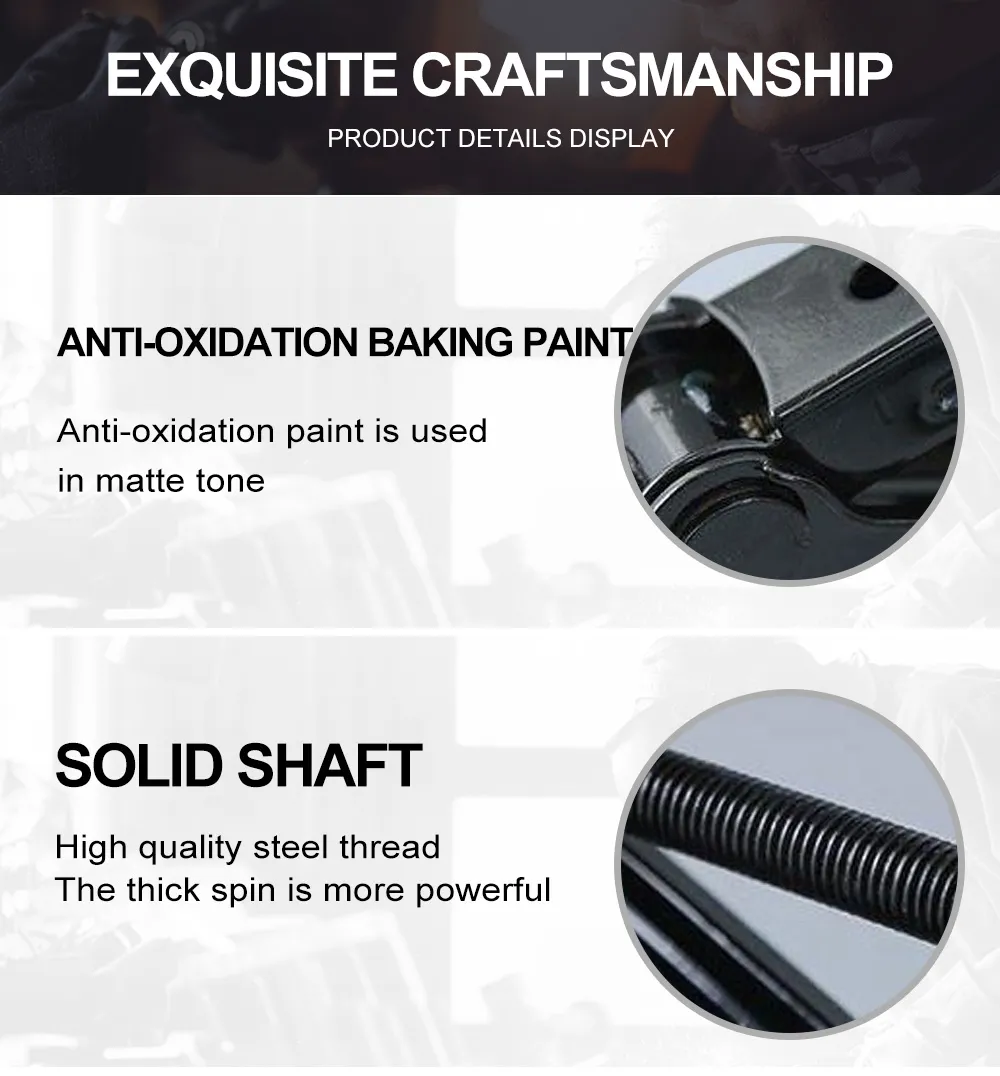
The construction of a 12-ton hydraulic floor jack necessitates a selection of materials engineered to withstand substantial stress and maintain operational integrity. The jack's body and lifting arm are typically fabricated from high-strength carbon steel (e.g., AISI 1045) offering a balance between tensile strength, yield strength, and weldability. Heat treatment processes, such as quenching and tempering, are applied to optimize these mechanical properties. The hydraulic cylinder is constructed from honed steel tubing, frequently utilizing a material like 4140 alloy steel known for its superior strength and resistance to wear. The piston within the cylinder is generally made from chrome-plated steel to reduce friction and prevent corrosion. The hydraulic fluid itself is typically a mineral oil-based formulation with viscosity additives to ensure consistent performance across a range of temperatures. Manufacturing involves several key processes: steel plate cutting and forming (pressing or rolling), welding (typically shielded metal arc welding or submerged arc welding), machining (for precise dimensions on the cylinder and piston), and hydraulic system assembly. Parameter control during welding is critical to prevent porosity and ensure weld strength. Honing of the cylinder bore must achieve a surface finish of Ra 0.8 μm or better to minimize fluid leakage and maximize seal life. Quality control includes non-destructive testing (NDT) methods, such as ultrasonic testing, to detect internal flaws in welds and castings.
Performance & Engineering
The performance of a 12-ton hydraulic floor jack is governed by fundamental principles of fluid mechanics and structural engineering. The lifting force is derived from Pascal’s Law (Pressure = Force/Area). A smaller piston (pump piston) generates pressure within the hydraulic fluid, which is then transmitted to a larger piston (lifting piston), amplifying the force. Force analysis dictates that the cylinder and piston must be designed to withstand the maximum lifting load with a substantial safety factor (typically 3:1 or higher). The jack’s stability is influenced by its base dimensions and center of gravity. A wider base provides greater resistance to tipping. Environmental resistance is a key consideration; exposure to corrosive elements (moisture, road salt) can degrade the steel components and hydraulic seals. Protective coatings, such as powder coating or zinc plating, are used to mitigate corrosion. Compliance requirements include adherence to safety standards established by organizations like ASME (American Society of Mechanical Engineers) and ANSI (American National Standards Institute). Specific features such as safety overload valves, designed to prevent exceeding the jack’s rated capacity, and controlled lowering mechanisms, are integral to operational safety and mandated by these standards. The design also incorporates considerations for fatigue life, accounting for repeated stress cycles during lifting and lowering operations.
Technical Specifications
| Parameter | Specification | Testing Method | Tolerance |
|---|---|---|---|
| Lifting Capacity | 12 Tons (24,000 lbs / 10,886 kg) | Static Load Test | ±5% |
| Minimum Lifting Height | 55 mm (2.17 inches) | Dimensional Measurement | ±2 mm |
| Maximum Lifting Height | 465 mm (18.3 inches) | Dimensional Measurement | ±5 mm |
| Pump Handle Strokes per Full Lift | Approximately 6-8 | Operational Test | N/A |
| Hydraulic Fluid Type | ISO VG 32 Hydraulic Oil | Viscosity Measurement | ISO VG 32 ± 10% |
| Operating Temperature Range | -20°C to 60°C (-4°F to 140°F) | Performance Test | ±5°C |
Failure Mode & Maintenance
Hydraulic floor jacks are subject to several potential failure modes. Fatigue cracking can occur in the lifting arm or cylinder due to repeated stress cycles, particularly if the jack is consistently overloaded. Seal failure is a common issue, leading to hydraulic fluid leakage and reduced lifting capacity. This can be attributed to seal degradation caused by age, temperature fluctuations, or contamination of the hydraulic fluid. Corrosion, especially in exposed steel components, can weaken the structure and compromise its integrity. Internal valve failures within the pump mechanism can prevent proper pressure build-up, resulting in sluggish operation or complete failure to lift. Deformation of the cylinder bore due to excessive force or impact can also lead to leakage and operational problems. Regular maintenance is crucial to prevent these failures. This includes inspecting the jack for leaks, corrosion, and damage before each use. Maintaining the hydraulic fluid at the correct level and periodically replacing it (typically every 12-24 months) is essential to prevent corrosion and maintain optimal performance. Lubricating moving parts, such as the lifting arm pivot points, reduces friction and extends their lifespan. Overload protection mechanisms should be tested regularly to ensure they function correctly. If any component shows signs of fatigue, cracking, or corrosion, it should be replaced immediately. Never attempt to repair the jack beyond replacing minor parts; professional servicing is recommended for complex repairs.
Industry FAQ
Q: What is the impact of hydraulic fluid contamination on jack performance and longevity?
A: Hydraulic fluid contamination, including dirt, metal particles, and moisture, significantly degrades jack performance and reduces its lifespan. Contaminants act as abrasives, causing wear on the cylinder bore, piston seals, and pump components. This leads to increased leakage, reduced lifting capacity, and eventual failure of the hydraulic system. Moisture can cause corrosion, further exacerbating the problem. Regularly changing the hydraulic fluid and using a fluid filter is essential to maintain fluid cleanliness.
Q: How does the material selection of the lifting arm affect its resistance to bending and failure?
A: The material selection of the lifting arm is critical to its structural integrity. High-strength carbon steel (like AISI 1045) with appropriate heat treatment provides the necessary tensile strength and yield strength to resist bending and failure under load. The arm's geometry (cross-sectional shape and thickness) also plays a crucial role. A wider, thicker arm will exhibit greater resistance to bending. Proper welding techniques are essential to maintain the material's strength at the welded joints.
Q: What safety features are considered essential for a 12-ton hydraulic floor jack?
A: Essential safety features include an overload protection valve, which prevents lifting beyond the jack’s rated capacity. A controlled lowering mechanism, allowing for a slow and predictable descent, is also critical. A stable base design, maximizing the footprint and minimizing the center of gravity, reduces the risk of tipping. A safety lock mechanism, preventing the jack from lowering during work, is a vital addition. Regular inspection and maintenance of these safety features are paramount.
Q: What is the role of the seals in maintaining hydraulic pressure and preventing leakage?
A: Seals are integral to maintaining hydraulic pressure and preventing fluid leakage. They create a tight barrier between the piston and cylinder, preventing the pressurized hydraulic fluid from escaping. Seal material (typically nitrile rubber or Viton) must be compatible with the hydraulic fluid and resistant to wear, temperature fluctuations, and chemical degradation. Proper seal installation and lubrication are crucial for optimal performance and longevity.
Q: How do environmental factors like temperature affect the performance of a hydraulic floor jack?
A: Temperature significantly affects hydraulic fluid viscosity. In cold temperatures, the fluid becomes thicker, slowing down the jack’s operation and potentially reducing lifting capacity. In hot temperatures, the fluid becomes thinner, potentially leading to increased leakage. Extreme temperatures can also affect the elasticity of the seals, leading to failure. Hydraulic fluids formulated for a wide temperature range are recommended for consistent performance.
Conclusion
The 12-ton hydraulic floor jack represents a cornerstone of lifting technology across various industries. Its operation relies on a complex interplay of material science, fluid mechanics, and structural engineering principles, requiring careful attention to design, manufacturing, and maintenance. Understanding the inherent failure modes and adhering to stringent safety protocols are paramount to ensure reliable and safe operation.
Continued advancements in materials science – exploring higher strength alloys and more durable seal materials – will further enhance the performance and longevity of these devices. Furthermore, integration of smart technologies, such as pressure sensors and automated safety features, will elevate the operational safety and efficiency of hydraulic floor jacks in demanding industrial environments.
