Introduction
The 2 1/2 ton (2268 kg) floor jack is a ubiquitous piece of lifting equipment in automotive repair facilities, industrial settings, and increasingly, advanced manufacturing environments. Positioned within the material handling equipment chain, its primary function is to provide controlled vertical lift for maintenance, repair, and positioning operations. Core performance characteristics revolve around lifting capacity, minimum and maximum lift height, pump stroke count, and the stability of the lifting mechanism. Unlike hydraulic presses which deliver sustained force, floor jacks prioritize dynamic lifting and lowering operations with a focus on operator control and portability. The industry faces persistent challenges related to maintaining consistent hydraulic pressure, preventing corrosion of critical components, and ensuring operator safety during use. This guide provides a comprehensive technical overview of 2 1/2 ton floor jacks, covering material science, manufacturing processes, performance analysis, potential failure modes, and relevant industry standards.
Material Science & Manufacturing
The construction of a 2 1/2 ton floor jack involves several key materials. The hydraulic cylinder and piston are typically manufactured from high-strength carbon steel (e.g., AISI 1045) due to its excellent machinability and tensile strength. The internal surfaces are honed to a precise finish to minimize friction and prevent seal degradation. The jack’s frame and lifting arm commonly utilize structural steel (e.g., A36) selected for its weldability and load-bearing capacity. Roll-formed steel is frequently employed in the base and handle construction for cost-effectiveness and weight reduction. Hydraulic fluid typically consists of mineral oil-based formulations with viscosity grades ranging from ISO 32 to ISO 46, chosen for their lubricity, thermal stability, and compatibility with the jack’s sealing materials (typically nitrile rubber -NBR).
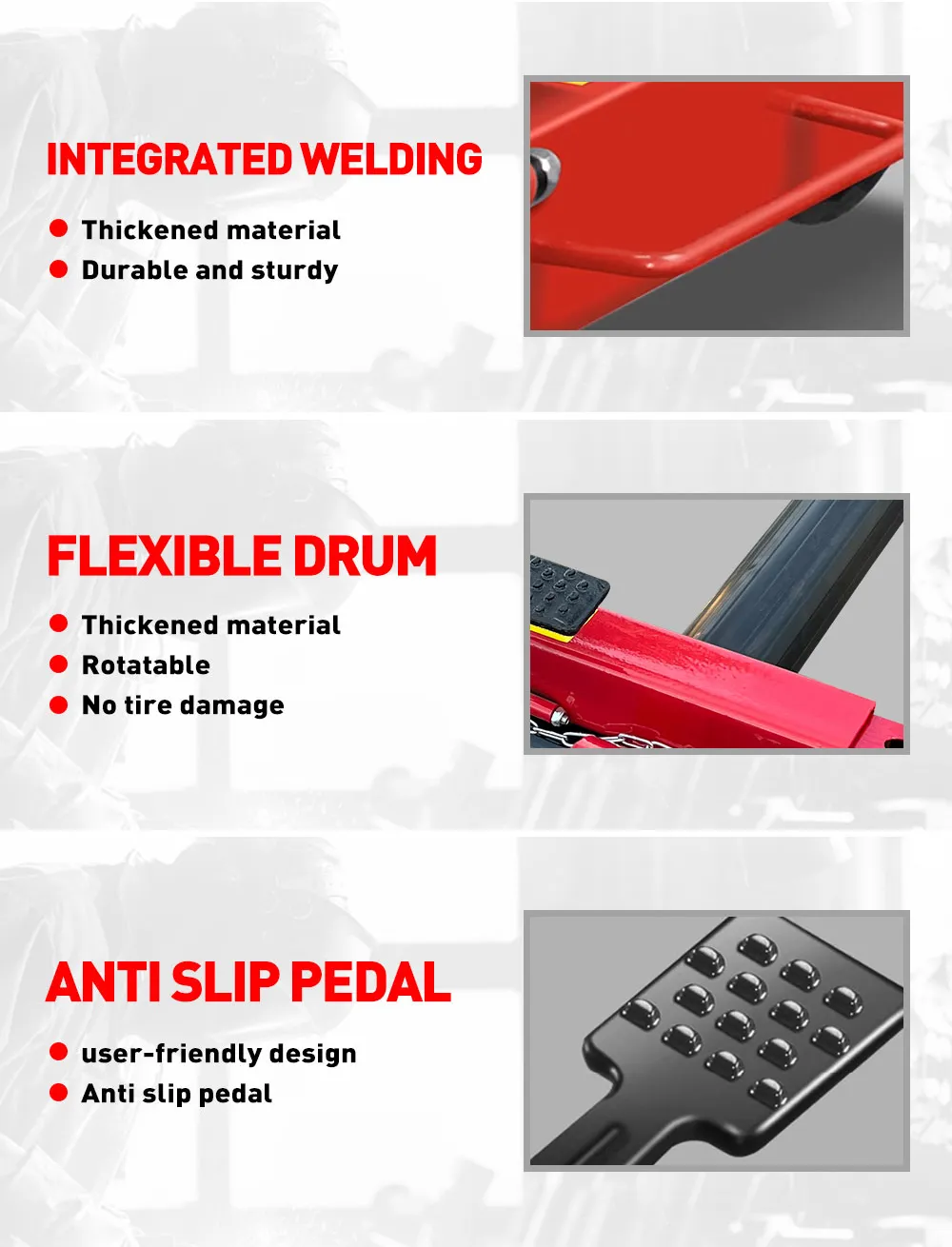
Manufacturing processes are multi-stage. Steel components undergo cutting, forming (bending, stamping), and welding. Welding, typically employing shielded metal arc welding (SMAW) or gas metal arc welding (GMAW), requires precise parameter control – amperage, voltage, and travel speed – to ensure weld integrity and prevent distortion. The hydraulic cylinder is honed and subjected to pressure testing. The cylinder and piston assembly are then integrated with the frame. Critical parameter control involves maintaining tight tolerances on cylinder dimensions to prevent leaks and ensure smooth piston movement. The hydraulic fluid is carefully filled and the system is bled to remove air. Painting and surface treatment (e.g., powder coating) provide corrosion resistance. Final assembly includes attaching the handle, saddle, and safety features.
Performance & Engineering
The performance of a 2 1/2 ton floor jack is governed by Pascal's Law, which dictates that pressure applied to a confined fluid is transmitted equally in all directions. The jack’s mechanical advantage is determined by the ratio of the piston area to the pump piston area. Force analysis reveals that the lifting capacity is directly proportional to the hydraulic pressure and the lifting piston area. Environmental resistance is a critical factor. Exposure to moisture, road salt, and industrial chemicals can accelerate corrosion of steel components. The jack must withstand repeated loading cycles without deformation or failure.
Compliance requirements vary by region. In the US, OSHA regulations (29 CFR 1910.178) govern the safe use of lifting equipment. European standards (EN 1494) specify requirements for design, construction, and testing of hydraulic jacks. Functional implementation involves a spring-loaded bypass valve which prevents over-pressurization, a check valve that maintains lift height during operation, and a release valve for controlled lowering. The saddle design and lifting arm geometry influence the jack’s stability under load. Finite element analysis (FEA) is often used during the design phase to optimize stress distribution and minimize the risk of structural failure. Proper lubrication of moving parts is essential to minimize friction and wear.
Technical Specifications
| Parameter | Value (Typical) | Testing Standard | Tolerance |
|---|---|---|---|
| Lifting Capacity | 2268 kg (5000 lbs) | ISO 6520-3 | ± 5% |
| Minimum Lift Height | 89 mm (3.5 in) | In-house QC | ± 5 mm |
| Maximum Lift Height | 686 mm (27 in) | In-house QC | ± 10 mm |
| Pump Stroke Length | 45 mm (1.8 in) | In-house QC | ± 2 mm |
| Number of Pumps to Full Lift | 6-8 | In-house QC | ± 1 |
| Hydraulic Fluid Viscosity | ISO 32 / ISO 46 | ASTM D445 | ± 5 cSt |
Failure Mode & Maintenance
Common failure modes in 2 1/2 ton floor jacks include hydraulic fluid leaks, seal failure, piston corrosion, weld cracking, and bending/fracture of the lifting arm. Hydraulic fluid leaks often originate from worn seals, loose fittings, or corrosion of the cylinder walls. Seal failure is accelerated by exposure to contaminants or incompatible fluids. Piston corrosion is a consequence of moisture ingress and lack of corrosion inhibitors in the hydraulic fluid. Weld cracking can occur due to fatigue loading or improper welding technique. Bending or fracture of the lifting arm results from overloading or material defects.
Preventive maintenance is crucial. Regular inspection for leaks, corrosion, and damaged components is essential. Hydraulic fluid should be replaced annually, and the system should be bled to remove air. Lubricate all moving parts with appropriate grease. Inspect the saddle and lifting arm for cracks or deformation. If a leak is detected, replace the affected seals or fittings. If the piston is corroded, it may need to be re-plated or replaced. Always adhere to the manufacturer’s recommended maintenance schedule. Avoid exceeding the jack’s rated lifting capacity. Store the jack in a clean, dry environment to prevent corrosion. Proper usage requires placing the jack on a level surface and ensuring the load is centered on the saddle.
Industry FAQ
Q: What is the impact of hydraulic fluid contamination on jack performance?
A: Hydraulic fluid contamination, even with particulate matter below visible thresholds, drastically reduces jack performance. Contaminants act as abrasives, accelerating wear on seals and piston surfaces, leading to leaks and reduced lifting capacity. Water contamination promotes corrosion, further degrading internal components. The use of a fluid filtration system and regular fluid changes are crucial to mitigate these effects.
Q: How does temperature affect the operation of a 2 1/2 ton floor jack?
A: Extreme temperatures can significantly impact performance. Low temperatures increase hydraulic fluid viscosity, slowing down operation and potentially reducing lifting capacity. High temperatures can reduce fluid viscosity, leading to leaks and decreased efficiency. Furthermore, temperature fluctuations can cause seals to expand and contract, increasing the risk of failure. Proper fluid selection for the operating temperature range is essential.
Q: What are the critical weld locations on a floor jack, and how are they inspected?
A: Critical weld locations include the connections between the lifting arm, the frame, and the saddle mounting points. These are subject to high stress concentrations during operation. Non-destructive testing methods, such as visual inspection, dye penetrant inspection (DPI), and ultrasonic testing (UT), are used to detect weld defects like cracks, porosity, and incomplete fusion. Regular visual inspection is vital to identify surface cracks.
Q: How important is the saddle design in terms of stability and load distribution?
A: The saddle design is paramount for stability and load distribution. A wider saddle generally provides better stability, especially with off-center loads. The saddle surface should be textured or coated to prevent slippage. The material of the saddle (typically steel) must be sufficiently strong to withstand the concentrated load. Poor saddle design can lead to instability and potentially catastrophic failure.
Q: What is the typical lifespan of a 2 1/2 ton floor jack under normal industrial use?
A: The lifespan of a 2 1/2 ton floor jack varies considerably depending on usage frequency, maintenance practices, and operating environment. Under normal industrial use with regular maintenance, a well-constructed jack can typically last 5-10 years. However, heavy use in corrosive environments or neglect of maintenance can significantly shorten its lifespan.
Conclusion
The 2 1/2 ton floor jack remains a fundamental tool in numerous industrial applications, relying on well-established principles of hydraulics and material science. Its performance is critically dependent on the quality of materials, precision manufacturing, and adherence to rigorous quality control procedures. Understanding potential failure modes and implementing a comprehensive maintenance program are essential for maximizing lifespan and ensuring safe operation.
Future developments may focus on lighter-weight materials (e.g., aluminum alloys), enhanced corrosion resistance through advanced coatings, and the integration of sensor technology for real-time monitoring of hydraulic pressure and load. Continued emphasis on adherence to international safety standards and best practices will remain paramount to ensuring the reliability and safety of these vital pieces of lifting equipment.
