Introduction
The 2-ton garage jack is a ubiquitous piece of equipment within automotive maintenance and repair facilities, as well as among serious automotive enthusiasts. Positioned as a critical component in the lifting and positioning of vehicles for tasks ranging from tire changes to full undercarriage repairs, it falls within the broader category of lifting equipment and relies on hydraulic principles for its functionality. This guide provides an in-depth technical overview of 2-ton garage jacks, encompassing material science, manufacturing processes, performance characteristics, potential failure modes, and relevant industry standards. A primary pain point within the industry is ensuring consistent lifting capacity and long-term reliability, particularly given the safety-critical nature of the application. Incorrect operation or material degradation can result in catastrophic failure, leading to vehicle damage, personal injury, or both. This guide aims to address these concerns by detailing the engineering principles and best practices associated with these essential tools.
Material Science & Manufacturing
The core components of a 2-ton garage jack dictate its structural integrity and performance. The hydraulic cylinder and piston are typically manufactured from high-strength carbon steel, specifically AISI 1045 or equivalent, chosen for its excellent machinability and tensile strength (approximately 570 MPa). Surface hardening via induction hardening or carburization is common to enhance wear resistance within the cylinder bore. The jack’s frame and lifting arm are generally constructed from welded steel sections – often utilizing AISI 1018 mild steel for ease of welding and cost-effectiveness, though higher grades like AISI 4140 alloy steel are used in critical stress areas. The hydraulic fluid commonly employed is a mineral oil-based formulation with viscosity ranging from 32-46 cSt at 40°C, selected for its lubrication properties and resistance to thermal breakdown. Seals within the hydraulic system are typically made from nitrile butadiene rubber (NBR) due to its compatibility with mineral oils and resistance to deformation under pressure.
Manufacturing involves several key processes. Steel sections are first cut to size using plasma cutting or sawing. Welding, often utilizing shielded metal arc welding (SMAW) or gas metal arc welding (GMAW), joins these sections to form the frame and lifting arm. Precise welding parameter control – including amperage, voltage, and travel speed – is crucial to prevent weld defects such as porosity or cracking. The hydraulic cylinder is manufactured through honing and machining processes to achieve a smooth, precise bore. The piston is similarly machined and fitted with seals. Assembly involves careful alignment and fastening of all components, followed by pressure testing to ensure leak-free operation and proper lifting capacity. Quality control focuses on non-destructive testing (NDT) methods like ultrasonic testing to identify potential flaws in welds and material defects. Parameter control during heat treatment is critical to achieve the desired hardness and prevent distortion.
Performance & Engineering
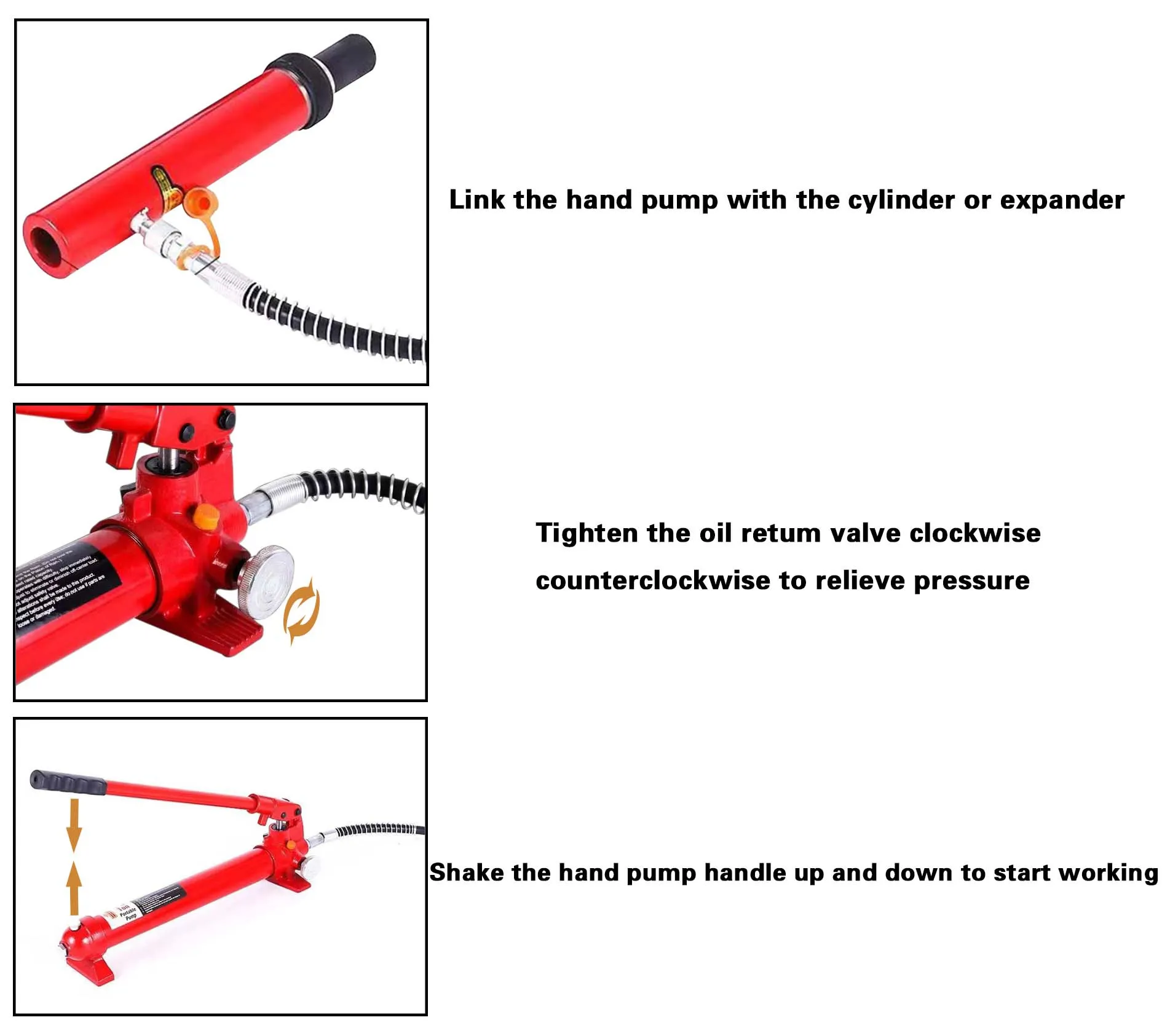
The performance of a 2-ton garage jack is fundamentally governed by Pascal's Law, which states that pressure applied to a confined fluid is transmitted equally in all directions. The jack utilizes a small diameter piston (pump piston) to generate hydraulic pressure when operated by the handle. This pressure is then transferred to a larger diameter piston (ram piston), creating a significant lifting force. The theoretical lifting capacity is calculated as Force = Pressure x Area. Engineering considerations include stress analysis of the frame and lifting arm under load to prevent bending or yielding. Finite element analysis (FEA) is commonly used to optimize the design and identify potential weak points. The stability of the jack is paramount. A wide base and low center of gravity are crucial to prevent tipping during lifting. The saddle design, which contacts the vehicle's lifting point, must distribute the load effectively to avoid damage to the vehicle's frame. Environmental resistance is also a key factor. Protective coatings, such as powder coating, are applied to prevent corrosion from exposure to moisture and road salts. Safety valves are incorporated to prevent over-pressurization and potential catastrophic failure. The lifting range, typically 110mm to 380mm, needs to accommodate a wide variety of vehicle heights.
Technical Specifications
| Parameter | Specification | Testing Method | Typical Tolerance |
|---|---|---|---|
| Lifting Capacity | 2000 kg (4400 lbs) | Static Load Test – ASTM E4 | ±5% |
| Minimum Lifting Height | 110 mm (4.3 inches) | Dimensional Measurement | ±2 mm |
| Maximum Lifting Height | 380 mm (15 inches) | Dimensional Measurement | ±2 mm |
| Pump Strokes to Max Height | Approximately 6-8 | Operational Testing | ±1 Stroke |
| Hydraulic Fluid Type | Mineral Oil (ISO VG 32-46) | Viscosity Measurement – ASTM D445 | ISO VG Grade |
| Operating Temperature Range | -20°C to 60°C (-4°F to 140°F) | Performance Testing at Extreme Temperatures | Maintain 80% of rated capacity |
Failure Mode & Maintenance
Common failure modes in 2-ton garage jacks include hydraulic leaks, seal degradation, piston corrosion, and structural failure of the frame or lifting arm. Hydraulic leaks often originate from worn or damaged seals in the pump assembly, cylinder, or release valve. These leaks can be identified visually and are often caused by age, exposure to contaminants, or incompatible fluids. Piston corrosion can occur if the hydraulic fluid becomes contaminated with water, leading to rust and reduced piston diameter, resulting in decreased lifting capacity. Structural failure typically manifests as cracking or bending of the frame or lifting arm, often due to exceeding the rated load capacity or pre-existing material defects. Fatigue cracking can occur in welded areas subjected to repeated stress cycles. Delamination of the saddle pad is also a failure point.
Preventative maintenance is crucial for extending the lifespan and ensuring the safe operation of the jack. Regular inspection for leaks is paramount. The hydraulic fluid should be changed every 12-24 months, depending on usage, using a fluid compatible with the seals (NBR). The jack should be kept clean and free of debris. Moving parts should be lubricated with a light oil. Welded areas should be inspected for cracks. Avoid exceeding the rated load capacity. Proper storage in a dry environment will minimize corrosion. If leaks are detected, replace the affected seals immediately. If structural damage is observed, the jack should be taken out of service and repaired by a qualified technician. Regularly check the safety valve for proper operation. Failure to perform these maintenance tasks can lead to unpredictable and potentially hazardous failures.
Industry FAQ
Q: What is the impact of using an incorrect hydraulic fluid on the jack's performance and longevity?
A: Using an incorrect hydraulic fluid can have a detrimental impact. Fluids incompatible with NBR seals can cause them to swell, degrade, or become brittle, leading to leaks and reduced sealing effectiveness. Fluids with incorrect viscosity can affect pump efficiency and lifting speed. Furthermore, fluids lacking adequate corrosion inhibitors can accelerate internal corrosion, compromising the cylinder and piston.
Q: How does temperature affect the performance of the hydraulic fluid and the jack itself?
A: Temperature significantly influences hydraulic fluid viscosity. Low temperatures increase viscosity, making the jack slower to operate and potentially increasing the force required to lift a load. High temperatures decrease viscosity, potentially leading to leaks and reduced efficiency. Extreme temperatures can also affect the elasticity of seals. The jack's steel components are also susceptible to dimensional changes with temperature fluctuations.
Q: What are the key considerations when assessing the structural integrity of a used garage jack?
A: Thoroughly inspect all welded areas for cracks, particularly around high-stress points like the lifting arm and frame joints. Check for signs of bending or deformation in the frame. Examine the lifting arm for any evidence of straightening or repair. Inspect the saddle for wear or damage. A visual inspection combined with a load test (performed cautiously) can help identify potential structural weaknesses.
Q: What safety features are essential in a 2-ton garage jack, and how do they function?
A: Essential safety features include a pressure relief valve (to prevent over-pressurization and potential rupture), a stable base (to prevent tipping), and a lock mechanism (to secure the jack at the desired height). The pressure relief valve automatically releases excess pressure if the jack is overloaded or if the fluid expands due to heat. The lock mechanism engages to prevent the jack from slowly lowering under load.
Q: How often should the jack be calibrated or inspected by a professional technician?
A: It is recommended to have a 2-ton garage jack professionally inspected and calibrated at least annually, or more frequently if it is subjected to heavy use. Calibration verifies that the jack is lifting to its specified capacity and that the pressure relief valve is functioning correctly. A qualified technician can also identify potential wear and tear and recommend necessary repairs.
Conclusion
The 2-ton garage jack, while seemingly simple in operation, is a sophisticated piece of equipment reliant on precise engineering and robust material science. Its performance and longevity are intrinsically linked to the quality of materials used, the precision of manufacturing processes, and adherence to proper maintenance protocols. Understanding the underlying hydraulic principles, potential failure modes, and relevant industry standards is critical for ensuring safe and reliable operation.
Looking forward, advancements in material science, such as the development of lighter, high-strength alloys, could lead to more durable and efficient garage jacks. Improved seal technology and hydraulic fluid formulations will further enhance performance and reduce the risk of leaks. Integration of smart sensors and diagnostic systems could provide real-time monitoring of hydraulic pressure, load levels, and structural integrity, offering proactive maintenance alerts and improved safety features. Continuous improvement in design and quality control remains essential for maintaining the reliability of these vital tools.
