Introduction
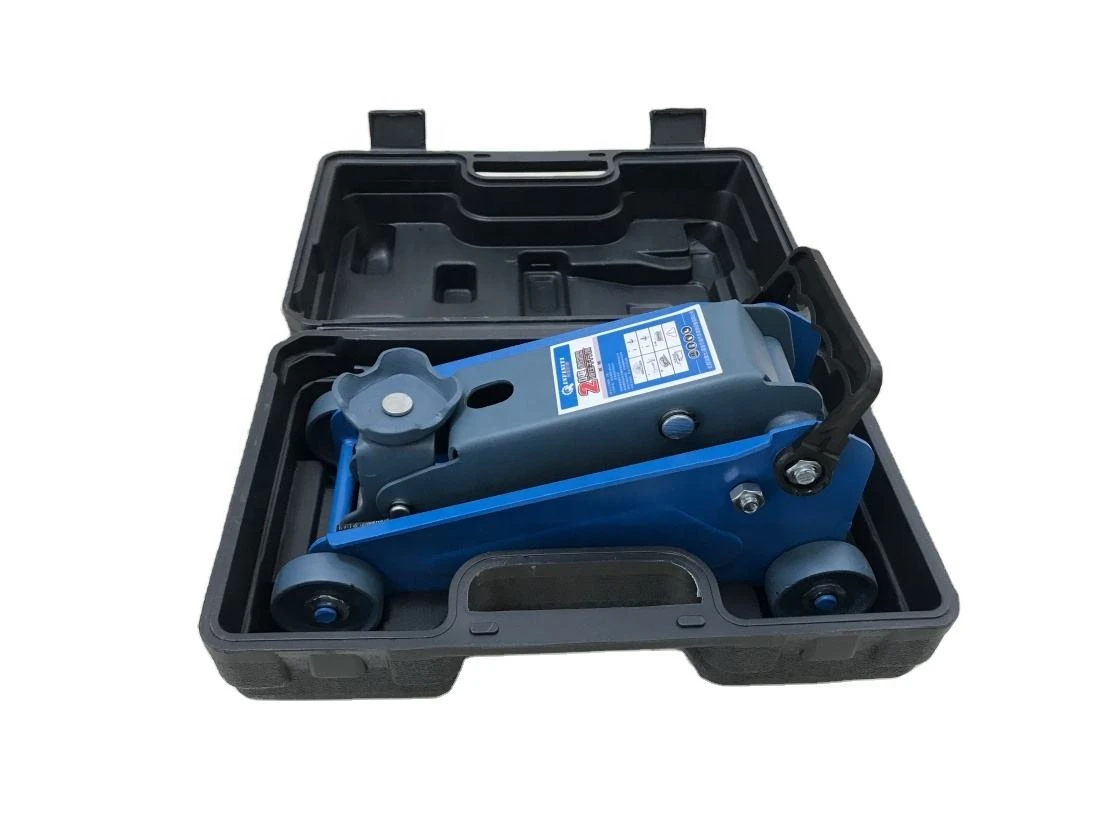
A 2-ton hydraulic floor jack for automotive use is a critical piece of equipment in vehicle maintenance and repair, positioned as an essential tool within the automotive service industry supply chain. These jacks are designed to lift vehicles weighing up to 2,000 kilograms (4,400 lbs), providing sufficient lifting capacity for the vast majority of passenger cars and light-duty trucks. Their core performance characteristics center around safe and reliable lifting, lowering, and holding of vehicle weight, enabling technicians to perform routine maintenance such as tire changes, oil changes, and more complex repairs requiring undercarriage access. The hydraulic design leverages Pascal's principle to multiply force, achieving substantial lifting capacity with manageable manual effort. Key considerations in their design include stability, lifting range, and operational safety features, addressing a significant pain point for automotive professionals: minimizing risk of vehicle drop and ensuring technician safety. Modern floor jacks often incorporate safety valves to prevent over-extension and controlled lowering mechanisms for precision and accident prevention.
Material Science & Manufacturing
The construction of a 2-ton floor jack relies on a combination of materials chosen for their strength, durability, and compatibility with hydraulic fluids. The main body and lifting arm are typically constructed from high-strength carbon steel, specifically AISI 1045 or equivalent, selected for its weldability and tensile strength. This steel undergoes processes like forging and machining to achieve the required structural integrity. The hydraulic cylinder is commonly made from honed steel tubing, possessing a smooth internal surface to minimize friction and wear against the piston. The piston itself is often constructed from hardened alloy steel, coated with chrome for corrosion resistance. Seals are critical components, typically manufactured from Nitrile Butadiene Rubber (NBR) or Viton (FKM), chosen for their resistance to hydraulic fluid and ability to maintain a tight seal under pressure. Manufacturing processes include precision casting for the pump housing, CNC machining for the lifting arm and saddle, and robotic welding to ensure consistent and reliable joint strength. Quality control focuses on non-destructive testing (NDT), such as ultrasonic testing, to detect internal flaws in critical components. The hydraulic fluid itself is typically a mineral oil-based formulation with anti-wear additives and corrosion inhibitors. Parameter control during manufacturing is paramount, especially for tolerances related to piston diameter, cylinder bore, and seal dimensions, as these directly impact lifting capacity and operational reliability. Heat treatment processes are used to optimize the mechanical properties of steel components, ensuring they can withstand the stresses imposed during operation.
Performance & Engineering
The performance of a 2-ton floor jack is heavily influenced by hydraulic principles and mechanical engineering design. The fundamental principle is Pascal's Law: pressure applied to a confined fluid is transmitted equally in all directions. The jack leverages a small diameter pump piston to generate high pressure within the hydraulic fluid, which then acts upon a larger diameter lifting piston, multiplying the force. Force analysis dictates that the lifting capacity is directly proportional to the ratio of the lifting piston area to the pump piston area. Stability is a key engineering consideration; the base of the jack is designed with a wide footprint to prevent tipping during lifting operations. The saddle, which contacts the vehicle’s jacking point, must be appropriately shaped and sized to distribute the load evenly. Environmental resistance is addressed through corrosion-resistant coatings and seal materials, protecting the jack from degradation in workshop environments. Compliance requirements, such as ASME PASE 2015 standards (in North America) and EN 1494 standards (in Europe), mandate specific safety features like overload protection valves, controlled lowering mechanisms, and robust construction to minimize the risk of failure. The engineering design also accounts for fatigue loading; the lifting mechanism is designed to withstand repeated cycles of lifting and lowering without significant degradation in performance. The release valve mechanism must provide smooth and controlled lowering, preventing sudden drops. Finite element analysis (FEA) is frequently used to optimize the design of critical components, identifying stress concentrations and ensuring structural integrity under maximum load.
Technical Specifications
| Lifting Capacity | Minimum Lifting Height | Maximum Lifting Height | Hydraulic Fluid Type |
|---|---|---|---|
| 2000 kg / 4400 lbs | 85 mm / 3.3 inches | 380 mm / 15 inches | ISO VG 32 Mineral Oil |
| Pump Handle Strokes per Full Lift | Base Width | Base Length | Net Weight |
| Approximately 8-12 | 230 mm / 9.1 inches | 420 mm / 16.5 inches | 18 kg / 39.7 lbs |
| Saddle Diameter | Safety Valve Setting (Overload Protection) | Operating Temperature Range | Material (Body/Arm) |
| 108 mm / 4.3 inches | 2200 kg / 4850 lbs | -20°C to 50°C / -4°F to 122°F | Carbon Steel (AISI 1045 Equivalent) |
| Seal Material | Hydraulic Cylinder Material | Piston Material | Lowering Speed (Controlled) |
| NBR / Viton | Honed Steel Tubing | Hardened Alloy Steel (Chrome Plated) | < 5 mm/s |
Failure Mode & Maintenance
Failure modes in 2-ton floor jacks typically stem from wear and tear, improper use, or environmental factors. Common failures include hydraulic fluid leaks, often originating from worn seals (NBR or Viton). Over time, these seals lose their elasticity and crack, leading to pressure loss and reduced lifting capacity. Another frequent failure is internal corrosion within the hydraulic cylinder, caused by moisture contamination of the hydraulic fluid. This corrosion roughens the cylinder walls, damaging the piston seals and reducing efficiency. Mechanical failures can occur in the lifting arm or saddle due to fatigue cracking, especially if the jack is repeatedly overloaded. The release valve can also malfunction, either becoming stuck in the open position (causing the jack to drift downwards) or failing to close properly (preventing controlled lowering). Failure analysis often reveals that improper use – such as lifting off-center loads or exceeding the rated capacity – accelerates these failure modes. Maintenance is crucial for extending the lifespan of the jack. Regular inspection of seals for cracks or damage is essential. The hydraulic fluid should be changed every 12-24 months, or more frequently in harsh environments, to remove contaminants and maintain optimal performance. Lubricating moving parts, such as the pump piston and lifting arm pivot points, reduces friction and wear. Checking the release valve for smooth operation is vital. Storage in a clean, dry environment protects against corrosion. Never attempt to repair hydraulic components without proper training and safety precautions; high-pressure hydraulic fluid can be dangerous.
Industry FAQ
Q: What is the significance of the safety valve setting being higher than the rated lifting capacity?
A: The safety valve (overload protection) is intentionally set slightly above the rated lifting capacity (2 tons in this case) to prevent catastrophic failure. It's a fail-safe mechanism; if an operator attempts to lift a load exceeding the jack's capacity, the valve will release hydraulic pressure, preventing the jack from being overloaded and potentially collapsing. This doesn't mean you should exceed the rated capacity, but provides a crucial safety margin against accidental overloads or miscalculations.
Q: How does the quality of the hydraulic fluid impact the jack’s performance and longevity?
A: The hydraulic fluid is the lifeblood of the jack. Using the correct ISO VG 32 mineral oil (or equivalent specified by the manufacturer) is critical. Contaminated or degraded fluid causes increased friction, wear, and corrosion within the hydraulic cylinder and pump. This leads to reduced lifting capacity, slower operation, and ultimately, premature failure of seals and internal components. Regular fluid changes are essential to maintain optimal performance and prevent costly repairs.
Q: What are the key considerations when selecting a floor jack for a high-volume automotive repair shop?
A: Durability, reliability, and safety are paramount. Look for a jack with a robust steel construction, high-quality seals, and a proven track record. Consider features like a fast pump-up speed to maximize technician efficiency. The warranty provided by the manufacturer is a good indicator of confidence in the product. A wider base and longer handle contribute to stability and ease of use.
Q: Is there a difference between single-stage and double-stage hydraulic jacks, and how does that affect lifting speed?
A: Single-stage jacks utilize one hydraulic cylinder to achieve the full lifting height. Double-stage jacks use two cylinders – a smaller cylinder for initial rapid lift and a larger cylinder for the final, slower, and more powerful lifting stage. Double-stage jacks generally have a faster pump-up speed over the initial portion of the lift, making them more efficient for vehicles with higher ground clearance.
Q: What preventative measures can be taken to minimize corrosion within the hydraulic cylinder?
A: Preventing moisture contamination of the hydraulic fluid is key. Ensure the jack is stored in a dry environment. Avoid using the jack outdoors in wet conditions. Regularly inspect the breather/fill plug for proper sealing. Consider using a hydraulic fluid with enhanced corrosion inhibitors. Periodic flushing of the hydraulic system can also help remove any accumulated moisture.
Conclusion
The 2-ton hydraulic floor jack remains an indispensable tool in automotive maintenance, relying on robust materials science and precise engineering to deliver reliable lifting performance. Understanding the underlying hydraulic principles, potential failure modes, and preventative maintenance procedures is crucial for ensuring operational safety and maximizing the lifespan of this essential equipment. Correct material selection (high-strength steel, durable seals, appropriate hydraulic fluid) is fundamental to its longevity and capability.
As automotive technology evolves, advancements in floor jack design will likely focus on increased lifting capacity, improved stability, and integration of smart features such as digital load indicators and remote control operation. Regular inspection, fluid maintenance, and adherence to specified load limits will remain critical aspects of safe and effective operation, mitigating the risk of catastrophic failures and ensuring continued reliability in demanding workshop environments.
