Introduction
A 2-ton racing jack is a hydraulic lifting device commonly employed in automotive repair and maintenance for lifting vehicles. Positioned within the automotive service tool chain, it serves as a critical component enabling undercarriage access for tasks like tire changes, oil changes, brake repairs, and more comprehensive chassis work. Unlike floor jacks designed for general purpose lifting, racing jacks prioritize low profile access, rapid pumping action, and robust construction to handle the demands of professional automotive environments. Core performance characteristics center around lifting capacity (2 tons or 2000 kg / 4400 lbs), minimum lift height, maximum lift height, and stability under load. The primary pain point within the industry is ensuring operator safety coupled with consistent, reliable performance under repeated stress cycles, as failures can lead to significant injury and vehicle damage. Achieving a balance between lightweight construction for portability and robust materials for durability remains a key engineering challenge.
Material Science & Manufacturing
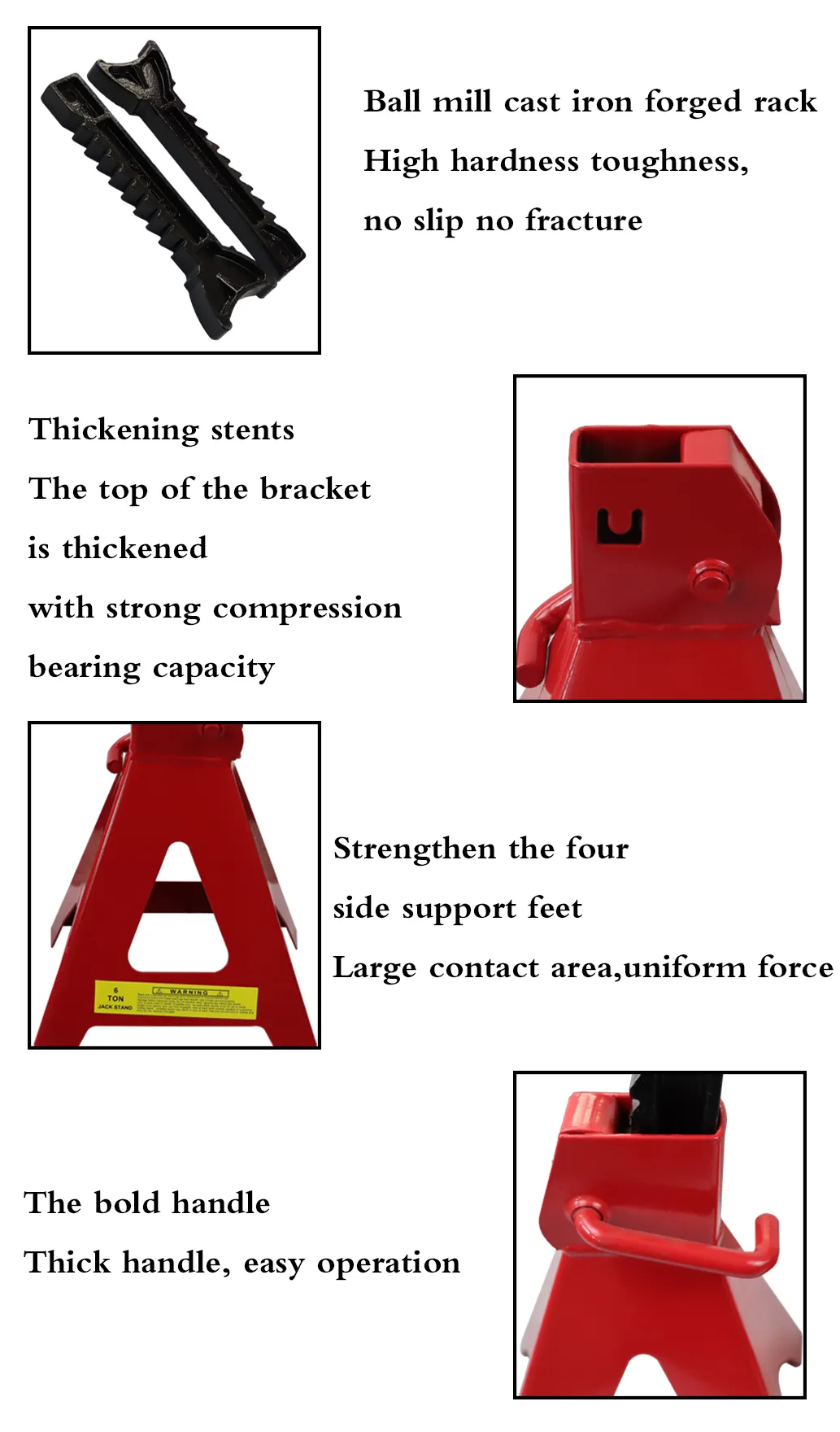
The construction of a 2-ton racing jack relies on a combination of high-strength steel alloys and hydraulic components. The jack's frame and lifting arm are typically manufactured from forged carbon steel (SAE 1045 or equivalent), chosen for its high tensile strength and ductility. Heat treatment processes such as quenching and tempering are applied to optimize hardness and toughness, preventing brittle fracture. The hydraulic cylinder utilizes high-precision honed cylinder tubes, typically made from AISI 1020 steel, offering a smooth internal surface to minimize friction and maximize seal life. The piston is often constructed from chrome-plated steel (4140 alloy) for corrosion resistance and wear resistance. Seals are commonly made from nitrile rubber (NBR) or hydrogenated nitrile butadiene rubber (HNBR) due to their excellent resistance to hydraulic fluid and temperature variations.
Manufacturing involves several key processes. Forging forms the basic shape of the frame and lifting arm. CNC machining refines critical dimensions and ensures precise tolerances. Welding, often employing MIG or TIG techniques, joins various components together. The hydraulic cylinder assembly requires careful alignment and sealing to prevent leaks. Hydraulic fluid, typically a mineral oil-based formulation with anti-wear additives, is filled and the system is pressure tested. Parameter control during manufacturing is paramount. Forging temperatures, cooling rates, welding parameters (current, voltage, wire feed speed), and machining tolerances are rigorously monitored to ensure structural integrity and operational reliability. Surface finishing processes like powder coating are applied for corrosion protection and aesthetic appeal.
Performance & Engineering
The performance of a 2-ton racing jack is dictated by Pascal’s Law, governing the transmission of pressure in a confined fluid. Force analysis involves calculating the pressure required to lift a specific load (Force = Pressure x Area). The hydraulic system is engineered to maximize mechanical advantage, allowing operators to lift heavy vehicles with relatively little effort. Stability is a critical engineering consideration. The jack’s base is designed with a wide footprint and low center of gravity to resist tipping. Lifting arm geometry is optimized to minimize bending moments and shear stresses under load. Safety mechanisms, such as overload relief valves, prevent exceeding the jack’s rated capacity, protecting both the operator and the equipment.
Environmental resistance is addressed through material selection and surface treatments. Corrosion protection is achieved through powder coating and the use of corrosion-resistant alloys. Operating temperature range is a key specification, with most jacks designed to function effectively between -10°C and 50°C. Compliance requirements include adherence to safety standards set by organizations like ASME (American Society of Mechanical Engineers) and CE marking for European markets. The jack's handle design incorporates ergonomic principles to reduce operator fatigue and improve control. Pumping mechanisms are optimized for speed and efficiency, minimizing the number of strokes required to reach the desired lift height.
Technical Specifications
| Parameter | Specification | Testing Standard | Typical Value Range |
|---|---|---|---|
| Lifting Capacity | 2 Tons (2000 kg / 4400 lbs) | ASME PALD-2014 | 1900 - 2100 kg |
| Minimum Lift Height | 75 mm (2.95 inches) | ISO 6917 | 70 - 80 mm |
| Maximum Lift Height | 600 mm (23.6 inches) | ISO 6917 | 580 - 620 mm |
| Pump Handle Strokes per Full Lift | Approximately 12-15 | Internal Testing | 12.5 - 16 strokes |
| Hydraulic Fluid Type | ISO VG 32 Mineral Oil | DIN 51524 | ISO VG 32 |
| Cylinder Bore Diameter | 28 mm (1.1 inches) | Dimensional Analysis | 27.5 - 28.5 mm |
Failure Mode & Maintenance
Common failure modes in 2-ton racing jacks include hydraulic leaks, seal degradation, cylinder drift (slow lowering under load), and structural failure of the frame or lifting arm. Hydraulic leaks typically originate from worn seals, loose fittings, or cracks in the cylinder or pump. Seal degradation is accelerated by exposure to contaminants, extreme temperatures, and prolonged use. Cylinder drift often indicates internal wear within the cylinder or a faulty check valve. Structural failures can result from fatigue cracking, overload, or improper welding. Oxidation of the hydraulic fluid leads to viscosity changes and corrosion, reducing performance and lifespan.
Preventive maintenance is crucial for maximizing jack lifespan and ensuring safe operation. Regularly inspect the jack for leaks, damage, and wear. Keep the hydraulic fluid clean and at the recommended level. Lubricate moving parts with appropriate grease. Periodically check the tightness of all fasteners. Avoid exceeding the jack’s rated capacity. Store the jack in a clean, dry environment. If leaks are detected, replace the affected seals immediately. For cylinder drift, inspect and replace the check valve. In the event of structural damage, discontinue use and consult a qualified repair technician. Annual inspection and fluid replacement are recommended for heavy-duty applications.
Industry FAQ
Q: What is the typical service life expectancy of a high-quality 2-ton racing jack under daily professional use?
A: Under demanding daily professional use, a high-quality 2-ton racing jack typically has a service life expectancy of 3-5 years. However, this is heavily dependent on maintenance practices. Consistent inspection, fluid changes, and prompt seal replacement can extend this lifespan significantly. Severe overloading or neglect will drastically reduce its lifespan.
Q: What is the significance of the low profile design in a racing jack, and what are the minimum clearance requirements for vehicle engagement?
A: The low profile design allows the jack to fit under vehicles with limited ground clearance, common in sports cars and lowered vehicles. Minimum clearance requirements typically range from 75mm to 100mm (2.95 – 3.94 inches), depending on the jack's specific design. Always consult the jack’s specifications and the vehicle’s lift point guidelines.
Q: What are the critical safety considerations when using a 2-ton racing jack, beyond simply adhering to the weight limit?
A: Beyond the weight limit, critical safety considerations include always using jack stands to support the vehicle after lifting, working on a level and solid surface, ensuring the jack is properly positioned on the vehicle’s designated lift points, and avoiding working under a vehicle supported only by a jack. Never attempt to modify the jack’s construction or bypass safety features.
Q: How does the hydraulic fluid type affect the jack’s performance, and is it permissible to substitute with a different viscosity grade?
A: Hydraulic fluid type significantly affects performance. ISO VG 32 mineral oil is the standard, providing optimal viscosity for efficient operation and seal lubrication. Substituting with a different viscosity grade can lead to slower lifting speeds, reduced performance in cold temperatures, and potential seal damage. It's generally not permissible without specific manufacturer approval.
Q: What are the common symptoms of a failing check valve within the hydraulic system, and what is the repair procedure?
A: A failing check valve commonly manifests as cylinder drift – the vehicle slowly lowering over time even with the release valve closed. The repair procedure involves dismantling the hydraulic pump, identifying and replacing the faulty check valve (typically a spring-loaded ball or poppet valve), and reassembling the pump, ensuring proper sealing and testing.
Conclusion
The 2-ton racing jack represents a critical tool in the automotive service industry, relying on a sophisticated interplay of material science, hydraulic engineering, and precision manufacturing. Its performance is dictated by adherence to fundamental principles of fluid mechanics and structural integrity. Understanding the potential failure modes and implementing a robust preventative maintenance program are paramount to ensuring operator safety and maximizing the tool’s lifespan.
Future developments in racing jack technology are likely to focus on lightweight materials (such as aluminum alloys) to enhance portability, improved seal materials for extended service intervals, and integrated safety features such as automatic overload protection and real-time load monitoring. Continuous adherence to industry standards and rigorous quality control remain essential for maintaining the reliability and safety of this vital piece of automotive equipment.
