Introduction
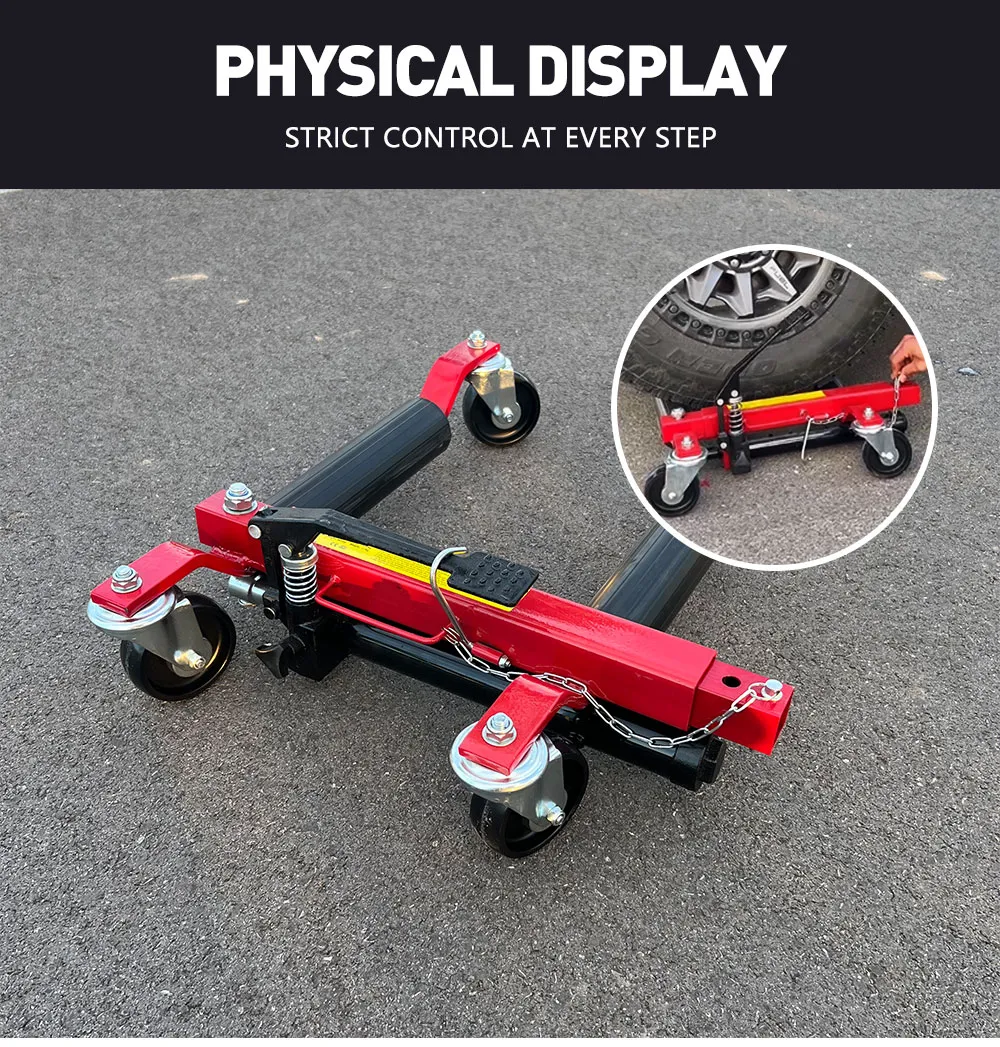
The 3 1/2 ton aluminum floor jack represents a significant advancement in lifting equipment, increasingly prevalent in automotive repair, industrial maintenance, and heavy equipment servicing. Unlike traditional steel floor jacks, aluminum alloy construction offers a substantial weight reduction while maintaining or exceeding lifting capacity. This design addresses a core industry pain point: operator fatigue and maneuverability limitations associated with heavier tools. The jack's hydraulic system delivers controlled lifting and lowering, enabling safe and efficient vehicle or load manipulation. Its core performance characteristics are defined by lifting capacity (3.5 tons / 7,000 lbs), minimum lifting height, maximum lifting height, and the speed of ascent and descent, all governed by hydraulic pump efficiency and valve design. This guide provides an in-depth technical analysis of aluminum floor jack construction, performance, failure modes, and relevant industry standards.
Material Science & Manufacturing
The primary material in the 3 1/2 ton aluminum floor jack is 6061-T6 aluminum alloy for the jack’s body, lifting arm, and handle components. 6061-T6 possesses a high strength-to-weight ratio, excellent corrosion resistance, and good weldability. Its tensile strength is approximately 45,000 PSI, and its yield strength is around 40,000 PSI. The hydraulic cylinder and piston are constructed from high-strength carbon steel (typically AISI 1045) and are surface-treated with chrome plating to prevent corrosion. The hydraulic fluid is a mineral oil-based formulation designed for optimal performance across a wide temperature range (-20°C to 80°C). Manufacturing processes involve several key steps: aluminum alloy casting or forging for the main body; precision machining to create mating surfaces and hydraulic ports; welding (typically Gas Metal Arc Welding - GMAW) to join components; hydraulic cylinder assembly and testing; and final assembly with steel components. Critical parameters during manufacturing include weld penetration depth, surface finish of machined parts (Ra < 1.6 μm), and hydraulic fluid cleanliness (particle count < 15/100ml). Heat treatment (T6 tempering) of the aluminum alloy is crucial for achieving the desired mechanical properties. Quality control measures include dimensional inspections, non-destructive testing (NDT) of welds, and hydraulic pressure testing to ensure leak-free operation. The saddle and lifting pad are typically made from polyurethane to prevent damage to the vehicle's jacking points.
Performance & Engineering
The performance of a 3 1/2 ton aluminum floor jack is fundamentally governed by Pascal's Law, which dictates the hydraulic pressure transfer. The jack’s engineering design focuses on maximizing mechanical advantage and minimizing pressure losses. Force analysis involves calculating the stress distribution within the aluminum alloy structure under load, ensuring it remains within acceptable limits. The lever arm length and piston diameter are critical parameters affecting lifting force. Environmental resistance is a key consideration; the aluminum alloy is naturally corrosion-resistant, but the steel components require protective coatings. The hydraulic fluid must maintain its viscosity and lubricity across a range of temperatures. Compliance requirements, such as ASME PA20.1 (Safety Standard for Motor Vehicle Lifts), dictate safety features like overload protection (relief valve) and stable lifting geometry. The jack’s stability is enhanced through a wide base and a low center of gravity. Finite Element Analysis (FEA) is often used during the design phase to optimize the structural integrity and identify potential failure points. The pump design influences the lifting speed and the required operator effort. A dual-pumping system can provide faster lift times but requires more physical exertion. Proper valve design ensures smooth and controlled lowering, preventing sudden drops.
Technical Specifications
| Parameter | Specification | Testing Standard | Tolerance |
|---|---|---|---|
| Lifting Capacity | 3.5 tons (7,000 lbs) | ASTM E415 | ±5% |
| Minimum Lifting Height | 3.7 inches (94 mm) | In-house calibration | ±0.1 inch |
| Maximum Lifting Height | 18.1 inches (460 mm) | In-house calibration | ±0.2 inch |
| Pump Type | Single/Dual Piston | Hydraulic Institute Standards | N/A |
| Hydraulic Fluid Type | ISO VG 32 Mineral Oil | ISO 3448 | Viscosity ± 5% |
| Aluminum Alloy Grade | 6061-T6 | ASTM B95 | Chemical Composition per ASTM B95 |
Failure Mode & Maintenance
Common failure modes in 3 1/2 ton aluminum floor jacks include hydraulic seal failure (leading to pressure loss), cylinder corrosion (resulting in piston seizure), aluminum alloy fatigue cracking (typically around weld points or stress concentrations), and saddle damage. Hydraulic seal failure is often caused by contamination of the hydraulic fluid or wear due to repeated cycles. Cylinder corrosion occurs when the protective chrome plating is compromised, exposing the steel to moisture. Aluminum alloy fatigue cracking can be initiated by overloads or repeated stress cycling. Saddle damage results from improper load application or use on abrasive surfaces. Preventative maintenance is crucial. Regular inspection of hydraulic fluid level and condition is essential. The fluid should be changed every 12-24 months, or sooner if contaminated. Periodic lubrication of moving parts (pivot points, handle joints) reduces friction and wear. Inspection of welds for cracks is critical, especially after heavy use. Protective coatings should be reapplied to steel components if damaged. Avoid exceeding the rated lifting capacity. Proper storage in a clean, dry environment minimizes corrosion. If the jack leaks hydraulic fluid, immediately stop use and replace the seals. If cracks are observed in the aluminum alloy, retire the jack from service.
Industry FAQ
Q: What is the significance of the 6061-T6 aluminum alloy grade used in the jack’s construction?
A: 6061-T6 provides an optimal balance of strength, weldability, and corrosion resistance. The “T6” designation indicates a solution heat treatment and artificial aging process, significantly increasing the alloy’s yield and tensile strength compared to other aluminum alloys. This ensures the jack can safely handle the rated lifting capacity without structural failure.
Q: How does the jack's hydraulic system compare to air-powered lifting systems in terms of precision and control?
A: Hydraulic systems offer superior precision and control compared to air-powered systems. Hydraulic fluid is incompressible, resulting in minimal flex and precise lifting and lowering movements. Air-powered systems, while faster, can exhibit some “bounce” or jerkiness due to the compressibility of air. This makes hydraulic jacks preferable for tasks requiring delicate load handling.
Q: What are the key considerations when selecting a hydraulic fluid for this type of jack?
A: The hydraulic fluid should have a viscosity suitable for the pump type (typically ISO VG 32), a high viscosity index (to maintain consistent performance across temperature variations), good lubricity, and corrosion inhibition properties. It should also be compatible with the jack’s seals and materials. Avoid using fluids containing additives that could damage the seals.
Q: What safety features are essential for a 3 1/2 ton aluminum floor jack, and how do they mitigate potential risks?
A: Essential safety features include an overload relief valve (to prevent exceeding the lifting capacity), a stable base design to minimize tipping, and a controlled lowering valve to prevent sudden drops. These features mitigate the risks of structural failure, jack instability, and potential injury to personnel or damage to equipment.
Q: What is the expected service life of the jack with proper maintenance, and what are the primary factors influencing its longevity?
A: With regular maintenance (fluid changes, lubrication, inspection for wear and damage), a 3 1/2 ton aluminum floor jack can have a service life of 5-10 years or more. The primary factors influencing longevity are the frequency of use, the weight of loads lifted, the environmental conditions (exposure to moisture or corrosive substances), and the thoroughness of preventative maintenance.
Conclusion
The 3 1/2 ton aluminum floor jack represents a robust and efficient lifting solution, offering a compelling alternative to traditional steel jacks due to its weight reduction and corrosion resistance. Its performance is fundamentally rooted in hydraulic principles and material science, specifically the properties of 6061-T6 aluminum alloy and the careful selection of hydraulic fluids and seals. Understanding the potential failure modes, implementing preventative maintenance procedures, and adhering to relevant industry standards are critical for maximizing the jack’s lifespan and ensuring safe operation.
Future advancements in floor jack technology may focus on integrating smart sensors for load monitoring and predictive maintenance, developing more durable and corrosion-resistant materials, and optimizing hydraulic pump designs for increased efficiency and reduced operator effort. The continued demand for lightweight, high-capacity lifting equipment will drive innovation in aluminum alloy manufacturing and hydraulic system engineering.
