Introduction
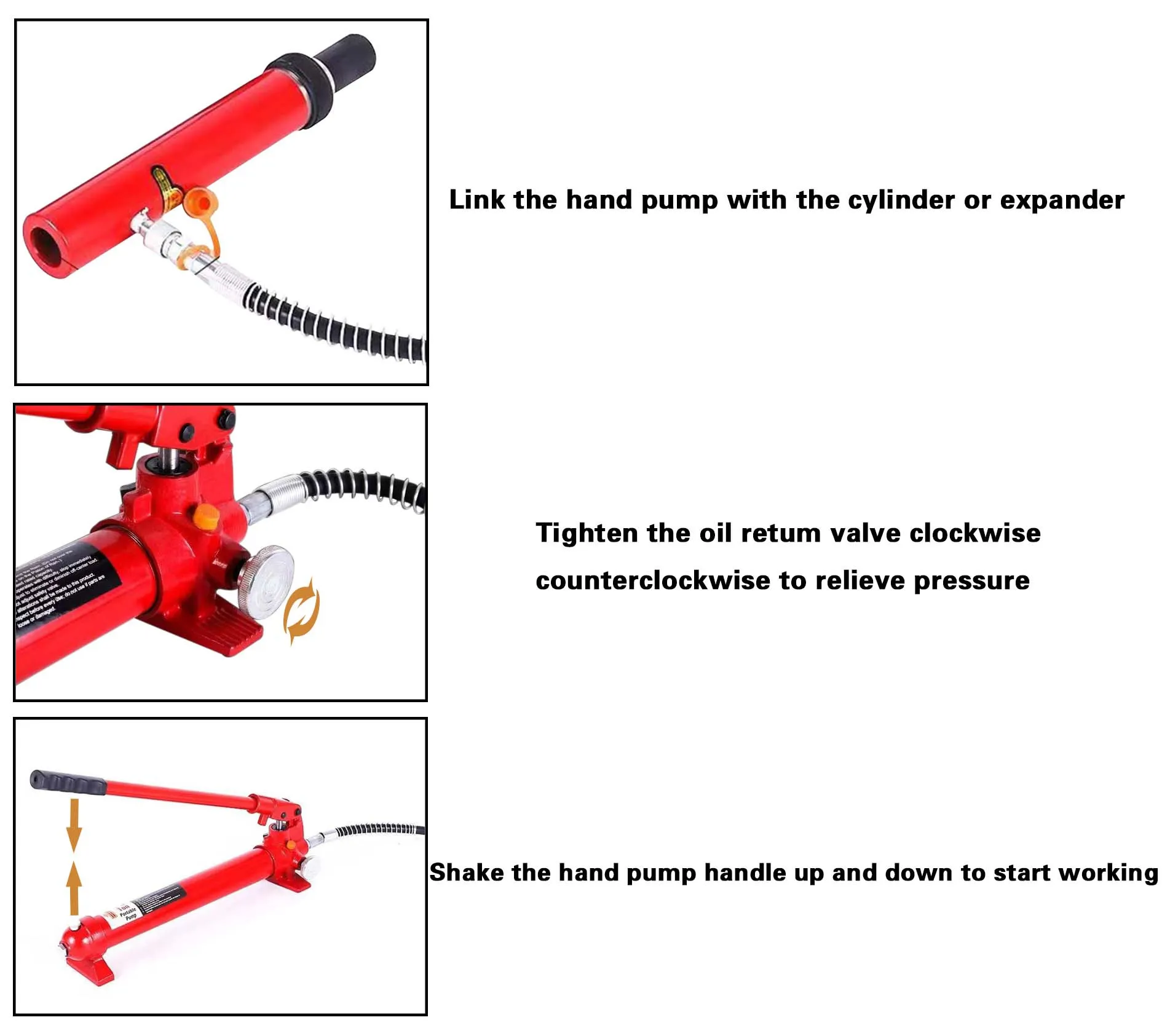
The 4-ton Porta Power kit is a hydraulic lifting and spreading tool widely utilized in industrial maintenance, vehicle repair, emergency rescue, and construction. Its core function is to apply substantial force in a controlled manner, enabling the separation of bonded surfaces, lifting of heavy objects, and the creation of rescue space. Positioned within the broader landscape of hydraulic tools, it offers a portable and self-contained solution compared to larger hydraulic presses or dedicated lifting equipment. The kit typically comprises a hydraulic pump, extension hoses, and a variety of spreading and lifting heads designed for diverse applications. Key performance indicators include maximum operating pressure, lifting capacity (4 tons/8,000 lbs), stroke length, and operational safety features. A primary industry pain point addressed by this tool is the need for rapid and precise application of force in environments where fixed infrastructure is unavailable or impractical. Its hydraulic functionality circumvents the limitations of purely mechanical solutions, delivering consistent force multiplication.
Material Science & Manufacturing
The core components of a 4-ton Porta Power kit involve several critical material selections and manufacturing processes. The hydraulic pump housing is commonly constructed from high-strength carbon steel (e.g., AISI 1045) chosen for its machinability, weldability, and resistance to deformation under pressure. The piston and cylinder assembly are typically made from hardened alloy steel (e.g., 4140) and undergo precision honing to achieve a tight seal and minimize friction. Seals are generally manufactured from nitrile rubber (Buna-N) or Viton fluoroelastomer, selected for their compatibility with hydraulic fluid and resistance to wear. The hydraulic fluid itself is typically a mineral oil-based formulation with anti-wear additives and corrosion inhibitors. Extension hoses are reinforced with multiple layers of high-tensile steel wire braid encased in a durable synthetic rubber. The spreading/lifting heads are commonly forged from carbon steel (e.g., AISI 1045) or alloy steel (e.g., 4140) and heat-treated to optimize strength and toughness.
Manufacturing processes involve several key stages. Pump housings are often produced via investment casting or machining from solid steel billets. Cylinders are honed to a specific surface finish to ensure proper sealing. Hydraulic hoses undergo pressure testing to verify their integrity. The assembly process requires meticulous attention to detail, ensuring proper alignment of components and tight connections to prevent leaks. Critical parameters controlled during manufacturing include material hardness, surface finish, dimensional accuracy, and hydraulic fluid viscosity. Welding, where applicable, requires stringent quality control procedures to prevent porosity and ensure weld strength. Furthermore, the integrity of seals is paramount; they are typically inspected for defects and proper installation.
Performance & Engineering
The performance of a 4-ton Porta Power kit is fundamentally governed by Pascal’s Law, which states that pressure applied to a confined fluid is transmitted equally in all directions. The kit utilizes a manual hydraulic pump to generate pressure, which is then transferred through the hoses to the spreading or lifting head. Force calculations involve multiplying the hydraulic pressure by the effective area of the piston. For a 4-ton kit, the theoretical maximum force is 8,000 lbs (approximately 35,585 N). However, actual lifting capacity is reduced by factors such as friction within the hydraulic system, hose elasticity, and the load angle. Engineering considerations focus on maintaining structural integrity under load. The cylinder must withstand the internal pressure without yielding or bursting. Spreading heads must resist bending and shear stresses.
Environmental resistance is crucial. The steel components are typically coated with a corrosion-resistant finish (e.g., zinc plating or powder coating) to protect against rust and oxidation. Seals must maintain their integrity across a range of temperatures and exposure to hydraulic fluid. Compliance requirements vary by region but often include safety certifications (e.g., CE marking in Europe) and adherence to industry standards (e.g., ASME B30.20 for hydraulic tools). Functional implementation often requires proper load distribution to prevent point loading and potential failure. Understanding the geometry of the load and selecting the appropriate spreading or lifting head are critical for safe and effective operation. Proper venting of hydraulic fluid is also vital to prevent airlocks and ensure consistent performance. Consideration of the material being acted upon is also important, as certain materials may be damaged by the force applied.
Technical Specifications
| Parameter | Specification | Tolerance | Test Method |
|---|---|---|---|
| Maximum Operating Pressure | 70 MPa (10,000 psi) | ±3.5 MPa (±500 psi) | Hydraulic Pressure Gauge Calibration (ASTM E74) |
| Lifting Capacity | 4 tons (8,000 lbs / 3558.5 N) | ±10% | Static Load Test (ISO 604) |
| Stroke Length | 150 mm (6 inches) | ±5 mm (±0.2 inches) | Dimensional Measurement (ISO 3302-1) |
| Hydraulic Fluid Type | ISO VG 32 Mineral Oil | Viscosity: 30-36 cSt @ 40°C | Viscosity Measurement (ASTM D445) |
| Hose Burst Pressure | 21 MPa (3,000 psi) | N/A | Hydrostatic Pressure Test (ISO 3872) |
| Operating Temperature Range | -20°C to 80°C (-4°F to 176°F) | N/A | Temperature Cycling Test (ASTM D3451) |
Failure Mode & Maintenance
Common failure modes in 4-ton Porta Power kits include hydraulic leaks, seal degradation, piston damage, hose rupture, and pump failure. Hydraulic leaks typically originate from worn seals, loose fittings, or corrosion damage to the pump housing or hoses. Seal degradation is accelerated by exposure to high temperatures, incompatible fluids, or abrasive contaminants. Piston damage can occur due to excessive load, contamination in the hydraulic fluid, or internal corrosion. Hose rupture is often caused by exceeding the maximum pressure rating, physical abrasion, or age-related deterioration. Pump failure can result from internal wear, valve malfunction, or fluid contamination. Fatigue cracking in the metal components, particularly in the spreading heads, can occur under repeated cyclic loading. Delamination can occur in any coating applied to protect against corrosion.
Preventative maintenance is crucial for extending the service life of the kit. Regular inspection of hoses for cracks, abrasions, and leaks is essential. Hydraulic fluid should be changed periodically (typically every 6-12 months) to remove contaminants and maintain optimal viscosity. Seals should be inspected and replaced as needed. The pump should be kept clean and lubricated. After each use, the kit should be wiped down to remove dirt and debris. Avoid exceeding the maximum load capacity. Store the kit in a clean, dry environment. If a leak is detected, immediately stop using the kit and repair the leak. Periodically check and tighten all fittings. When not in use, relieve pressure within the system.
Industry FAQ
Q: What is the impact of hydraulic fluid viscosity on the performance of the Porta Power kit?
A: Hydraulic fluid viscosity directly influences the efficiency of force transmission. Too low a viscosity results in increased internal leakage, reducing the available force and slowing down operation. Too high a viscosity increases resistance to flow, requiring more effort to operate the pump and potentially leading to cavitation. ISO VG 32 is typically recommended, as it provides a balance between flow rate and sealing performance. Regular monitoring of fluid viscosity is crucial, especially in varying temperature conditions.
Q: What are the primary considerations for selecting the correct spreading/lifting head for a specific application?
A: The selection of the appropriate head depends on the geometry of the space, the material being acted upon, and the required force distribution. A narrow spreading head is suitable for tight spaces, while a wider head provides a more stable and even distribution of force. The head material must be compatible with the material being lifted or spread to prevent damage. Always consider the load angle and ensure that the head is properly positioned to avoid uneven stress concentration.
Q: How does temperature affect the operation and longevity of the kit?
A: Temperature fluctuations impact the viscosity of the hydraulic fluid, as well as the performance of seals. Low temperatures can increase fluid viscosity, slowing down operation and potentially causing damage to the pump. High temperatures can degrade seals and reduce their effectiveness. Operating outside the specified temperature range can accelerate wear and reduce the overall lifespan of the kit.
Q: What safety precautions should be taken when operating the 4-ton Porta Power kit?
A: Always wear appropriate personal protective equipment (PPE), including safety glasses and gloves. Ensure the work area is clear of personnel. Never exceed the maximum load capacity of the kit. Inspect the kit for damage before each use. Use the correct spreading/lifting head for the application. Maintain a stable and secure lifting point. Relieve pressure from the system before disconnecting hoses.
Q: What are the implications of using non-approved hydraulic fluids?
A: Using non-approved hydraulic fluids can lead to seal incompatibility, corrosion, and reduced performance. Certain fluids may contain additives that react with the seals, causing them to swell, harden, or disintegrate. This results in leaks, reduced force transmission, and potential pump damage. Always use a hydraulic fluid that meets or exceeds the manufacturer’s specifications.
Conclusion
The 4-ton Porta Power kit represents a versatile and essential tool for a wide range of industrial and emergency applications. Its hydraulic design provides a significant force multiplication capability in a portable and relatively compact package. The material selection and manufacturing processes are critical to ensuring its reliability and durability. Understanding the underlying principles of hydraulics, material science, and force analysis is essential for safe and effective operation.
Proper maintenance, including regular fluid changes, seal inspections, and hose checks, is paramount to extending the service life of the kit and preventing costly failures. Adherence to relevant industry standards and safety protocols is also crucial. Continued advancements in hydraulic technology and material science will likely lead to further improvements in the performance, efficiency, and safety of these vital tools.
