Introduction
Automotive floor jacks are critical lifting devices utilized in automotive repair and maintenance, enabling technicians and enthusiasts to safely elevate vehicles for undercarriage work. Positioned as a foundational tool within the automotive service industry supply chain, their performance is intrinsically linked to safety, efficiency, and operational cost. Core performance parameters encompass lifting capacity (tonnage), minimum and maximum lift height, pump stroke count, and overall structural integrity. The industry currently faces challenges related to increasing vehicle weights, particularly in the SUV and truck segments, demanding higher-capacity jacks. Simultaneously, there’s a growing need for lightweight, portable solutions to support mobile service technicians. Concerns over hydraulic fluid leakage, long-term corrosion resistance, and adherence to stringent safety standards are also paramount.
Material Science & Manufacturing
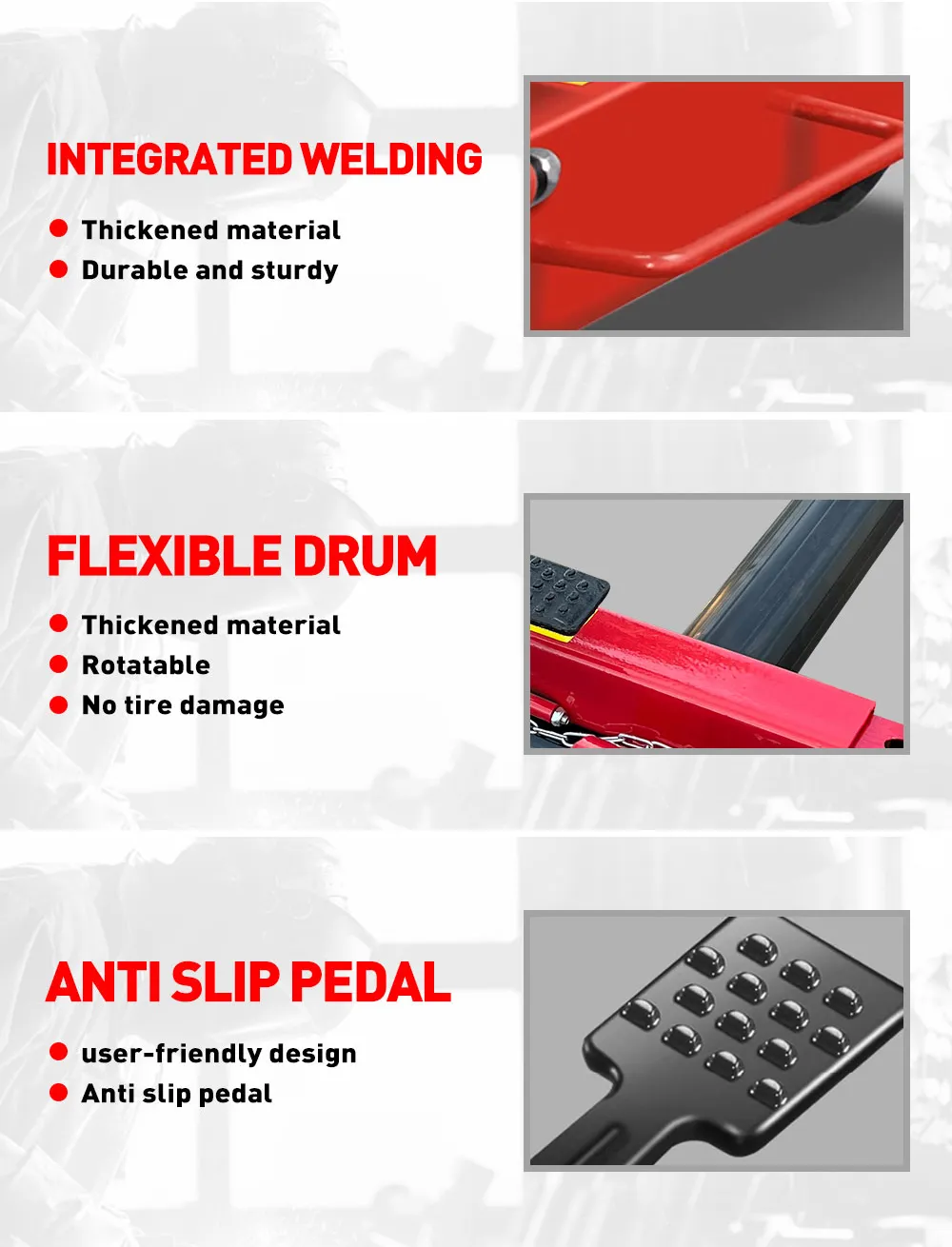
The construction of automotive floor jacks primarily relies on high-strength steel alloys – typically AISI 1045 or equivalent – for the lifting arm, saddle, and frame. These steels are chosen for their yield strength (approximately 310 MPa), tensile strength (560 MPa), and weldability. The hydraulic cylinder body often employs seamless steel tubing, subjected to rigorous non-destructive testing (NDT), such as ultrasonic testing, to detect internal flaws. Piston rods utilize chrome-plated steel (typically 4140 alloy) to enhance corrosion resistance and surface hardness, minimizing wear against cylinder seals. Hydraulic fluid commonly consists of mineral oil-based formulations with viscosity grades ranging from ISO VG 32 to VG 46, incorporating anti-wear additives and corrosion inhibitors.
Manufacturing processes involve several key stages. Steel components are formed through forging, stamping, or CNC machining, followed by welding (typically shielded metal arc welding - SMAW - or gas metal arc welding - GMAW) to assemble the frame and lifting arm. Welds undergo visual inspection, radiography, and potentially dye penetrant testing to ensure structural integrity. The hydraulic cylinder is manufactured via deep drawing of the cylinder body, followed by honing for precise internal diameter tolerances. Seals, made from nitrile rubber (NBR) or hydrogenated nitrile butadiene rubber (HNBR) for higher temperature resistance, are precision-molded and installed. The pump assembly, consisting of a lever, piston, and valves, undergoes rigorous quality control to ensure consistent flow rates and pressure generation. Finally, the jack is typically coated with a powder coating or enamel finish to provide corrosion protection.
Performance & Engineering
The performance of a floor jack is fundamentally governed by Pascal's Law, relating pressure applied to a fluid to the force exerted on a piston. Force analysis reveals that the lifting capacity is directly proportional to the piston area and the applied pressure. Engineering design must account for substantial safety factors – typically 3:1 or higher – to prevent structural failure under overload conditions. The lifting mechanism’s stability is critical, dictating a wide base design and low center of gravity to minimize the risk of tipping. Environmental resistance is a key consideration. Exposure to road salts, moisture, and temperature fluctuations can lead to corrosion. Material selection and protective coatings are vital in mitigating this risk. Compliance with industry standards, such as ASME PASE 2015 (Safety Standard for Hydraulic Floor Jacks and Lifting Devices) is non-negotiable. This standard specifies requirements for material strength, stability testing, and marking requirements.
Finite Element Analysis (FEA) is commonly used during the design phase to optimize component geometry, predict stress concentrations, and ensure structural integrity. Hydraulic system design focuses on minimizing pressure drop and maximizing efficiency, achieved through careful selection of hose diameters, valve configurations, and pump designs. Leakage prevention is also paramount, necessitating precise machining of cylinder bores and piston seals. The design of the release valve must provide controlled descent, preventing sudden drops and potential damage to the vehicle.
Technical Specifications
| Capacity (Tons) | Minimum Lift Height (in) | Maximum Lift Height (in) | Pump Strokes Per Full Lift |
|---|---|---|---|
| 2 | 3.7 | 15.7 | 8-10 |
| 3 | 3.5 | 20.5 | 7-9 |
| 4 | 3.9 | 23.6 | 6-8 |
| 5 | 4.1 | 27.5 | 5-7 |
| 6 | 4.3 | 31.5 | 5-6 |
| 10 | 4.7 | 39.4 | 4-5 |
Failure Mode & Maintenance
Common failure modes in automotive floor jacks include hydraulic fluid leakage, typically originating from worn seals or damaged hydraulic lines. Fatigue cracking can occur in the lifting arm or frame due to repeated stress cycles, especially under overload conditions. Corrosion is a significant contributor to long-term degradation, particularly in regions exposed to salt and moisture. Piston corrosion can lead to cylinder bore damage and reduced lifting capacity. Shear failure of the release valve can result in uncontrolled descent. Delamination of powder coating can accelerate corrosion.
Preventative maintenance is crucial. Regular inspection for hydraulic fluid leaks is paramount, followed by immediate seal replacement if detected. Lubrication of pivot points and moving parts reduces friction and wear. Periodic inspection of welds for cracking is essential, utilizing visual inspection and potentially dye penetrant testing. The hydraulic fluid should be replaced every 12-24 months to maintain optimal performance and prevent corrosion. Proper storage in a clean, dry environment minimizes corrosion risk. Never exceed the rated lifting capacity, and always use the jack on a level, hard surface. If structural damage is observed, the jack should be removed from service immediately and inspected by a qualified technician.
Industry FAQ
Q: What is the impact of different hydraulic fluid types on the jack’s performance and lifespan?
A: The choice of hydraulic fluid significantly influences performance and longevity. Mineral oil-based fluids are common but susceptible to oxidation and thermal breakdown. Synthetic fluids, such as polyalphaolefin (PAO) or ester-based fluids, offer superior thermal stability, oxidation resistance, and lubricity, extending the jack’s lifespan and maintaining consistent performance in extreme temperatures. However, synthetic fluids are generally more expensive and require compatibility checks with seal materials.
Q: How does the steel grade used in the lifting arm affect its resistance to bending and fatigue?
A: Higher steel grades with increased yield strength and tensile strength directly correlate to improved resistance to bending and fatigue. AISI 1045 is a common choice, but higher alloy steels like 4140 offer superior performance, particularly for higher-capacity jacks. Heat treatment processes, such as quenching and tempering, also play a critical role in optimizing the steel’s mechanical properties. Proper welding techniques are also essential to maintain the steel’s strength and prevent weld-induced defects.
Q: What are the key considerations for selecting the appropriate seal material?
A: Seal material selection depends on several factors, including temperature range, hydraulic fluid compatibility, and pressure. Nitrile rubber (NBR) is a cost-effective option for general-purpose applications, but it has limited temperature resistance. Hydrogenated Nitrile Butadiene Rubber (HNBR) offers enhanced temperature resistance and abrasion resistance. Viton (FKM) provides the highest temperature and chemical resistance but is the most expensive. Compatibility with the hydraulic fluid is critical to prevent swelling, shrinking, or degradation of the seal.
Q: What quality control measures are employed during the manufacturing process to ensure safety and reliability?
A: Rigorous quality control measures are employed throughout the manufacturing process. These include material certification to verify steel grade and chemical composition, non-destructive testing (NDT) of welded components (radiography, dye penetrant), dimensional inspections to ensure tight tolerances, pressure testing to verify hydraulic system integrity, and load testing to validate lifting capacity. Statistical Process Control (SPC) is used to monitor critical parameters and identify potential deviations.
Q: How do different surface treatments contribute to corrosion resistance?
A: Surface treatments play a crucial role in enhancing corrosion resistance. Powder coating provides a durable, impact-resistant barrier against moisture and chemicals. Zinc plating offers sacrificial corrosion protection. Chrome plating, commonly applied to piston rods, provides excellent hardness and corrosion resistance. Proper surface preparation, including cleaning and degreasing, is essential for achieving optimal coating adhesion and performance. Regular application of corrosion inhibitors can also extend the lifespan of the jack.
Conclusion
Automotive floor jacks, while seemingly simple devices, represent a complex interplay of material science, engineering principles, and manufacturing precision. Their reliable operation is paramount for ensuring the safety of technicians and the integrity of vehicle repair processes. Addressing the industry's evolving needs – particularly regarding increasing vehicle weights and the demand for portable solutions – requires continuous innovation in materials, design, and manufacturing techniques.
Future development will likely focus on lightweight materials such as aluminum alloys and high-strength composites, coupled with advanced hydraulic system designs to improve efficiency and reduce environmental impact. The integration of smart technologies, such as integrated pressure sensors and digital load indicators, could further enhance safety and control. Adherence to stringent quality control standards and ongoing preventative maintenance remain essential for maximizing the lifespan and reliability of these critical tools.
