Introduction
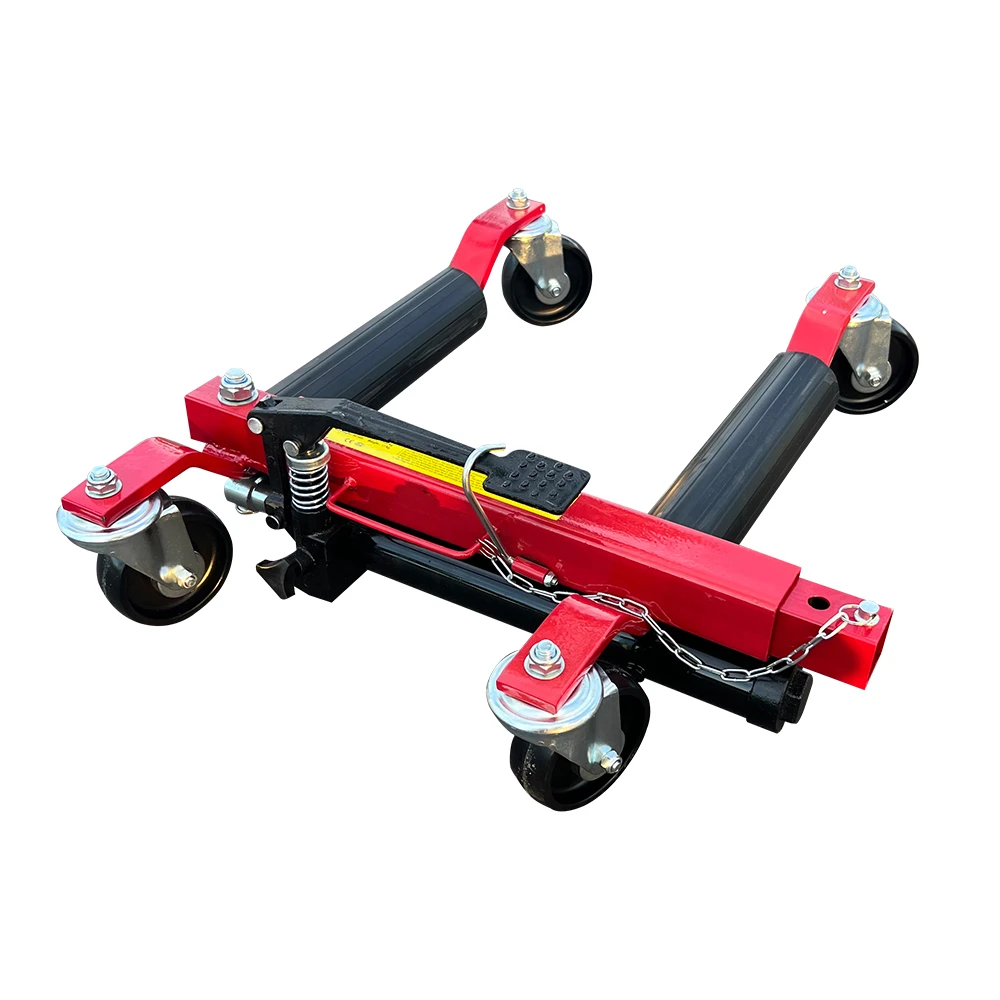
Hydraulic car jacks are essential tools for vehicle maintenance and repair, providing a mechanical advantage to lift substantial weights with relatively minimal force exertion. Positioned within the automotive service equipment supply chain, they represent a critical component for professional mechanics and informed vehicle owners. These jacks operate on Pascal's principle, utilizing a hydraulic fluid system to transfer force from a pump mechanism to a lifting piston. Core performance characteristics center around lifting capacity (tonnage), minimum and maximum lifting heights, and operational safety features like overload protection and stable base design. The industry faces ongoing pressure to improve jack durability, reduce weight without compromising structural integrity, and enhance safety mechanisms to prevent accidental lowering or instability. Understanding the interplay of material science, manufacturing processes, and performance metrics is crucial for selecting and utilizing a hydraulic car jack effectively and safely.
Material Science & Manufacturing
The core components of a hydraulic car jack necessitate careful material selection. The hydraulic cylinder is typically constructed from high-strength steel, specifically AISI 1045 or similar carbon steel alloys, chosen for their excellent tensile strength and resistance to yielding under pressure. The piston itself is often coated with hard chrome plating to enhance wear resistance and prevent corrosion. The hydraulic fluid, commonly a mineral oil-based formulation, must exhibit high viscosity index, thermal stability, and compatibility with the sealing materials. Seals are typically manufactured from nitrile butadiene rubber (NBR) or hydrogenated nitrile butadiene rubber (HNBR) due to their resistance to hydraulic fluids and acceptable temperature range. The jack’s housing and lifting arm are frequently produced from structural steel, such as A36 steel, via processes like stamping, welding, and machining. Manufacturing precision is critical. Welding procedures must adhere to AWS D1.1 standards to ensure joint integrity and prevent fatigue cracking. Heat treatment processes, such as quenching and tempering, are employed to achieve the desired hardness and ductility in steel components. Parameter control during the hydraulic fluid filling process is paramount; air bubbles within the system significantly reduce efficiency and can lead to erratic lifting. Quality control checks include hydrostatic testing of the cylinder to verify its pressure rating and dimensional accuracy of critical components using coordinate measuring machines (CMMs).

Performance & Engineering
Hydraulic jack performance is governed by fundamental principles of fluid mechanics and structural engineering. The lifting force is directly proportional to the hydraulic pressure and the piston area, as defined by Pascal’s Law (P = F/A). Force analysis considers the weight of the vehicle being lifted, a safety factor (typically 2:1 or higher), and the jack’s structural limits. Environmental resistance is a key concern; exposure to moisture, road salts, and extreme temperatures can accelerate corrosion and degrade seals. Coatings like powder coating or zinc plating are applied to steel components to mitigate corrosion. Stability is achieved through a wide base design and a low center of gravity. The lifting arm geometry influences the mechanical advantage and the range of motion. Compliance requirements vary by region. In the United States, hydraulic jacks must meet ASME PASE safety standards. In Europe, compliance with EN 1494 standards is essential. The jack’s release mechanism, typically a solenoid valve or a manual lever, must provide precise and controlled lowering. Finite element analysis (FEA) is frequently used during the design phase to optimize the structural integrity of the lifting arm and housing, identifying potential stress concentration points and ensuring adequate safety margins. Operational fatigue life is assessed through cyclic loading tests simulating repeated lifting and lowering cycles.
Technical Specifications
| Parameter | Typical Value (2 Ton Jack) | Typical Value (3 Ton Jack) | Testing Standard |
|---|---|---|---|
| Lifting Capacity | 2000 kg (4400 lbs) | 3000 kg (6600 lbs) | ASME PASE |
| Minimum Lifting Height | 135 mm (5.3 in) | 130 mm (5.1 in) | EN 1494 |
| Maximum Lifting Height | 330 mm (13 in) | 380 mm (15 in) | ASME PASE |
| Pump Handle Strokes to Max Height | 8-10 | 10-12 | Internal Testing |
| Hydraulic Fluid Type | ISO VG 32 Mineral Oil | ISO VG 32 Mineral Oil | ISO 3448 |
| Operating Temperature Range | -20°C to 60°C (-4°F to 140°F) | -20°C to 60°C (-4°F to 140°F) | Internal Testing |
Failure Mode & Maintenance
Hydraulic car jacks are susceptible to several failure modes. Internal leakage of hydraulic fluid is a common issue, often stemming from seal degradation or damage to the cylinder walls. This manifests as a gradual reduction in lifting capacity or an inability to maintain height. Fatigue cracking can occur in the lifting arm or housing due to repeated stress cycles, particularly if the jack is consistently overloaded. Corrosion, especially in harsh environments, weakens steel components and can lead to structural failure. Air ingress into the hydraulic system causes spongy operation and reduces efficiency. Overload conditions can permanently deform the cylinder or lifting arm, rendering the jack unusable. Maintenance is crucial for extending the jack’s lifespan. Regular inspection of the hydraulic fluid level and condition is essential; fluid should be replaced every 12-24 months or sooner if contaminated. All moving parts should be lubricated periodically with a suitable grease. Seals should be inspected for cracks or wear and replaced as necessary. The jack should be stored in a clean, dry environment to prevent corrosion. Always avoid exceeding the rated lifting capacity, and never use the jack on uneven or unstable surfaces. If a leak is detected, the jack should be removed from service immediately and repaired by a qualified technician. Proper storage and careful operation are the key to preventative maintenance.
Industry FAQ
Q: What is the significance of the “duty cycle” specification for a hydraulic jack?
A: The duty cycle refers to the number of lifting and lowering cycles the jack can reliably perform within a specific timeframe. A higher duty cycle indicates a more robust design capable of handling frequent use in a professional setting. It's often expressed as a percentage (e.g., 25% duty cycle means the jack can be used for 25% of any given hour, with the remaining 75% dedicated to cooling and resting).
Q: How does the viscosity of the hydraulic fluid affect jack performance?
A: Viscosity is crucial. Too low a viscosity leads to internal leakage and reduced efficiency. Too high a viscosity increases resistance to flow, slowing down lifting and lowering speeds, and potentially causing strain on the pump mechanism. ISO VG 32 is a commonly recommended viscosity grade for most hydraulic car jacks, as it provides a good balance between flow rate and sealing performance.
Q: What are the potential consequences of using an incorrect hydraulic fluid type?
A: Using an incompatible fluid can lead to seal swelling or degradation, corrosion of internal components, and reduced lubrication. This results in leakage, loss of lifting capacity, and ultimately, jack failure. Always consult the manufacturer’s specifications for the correct fluid type.
Q: What is the importance of the safety valve (overload protection) in a hydraulic jack?
A: The safety valve is a critical safety feature that prevents the jack from being overloaded. It's designed to automatically release hydraulic pressure if the rated lifting capacity is exceeded, preventing structural failure and potential injury. Regular testing of the safety valve functionality is highly recommended.
Q: How can I assess the quality of a hydraulic jack before purchasing it?
A: Look for certifications demonstrating compliance with relevant safety standards (ASME PASE, EN 1494). Inspect the welding quality for any defects. Check the smoothness of the pumping action. Verify the jack is constructed from high-quality steel. Consider the manufacturer’s reputation and warranty terms. A well-constructed jack will feel solid and robust.
Conclusion
Hydraulic car jacks represent a mature yet continually evolving technology. Their effectiveness relies heavily on the precise application of material science principles, adherence to rigorous manufacturing standards, and consistent performance of key components. The selection of appropriate materials, like high-strength steels and compatible hydraulic fluids, is fundamental to ensuring both longevity and safe operation. Understanding the interplay between Pascal’s Law, structural engineering, and relevant safety regulations is paramount for both manufacturers and end-users.
Future advancements are likely to focus on lightweight materials, improved seal technology for enhanced leak prevention, and the integration of smart sensors for real-time monitoring of pressure and load. Continued refinement of manufacturing processes and quality control measures will be essential to maintain the reliability and safety of these critical automotive service tools. Proper maintenance and adherence to the specified operating parameters remain the most effective strategies for maximizing the lifespan and minimizing the risk of failure.
