Introduction
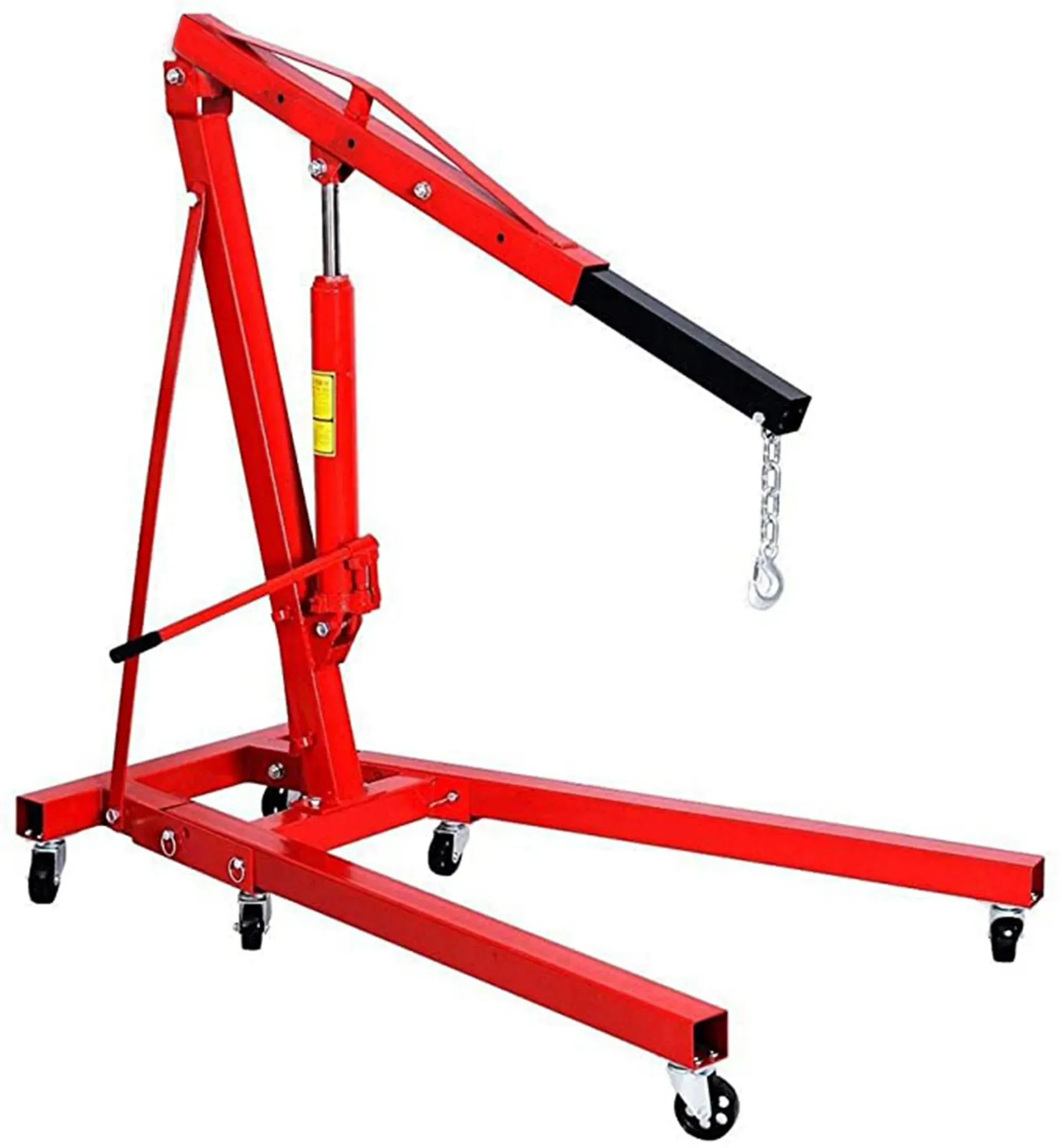
The hydraulic floor jack, a critical component in automotive maintenance, is a mechanical device used to lift vehicles for tire changes, undercarriage servicing, and other repair procedures. Positioned within the automotive tool supply chain, it bridges the gap between vehicle ownership and the ability to perform essential maintenance without reliance on professional service centers. Core performance characteristics are defined by lifting capacity (tonnage), lift height range, pump stroke count, and safety features such as overload protection and stable base design. Unlike scissor jacks, which rely on mechanical advantage, hydraulic jacks utilize Pascal's principle – the transmission of pressure through a fluid – to generate substantial lifting force with minimal user exertion. This technology necessitates rigorous material selection and manufacturing controls to ensure operational reliability and user safety, addressing a key pain point in the automotive aftermarket: the demand for dependable, high-performance lifting equipment.
Material Science & Manufacturing
Car jacks predominantly employ steel alloys for critical components due to their high tensile strength, yield strength, and resistance to deformation. The hydraulic cylinder itself is typically constructed from seamless drawn steel tubing, meeting ASTM A519 specifications for mechanical tubing. The steel grade selected (e.g., AISI 1018, 4140) is dependent on the intended tonnage capacity; higher capacity jacks require higher alloy steels to withstand increased stresses. The piston within the cylinder is often coated with a hard chrome plating to minimize friction and corrosion. The jack's housing is typically manufactured from mild steel (e.g., AISI 1008) via stamping and welding processes. Welding parameters, including shielding gas composition and current control, are critical to achieving sound weld integrity and preventing stress concentrations. Hydraulic fluid composition is paramount; a mineral oil base stock with anti-wear additives (zinc dialkyldithiophosphates – ZDDPs) and corrosion inhibitors is common. Manufacturing processes include CNC machining for precision components, heat treatment for stress relief and hardness enhancement, and non-destructive testing (NDT) like ultrasonic testing and magnetic particle inspection to identify internal flaws. Quality control focuses on dimensional accuracy, surface finish, and hydraulic system pressure testing, adhering to ISO 9001 standards.
Performance & Engineering
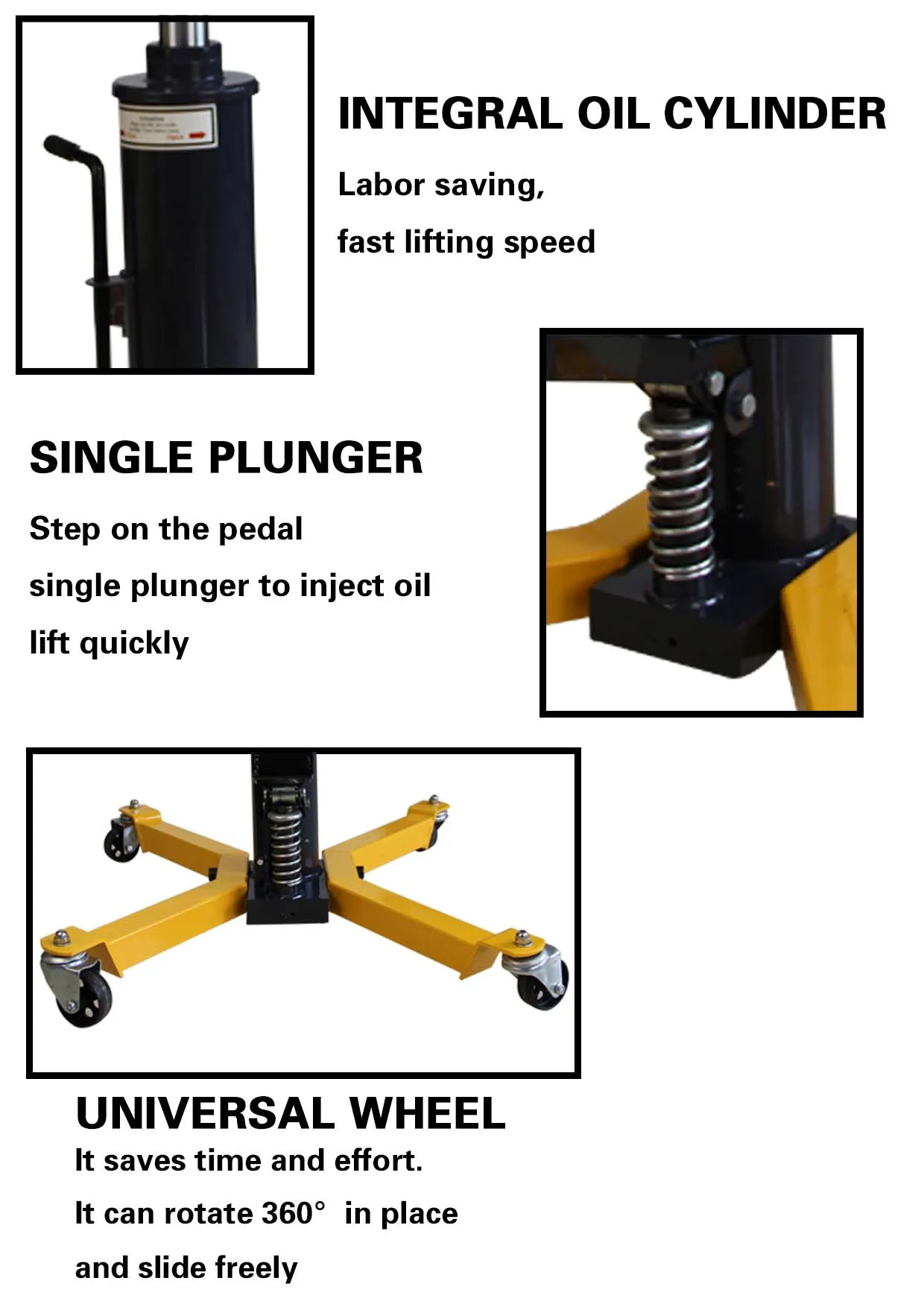
The performance of a hydraulic jack is fundamentally governed by Pascal’s Law: Pressure (P) = Force (F) / Area (A). Engineering analysis focuses on stress distribution within the cylinder, piston, and lifting saddle under maximum load conditions. Finite Element Analysis (FEA) is frequently used to optimize component geometry and minimize stress concentrations. Stability is a critical design consideration; the jack's base must provide a sufficient footprint to prevent tipping, calculated using static equilibrium principles. The lever arm length and pump design determine the mechanical advantage and the number of pump strokes required to achieve a desired lift height. Safety features, such as overload valves and bypass mechanisms, are engineered to prevent exceeding the jack’s rated capacity. Environmental resistance is addressed through protective coatings (e.g., powder coating) to prevent corrosion. Hydraulic fluid viscosity is crucial; it must maintain adequate lubrication and pressure transmission across a wide temperature range. Compliance with safety standards, such as ASME B30.1 (Slings, Alloys Chains, Synthetic Slings, and Attachments) and ANSI/PALD Z359 (Aerial Lifts), dictates design requirements and testing procedures. Fatigue analysis is conducted to assess the jack’s durability under repeated lifting and lowering cycles.
Technical Specifications
| Capacity (Tons) | Minimum Lift Height (in) | Maximum Lift Height (in) | Pump Stroke Count (per ton) |
|---|---|---|---|
| 2 | 3.7 | 15.7 | 8-10 |
| 3 | 3.5 | 20.5 | 6-8 |
| 5 | 3.3 | 24.8 | 5-7 |
| 10 | 3.1 | 28.3 | 4-6 |
| 20 | 2.9 | 32.7 | 3-5 |
| 30 | 2.7 | 36.2 | 2-4 |
Failure Mode & Maintenance
Common failure modes in hydraulic jacks include seal degradation, leading to hydraulic fluid leakage and reduced lifting capacity. This is exacerbated by fluid contamination (dirt, metal particles) and exposure to extreme temperatures. Cylinder wall scoring, caused by abrasive wear, can also compromise performance. Mechanical failure of the lifting saddle or release valve is possible under overload conditions. Corrosion, particularly in humid environments, can weaken structural components. Fatigue cracking can occur in the handle or pump mechanism due to repeated stress. Maintenance procedures include regular inspection for leaks, checking fluid levels and condition (color, clarity), lubricating moving parts, and protecting against corrosion. Seal replacement is critical when leakage is detected. Hydraulic fluid should be changed periodically (typically every 12-24 months) to remove contaminants and maintain optimal viscosity. Overloading the jack should be strictly avoided. Proper storage in a clean, dry environment is essential to prevent corrosion. Preventive maintenance programs, adhering to manufacturer’s recommendations, significantly extend the jack’s service life.
Industry FAQ
Q: What is the significance of the pump stroke count in relation to jack efficiency?
A: A lower pump stroke count per ton indicates greater mechanical advantage and therefore higher efficiency. Fewer strokes are required to lift a given load, reducing user effort and time. However, a lower stroke count may necessitate a larger and more robust pump mechanism, increasing cost and weight.
Q: How do different hydraulic fluid types affect jack performance and lifespan?
A: Mineral oil-based fluids are common, but synthetic fluids offer superior temperature stability and lubrication, extending jack lifespan in harsh environments. Viscosity is critical; too low a viscosity leads to internal leakage, while too high a viscosity increases pumping effort. Compatibility with seal materials is also essential to prevent swelling or degradation.
Q: What are the primary causes of hydraulic seal failure, and how can they be mitigated?
A: Seal failure is often caused by abrasion from contaminants in the hydraulic fluid, degradation due to high temperatures, or incompatibility with the fluid. Mitigation strategies include using high-quality hydraulic fluid, implementing filtration systems, and selecting seals with appropriate material compatibility.
Q: What safety features are essential in a high-tonnage hydraulic jack?
A: Essential safety features include an overload valve to prevent exceeding the jack's capacity, a bypass mechanism to slowly lower the load in case of hydraulic failure, and a stable base design to prevent tipping. Regular inspection of these features is crucial.
Q: How does the manufacturing process of the cylinder tube impact the jack’s long-term reliability?
A: Seamless drawn steel tubing is preferred over welded tubes, as it eliminates potential weld defects that can compromise cylinder integrity. Heat treatment and surface finishing processes are critical to enhance the cylinder’s resistance to wear and corrosion, directly impacting long-term reliability.
Conclusion
Hydraulic floor jacks represent a mature but continually refined technology essential for automotive maintenance and repair. Their performance hinges on precise material selection, controlled manufacturing processes, and rigorous adherence to safety standards. Understanding the interplay between hydraulic principles, material properties, and engineering design is crucial for selecting a jack suited to specific application requirements.
Future developments may focus on lightweight materials (e.g., aluminum alloys) to reduce weight without compromising strength, and advanced sealing technologies to minimize leakage and extend service life. The integration of smart sensors for load monitoring and predictive maintenance will further enhance safety and reliability, solidifying the hydraulic jack’s position as an indispensable tool in the automotive industry.
