Introduction
A 24-inch lift floor jack is a hydraulic tool used to lift vehicles for maintenance and repair. Positioned within the automotive service equipment supply chain, it represents a critical component for professional mechanics and serious automotive enthusiasts alike. These jacks operate on Pascal's principle, utilizing a hydraulic fluid system to multiply force applied to a smaller piston, resulting in substantial lifting capacity. Core performance characteristics center around lift height, weight capacity (typically ranging from 2 to 3 tons), minimum saddle height, and pump stroke count required to achieve full extension. A key pain point in the industry is ensuring consistent quality control, particularly in material selection and weld integrity, to prevent catastrophic failure during operation. The demand for robust, reliable jacks that meet stringent safety standards continues to drive innovation in design and manufacturing.
Material Science & Manufacturing
The primary material used in the construction of a 24-inch lift floor jack is steel, specifically carbon steel for the jack body, handle, and lifting arm. The grade of steel varies, but typically falls within AISI 1045 or equivalent, selected for its balance of strength, ductility, and weldability. The hydraulic cylinder utilizes honed steel tubing to provide a smooth surface for the piston seal, minimizing friction and maximizing efficiency. The piston itself is commonly made from high-strength alloy steel, often case-hardened for increased wear resistance. Seals are typically manufactured from nitrile butadiene rubber (NBR) or hydrogenated nitrile butadiene rubber (HNBR) due to their excellent resistance to hydraulic fluid and wide temperature operating range.
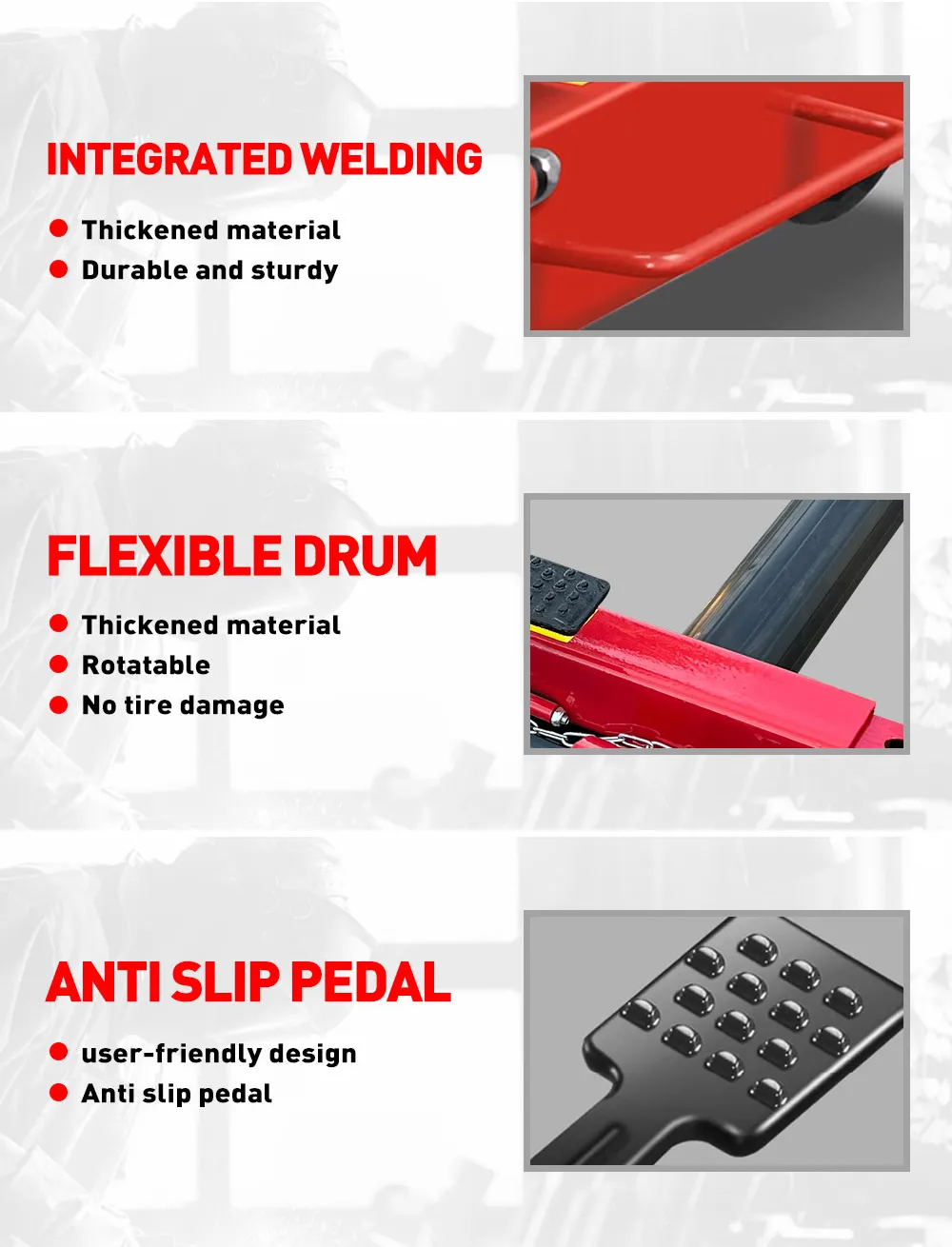
Manufacturing processes involve several stages. Steel components are formed via stamping, bending, and welding. Welding, predominantly shielded metal arc welding (SMAW) or gas metal arc welding (GMAW), requires precise parameter control (current, voltage, travel speed) to ensure full penetration and minimize defects. Hydraulic cylinders are manufactured through honing and machining processes, requiring tight tolerances to maintain pressure integrity. The hydraulic pump assembly is typically automated, with key parameter control focusing on valve seating, piston stroke, and fluid flow rate. Quality control measures at each stage include non-destructive testing (NDT) like ultrasonic testing (UT) and magnetic particle inspection (MPI) to identify weld defects and material flaws. Surface finishing includes painting or powder coating for corrosion protection.
Performance & Engineering
The performance of a 24-inch floor jack is governed by fundamental principles of fluid mechanics and structural engineering. Force analysis focuses on the stress distribution within the lifting arm and jack body under maximum load. Finite element analysis (FEA) is frequently employed during the design phase to optimize structural integrity and minimize weight. The hydraulic system’s efficiency is determined by the piston area ratio and the volumetric efficiency of the pump. Environmental resistance is a critical consideration. Exposure to moisture and corrosive substances can lead to rust and hydraulic fluid degradation. Therefore, protective coatings and proper seal materials are vital. Compliance requirements include adherence to ASME PASE 2015 safety standards for hydraulic jacks, which mandate minimum safety factors and testing procedures. The jack’s stability is enhanced through a wide base and a low center of gravity. Pump stroke count is a direct indicator of mechanical advantage, influencing the effort required to lift a given load. Long-term durability requires robust bearing design within the pivoting points of the jack arm.
Technical Specifications
| Parameter | Value (Typical) | Units | Testing Standard |
|---|---|---|---|
| Lifting Capacity | 2 | tons | ASME PASE 2015 |
| Minimum Saddle Height | 3.5 | inches | Manufacturer Specification |
| Maximum Lift Height | 24 | inches | Manufacturer Specification |
| Handle Length | 42 | inches | Manufacturer Specification |
| Pump Stroke Count (Full Lift) | 8-12 | strokes | Manufacturer Specification |
| Net Weight | 75 | lbs | Manufacturer Specification |
Failure Mode & Maintenance
Common failure modes in 24-inch lift floor jacks include hydraulic fluid leakage, seal failure, weld cracking, and handle damage. Hydraulic fluid leakage is often caused by deteriorating seals or damaged fittings, leading to reduced lifting capacity. Seal failure can occur due to prolonged exposure to high temperatures or incompatible fluids. Weld cracking, particularly around the lifting arm and base, is a critical failure mode indicating material fatigue or poor weld quality. Fatigue cracking can initiate at stress concentration points, such as weld toes or sharp corners. Oxidation and corrosion of steel components can compromise structural integrity over time. Delamination of paint or powder coating exposes the underlying steel to corrosive elements.
Preventative maintenance is crucial. Regularly check hydraulic fluid levels and inspect for leaks. Replace seals and fittings as needed, ensuring compatibility with the hydraulic fluid (typically ISO VG 32 or equivalent). Lubricate moving parts to reduce friction and wear. Inspect welds for cracks or signs of deterioration. Store the jack in a clean, dry environment to prevent corrosion. Avoid exceeding the rated lifting capacity. A full hydraulic fluid flush and seal replacement should be performed annually, or more frequently in harsh operating conditions. When the jack is not in use, the handle should be fully retracted and secured.
Industry FAQ
Q: What is the impact of hydraulic fluid viscosity on jack performance?
A: Hydraulic fluid viscosity directly affects jack performance. Lower viscosity fluids result in faster lifting speeds but can lead to increased leakage. Higher viscosity fluids provide better sealing but require more force to pump. The optimal viscosity, typically ISO VG 32, balances these factors to ensure efficient and reliable operation.
Q: How does the steel grade affect the jack’s lifespan?
A: Higher grades of steel, such as AISI 1045, offer increased tensile strength and yield strength, contributing to a longer lifespan. Proper heat treatment and surface hardening further enhance durability and resistance to fatigue cracking.
Q: What are the key considerations when selecting a floor jack for heavy-duty applications?
A: For heavy-duty applications, prioritize lifting capacity, saddle height range, and structural integrity. Look for jacks with reinforced steel construction, robust welding, and a stable base. A dual pump design can reduce pumping effort. Regularly inspect and maintain the jack according to manufacturer recommendations.
Q: How important is the safety valve in a floor jack?
A: The safety valve is a critical safety feature. It prevents over-pressurization of the hydraulic system by automatically relieving pressure if the jack is overextended or if the hydraulic fluid expands due to heat. Regular inspection and testing of the safety valve are essential.
Q: What is the role of the bypass valve?
A: The bypass valve allows the jack to be lowered slowly and controllably. It releases hydraulic fluid from the cylinder, gradually reducing the lifting pressure. A properly functioning bypass valve is crucial for safe and controlled lowering of the vehicle.
Conclusion
The 24-inch lift floor jack remains an indispensable tool in the automotive industry, offering a reliable and cost-effective solution for vehicle lifting. Its performance is fundamentally linked to material science, precision manufacturing, and adherence to stringent safety standards. Understanding the core principles of hydraulics, structural engineering, and failure modes is paramount for selecting, operating, and maintaining these jacks effectively.
Continued innovation in materials, such as high-strength alloys and advanced seal materials, promises to further enhance the durability and performance of floor jacks. The integration of smart features, like integrated pressure gauges and overload alarms, could improve safety and user experience. Ultimately, a proactive approach to maintenance and a commitment to quality control are essential for ensuring the long-term reliability and safe operation of this critical piece of automotive equipment.
