Introduction
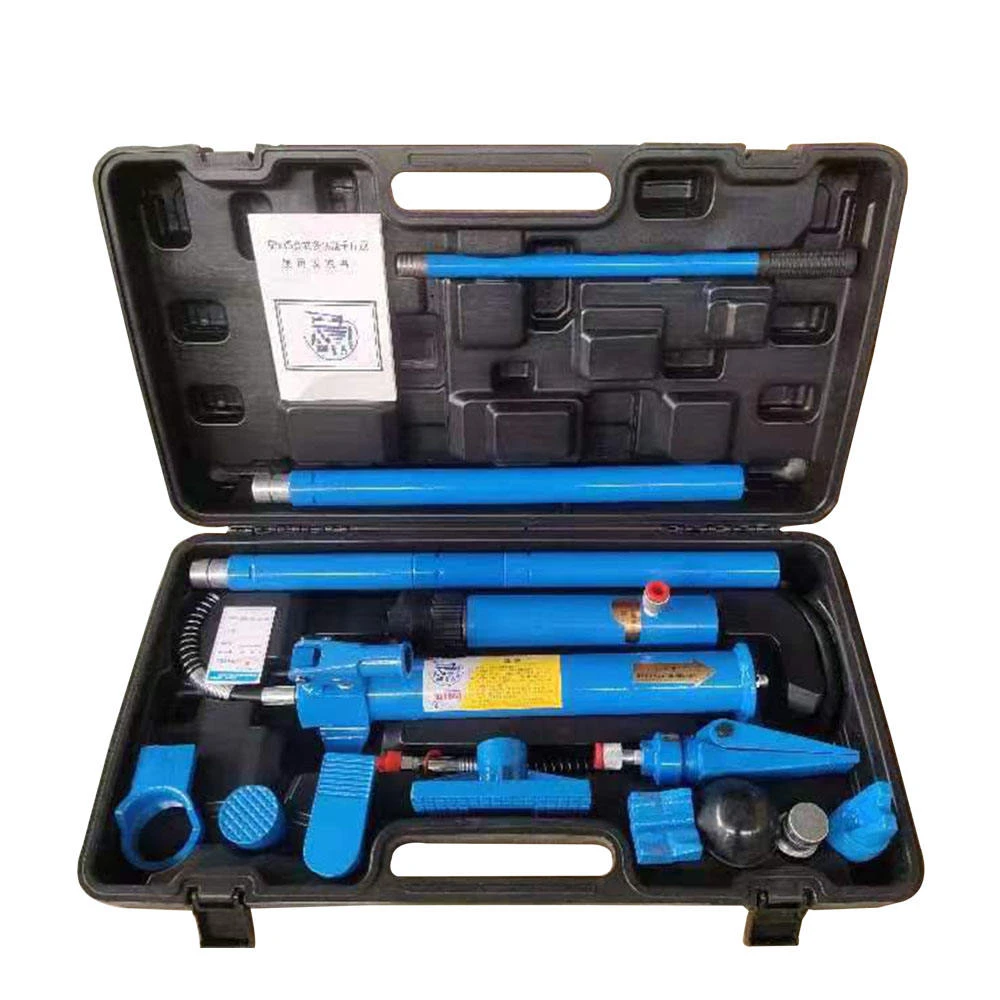
Hydraulic jack porta power, often referred to as portable hydraulic jacks, represents a critical component in a wide range of industrial maintenance, repair, and operational (MRO) applications. Positioned within the lifting and positioning equipment sector, these devices provide localized, high-force actuation where fixed infrastructure is impractical or unavailable. Unlike traditional floor jacks or cranes, porta power systems prioritize portability and adaptability. Core performance characteristics revolve around generating substantial force within a compact form factor, coupled with precise control over lifting, pressing, bending, and spreading operations. They are indispensable for tasks such as structural realignment, equipment disassembly, and emergency rescue, offering a versatile alternative to more cumbersome machinery. The demand is driven by increasing needs for on-site repair and preventative maintenance across various industries, including construction, automotive, shipbuilding, and manufacturing. A key pain point in the industry is ensuring long-term reliability under harsh operating conditions and maintaining consistent performance across multiple cycles.
Material Science & Manufacturing
The construction of hydraulic jack porta power units relies on a strategic selection of materials to withstand high pressures and stresses. The core hydraulic cylinder is typically manufactured from high-strength alloy steel (e.g., AISI 4140, 8620) due to its excellent tensile strength, yield strength, and resistance to fatigue. The internal surface of the cylinder undergoes honing and polishing to achieve a smooth finish, minimizing friction and maximizing seal life. Pistons are similarly constructed from alloy steel and often feature hard chrome plating to enhance corrosion resistance and wear properties. Hydraulic fluid, commonly mineral oil-based with viscosity grades ranging from ISO VG 32 to VG 68, is crucial for force transmission. Additives are incorporated to provide anti-wear, anti-corrosion, and foam suppression characteristics. The pump housing and external components are generally fabricated from carbon steel (e.g., A36) and protected with a durable powder coat finish. Manufacturing processes involve precision machining of cylinder barrels and pistons, followed by heat treatment to optimize mechanical properties. Welding, primarily shielded metal arc welding (SMAW) or gas metal arc welding (GMAW), is utilized for assembling structural components. Quality control is paramount; hydrostatic testing at pressures significantly exceeding the operational limit is standard to verify structural integrity and leak tightness. Seal materials, such as nitrile butadiene rubber (NBR) or fluorocarbon elastomers (FKM), are critical and undergo rigorous testing for compatibility with the hydraulic fluid and operating temperatures.
Performance & Engineering
Performance of hydraulic jack porta power hinges on Pascal's Law, which dictates that pressure applied to a confined fluid is transmitted equally in all directions. The force output is directly proportional to the applied pressure and the piston area (F = P x A). Engineering considerations focus on maximizing this force while minimizing the overall size and weight of the unit. Finite element analysis (FEA) is routinely employed during the design phase to optimize structural components for stress distribution and prevent failure. Hydraulic circuit design is critical; spool valves control the direction of fluid flow, enabling lifting and lowering operations. Release valves provide overpressure protection, preventing damage to the system. Force analysis must account for dynamic loads and potential impact forces. Environmental resistance is a significant concern. Exposure to moisture, dust, and extreme temperatures can degrade performance and accelerate corrosion. Seals play a vital role in maintaining system integrity, and their selection must consider temperature ranges and fluid compatibility. Compliance requirements vary by region; adherence to ASME B30.1 (for lifting equipment) and relevant safety standards is mandatory. Furthermore, accurate load testing and calibration are essential to ensure consistent and reliable performance.
Technical Specifications
| Capacity (tons) | Stroke (inches) | Working Pressure (PSI) | Pump Type |
|---|---|---|---|
| 10 | 2.5 | 10,000 | Manual (Single-Acting) |
| 20 | 4 | 10,000 | Manual (Single-Acting) |
| 50 | 6 | 10,000 | Manual (Single-Acting) |
| 100 | 8 | 10,000 | Manual (Single-Acting) |
| 20 | 4 | 10,000 | Electric (Single-Acting) |
| 50 | 6 | 10,000 | Electric (Single-Acting) |
Failure Mode & Maintenance
Failure modes in hydraulic jack porta power systems are diverse. Fatigue cracking in the cylinder barrel or piston is a common issue, particularly under cyclical loading. This is often initiated by pre-existing defects or stress concentrations. Seal failure, leading to hydraulic fluid leaks, is another frequent occurrence, exacerbated by temperature extremes and fluid contamination. Delamination of the chrome plating on the piston can increase friction and accelerate wear. Corrosion, especially in marine environments, can compromise the structural integrity of steel components. Pump failure can result from wear of internal components or contamination of the hydraulic fluid. Maintenance is crucial for preventing these failures. Regular inspection of seals for cracks and leaks is essential, along with periodic fluid changes (typically every 6-12 months). Lubrication of moving parts minimizes friction and wear. Promptly addressing any signs of corrosion can prevent catastrophic failure. Hydrostatic testing should be performed annually to verify cylinder integrity. If fatigue cracking is suspected, non-destructive testing methods (e.g., ultrasonic testing, magnetic particle inspection) should be employed. Proper storage is also important; units should be stored in a clean, dry environment to prevent corrosion.
Industry FAQ
Q: What is the primary difference between single-acting and double-acting porta power jacks?
A: Single-acting jacks apply force in one direction (typically extending the ram) and rely on an external force (gravity or a spring) to retract it. Double-acting jacks apply force in both directions, providing more controlled and efficient operation for applications requiring precise retraction.
Q: How does operating temperature affect the performance of hydraulic fluid in porta power jacks?
A: Lower temperatures increase fluid viscosity, reducing flow rate and potentially slowing down operation. Higher temperatures can decrease viscosity, potentially leading to leaks and reduced efficiency. Selecting a fluid with an appropriate viscosity index for the operating temperature range is critical.
Q: What are the implications of using incorrect hydraulic fluid in a porta power jack?
A: Using the wrong fluid can cause seal incompatibility, leading to leaks and system failure. It can also affect fluid viscosity and lubricity, increasing wear and reducing performance. Always consult the manufacturer's specifications for the correct fluid type.
Q: What preventative measures can be taken to minimize corrosion in porta power jacks used in saltwater environments?
A: Utilizing stainless steel components where possible, applying protective coatings (e.g., epoxy primers, polyurethane topcoats), and regular cleaning with a corrosion inhibitor are essential. Thoroughly drying the unit after exposure to saltwater is also crucial.
Q: How often should the hydraulic fluid be analyzed to assess its condition?
A: Hydraulic fluid analysis should be performed at least annually, or more frequently in demanding applications. Analysis can identify contamination, oxidation, and wear debris, allowing for timely fluid changes and preventative maintenance.
Conclusion
Hydraulic jack porta power systems represent a robust and versatile solution for a wide array of industrial lifting and actuation challenges. Their core functionality, underpinned by fundamental principles of hydraulics and materials science, provides significant advantages in terms of portability, force capacity, and operational control. However, ensuring long-term reliability necessitates meticulous attention to material selection, manufacturing processes, and preventative maintenance procedures.
Future advancements are likely to focus on incorporating smart technologies, such as integrated sensors for load monitoring and remote diagnostics, to enhance safety and efficiency. Development of more environmentally friendly hydraulic fluids and lightweight materials will further improve the sustainability and practicality of these essential tools. Continued adherence to rigorous quality control standards and industry best practices will remain paramount in maintaining the integrity and performance of hydraulic jack porta power systems.
