Introduction
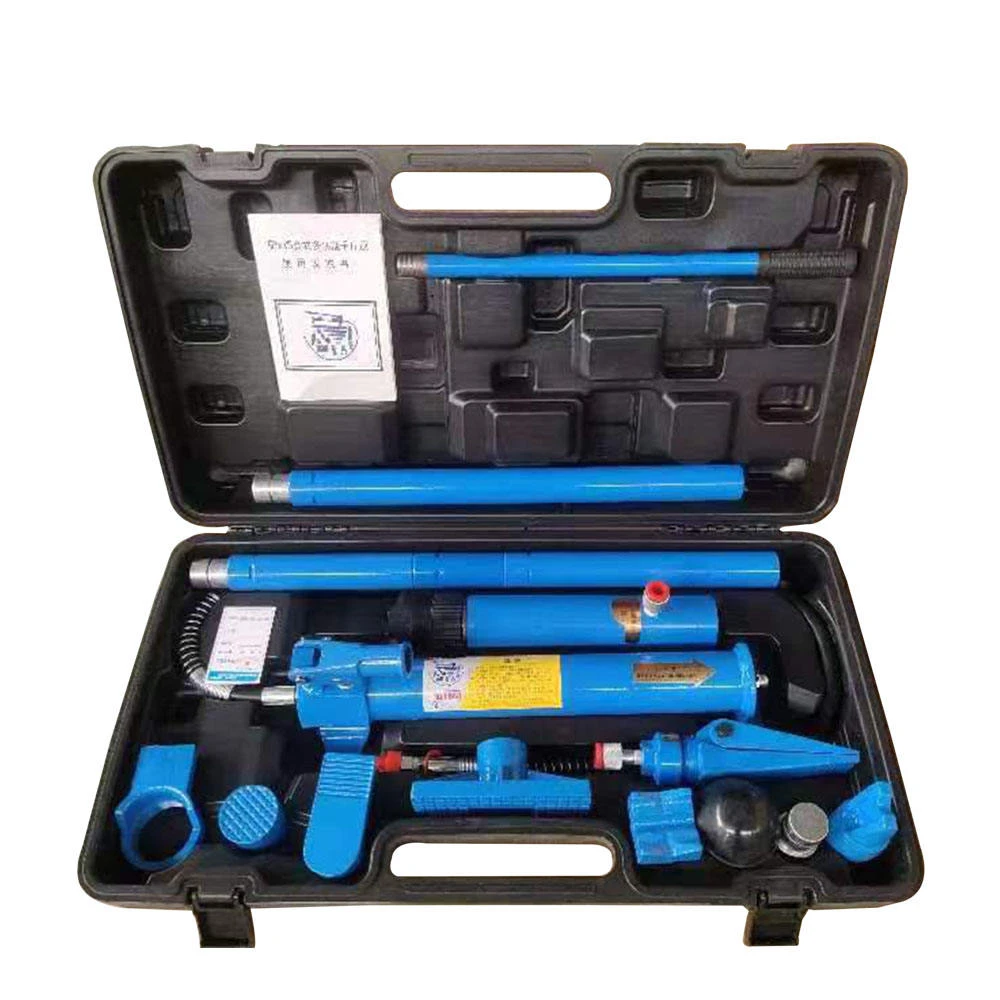
The Jet 10 Ton Porta Power is a hydraulic cylinder system designed for industrial maintenance, repair operations (MRO), and heavy equipment applications. Positioned within the lifting and positioning equipment sector, it provides a portable and robust solution for applying significant force in scenarios requiring lifting, bending, spreading, or pressing. Its core performance characteristics revolve around delivering 10 tons (9089.84 kg) of force, controlled through a manual hydraulic pump, and incorporating interchangeable ram heads and accessories for adaptability. This guide provides an in-depth technical analysis of the Jet 10 Ton Porta Power, covering material science, manufacturing processes, performance parameters, failure modes, and relevant industry standards. A core industry pain point addressed by such tools is the need for rapid, reliable, and localized force application in challenging environments where fixed infrastructure isn’t available or practical.
Material Science & Manufacturing
The Jet 10 Ton Porta Power utilizes several key materials in its construction. The cylinder body is typically constructed from high-strength carbon steel (AISI 1045 or equivalent), chosen for its tensile strength, yield strength, and weldability. The piston rod employs alloy steel (4140 or equivalent) hardened and tempered to resist bending and shear stress. The hydraulic fluid is a mineral oil-based formulation, often incorporating anti-wear additives and corrosion inhibitors. Seals are generally manufactured from nitrile butadiene rubber (NBR) or hydrogenated nitrile butadiene rubber (HNBR) for compatibility with the hydraulic fluid and to maintain sealing integrity under pressure.
Manufacturing involves several critical processes. The cylinder body is formed through seamless tube extrusion followed by machining to precise tolerances. Welding is employed to attach end caps and mounting brackets, requiring adherence to AWS D1.1 structural welding code. The piston rod undergoes a process of forging, machining, and induction hardening to achieve the required surface hardness and core toughness. The hydraulic pump assembly is manufactured using precision casting and machining, with careful attention paid to valve seating and seal integrity. Quality control at each stage includes non-destructive testing (NDT) such as ultrasonic testing (UT) and magnetic particle inspection (MPI) to detect defects in welds and critical components. Key parameter control focuses on maintaining concentricity of the cylinder bore, surface finish of the piston rod, and accurate calibration of the hydraulic pump to ensure consistent force output.
Performance & Engineering
The performance of the Jet 10 Ton Porta Power is dictated by fundamental principles of hydraulic force generation: Force = Pressure x Area. The system achieves 10 tons of force through a hydraulic pressure of approximately 700 bar (10,000 psi) applied across the piston's effective area. Engineering considerations include stress analysis of the cylinder body and piston rod under maximum load, employing finite element analysis (FEA) to identify potential weak points. Environmental resistance is crucial, particularly concerning corrosion protection. The steel components receive a phosphate coating followed by a paint finish to mitigate corrosion. The hydraulic fluid must also resist oxidation and maintain its viscosity over a wide temperature range. Compliance requirements involve adherence to ASME B30.20 standards for hydraulic tools, which cover design, fabrication, operation, and maintenance. The ram heads and accessories are designed with safety factors to prevent catastrophic failure under overload conditions. Force distribution is another key aspect, ensuring that the load is applied evenly to prevent localized stress concentrations. The system’s stroke length is also a critical parameter, influencing its versatility in different applications.
Technical Specifications
| Parameter | Specification | Unit | Test Standard |
|---|---|---|---|
| Rated Force | 10 | tons (9089.84 kg) | ASME B30.20 |
| Working Pressure | 700 | bar (10,000 psi) | ISO 6020-1 |
| Stroke Length | 150 | mm (6 in) | Manufacturer Specification |
| Cylinder Body Material | AISI 1045 Carbon Steel | - | ASTM A519 |
| Piston Rod Material | 4140 Alloy Steel | - | ASTM A485 |
| Hydraulic Fluid | Mineral Oil-based | - | ISO 32 |
Failure Mode & Maintenance
Common failure modes for the Jet 10 Ton Porta Power include hydraulic leaks (due to seal degradation or damaged fittings), cylinder bending or buckling (resulting from excessive side loading or overloading), piston rod corrosion (caused by exposure to harsh environments), and pump failure (due to contamination or wear). Fatigue cracking can occur in the cylinder body or piston rod after repeated cycling under high loads. Delamination of the piston rod's hardened surface can occur if the hardening process is flawed or if the rod is subjected to impact loads. Oxidation of the hydraulic fluid leads to reduced lubrication and increased corrosion.
Preventive maintenance is crucial. Regular inspection of hydraulic lines and fittings for leaks is essential. The hydraulic fluid should be replaced periodically (typically every 12 months or after 1000 cycles), and a filter should be used to remove contaminants. The piston rod should be cleaned and lubricated to prevent corrosion. Avoid side loading and overloading the cylinder. Store the Porta Power in a clean, dry environment to protect it from corrosion. If a leak is detected, replace the seals immediately. If the pump fails, it may need to be rebuilt or replaced. Regularly check for any signs of cracking or deformation in the cylinder body and piston rod. Proper maintenance extends the lifespan of the tool and ensures safe operation.
Industry FAQ
Q: What is the maximum operating temperature range for the Jet 10 Ton Porta Power?
A: The standard operating temperature range is -20°C to 80°C (-4°F to 176°F). Operating outside this range can affect the performance of the hydraulic fluid and seals, potentially leading to reduced efficiency or failure. Specialized hydraulic fluids are available for extreme temperature applications.
Q: How do I determine the correct ram head for a specific application?
A: The ram head selection depends on the shape of the load and the required force distribution. For flat surfaces, a flat ram head is suitable. For curved surfaces, a saddle ram head is recommended. For spreading applications, a spreader ram head should be used. Always ensure the ram head is rated for the applied force.
Q: What type of hydraulic fluid is recommended for the Jet 10 Ton Porta Power?
A: A mineral oil-based hydraulic fluid with anti-wear additives and corrosion inhibitors, conforming to ISO 32 viscosity grade, is generally recommended. Avoid using fluids that are not compatible with nitrile rubber seals.
Q: What safety precautions should be taken when operating the Porta Power?
A: Always wear safety glasses and gloves. Ensure the load is properly supported before applying force. Avoid standing in the path of the cylinder during operation. Never exceed the rated capacity of the Porta Power. Inspect the equipment before each use for any signs of damage.
Q: What is the typical lifespan of a Jet 10 Ton Porta Power with regular maintenance?
A: With regular maintenance and proper operation, a Jet 10 Ton Porta Power can have a lifespan of 5-10 years or more. The actual lifespan will depend on the frequency of use, the severity of the operating conditions, and the quality of maintenance performed.
Conclusion
The Jet 10 Ton Porta Power represents a versatile and reliable solution for a wide range of industrial lifting and positioning tasks. Its robust construction, employing high-strength materials and a precision manufacturing process, ensures consistent performance and durability. Understanding the principles of hydraulic force generation, coupled with adherence to relevant industry standards like ASME B30.20 and ISO 6020-1, is crucial for safe and efficient operation.
Proactive maintenance, including regular fluid changes, seal inspections, and protection from environmental factors, is paramount to maximizing the lifespan and reliability of the Porta Power. Addressing potential failure modes, such as hydraulic leaks and component fatigue, through preventative measures ultimately minimizes downtime and ensures continued operational efficiency. The Jet 10 Ton Porta Power remains a vital tool for industries demanding portable, powerful, and dependable hydraulic force.
