Introduction
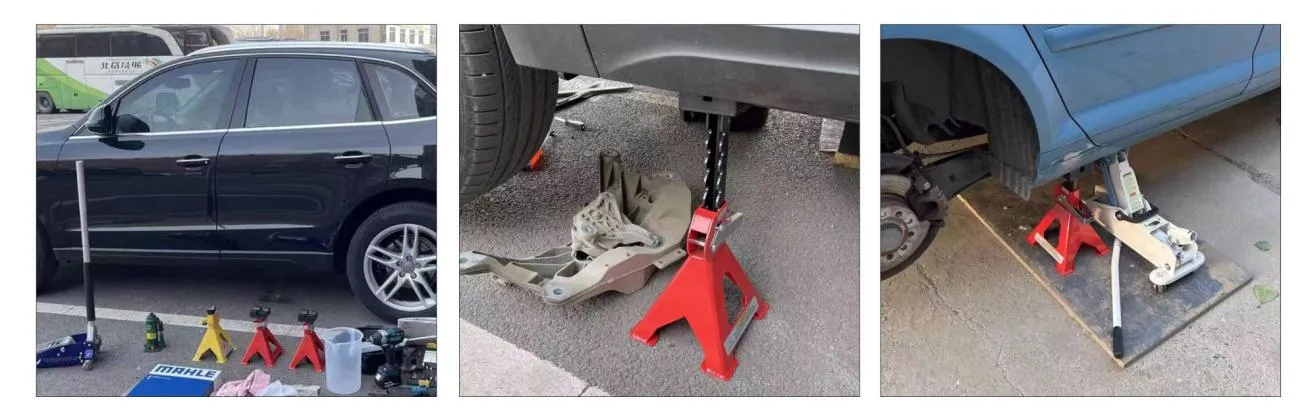
The porta hydraulic jack, commonly referred to as a floor jack, is a mechanical device utilized for lifting heavy loads a short distance. It occupies a crucial position in numerous industries, including automotive repair, construction, industrial maintenance, and emergency response. Its technical foundation relies on Pascal's Principle, employing a hydraulic system to multiply force and facilitate the lifting of substantial weight with minimal physical effort. Core performance metrics center on lifting capacity (tonnage), minimum and maximum lifting heights, and operational safety features. A key challenge in the industry revolves around ensuring long-term reliability under demanding conditions, minimizing oil leakage, and maintaining consistent lifting performance across varying temperatures. This guide provides a comprehensive technical overview of porta hydraulic jacks, covering material science, manufacturing processes, performance parameters, failure modes, and industry standards.
Material Science & Manufacturing
Porta hydraulic jacks are constructed from a combination of materials chosen for their strength, durability, and compatibility with the hydraulic fluid. The primary structural components, including the lifting arm, frame, and saddle, are typically manufactured from high-strength carbon steel, specifically ASTM A572 Grade 50 or equivalent, selected for its yield strength and weldability. The hydraulic cylinder, responsible for force amplification, is generally made from honed steel tubing, often SAE 1020 or a similar alloy, providing a smooth internal surface to minimize friction and wear. Seals are critical components, predominantly made of nitrile butadiene rubber (NBR) or hydrogenated nitrile butadiene rubber (HNBR) due to their resistance to hydraulic fluid and wide temperature operating range. The hydraulic fluid itself is typically a mineral oil-based hydraulic fluid, complying with ISO 32 or ISO 46 viscosity grades, formulated with anti-wear additives, corrosion inhibitors, and demulsifiers.
Manufacturing involves several key processes. Steel components are formed through processes like forging, casting, and plate rolling, followed by precision machining to ensure dimensional accuracy. Welding, primarily shielded metal arc welding (SMAW) or gas metal arc welding (GMAW), is used to join structural elements, requiring strict adherence to AWS D1.1 structural welding code. The hydraulic cylinder is manufactured through a honing process to achieve a precise internal diameter and smooth surface finish. Assembly involves meticulous fitting of seals, pistons, and valves, followed by thorough testing to verify leak-free operation and structural integrity. Painting and coating processes, employing epoxy or polyurethane coatings, provide corrosion protection. Key parameter control during manufacturing includes weld quality inspection (radiographic testing, ultrasonic testing), dimensional verification (coordinate measuring machines - CMM), and hydraulic pressure testing to ensure compliance with safety standards.

Performance & Engineering
The performance of a porta hydraulic jack is fundamentally governed by Pascal's Principle: pressure applied to a confined fluid is transmitted equally in all directions. Force analysis focuses on the hydraulic ratio – the area of the pump piston relative to the lifting piston. A larger lifting piston area, relative to the pump piston area, results in greater lifting capacity. Engineering design incorporates safety factors to account for dynamic loading, impact forces, and material variations. Finite element analysis (FEA) is frequently employed to simulate stress distribution within the jack’s structure under maximum load, identifying potential weak points and optimizing component geometry. Environmental resistance is critical. Jacks must withstand exposure to moisture, dust, and temperature fluctuations without compromising performance. Corrosion protection through coatings and material selection is paramount. Compliance requirements are extensive, encompassing ASME PASE 2015 (Safety Standard for Portable Hydraulic Equipment) and various national regulations pertaining to lifting equipment safety. Functional implementation involves precise valve design to control fluid flow, a release valve for controlled descent, and safety mechanisms such as overload protection and a stable base to prevent tipping.
Technical Specifications
| Parameter | Unit | Typical Value (2-Ton Jack) | Typical Value (3-Ton Jack) |
|---|---|---|---|
| Lifting Capacity | Ton | 2 | 3 |
| Minimum Lifting Height | in | 3.5 | 3.7 |
| Maximum Lifting Height | in | 24 | 27 |
| Pump Handle Strokes/Full Lift | Number | 8-12 | 6-10 |
| Hydraulic Fluid Capacity | qt | 1.5 | 2.0 |
| Base Width | in | 8 | 9 |
Failure Mode & Maintenance
Porta hydraulic jacks are susceptible to several failure modes. Fatigue cracking can occur in the lifting arm or frame due to repeated stress cycles, particularly under overload conditions. Delamination of seals leads to hydraulic fluid leakage, reducing lifting capacity and potentially causing the jack to fail to hold a load. Degradation of hydraulic fluid, through contamination or oxidation, can increase viscosity, impair valve operation, and accelerate wear. Oxidation of steel components, particularly in humid environments, can compromise structural integrity. A common failure is the release valve becoming stuck, preventing controlled lowering of the load - a significant safety hazard.
Preventative maintenance is crucial for extending jack life and ensuring safe operation. Regular inspection for leaks, cracks, and damaged components is essential. Hydraulic fluid should be replaced annually or as recommended by the manufacturer, using fluid that meets the specified ISO grade. All moving parts should be lubricated with a suitable grease. The jack should be stored in a clean, dry environment to prevent corrosion. Avoid exceeding the rated lifting capacity. If the jack shows signs of structural damage or erratic operation, it should be removed from service immediately and inspected by a qualified technician. Bleeding the hydraulic system to remove air bubbles is critical if lifting performance deteriorates. Periodic inspection of the saddle for wear or damage is also advised.
Industry FAQ
Q: What are the key differences between single-stage and double-stage hydraulic jacks, and what are the implications for industrial applications?
A: Single-stage jacks utilize a single piston to achieve the entire lifting range. They are simpler in design and typically more cost-effective, suitable for applications requiring moderate lifting heights. Double-stage jacks employ two pistons, a smaller one for rapid initial lift and a larger one for increased lifting power and height. They offer faster engagement and greater overall lifting capacity, making them ideal for applications like truck repair or heavy machinery lifting where both speed and height are critical.
Q: How does hydraulic fluid viscosity affect jack performance, and what are the recommended viscosity grades for different operating temperatures?
A: Hydraulic fluid viscosity directly impacts the jack’s responsiveness and efficiency. Low viscosity fluids can lead to increased leakage and reduced lubrication, while excessively high viscosity fluids can hinder valve operation and increase pumping effort. For typical operating temperatures (60-100°F), ISO 32 is generally recommended. For colder temperatures (below 32°F), ISO 18 or ISO 22 may be necessary to maintain adequate flow. Higher temperatures might require ISO 46.
Q: What are the common causes of hydraulic jack drift, and what steps can be taken to rectify the problem?
A: Hydraulic jack drift, where the load slowly descends, is usually caused by internal leakage past the seals or within the hydraulic cylinder. Potential causes include worn or damaged seals, contamination in the hydraulic fluid, or a malfunctioning release valve. Rectification involves replacing worn seals, flushing the hydraulic system to remove contaminants, and inspecting/repairing the release valve. Air in the system can also cause drift; bleeding the system is essential in such cases.
Q: What materials are used in high-duty hydraulic jack construction designed for harsh industrial environments (e.g., shipbuilding, mining)?
A: High-duty jacks used in harsh environments utilize more robust materials. Instead of standard carbon steel, alloy steels like 4140 or higher are commonly employed for the lifting arm and frame, providing increased tensile strength and resistance to fatigue. Seals are typically made of HNBR or Viton for superior chemical and temperature resistance. Coatings are often upgraded to epoxy-phenolic or ceramic coatings for enhanced corrosion protection. The hydraulic fluid is often a synthetic fluid with superior oxidation stability and lubricity.
Q: How do overload protection mechanisms function in modern porta hydraulic jacks, and what are their limitations?
A: Overload protection mechanisms in porta hydraulic jacks typically involve a pressure relief valve that bypasses fluid back to the reservoir when the pre-set pressure limit is exceeded. This prevents the jack from being overloaded beyond its rated capacity. Limitations include the accuracy of the relief valve setting and the potential for valve failure. These systems are designed as a safety feature, but should not be relied upon as a substitute for proper load assessment and safe operating practices.
Conclusion
The porta hydraulic jack remains an indispensable tool across diverse industrial sectors, leveraging the principles of hydraulic amplification to provide efficient and reliable lifting capabilities. Understanding the material science underpinning its construction, the intricacies of its manufacturing processes, and the critical performance parameters is vital for ensuring safe and effective operation. Proactive maintenance, coupled with awareness of potential failure modes, is crucial for extending the service life of these devices and mitigating risks.
Continued advancements in material science, seal technology, and hydraulic system design are poised to enhance the performance, durability, and safety of porta hydraulic jacks. Future developments may include the integration of smart sensors for real-time load monitoring and predictive maintenance, as well as the exploration of alternative hydraulic fluids with improved environmental profiles. Adherence to international standards and best practices remains paramount for maintaining the integrity and reliability of these essential lifting tools.
