Introduction
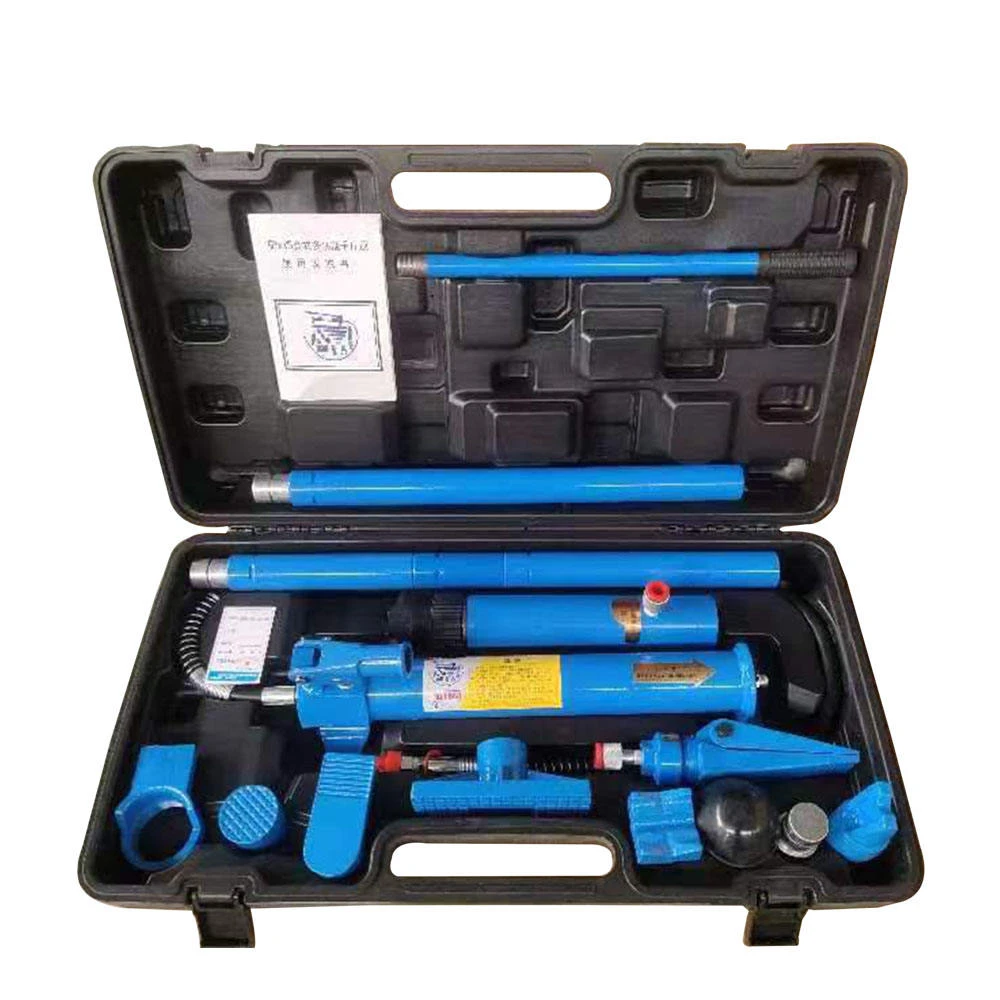
Porta Power hydraulic jack body frame repair kits are critical components in maintaining the operational integrity of hydraulic jacks used extensively in industries like automotive, construction, manufacturing, and emergency services. These kits address the common issue of frame deformation or damage resulting from repeated high-stress applications, improper load distribution, or accidental impact. The kits typically comprise pre-fabricated frame sections, welding consumables, bracing elements, and often, detailed repair instructions. Their technical position lies within the realm of preventative maintenance and damage control for heavy-duty hydraulic equipment, preventing complete jack failure and ensuring continued safe operation. Core performance indicators for these kits center around restoring the jack's structural rigidity, maintaining its rated pressure capacity, and ensuring long-term operational reliability by mitigating stress concentration points within the frame.
Material Science & Manufacturing
The primary material used in porta power jack frames is typically high-strength carbon steel, often AISI 1045 or equivalent. The selection criteria revolve around yield strength (typically >350 MPa), tensile strength (typically >570 MPa), and weldability. Repair kits utilize the same or compatible steel grades to ensure metallurgical compatibility. Welding processes are predominantly Shielded Metal Arc Welding (SMAW – stick welding) or Gas Metal Arc Welding (GMAW – MIG welding) due to their accessibility and cost-effectiveness in field repair scenarios. Critical parameters during welding include pre-heating the base metal to minimize hydrogen embrittlement, maintaining a consistent weld bead profile to avoid stress risers, and post-weld heat treatment (PWHT) – though less common in field repairs – to relieve residual stresses. The bracing elements within the kit may utilize lower carbon steels for ease of forming and welding, with sufficient thickness to provide adequate support. Surface treatments, like phosphate coating, are applied to the original frame components to provide corrosion resistance. Repair welds must be inspected for porosity, undercut, and adequate penetration. The quality of the welding consumables (electrodes or welding wire) directly impacts the integrity of the repair. The chemical composition of the consumables must match or exceed the mechanical properties of the parent metal.
Performance & Engineering
The performance of a repaired porta power jack frame is fundamentally governed by restoring its original load-bearing capacity and resistance to deformation under applied force. Engineering analysis focuses on Finite Element Analysis (FEA) to model stress distribution within the frame, both before and after damage, and to validate the effectiveness of the repair. Force analysis considers both static loads (the jack's rated capacity) and dynamic loads (impact, vibration) encountered during use. A critical failure mode is yielding of the frame material, leading to permanent deformation and potential jack collapse. Repair kits are engineered to reinforce weakened areas and redistribute stress. The design of bracing elements is crucial; they must be strategically positioned to minimize bending moments and shear stresses. Environmental resistance is also a key consideration. Exposure to corrosive environments (e.g., saltwater, acidic industrial fumes) can accelerate frame degradation, particularly at weld points. Compliance requirements often involve adherence to ASME B30.1 standards for slings, alloys chains, and lifting devices, which indirectly address the structural integrity of hydraulic jacks. Proper weld technique is vital to prevent stress concentrations, which can initiate fatigue cracking under cyclic loading. The repair must restore the original geometry and alignment of the frame to prevent binding within the jack’s internal components.
Technical Specifications
| Parameter | Specification (Typical) | Testing Standard | Repair Kit Compatibility |
|---|---|---|---|
| Frame Material | AISI 1045 Carbon Steel | ASTM A36 | Must match or exceed parent metal properties |
| Yield Strength (Frame) | ≥ 350 MPa | ASTM E8 | Repair weld yield strength must match |
| Tensile Strength (Frame) | ≥ 570 MPa | ASTM E8 | Repair weld tensile strength must match |
| Weld Metal Composition | AWS E7018 (SMAW) or ER70S-6 (GMAW) | AWS A5.1 | Compatible with AISI 1045 |
| Bracing Element Material | AISI 1018 Carbon Steel | ASTM A36 | Sufficient thickness for load bearing |
| Corrosion Resistance (Frame) | Phosphate Coating (as applied) | ASTM D610 | Repair welds require appropriate coating |
Failure Mode & Maintenance
Common failure modes in porta power jack frames include fatigue cracking originating from weld points, particularly under high-cycle loading. Another prevalent issue is distortion or bending of the frame due to overloading or improper load application. Corrosion, especially in coastal or industrial environments, can lead to pitting corrosion and reduced section thickness, ultimately compromising structural integrity. Delamination can occur in areas where the original material had imperfections or where improper welding techniques were used. Oxidation of the steel can also contribute to material degradation over time. Preventative maintenance involves regular visual inspections for cracks, deformation, and corrosion. Welds should be examined for porosity or undercut using visual inspection or dye penetrant testing. Proper lubrication of the jack's moving parts reduces stress on the frame. If damage is detected, the repair kit should be used promptly, following the manufacturer's instructions precisely. Welds must be thoroughly inspected post-repair. Periodic re-application of corrosion-inhibiting coatings is recommended. Overloading the jack beyond its rated capacity is a primary cause of failure and must be avoided. Proper storage in a dry environment can minimize corrosion risks. Routine cleaning to remove debris and contaminants extends the lifespan of the frame.
Industry FAQ
Q: What is the acceptable level of weld porosity after using a repair kit?
A: Weld porosity is generally unacceptable, even in minor amounts. According to AWS D1.1, Structural Welding Code – Steel, porosity exceeding certain limits can significantly reduce weld strength and ductility. Any visible porosity should be cause for re-welding and inspection. Dye penetrant or ultrasonic testing is recommended to ensure complete weld integrity.
Q: Can a repair kit be used on a frame that has experienced significant deformation?
A: Repair kits are generally designed for moderate deformation. Severely bent or twisted frames may have undergone plastic deformation, and attempting to repair them could introduce residual stresses that compromise the jack's safety. In such cases, frame replacement is often the most prudent course of action. A qualified structural engineer should assess the extent of the damage.
Q: What welding process is most suitable for field repairs using these kits?
A: Shielded Metal Arc Welding (SMAW), commonly known as stick welding, is most suitable for field repairs due to its portability and relatively low equipment cost. However, Gas Metal Arc Welding (GMAW) can provide higher weld quality and efficiency if a power source is available. The selected process must be performed by a certified welder.
Q: How does corrosion affect the repaired frame and what preventative measures should be taken?
A: Corrosion, particularly at weld seams, weakens the frame material and reduces its load-bearing capacity. Repair welds act as anodic sites, accelerating corrosion. Preventative measures include thorough cleaning of the weld area before applying a corrosion-inhibiting coating (e.g., zinc-rich primer, epoxy coating). Regular inspection and re-coating are crucial in corrosive environments.
Q: Does the repair affect the jack's original load rating?
A: A properly executed repair, using the correct materials and welding techniques, should restore the jack’s original load rating. However, it’s essential to document the repair, including weld procedures and inspection results. It’s recommended to reduce the load rating by 10-20% as a safety factor and to perform a proof load test after the repair to verify structural integrity.
Conclusion
Porta power hydraulic jack body frame repair kits provide a cost-effective solution for restoring the structural integrity of damaged hydraulic jacks, preventing premature failure and maintaining operational safety. Successful implementation hinges on meticulous material selection, adherence to proper welding procedures, and thorough post-repair inspection. The inherent material properties of the frame steel, coupled with the quality of the repair weld, are paramount in ensuring the restored jack meets its original performance specifications.
Ongoing preventative maintenance, including regular visual inspections, corrosion protection, and adherence to rated load limits, is critical to extending the lifespan of both the original jack and the repaired frame. Investing in qualified welders and adhering to industry standards such as AWS and ASME are vital for ensuring the longevity and reliability of hydraulic jack systems, thereby minimizing downtime and maximizing return on investment.
