Introduction
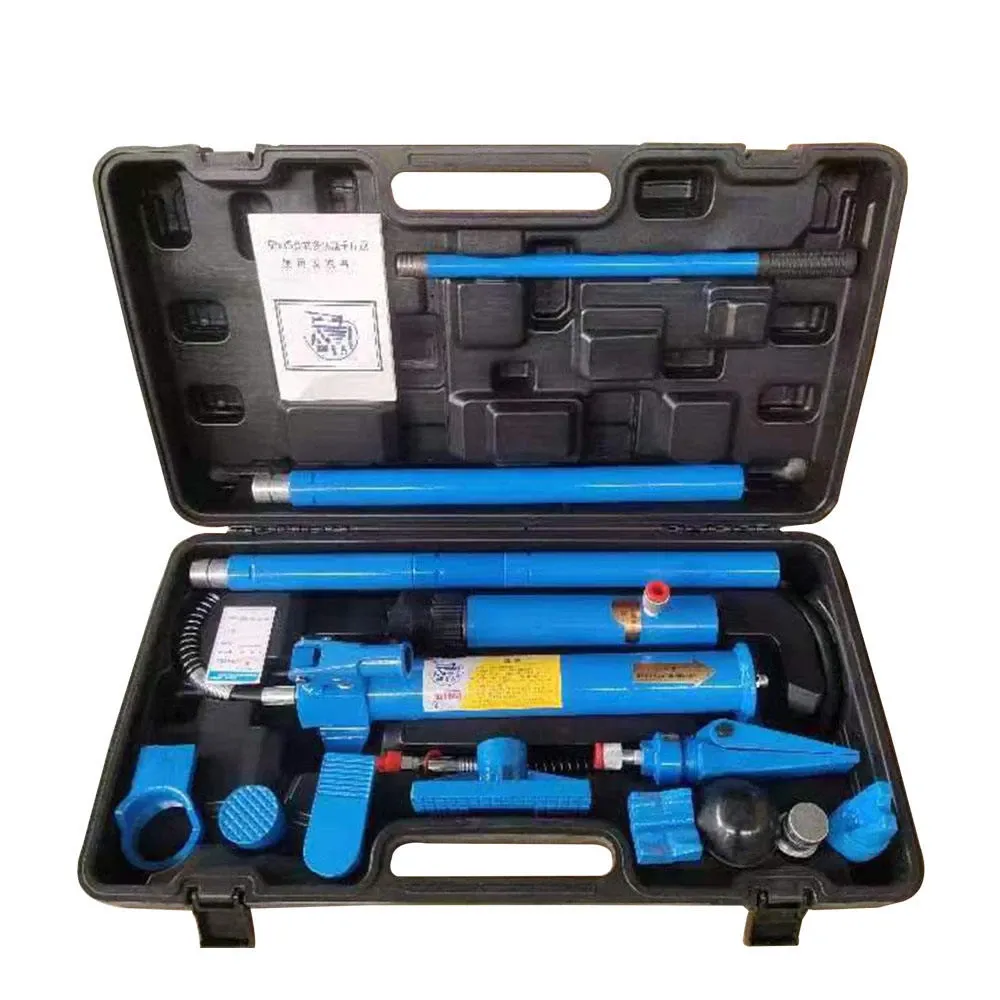
The porta power jack, also known as a hydraulic spreader, is a critical piece of rescue and industrial equipment utilized for separating metal objects, creating space, or lifting heavy loads. Its position in the industry chain lies between specialized hydraulic manufacturing and end-user applications in emergency services, construction, automotive repair, and heavy manufacturing. Core performance is defined by spreading force (measured in tons), spread range (the maximum distance the jaws can open), and operational speed. The device operates on the principle of Pascal's Law, utilizing hydraulic pressure to multiply force. A key pain point for industry users is maintaining consistent performance under varying environmental conditions and ensuring long-term reliability against cyclical loading and potential corrosion. Demand is driven by increasing safety regulations and the need for rapid intervention in emergency scenarios and efficient industrial operations.
Material Science & Manufacturing
Porta power jacks primarily utilize high-strength alloy steels in their construction, typically 4140 or similar chromium-molybdenum alloys for the hydraulic cylinder and spreading jaws. These materials are selected for their high yield strength, tensile strength, and toughness, enabling them to withstand the extreme forces generated during operation. Manufacturing begins with precision machining of the cylinder body and piston, followed by heat treatment to achieve desired hardness and ductility. Spreading jaws are typically forged or cast, then machined to final dimensions and hardened. The hydraulic fluid commonly employed is a mineral oil-based hydraulic fluid with specific viscosity and anti-corrosion additives. The seals are manufactured from nitrile rubber (Buna-N) or Viton, depending on temperature and fluid compatibility requirements. Manufacturing processes include precision casting, forging, CNC machining, heat treatment, and hydraulic assembly. Critical parameter control involves maintaining tight tolerances on cylinder bore diameter, piston diameter, and seal dimensions to prevent leakage and ensure efficient power transmission. Surface treatments such as black oxide coating or powder coating are applied to protect against corrosion. Welding processes, primarily shielded metal arc welding (SMAW) or gas metal arc welding (GMAW), are used for fabricating structural components. Careful consideration of weld metallurgy and heat-affected zone properties is essential to maintain structural integrity.
Performance & Engineering
Performance is intrinsically linked to force analysis. The spreading force is calculated based on the hydraulic pressure and the effective area of the piston. Engineering design focuses on maximizing this force while minimizing stress concentrations in critical components. Finite Element Analysis (FEA) is routinely employed to simulate stress distribution under various loading conditions. Environmental resistance is a major consideration. Jacks operating in corrosive environments (marine, industrial) require specialized materials and coatings to prevent oxidation and degradation. Operating temperature range affects fluid viscosity and seal performance; extreme temperatures necessitate fluid selection with appropriate viscosity index and seal material compatibility. Compliance requirements stem from safety standards set by organizations such as NFPA (National Fire Protection Association) and OSHA (Occupational Safety and Health Administration). These standards dictate minimum spreading force, safety mechanisms (pressure relief valves, anti-retraction features), and material specifications. Functional implementation relies on a robust hydraulic system consisting of a pump, reservoir, hoses, and control valves. The pump generates hydraulic pressure, which is transmitted through the hoses to the jack's cylinder. Control valves regulate the flow of fluid, enabling precise control of the spreading action.
Technical Specifications
| Parameter | Unit | Typical Value | Testing Standard |
|---|---|---|---|
| Spreading Force | tons | 10-50 | ISO 604 |
| Spread Range | mm | 0-250 | ASTM E83 |
| Operating Pressure | MPa | 70 | ISO 6022 |
| Cylinder Bore Diameter | mm | 32-50 | DIN ISO 9409 |
| Piston Rod Diameter | mm | 20-30 | EN ISO 2868 |
| Hydraulic Fluid Viscosity | cSt | 46 | ISO 3104 |
Failure Mode & Maintenance
Common failure modes include fatigue cracking of the spreading jaws due to repeated cyclical loading, particularly at stress concentration points. Seal failure leads to hydraulic fluid leakage and loss of pressure, often caused by abrasion, temperature extremes, or incompatible fluids. Corrosion of internal components (cylinder, piston) can occur in harsh environments, leading to seizure and reduced performance. Delamination of coatings can expose the underlying metal to corrosion. Oxidation of hydraulic fluid results in sludge formation and reduced lubricity. Maintenance involves regular inspection of seals for wear and tear, hydraulic fluid level checks and replacement according to manufacturer recommendations (typically every 1-2 years). Lubrication of moving parts is critical to reduce friction and wear. Visual inspection for cracks, corrosion, and damage is essential. Pressure testing should be performed periodically to verify the integrity of the hydraulic system. In the event of a fatigue crack, the affected jaw must be replaced. For seal failure, the seal should be replaced with a compatible material. Regular cleaning and protective coating application are essential for corrosion prevention.
Industry FAQ
Q: What is the impact of hydraulic fluid contamination on the lifespan of a porta power jack?
A: Hydraulic fluid contamination is a significant contributor to premature failure. Particulate matter acts as an abrasive, accelerating wear on seals, cylinder walls, and valve components. Water contamination promotes corrosion. Chemical contamination can degrade fluid properties and damage seals. Maintaining fluid cleanliness through filtration and regular fluid changes is crucial for extending the jack's lifespan.
Q: How do temperature extremes affect the performance of a porta power jack?
A: Low temperatures increase fluid viscosity, slowing down operation and potentially causing seal stiffening. High temperatures decrease viscosity, potentially leading to leakage and reduced lubrication. Extreme cold can also affect the mechanical properties of the steel, increasing brittleness. Fluid selection with appropriate viscosity index and operating temperature range is critical.
Q: What material selection considerations are important for porta power jacks used in marine environments?
A: Marine environments are highly corrosive. Stainless steel (316 or higher grade) is essential for all exposed components. Seals should be made of materials resistant to saltwater corrosion, such as Viton. Protective coatings (epoxy or polyurethane) are also crucial. Regular washing with freshwater after exposure to saltwater is recommended.
Q: What safety features are essential in a porta power jack design?
A: A pressure relief valve is crucial to prevent over-pressurization and potential catastrophic failure. An anti-retraction valve prevents the jack from collapsing under load. A robust locking mechanism secures the jack in position. Clear operating instructions and safety warnings are also essential.
Q: How does the spreading force of a porta power jack relate to its cylinder bore diameter?
A: Spreading force is directly proportional to the hydraulic pressure and the effective area of the piston. The effective area is calculated using the cylinder bore diameter (Area = π (diameter/2)^2). Therefore, a larger cylinder bore diameter, at a given pressure, will result in a greater spreading force. However, a larger bore also requires a more powerful pump.
Conclusion
The porta power jack remains a vital tool across diverse industries due to its inherent ability to generate substantial force in confined spaces. Its performance and longevity are deeply intertwined with material science, precise manufacturing controls, and adherence to rigorous engineering principles. Understanding the failure modes and implementing proactive maintenance strategies are paramount for maximizing operational efficiency and ensuring worker safety.
Future developments are likely to focus on lightweight materials (e.g., high-strength aluminum alloys), improved hydraulic fluid formulations with enhanced environmental compatibility, and the integration of smart sensors for real-time force monitoring and predictive maintenance. Continuous refinement of manufacturing processes and adherence to evolving industry standards will be critical for sustaining the reliability and effectiveness of this essential piece of equipment.
