Introduction
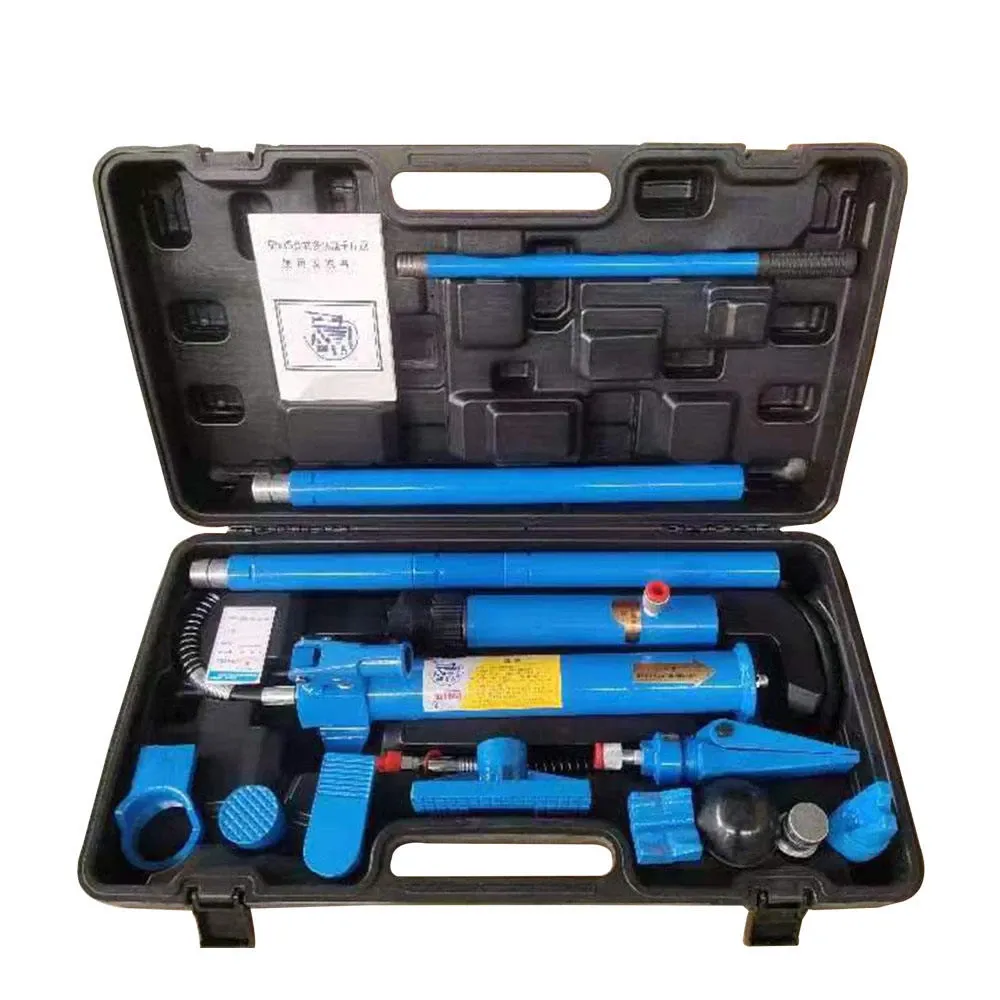
The porta power pancake jack, a hydraulic tool commonly employed in industrial maintenance, automotive repair, and construction, represents a significant advancement in portable lifting and force application technology. Positioned within the broader hydraulics industry, these jacks provide a compact, low-profile solution for tasks requiring controlled force in confined spaces. Unlike traditional bottle jacks or floor jacks, the pancake jack’s design prioritizes accessibility and stability under heavy loads. Core performance characteristics include rated tonnage capacity, stroke length, and overall durability, factors critical for applications ranging from machinery leveling and structural realignment to vehicle frame straightening and emergency rescue operations. This guide provides an in-depth technical overview of porta power pancake jacks, covering material science, manufacturing processes, performance engineering, potential failure modes, and relevant industry standards, aimed at engineers, procurement specialists, and maintenance personnel.
Material Science & Manufacturing
Porta power pancake jacks rely on a combination of high-strength steel alloys for critical components, primarily in the cylinder body, piston, and pump assembly. The cylinder body is commonly constructed from AISI 4140 or equivalent chromium-molybdenum alloy steel, chosen for its high tensile strength (typically exceeding 860 MPa) and excellent ductility, enabling it to withstand substantial pressure without catastrophic failure. The piston is often crafted from hardened alloy steel like AISI 5160, further enhanced by a surface hardening process such as induction hardening or nitriding to improve wear resistance and prevent galling. Seals, vital for maintaining hydraulic pressure, are typically composed of nitrile butadiene rubber (NBR) or fluorocarbon elastomer (FKM/Viton), selected based on fluid compatibility and operating temperature ranges.
Manufacturing begins with precision machining of the steel components. The cylinder body undergoes internal honing to achieve a smooth, consistent bore diameter, critical for efficient piston movement and seal integrity. The piston is similarly machined and polished. The pump assembly, often a manual lever-operated system, is manufactured through a combination of forging, machining, and heat treatment. Key parameters are carefully controlled throughout the process: material composition verification via spectroscopic analysis; dimensional accuracy monitored with Coordinate Measuring Machines (CMM); and hardness testing (Rockwell or Vickers scales) to confirm heat treatment effectiveness. Welding, if employed (particularly in some pump housing designs), follows AWS D1.1 structural welding code standards. Finally, the assembled jack undergoes rigorous pressure testing to verify its rated capacity and leak-free operation.
Performance & Engineering
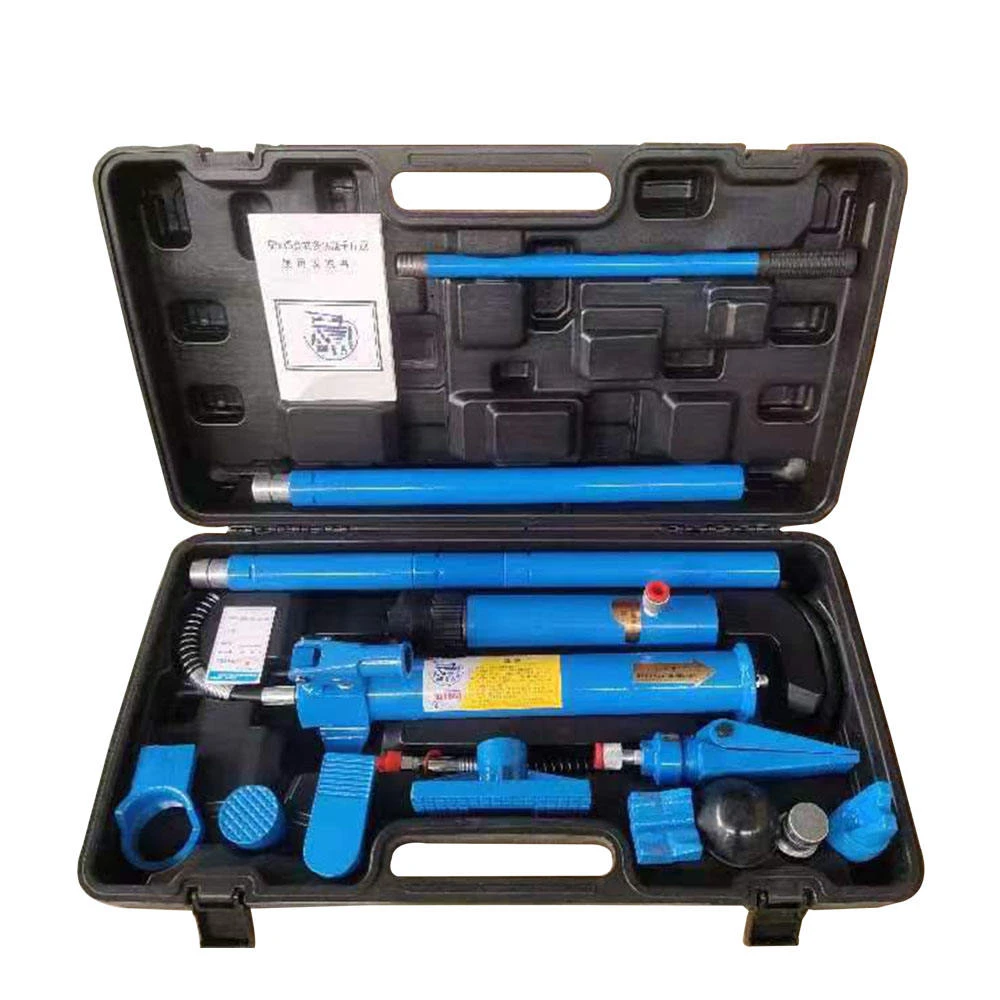
The performance of a porta power pancake jack is fundamentally governed by Pascal’s Law, which dictates that pressure applied to a confined fluid is transmitted equally in all directions. The jack’s lifting capacity is directly proportional to the piston area and the hydraulic pressure generated by the pump. Force analysis considers both static loads (weight being lifted) and dynamic loads (impact forces during operation). Finite Element Analysis (FEA) is frequently employed during the design phase to optimize the cylinder and piston geometry for stress distribution and minimize deformation under load.
Environmental resistance is a crucial engineering consideration. Surface coatings, such as zinc plating or powder coating, are applied to steel components to protect against corrosion, particularly in harsh industrial environments. The choice of seal material (NBR vs. FKM) impacts fluid compatibility and temperature resistance. NBR is suitable for general-purpose hydraulic fluids within a temperature range of -40°C to 120°C, while FKM offers superior resistance to petroleum-based fluids and can operate at temperatures up to 200°C. Compliance with safety standards, such as ASME B30.1 (Slings, Alloys Chains, and Synthetic Slings) – although not directly applicable, the principles of safe lifting practices are relevant – and adherence to relevant national safety regulations, are paramount. The design also addresses stability concerns; the low profile inherently enhances stability, but the jack must be used on a level, stable surface with appropriate support mechanisms (cribbing, blocking) to prevent tipping or shifting under load.
Technical Specifications
| Capacity (Tons) | Stroke Length (inches) | Closed Height (inches) | Open Height (inches) |
|---|---|---|---|
| 5 | 1.5 | 2.25 | 3.75 |
| 10 | 1.75 | 2.75 | 4.5 |
| 20 | 2.0 | 3.5 | 5.5 |
| 30 | 2.25 | 4.0 | 6.25 |
| 50 | 2.5 | 4.75 | 7.25 |
| 100 | 3.0 | 6.0 | 9.0 |
Failure Mode & Maintenance
Common failure modes in porta power pancake jacks include seal failure leading to hydraulic fluid leakage, piston damage due to excessive loading or contamination, cylinder wall scoring from abrasive particles entering the system, and pump assembly malfunction (lever breakage, valve sticking). Fatigue cracking in the cylinder body or piston can occur under repeated cyclical loading, particularly if the jack is consistently operated at or near its maximum capacity. Corrosion, particularly in coastal or humid environments, can also contribute to structural weakening.
Preventive maintenance is critical for extending the jack’s service life. Regular inspection for leaks, damage, and corrosion is essential. Hydraulic fluid should be replaced periodically (typically every 12-24 months, or as recommended by the manufacturer) using a fluid compatible with the seal materials. The jack should be kept clean and free of debris. After each use, the piston should be fully retracted to minimize corrosion. If the jack is stored for an extended period, it should be protected from moisture and extreme temperatures. Any detected leaks or malfunctions should be addressed promptly by a qualified technician. Replacement parts should always meet or exceed the original manufacturer’s specifications.
Industry FAQ
Q: What is the impact of hydraulic fluid viscosity on the jack's performance, particularly in cold weather?
A: Higher viscosity fluids increase resistance to flow, especially at lower temperatures, resulting in slower operation and reduced efficiency. In cold weather, using a fluid with a lower viscosity index (VI) or a synthetic hydraulic fluid specifically designed for cold-temperature applications is crucial to maintain adequate performance. Viscosity should be monitored and adjusted per manufacturer specifications.
Q: What are the limitations of using a porta power pancake jack for lifting versus pushing/pulling applications?
A: While capable of lifting, pancake jacks are primarily optimized for applying horizontal force – pushing or pulling. Their stroke length is typically limited, making them less suitable for applications requiring substantial vertical lift. Using a pancake jack for unsupported lifting creates a greater risk of instability and potential failure.
Q: How does the quality of the steel alloy affect the jack’s overall lifespan and safety?
A: Higher-quality steel alloys with greater tensile strength, ductility, and hardness are essential for withstanding the stresses generated during operation. Inferior alloys are more susceptible to fatigue cracking, yielding, and catastrophic failure. Material certification and traceability are crucial to ensure the use of appropriate steel grades.
Q: What are the best practices for preventing contamination of the hydraulic system?
A: Maintaining a clean hydraulic system is paramount. Always use a filtered funnel when adding hydraulic fluid. Avoid using contaminated fluids. Ensure all fittings and connections are sealed properly to prevent ingress of dust, dirt, and moisture. Regularly inspect and replace filters as recommended by the manufacturer.
Q: How does the operating temperature affect the seal integrity and overall jack performance?
A: Operating temperatures outside the specified range for the seal material (NBR or FKM) can compromise its integrity, leading to leaks and reduced performance. Extreme heat can cause seals to swell or degrade, while extreme cold can cause them to become brittle and crack. Proper fluid selection and operating within specified temperature limits are essential.
Conclusion
The porta power pancake jack represents a versatile and robust solution for applications requiring controlled force in constrained environments. Its performance is intrinsically linked to the careful selection of materials – high-strength steel alloys and compatible seal elastomers – and the precision of its manufacturing processes. Understanding the principles of hydraulic operation, potential failure modes, and diligent adherence to maintenance protocols are crucial for maximizing the jack's lifespan and ensuring safe, reliable operation.
Future advancements in this technology will likely focus on lightweight materials (e.g., aluminum alloys for non-critical components), improved seal designs for enhanced durability, and the integration of smart sensors for real-time pressure monitoring and predictive maintenance. Continuous refinement of manufacturing techniques and adherence to stringent quality control standards will remain paramount to maintain the integrity and performance of these essential industrial tools.
