Introduction
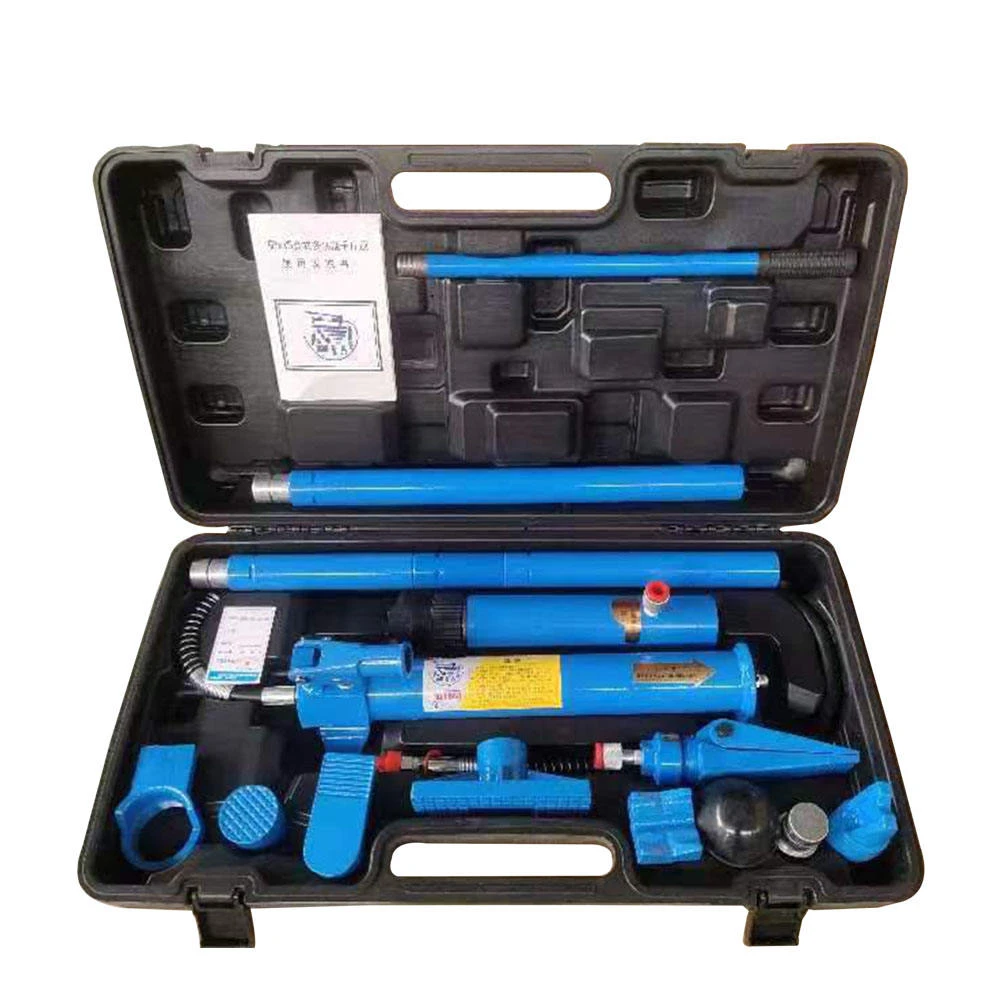
The Porta Power Ram 10 Ton is a hydraulic ram designed for industrial applications requiring substantial linear force. Positioned within the broader landscape of lifting and positioning equipment, it serves as a critical component in applications like machinery installation, structural realignment, and component separation. Unlike more complex hydraulic systems, the 10-ton Porta Power offers a portable, self-contained solution, eliminating the need for external pumps or power sources. Its core performance characteristics center around delivering a controlled and significant force output, typically measured in tons, with a stroke length suitable for a wide range of tasks. A key pain point addressed by this technology is the need for safe and precise force application in confined spaces or remote locations where traditional methods like cranes or jacks are impractical. Proper selection and application are critical to avoid component damage and ensure worker safety.
Material Science & Manufacturing
The Porta Power Ram 10 Ton predominantly utilizes high-strength carbon steel for its critical components, specifically the ram cylinder, piston rod, and saddle assemblies. The steel’s composition, typically a grade like AISI 1045 or equivalent, offers a balance of hardness, tensile strength, and weldability. The piston and seals are commonly manufactured from nitrile rubber (NBR) or polyurethane, chosen for their resistance to hydraulic fluid and ability to maintain a tight seal under pressure. The hydraulic fluid itself is usually a mineral oil-based fluid with specific viscosity and anti-corrosion additives. Manufacturing begins with precision machining of the steel components, followed by heat treatment (quenching and tempering) to achieve desired hardness and toughness. The cylinder is honed to a smooth internal finish to minimize friction and prevent seal damage. The piston assembly is rigorously tested for dimensional accuracy and seal integrity. Welding processes, primarily shielded metal arc welding (SMAW) or gas metal arc welding (GMAW), are employed for joining structural elements. Critical parameters during welding include pre-heating temperature, welding current, and electrode type to prevent cracking and ensure adequate penetration. Quality control involves non-destructive testing (NDT) methods such as ultrasonic testing (UT) and magnetic particle inspection (MPI) to detect internal flaws and surface cracks. The hydraulic fluid is filtered during filling and operation to maintain cleanliness and prevent abrasive wear on internal components.
Performance & Engineering
The performance of a 10-ton Porta Power Ram is fundamentally governed by Pascal's Law, which states that pressure applied to a confined fluid is transmitted equally in all directions. The ram’s force output is calculated by multiplying the hydraulic pressure by the piston area. Engineering considerations revolve around maximizing force output while maintaining structural integrity and operational safety. Force analysis necessitates evaluating the stress distribution within the cylinder, piston, and saddle assemblies under maximum load. Finite Element Analysis (FEA) is frequently used to model stress concentrations and optimize component geometry. Environmental resistance is crucial; the ram must withstand temperature fluctuations, humidity, and potential exposure to corrosive substances. Surface treatments like zinc plating or epoxy coating are applied to protect against corrosion. Compliance requirements, particularly regarding safety standards, dictate the need for pressure relief valves to prevent over-pressurization and potential rupture. The saddle design must ensure stable contact with the workpiece, minimizing the risk of slippage or instability during operation. Stroke length is engineered to provide sufficient travel for a variety of applications, while maintaining a compact overall ram size. Proper selection of hydraulic fluid viscosity is critical for optimal performance in varying temperature conditions. Accurate force control is essential to prevent damage to delicate components during operations such as die setting or alignment.
Technical Specifications
| Parameter | Specification | Testing Standard | Typical Application |
|---|---|---|---|
| Rated Capacity | 10 Tons (98.06 kN) | ISO 604 | Machinery Moving, Structural Repair |
| Maximum Stroke | 150 mm (5.9 inches) | ASTM E83 | Equipment Installation |
| Cylinder Bore | 63.5 mm (2.5 inches) | DIN 2491 | Hydraulic Cylinder Dimensioning |
| Retracted Height | 315 mm (12.4 inches) | Internal Specification | Space-Constrained Operations |
| Hydraulic Fluid Capacity | 0.8 Liters | ISO 3448 | Hydraulic System Performance |
| Operating Pressure | 70 MPa (10,000 psi) | ANSI/ASME B31.3 | High-Force Applications |
Failure Mode & Maintenance
Common failure modes in Porta Power Rams include hydraulic fluid leaks, piston seal failure, cylinder damage (corrosion, pitting), and saddle deformation. Hydraulic fluid leaks typically originate from worn seals around the piston, cylinder head, or hydraulic connections. Piston seal failure results in reduced force output and potential internal leakage. Cylinder damage can occur due to corrosion from moisture ingress or abrasive wear from contaminated hydraulic fluid. Saddle deformation arises from overloading or improper load distribution. Fatigue cracking can occur in the cylinder body under repeated cyclic loading. Preventive maintenance is crucial to extend the ram’s lifespan. This includes regular inspection of hydraulic connections for leaks, periodic fluid replacement (typically every 12-24 months), and cleaning of the external surfaces to prevent corrosion. Seals should be inspected and replaced as needed. The hydraulic fluid should be filtered to remove contaminants. Proper storage is essential; the ram should be stored in a clean, dry environment with the piston fully retracted to minimize corrosion. If a leak is detected, immediately isolate the system and repair or replace the affected seals. If the ram exhibits reduced force output or erratic operation, inspect the hydraulic fluid for contamination and check the piston seals. A comprehensive failure analysis should be conducted if catastrophic failure occurs to identify the root cause and prevent recurrence.
Industry FAQ
Q: What is the acceptable operating temperature range for a 10-ton Porta Power Ram?
A: The typical acceptable operating temperature range is -20°C to 80°C (-4°F to 176°F). However, performance can be affected at extreme temperatures. Below -20°C, the hydraulic fluid may become too viscous, while above 80°C, seal degradation can occur. Using a fluid appropriate for the operational temperature is key.
Q: How often should the hydraulic fluid be changed?
A: Generally, hydraulic fluid should be changed every 12-24 months, or after 500-1000 cycles of operation, whichever comes first. The frequency depends on the operating environment and the level of contamination. Regular fluid analysis can help determine the optimal change interval.
Q: What type of hydraulic fluid is recommended?
A: A mineral oil-based hydraulic fluid with anti-wear additives and corrosion inhibitors is typically recommended. ISO 32 or ISO 46 viscosity grades are common choices. Consult the manufacturer's specifications for specific fluid recommendations.
Q: Can the Porta Power Ram be used in a horizontal position?
A: Yes, the ram can be operated in a horizontal position, but it is essential to ensure adequate support and stability. Avoid applying side loads to the ram, as this can damage the piston and cylinder.
Q: What safety precautions should be taken when using the Porta Power Ram?
A: Always wear appropriate personal protective equipment (PPE), including safety glasses and gloves. Ensure the ram is placed on a stable and level surface. Never exceed the rated capacity of the ram. Use saddle adapters to distribute the load evenly. Avoid applying sudden or shock loads. Always relieve pressure before disconnecting hydraulic lines.
Conclusion
The Porta Power Ram 10 Ton remains a valuable and versatile tool for a wide range of industrial applications. Its portability, ease of use, and substantial force output make it an effective solution for tasks where larger, more complex hydraulic systems are impractical. Understanding the underlying material science, manufacturing processes, and engineering principles governing its performance is crucial for proper selection, operation, and maintenance.
Proactive maintenance, including regular fluid changes and seal inspections, is paramount to extending the ram’s operational life and preventing costly failures. Adherence to relevant safety standards and best practices ensures worker safety and minimizes the risk of damage to equipment or structures. Continued advancements in hydraulic technology may lead to the development of even more efficient and reliable Porta Power Ram designs in the future.
