Introduction
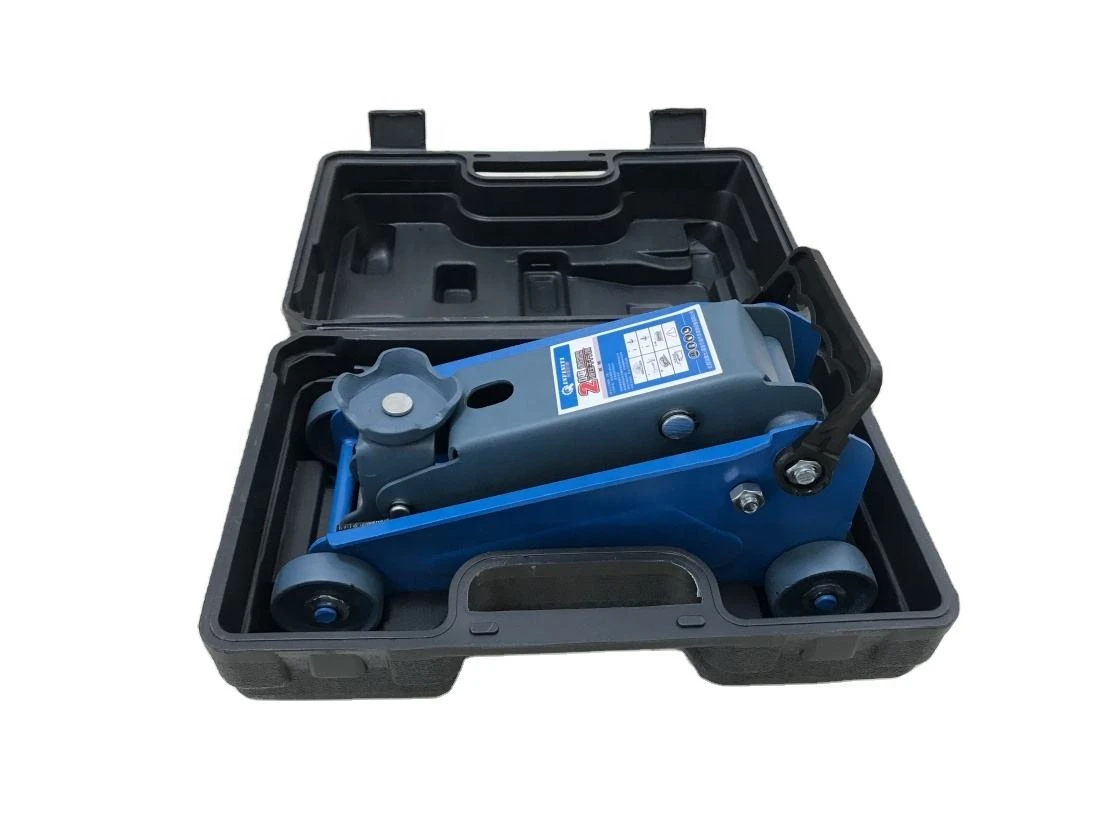
A two-ton floor jack is a hydraulic lifting device commonly employed in automotive repair, construction, and industrial maintenance for raising vehicles and heavy equipment. Positioned within the material handling equipment category, its core functionality revolves around converting applied force into significant lifting power through Pascal's principle. Unlike screw jacks which rely on mechanical advantage, floor jacks utilize a non-compressible fluid (typically hydraulic oil) to transmit force, offering a higher lift capacity with relatively less physical effort. Key performance indicators include lifting height, ton capacity, saddle height range, and pump stroke length. The device addresses a critical need in the industry: the safe and efficient elevation of heavy loads for maintenance, repair, or repositioning. Proper selection and usage are paramount, given the inherent risks associated with working beneath elevated equipment.
Material Science & Manufacturing
The manufacturing of a two-ton floor jack involves a complex interplay of material science and precision engineering. The hydraulic cylinder, the core of the jack, is typically constructed from high-strength carbon steel (AISI 1045 or equivalent) due to its durability and resistance to high pressure. The internal surface undergoes honing and polishing to minimize friction and prevent seal wear. Piston seals are commonly manufactured from nitrile rubber (NBR) or hydrogenated nitrile butadiene rubber (HNBR) for their oil resistance and ability to maintain a tight seal under pressure. The jack’s frame and lifting arm are usually fabricated from structural steel (A36 or equivalent), subjected to welding processes (SMAW or MIG/MAG) which necessitate stringent quality control to ensure weld integrity and prevent failure under stress. The hydraulic fluid itself is a specialized mineral oil with viscosity optimized for efficient pump operation and temperature stability. Manufacturing parameter control focuses on dimensional accuracy of cylinder components, weld penetration depth, and precise seal installation. Heat treatment processes like quenching and tempering are applied to steel components to enhance their hardness and toughness. The saddle, which contacts the load, frequently features a textured surface or rubber pad to improve grip and prevent slippage. The release valve utilizes hardened steel components for durability and precise control of the descent rate.
Performance & Engineering
The performance of a two-ton floor jack is governed by principles of fluid mechanics and structural engineering. The hydraulic system operates based on Pascal's Law, which dictates that pressure applied to a confined fluid is transmitted equally in all directions. The force amplification is determined by the ratio of the piston areas: the pump piston area versus the lifting piston area. Force analysis is critical in determining the required wall thickness of the cylinder and the structural integrity of the lifting arm to withstand the applied load without deformation or failure. Environmental resistance is a key consideration; exposure to moisture, dust, and extreme temperatures can degrade seals, corrode steel components, and affect fluid viscosity. The design must incorporate features like dust covers and corrosion-resistant coatings to mitigate these effects. Compliance requirements, such as ASME B30.1 (Safety Standard for Material Handling Equipment), dictate testing procedures for load capacity, stability, and valve functionality. The valve mechanism’s engineering is pivotal – it controls the rate of descent, preventing uncontrolled lowering which represents a significant safety hazard. Finite element analysis (FEA) is routinely employed during the design phase to optimize structural components and predict stress concentrations under various loading conditions. Stability is engineered through a wide base and low center of gravity.
Technical Specifications
| Parameter | Specification | Test Method | Typical Tolerance |
|---|---|---|---|
| Lifting Capacity | 2 Tons (4,000 lbs / 1814 kg) | Static Load Test – ASME B30.1 | ±5% |
| Minimum Lifting Height | 5.5 inches (140 mm) | Dimensional Measurement | ±0.1 inches (±2.5 mm) |
| Maximum Lifting Height | 24 inches (610 mm) | Dimensional Measurement | ±0.2 inches (±5 mm) |
| Saddle Height Range | 5.5 – 24 inches (140 – 610 mm) | Dimensional Measurement | ±0.2 inches (±5 mm) |
| Pump Stroke Length | 4 inches (102 mm) | Dimensional Measurement | ±0.05 inches (±1.3 mm) |
| Hydraulic Fluid Capacity | 1.5 Liters | Volumetric Measurement | ±2% |
Failure Mode & Maintenance
Common failure modes in two-ton floor jacks stem from several sources. Hydraulic seal failure is prevalent, leading to gradual pressure loss and an inability to maintain lift. This is often caused by contamination of the hydraulic fluid, exceeding the load capacity, or age-related degradation of the seal material. Metal fatigue cracking can occur in the lifting arm or cylinder body, particularly under repeated stress cycles and improper usage (e.g., lifting off-center loads). Weld failures in the frame or lifting arm are also possible due to inadequate weld quality or excessive loading. Corrosion, especially in humid environments, can weaken steel components and impede the operation of moving parts. Valve malfunctions, resulting from debris accumulation or wear, can lead to uncontrolled descent. Maintenance protocols should include regular visual inspection for leaks, cracks, and corrosion. Hydraulic fluid should be checked and replaced every 12-24 months, using a fluid compatible with the jack’s seals. Lubrication of pivot points and moving parts is crucial to reduce friction and prevent wear. Load testing should be conducted periodically to verify load capacity. If a leak is detected, the affected seal or component must be replaced immediately. Proper storage in a clean, dry environment will help prevent corrosion.
Industry FAQ
Q: What is the impact of using an incorrect hydraulic fluid in a floor jack?
A: Using an incorrect hydraulic fluid can lead to several problems. If the fluid is too viscous, it increases the effort required to pump the jack and can strain the pump mechanism. If it’s too thin, it may not provide sufficient lubrication, causing premature wear of seals and internal components. Incompatibility with the seal materials (NBR, HNBR) can cause swelling, hardening, or degradation of the seals, leading to leaks and pressure loss. It's critical to always use the fluid specified by the manufacturer.
Q: How do I troubleshoot a slow descent rate on a floor jack?
A: A slow descent rate usually indicates a restriction in the release valve or a buildup of debris within the hydraulic system. First, check the release valve for any visible obstructions. If clean, attempt to operate the valve several times to dislodge any potential particles. If the problem persists, the hydraulic fluid may be contaminated, and a fluid flush and filter replacement are recommended. In some cases, the release valve itself may be worn and require replacement.
Q: What are the safety considerations when lifting an off-center load?
A: Lifting an off-center load significantly increases the stress on the lifting arm and hydraulic cylinder, potentially leading to instability and failure. Always position the load as centrally as possible on the saddle. If an off-center lift is unavoidable, reduce the load weight substantially and ensure the jack is positioned on a stable, level surface. Never work under a load supported only by a floor jack; always use jack stands as secondary support.
Q: What is the recommended maintenance schedule for a two-ton floor jack used in a commercial automotive shop?
A: In a commercial setting, a two-ton floor jack should undergo a more frequent maintenance schedule. Visual inspection for leaks and damage should be performed daily. Hydraulic fluid should be replaced every six months, or more frequently if the jack is heavily used. All pivot points should be lubricated monthly. A complete inspection, including load testing and seal examination, should be conducted annually by a qualified technician.
Q: What is the difference between single-stage and double-stage hydraulic pumps in floor jacks?
A: Single-stage pumps require more strokes to reach maximum lift height, but typically offer a higher flow rate for faster lifting. Double-stage pumps provide a lower initial effort for the first portion of the lift, then require more effort as the load approaches maximum height. This is achieved by changing the effective piston area during the lift cycle, offering a balance between ease of use and lifting speed.
Conclusion
The two-ton floor jack represents a critical component in numerous industrial and automotive applications. Its functionality is deeply rooted in principles of fluid mechanics and materials science, demanding careful attention to material selection, manufacturing processes, and maintenance procedures. Understanding the potential failure modes – ranging from hydraulic seal degradation to structural fatigue – is essential for ensuring safe and reliable operation. Adherence to industry standards, such as ASME B30.1, and implementing a proactive maintenance program are crucial for maximizing the lifespan and minimizing the risk of accidents.
Future developments in floor jack technology will likely focus on enhanced safety features, such as integrated overload protection systems and improved valve designs for precise descent control. The integration of smart sensors for real-time monitoring of hydraulic pressure and load weight is also anticipated. Lightweight materials, like aluminum alloys, may be increasingly utilized to reduce the overall weight of the jack without compromising its structural integrity. Continuous innovation in seal materials will further enhance durability and reduce the frequency of maintenance interventions.
