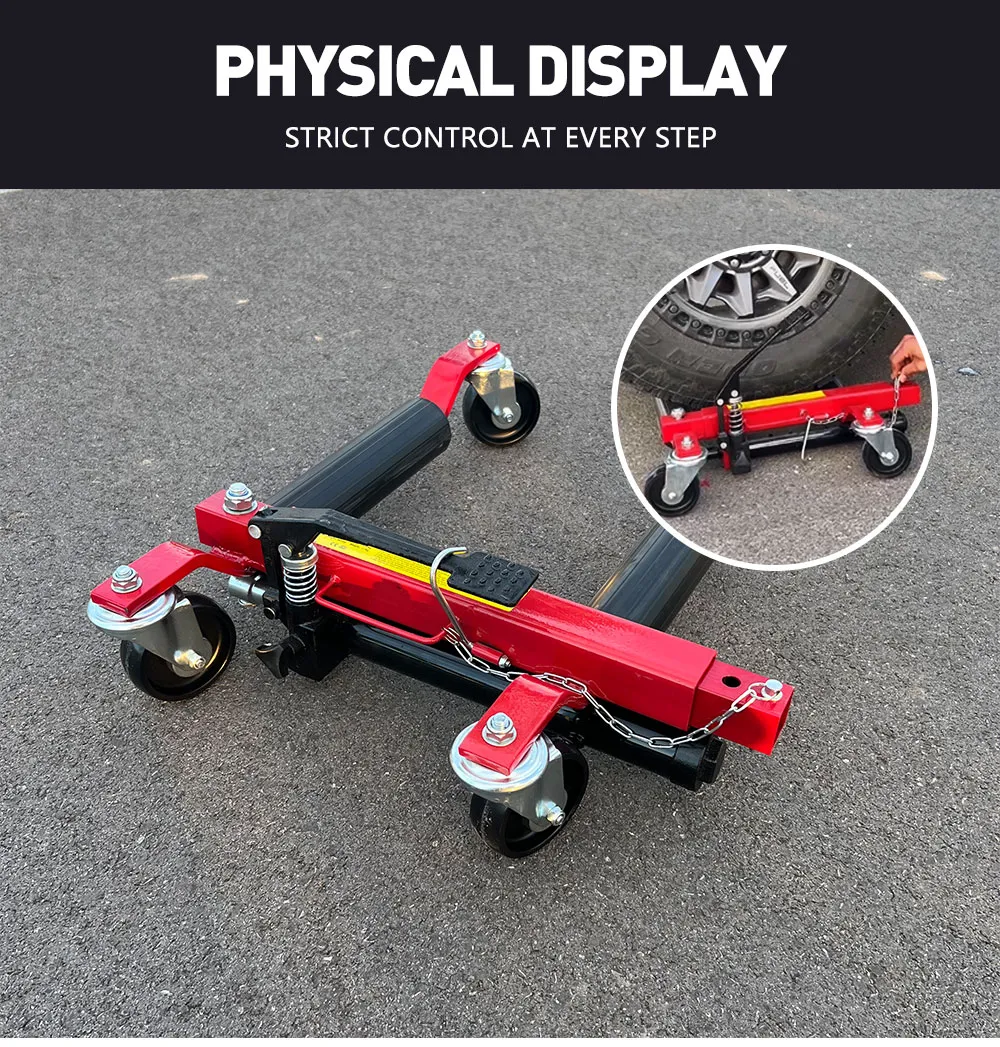
Introduction
The car jack lift is a mechanical device employed to lift vehicles for maintenance, repair, or tire changes. Positioned within the automotive aftermarket and professional repair sectors, it represents a crucial component of vehicle service infrastructure. Functionally, car jack lifts convert applied force—typically manual or hydraulic—into lifting power, enabling temporary elevation of a vehicle’s chassis. Core performance characteristics include lifting capacity (measured in tons or kilograms), lifting range (minimum and maximum height achieved), and stability under load. The design and materials used directly impact safety, durability, and operational efficiency. A primary industry pain point centers around ensuring consistent reliability and preventing catastrophic failure during use, as a compromised jack lift poses a severe safety hazard to both the vehicle and personnel. This guide provides an in-depth technical overview of car jack lifts, encompassing material science, manufacturing processes, performance engineering, failure modes, and relevant industry standards.
Material Science & Manufacturing
Car jack lifts are constructed from a variety of materials, selected for their strength, ductility, and corrosion resistance. The primary structural components, including the lifting arm, base, and saddle, are typically manufactured from medium-carbon steel (e.g., AISI 1045) due to its favorable balance of cost and mechanical properties. Steel undergoes heat treatment—quenching and tempering—to achieve desired hardness and toughness. Hydraulic jacks utilize high-strength alloy steel cylinders to withstand significant internal pressure. The hydraulic fluid itself is commonly mineral oil-based, formulated with additives to enhance viscosity, prevent corrosion, and provide lubrication. Manufacturing processes vary depending on the jack lift type. Bottle jacks often involve deep drawing of steel to form the cylinder, followed by machining and welding. Floor jacks typically incorporate a combination of casting (for the base and some structural elements), forging (for critical linkages), and seamless steel tube drawing for the hydraulic cylinder. Key parameter control during manufacturing includes weld integrity (ensured through non-destructive testing like ultrasonic inspection), dimensional accuracy (verified via coordinate measuring machines – CMMs), and surface finish (to minimize friction and prevent corrosion). The quality of the hydraulic seals—typically made from nitrile rubber (NBR) or Viton—is paramount, as leaks significantly reduce lifting capacity and operational safety. Chemical compatibility between the hydraulic fluid and seal material is critical, and often specified by the fluid manufacturer.

Performance & Engineering
The performance of a car jack lift is fundamentally governed by principles of force analysis and structural mechanics. The lifting force is determined by the hydraulic pressure (P) multiplied by the piston area (A): F = P x A. The mechanical advantage of the jack lift system, which determines the force amplification, is dictated by the lever arm ratios and hydraulic cylinder dimensions. Stability is crucial, and the jack lift’s base must be sufficiently wide to prevent tipping under load. The center of gravity of the lifted vehicle must remain within the jack lift’s support base. Finite Element Analysis (FEA) is commonly used during the design phase to simulate stress distribution under various loading conditions, identifying potential weak points and optimizing structural geometry. Environmental resistance is a key consideration. Jack lifts operating in corrosive environments (e.g., coastal regions, areas with road salt exposure) require protective coatings such as zinc plating or powder coating to prevent rust and corrosion. Compliance requirements dictate specific safety features, such as locking mechanisms to prevent uncontrolled descent, and overload protection to prevent exceeding the rated lifting capacity. These features must meet standards set by organizations like ASME (American Society of Mechanical Engineers) and relevant national regulatory bodies. Furthermore, the hydraulic system needs to be engineered to withstand cyclical loading and thermal expansion/contraction of the fluid.
Technical Specifications
| Parameter | Unit | Typical Value (Floor Jack) | Typical Value (Bottle Jack) |
|---|---|---|---|
| Lifting Capacity | tons | 2-3 | 2-20 |
| Minimum Lifting Height | inches | 3.5 | 8 |
| Maximum Lifting Height | inches | 15-24 | 15-24 |
| Hydraulic Pressure | PSI | 6000-8000 | 8000-10000 |
| Pump Stroke | inches | 3-4 | N/A (single-action) |
| Base Width | inches | 10-14 | 6-8 |
Failure Mode & Maintenance
Car jack lifts are susceptible to several failure modes. Fatigue cracking can occur in the lifting arm or hydraulic cylinder due to repeated stress cycles, particularly if the jack lift is consistently overloaded. Hydraulic leaks are common, often stemming from worn or damaged seals. Corrosion, especially in exposed components, can lead to structural weakening. Shear failure of the lifting saddle can occur if the vehicle’s jacking point is improperly positioned or if the saddle is inadequately strong. Delamination of the base or lifting arm, if made from composite materials (less common), can result in catastrophic failure. Oxidation of the hydraulic fluid can degrade its lubricating properties and promote corrosion within the hydraulic system. Maintenance is critical to prevent these failures. Regular inspection for leaks, cracks, and corrosion is essential. Hydraulic fluid should be replaced periodically (typically every 1-2 years) to maintain its performance. Lubrication of moving parts (e.g., pivot points, screw threads) reduces friction and prevents wear. Storage in a clean, dry environment minimizes corrosion risk. Overload protection mechanisms should be tested regularly to ensure proper functionality. In the event of any visible damage or suspected malfunction, the jack lift should be taken out of service immediately and inspected by a qualified technician. Performing load tests periodically ensures proper operation.
Industry FAQ
Q: What is the primary factor determining the safe lifting capacity of a car jack lift?
A: The safe lifting capacity is determined by the yield strength of the materials used in the critical structural components (lifting arm, hydraulic cylinder), combined with a conservative safety factor typically mandated by industry standards (ASME). It’s not solely based on the hydraulic pressure; material strength and design integrity are paramount.
Q: What types of hydraulic fluid are compatible with standard nitrile rubber (NBR) seals?
A: Mineral oil-based hydraulic fluids are generally compatible with NBR seals. However, it's crucial to verify compatibility with the fluid manufacturer's specifications, as some fluids contain additives that can cause NBR swelling or degradation. Avoid using fluids containing petroleum-based solvents or synthetic esters with NBR seals.
Q: How does temperature affect the performance of a hydraulic car jack lift?
A: Temperature significantly impacts hydraulic fluid viscosity. Lower temperatures increase viscosity, potentially slowing down operation and requiring more force to initiate lifting. Higher temperatures decrease viscosity, potentially leading to leaks and reduced lifting efficiency. Extreme temperatures can also affect the elasticity of seals.
Q: What are the consequences of using a car jack lift on an uneven surface?
A: Using a car jack lift on an uneven surface dramatically increases the risk of instability and tipping. This can lead to the vehicle falling, potentially causing serious injury or damage. Always ensure the jack lift is placed on a firm, level surface before lifting.
Q: What is the purpose of the safety locking mechanism on a floor jack?
A: The safety locking mechanism is a critical fail-safe device designed to prevent the jack from slowly lowering under load. It engages when the pump handle is released, mechanically locking the hydraulic cylinder in place. Regular inspection and testing of this mechanism are essential for safe operation.
Conclusion
Car jack lifts are essential tools within the automotive service industry, relying on a complex interplay of material science, mechanical engineering, and hydraulic principles. Ensuring reliable operation and preventing failure necessitates a thorough understanding of the factors influencing lifting capacity, stability, and durability. Proper manufacturing processes, meticulous material selection, and diligent maintenance practices are paramount to mitigate risks and ensure operator safety.
Future developments may focus on incorporating smart technologies, such as integrated load sensors and automated locking mechanisms, to further enhance safety and operational efficiency. Furthermore, research into alternative materials, offering improved strength-to-weight ratios and corrosion resistance, could lead to the development of more robust and longer-lasting car jack lift designs. Adherence to evolving industry standards and a commitment to continuous improvement are vital for maintaining the integrity and safety of this critical piece of automotive equipment.
