Introduction
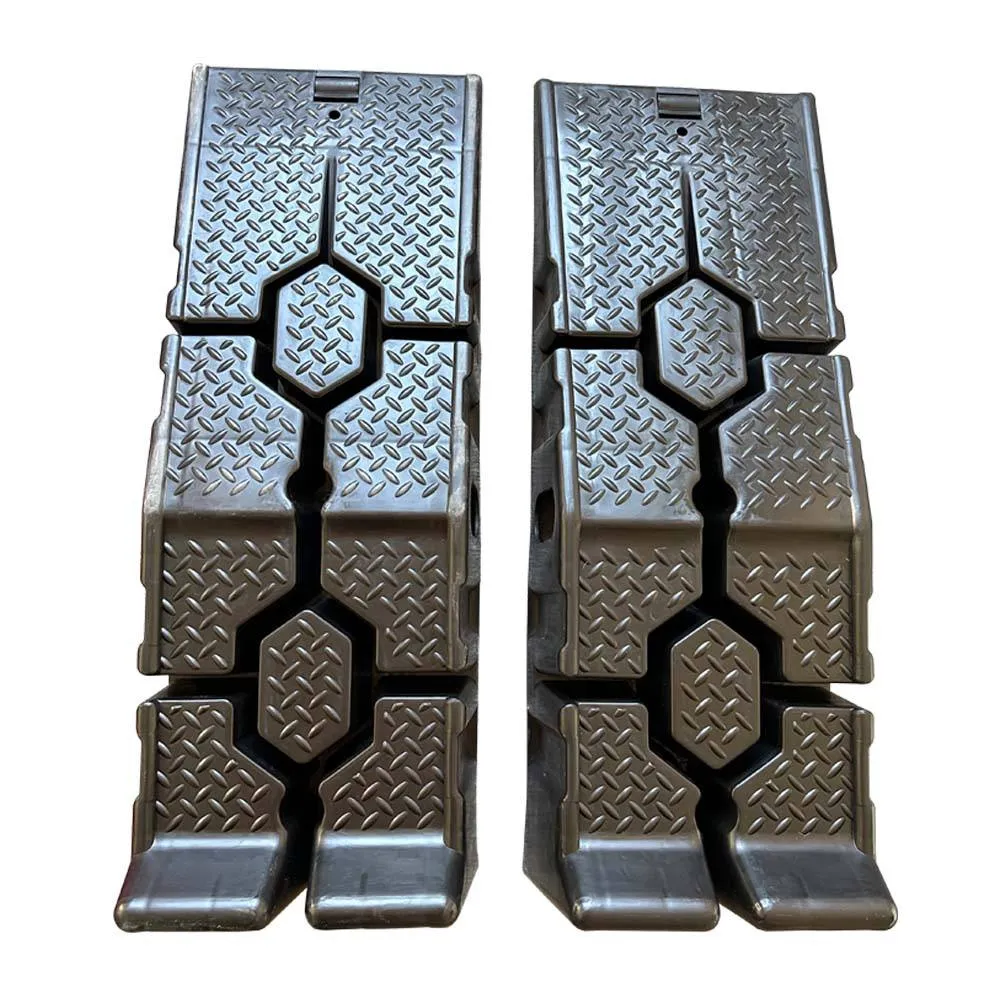
Car jack supports, also known as jack stands, are critical safety devices utilized in automotive repair and maintenance. Positioned beneath a vehicle after lifting with a jack, they provide stable and secure support, preventing collapse during work. These supports are not merely ancillary tools; they are a fundamental component of a safe working environment, especially when dealing with potentially hazardous procedures like tire changes, brake repairs, or undercarriage maintenance. The industry chain positions car jack supports as a post-lift safety mechanism, dependent on the quality of the lifting jack but ultimately responsible for preventing catastrophic failure. Core performance characteristics revolve around load capacity, stability under load, and ease of adjustment and secure locking. The demand for robust and reliable car jack supports is directly proportional to the increasing complexity of vehicle maintenance and the heightened awareness of safety protocols within the automotive sector.
Material Science & Manufacturing
The predominant material for car jack supports is steel, specifically carbon steel alloys, due to their high strength-to-weight ratio and cost-effectiveness. Common grades include ASTM A36, offering good weldability and ductility, and higher strength alloys like ASTM A572 Grade 50 for increased load bearing capacity. Manufacturing typically begins with steel plate or structural tubing, subjected to processes like laser cutting or plasma cutting to achieve the desired component shapes. Welding, primarily shielded metal arc welding (SMAW) or gas metal arc welding (GMAW), is employed to assemble the various structural elements. Critical weld parameters, including current, voltage, and travel speed, are meticulously controlled to ensure full penetration and prevent defects such as porosity or cracking. The pawl mechanism, responsible for locking the support at specific heights, is often manufactured from hardened alloy steel (e.g., 4140 or 4340) via forging and heat treatment. Surface treatment is essential; typically, components undergo powder coating or zinc plating to provide corrosion resistance and enhance durability. Quality control involves non-destructive testing (NDT) methods like ultrasonic testing (UT) and magnetic particle inspection (MPI) to identify internal flaws or surface cracks in welds. The precise geometry of the base and saddle are crucial for stability, requiring tight tolerances maintained through CNC machining and grinding operations. Material compatibility with common automotive fluids (oil, brake fluid, etc.) is also a consideration in surface coating selection.
Performance & Engineering
Performance of car jack supports is fundamentally governed by structural mechanics principles. Force analysis reveals that the support experiences primarily compressive loading, with potential bending moments induced by off-center load application. The base of the support is engineered to maximize its contact area with the ground, enhancing stability and reducing the risk of tipping. The saddle, which contacts the vehicle’s chassis, is often contoured to conform to common structural points, preventing slippage. A critical engineering parameter is the buckling load, representing the maximum compressive force the support can withstand before undergoing structural instability. This is calculated based on the material's Young's modulus, the support's cross-sectional geometry, and its effective length. Environmental resistance is also paramount; supports must withstand exposure to moisture, road salts, and temperature fluctuations without significant degradation. Compliance with safety standards, such as those established by ANSI/ASSP B133.1 (Safety Standard for Portable Hydraulic Lift Equipment), is mandatory. This standard dictates minimum load capacities, stability requirements, and marking requirements. The pawl mechanism is a key engineering element, requiring precise spring force and engagement geometry to ensure reliable locking and prevent unintentional lowering. Fatigue life is a critical consideration, especially for supports used frequently in professional automotive shops; repeated loading and unloading cycles can lead to crack initiation and propagation.
Technical Specifications
| Load Capacity (tons) | Minimum Height (inches) | Maximum Height (inches) | Base Width (inches) |
|---|---|---|---|
| 3 | 11 | 17.5 | 9 |
| 6 | 15 | 24 | 12 |
| 10 | 18 | 30 | 14 |
| 15 | 24 | 40 | 16 |
| 20 | 28 | 48 | 18 |
| 30 | 36 | 60 | 20 |
Failure Mode & Maintenance
Common failure modes for car jack supports include yield under excessive load, buckling due to instability, and failure of the pawl locking mechanism. Yielding occurs when the applied stress exceeds the material’s yield strength, resulting in permanent deformation. Buckling is more prevalent in supports with high aspect ratios (length-to-width) and can be initiated by imperfections in the material or misalignment during loading. Pawl failure can stem from wear, corrosion, or fatigue cracking of the spring or engagement teeth. Corrosion, particularly in coastal environments or areas with frequent road salt exposure, can significantly reduce the cross-sectional area of structural members, compromising their load-bearing capacity. Fatigue cracking often originates at stress concentration points, such as weld toes or areas of sharp geometry. Maintenance primarily involves regular inspection for signs of corrosion, damage, or wear. Lubrication of the pawl mechanism with a light oil or grease is crucial for smooth operation and prevention of sticking. Periodic cleaning to remove dirt and debris is also recommended. If cracks or significant corrosion are detected, the support should be immediately removed from service. Welding repairs should only be performed by qualified personnel using appropriate welding procedures and materials. Regularly check for proper function of the pawl and ensure it securely locks at each height setting. Proper storage in a dry environment helps prevent corrosion and prolong service life.
Industry FAQ
Q: What is the difference between a jack and a jack stand, and why are both necessary?
A: A jack is used to lift the vehicle, while a jack stand is used to support the vehicle once it’s lifted. Jacks are designed for temporary lifting and are inherently unstable when used for extended support. Jack stands provide a stable and secure platform, preventing the vehicle from collapsing if the jack were to fail or be accidentally bumped.
Q: How do I determine the correct load capacity of a jack stand for my vehicle?
A: Always refer to your vehicle’s owner’s manual for the specified weight. Select jack stands with a combined load capacity greater than the weight of the vehicle. It’s prudent to overestimate rather than underestimate. Consider the weight distribution; if you’re lifting only one end of the vehicle, the weight on that end will be approximately half the total vehicle weight.
Q: What safety precautions should be taken when using jack stands?
A: Ensure the vehicle is parked on a level, solid surface. Always engage the parking brake and chock the wheels that remain on the ground. Place the jack stands on designated reinforced areas of the vehicle’s frame or chassis. Lower the vehicle onto the jack stands slowly and carefully. Never work under a vehicle supported only by a jack.
Q: What does “ANSI/ASSP B133.1” certification mean for a jack stand?
A: ANSI/ASSP B133.1 is a safety standard for portable hydraulic lift equipment, including jack stands. Certification to this standard indicates that the jack stand has been tested and meets specific requirements for load capacity, stability, and durability. It ensures a baseline level of safety and quality.
Q: Can I use multiple jack stands in conjunction to increase the total lifting capacity?
A: While using multiple jack stands is recommended for safety and stability, simply adding their load capacities together is not always accurate. The load distribution may not be even, potentially overloading individual stands. Ensure each jack stand is rated for at least the weight it will bear and that they are all placed on solid, level surfaces.
Conclusion
Car jack supports are indispensable components in automotive maintenance, functioning as crucial safety devices that prevent potentially catastrophic vehicle collapse. Their performance is dictated by material science principles, rigorous manufacturing processes, and adherence to stringent engineering standards. The selection of appropriate supports hinges on a careful consideration of load capacity, stability, and environmental resistance.
Proper maintenance, including regular inspection, lubrication, and prompt replacement of damaged components, is paramount to ensure long-term reliability and operator safety. As vehicle technology advances and maintenance procedures become increasingly complex, the demand for high-quality, robust, and certified car jack supports will continue to grow, driven by a heightened focus on safety and compliance within the automotive industry.
