Introduction
Scissor jacks and jack stands are critical components in vehicle maintenance and repair, constituting a foundational safety system for lifting and supporting loads. Scissor jacks, utilizing a mechanical advantage through a criss-cross folding mechanism, provide a compact and portable lifting solution. Jack stands, conversely, are static support devices designed to securely hold a lifted vehicle in place, preventing collapse during work procedures. Their primary function within the automotive industry, and increasingly in industrial settings requiring controlled lifting operations, is to facilitate access to undercarriage components for inspection, repair, or modification. This guide provides an in-depth exploration of the material science, manufacturing processes, performance characteristics, failure modes, and relevant industry standards governing these essential lifting tools. A key industry pain point is the frequent misuse and subsequent catastrophic failures associated with both types, often stemming from exceeding load capacities, improper placement, or material degradation. Ensuring a robust understanding of these aspects is paramount for safe and effective operation.
Material Science & Manufacturing
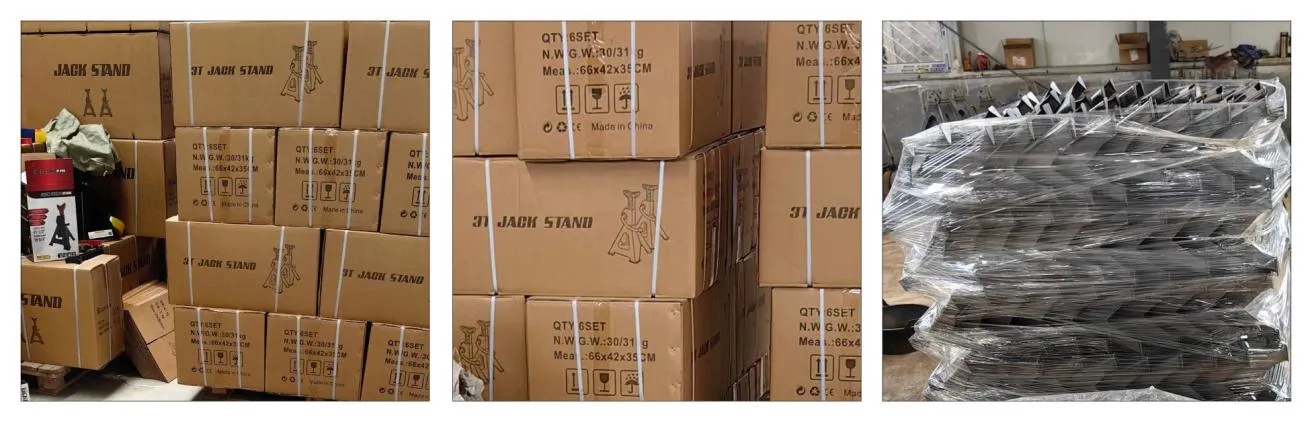
Scissor jacks and jack stands commonly employ high-strength steel alloys – typically AISI 1045 or equivalent carbon steels – due to their favorable balance of strength, ductility, and cost-effectiveness. The steel is selected for its capacity to withstand significant tensile and compressive stresses. The manufacturing process for scissor jacks involves stamping or laser cutting the steel components to precise dimensions, followed by cold forming to achieve the desired angles and curvature for the folding mechanism. Welding, predominantly using shielded metal arc welding (SMAW) or gas metal arc welding (GMAW), joins the individual parts, requiring careful control of welding parameters (current, voltage, travel speed) to minimize heat-affected zones and maintain material integrity. Jack stands often utilize heavier gauge steel, requiring more robust fabrication techniques like forging for critical load-bearing components. The pawl mechanism in jack stands, responsible for locking the stand at various heights, is typically manufactured from hardened alloy steel (e.g., 4140) and subjected to heat treatment processes like case hardening to enhance surface wear resistance. Surface finishing involves painting or powder coating to provide corrosion protection. Crucially, the quality of the welding, heat treatment, and surface coating significantly influences the long-term durability and safety of these devices. The consistency of material composition, verified through spectroscopic analysis, is also a key quality control metric. Potential material defects like inclusions or porosity can initiate crack propagation under cyclical loading.
Performance & Engineering
The performance of scissor jacks and jack stands is fundamentally governed by principles of statics and materials science. Scissor jacks operate on the principle of mechanical advantage, converting rotational force applied to the crank into linear displacement. The force amplification is directly related to the geometry of the scissor mechanism. Engineering analysis focuses on determining the maximum load capacity based on the yield strength of the steel and the geometry of the components. Finite element analysis (FEA) is routinely employed to simulate stress distribution under various loading conditions and identify potential failure points. Jack stands, designed for static load support, are analyzed for buckling stability. The height adjustment mechanism is engineered to provide secure locking at discrete intervals, preventing accidental collapse. The pawl and ratchet system is subjected to rigorous testing to ensure it can withstand repeated engagement and disengagement cycles without failure. Environmental resistance is a critical performance parameter. Jack stands exposed to outdoor conditions are susceptible to corrosion. Therefore, materials selection and protective coatings must be optimized to mitigate corrosion risks. Compliance requirements, such as those outlined by ANSI/ASSP B133.1, dictate minimum safety factors and testing procedures to ensure structural integrity and prevent catastrophic failures. Force analysis includes calculations of shear stress, tensile stress, and compressive stress on key components under maximum load conditions.
Technical Specifications
| Parameter | Scissor Jack (Typical) | Jack Stand (2 Ton Capacity) | Jack Stand (3 Ton Capacity) |
|---|---|---|---|
| Load Capacity (Maximum) | 1.5 - 2.0 Tons | 2.0 Tons (4000 lbs) | 3.0 Tons (6000 lbs) |
| Lifting Height (Minimum) | 3.5 inches | 11 inches | 14 inches |
| Lifting Height (Maximum) | 14 inches | 16 inches | 18 inches |
| Base Diameter | 2.5 inches | 4.5 inches | 5.0 inches |
| Steel Grade (Typical) | AISI 1045 | AISI 1045 | AISI 1045 |
| Pawl Material | Carbon Steel | Hardened Alloy Steel (4140) | Hardened Alloy Steel (4140) |
Failure Mode & Maintenance
Common failure modes for scissor jacks include buckling of the scissor mechanism under excessive load, fatigue cracking at weld joints due to cyclical loading, and stripping of the screw threads in the crank mechanism. Jack stands are prone to pawl failure, resulting in sudden collapse, yielding of the base plate due to overloading, and corrosion-induced weakening of critical structural components. Failure analysis reveals that improper usage, such as exceeding the rated load capacity or placing the jack stand on an unstable surface, are the leading causes of failures. Maintenance for scissor jacks involves regular lubrication of the moving parts to reduce friction and prevent corrosion. Inspecting the screw threads and weld joints for signs of damage is crucial. For jack stands, periodic inspection of the pawl mechanism is essential to ensure proper engagement. Checking for corrosion, particularly in the base plate and height adjustment mechanism, is also vital. If corrosion is present, cleaning and re-coating with a rust preventative are recommended. Do not modify jack stands or scissor jacks in any way, as this can compromise their structural integrity. Replace any components showing signs of wear or damage immediately. Regular load testing, while impractical for most end-users, is a critical aspect of industrial maintenance programs.
Industry FAQ
Q: What is the difference between dynamic and static load capacity, and which should I prioritize?
A: Static load capacity refers to the maximum weight a jack or jack stand can support when the load is applied slowly and evenly, without impact or movement. Dynamic load capacity, however, accounts for shock loading and movement. For vehicle repair, always prioritize the static load capacity, ensuring it exceeds the weight of the vehicle section you are supporting. However, be aware that even 'static' loads can experience brief dynamic forces during certain repairs, so always err on the side of caution.
Q: How often should I inspect my jack stands for wear and tear?
A: Ideally, jack stands should be inspected before every use. Look for signs of corrosion, cracks, dents, and ensure the pawl mechanism engages and disengages smoothly and securely. A more thorough inspection, including checking for thread damage and base plate integrity, should be performed at least annually, or more frequently with heavy use.
Q: Can I use multiple scissor jacks to lift a heavier vehicle?
A: No. Using multiple scissor jacks is strongly discouraged. Scissor jacks are designed for specific load capacities and are not engineered to be combined. The load distribution will be uneven, increasing the risk of instability and catastrophic failure. Always use appropriately rated jack stands for heavier vehicles.
Q: What type of steel is best suited for high-load jack stands used in industrial environments?
A: For heavy-duty industrial applications, forged steel jack stands made from alloy steels like 4140 or 4340 are preferred. These alloys offer superior strength, toughness, and wear resistance compared to standard carbon steels. Surface hardening treatments like induction hardening can further enhance durability and resistance to deformation.
Q: How do I determine if a jack stand is still safe to use after being dropped?
A: A jack stand that has been dropped should never be used again. Even if there is no visible damage, the internal structure may have been compromised. The pawl mechanism could be misaligned or the steel fatigued. Replace the jack stand immediately to avoid a potentially life-threatening situation.
Conclusion
Scissor jacks and jack stands represent a fundamental, yet often overlooked, element of safe lifting operations. Their functionality hinges on robust material selection, precise manufacturing processes, and adherence to stringent engineering principles. Understanding the limitations of each type – the portability of scissor jacks versus the static stability of jack stands – is crucial for appropriate application. The inherent risks associated with these tools necessitate diligent inspection, proper maintenance, and unwavering adherence to load capacity guidelines.
Looking forward, advancements in material science and manufacturing techniques, such as the incorporation of lightweight, high-strength alloys and automated welding processes, will likely lead to improved performance and enhanced safety features. Further development of smart jack stands, equipped with integrated load sensors and warning systems, could provide an additional layer of protection against overloading and instability. Ultimately, prioritizing safety through comprehensive training and strict adherence to industry standards remains the most critical factor in preventing accidents and ensuring the longevity of these essential tools.
